

Tennis odds are the prices a sportsbook sets for a match outcome, and they double as shorthand for implied probability. Learn three markets first: moneyline, game handicap, and total games. Once you can read a plus or minus sign and convert it to a percentage, you can compare that number against your own read on the match and start spotting real value.
TL;DR:
- A favorite with -4.5 game spread must win by at least five games for the bet to succeed, with no push possible due to half-point lines.
- Implied probability from odds helps identify value bets when your estimate of a player's chances exceeds the bookmaker's implied percentage.
- Live odds can shift quickly during a match, especially after momentum swings or player injuries, so monitoring real-time signs is crucial for live betting.
- The standard vig built into lines means you need to win over half your bets at that price for profit, so comparing implied probability to your own estimates is key.
- Betting small and disciplined, with stakes of 1-3% of your bankroll, helps manage risk and prevents emotional or reckless betting decisions.
Table of Contents
- Bet types every beginner should know
- Reading plus and minus signs and what they really mean
- How spreads and totals play out, and the settlement quirks
- What the vig costs you and how to check for value
- Why live odds swing fast and what to watch for
- Keeping your bankroll and your head intact
- Who wrote this and why Tweener gets a mention
- A skill-based way to stay in the game
- A closing thought on thinking in probabilities
- Sources
- FAQ
Bet types every beginner should know
Most tennis wagers fall into a handful of categories, and the moneyline is the one you'll see most often. It's a straight bet on who wins the match, no games or sets involved, which is why it's the most popular bet type in tennis.
Game handicaps work differently. A line like -4.5 means the favorite has to win by at least 5 games for that bet to cash. Totals (over/under) ask whether the combined games played will go above or below a number the book sets, often influenced by surface speed and how often each player holds serve — concepts explained in our guide to racquetball tennis: key differences and crossover guide.
Beyond those three, you'll run into:
- Parlays: multiple bets bundled together, where every leg has to win and the payout grows with each added leg.
- Props: side bets on specifics like total aces or whether a set goes to a tiebreak.
- Futures: longer-term bets on tournament winners, placed well before the draw plays out.
Learn the first three markets cold before touching the rest.
Reading plus and minus signs and what they really mean
American odds use a plus or minus sign to show risk versus reward. A minus number tells you how much you need to risk to win $100. A plus number tells you how much you'd win on a $100 bet. Favorites carry the minus sign, underdogs the plus, and that split is the backbone of how tennis prices are displayed.
To convert odds into implied probability:
- For negative odds: probability = odds ÷ (odds + 100), using the absolute value of the odds.
- For positive odds: probability = 100 ÷ (odds + 100).
- Multiply the result by 100 to get a percentage.
A few worked examples make this stick.
Implied probability is the breakeven line, not a prediction. If your own estimate for a player's chances is higher than the number the odds imply, that's where value starts to show up.

How spreads and totals play out, and the settlement quirks
A -4.5 game handicap means your bet only pays if the favorite wins by 5 games or more. Win by exactly 4 and the bet loses, since half-point lines exist specifically to eliminate ties, or pushes, which whole-number lines can produce.
Totals move based on a few real factors:
- Surface: grass and hard courts tend to produce faster points and more holds than clay.
- Serve hold percentage: players who rarely get broken push totals toward the over.
- Playing style: two big servers facing off often means fewer break points and more games overall, something covered in more depth in match prediction strategy breakdowns built around surface and form.
Settlement gets tricky when a player retires mid-match. Spread and total bets are commonly voided if the match doesn't reach a conclusion, though the exact rule depends on the operator, so sportsbook policies on retirements are worth reading before you place anything on a shaky favorite.
Pro Tip: Check a sportsbook's retirement and weather-delay policy before you bet a spread or total, not after.
What the vig costs you and how to check for value
Sportsbooks build in a margin called the vig, or juice, and it's baked into nearly every line you'll see. A standard -110 spread is the clearest example: you risk $110 to win $100, and that vig is typical across point-spread markets even though it shifts by book and sport.
At that typical vig, the breakeven implied probability is just over 50%, meaning you need to win more than half your bets at that price just to break even, before any profit.
To actually find value:
- Convert the posted odds to implied probability using the formulas above.
- Compare that number against your own honest estimate of the outcome.
- Bet only when your estimate is meaningfully higher than the implied number, not just slightly.
A few habits help over time: shop the same match across multiple books since lines vary, keep individual stakes modest and consistent, and track every bet so you can see your real results instead of your memory of them.
Why live odds swing fast and what to watch for
In-play odds move quickly because tennis momentum shifts in real time. A single break of serve, a string of unforced errors, or a player struggling to hold at 4-4 in the second set can swing a price within seconds.
Watch for physical and situational warning signs before you bet live:
- Limping or visible discomfort, which often precedes a medical timeout or retirement.
- Sudden drops in first-serve percentage, a common sign of fatigue or injury.
- Unusual pace changes, like a player rushing points or taking much longer between them.
Retirements create the messiest settlement scenarios in live betting. Some books void totals and handicaps outright if a player retires before the match ends, while others settle a total as a win if the number was already crossed, so the specific rules depend entirely on the operator.
Keeping your bankroll and your head intact
Betting small and staying disciplined matters more than any single pick.
- Cap individual stakes at 1-3% of your bankroll, a rule that also shows up in fantasy tennis bankroll guidance for similar reasons: it keeps one bad day from wiping you out.
- Set a session cap and stop when you hit it, win or lose.
- Never chase a loss with a bigger bet, which is one of the fastest ways to turn a bad day into a terrible one.
- Avoid betting while intoxicated, and be especially careful with live, in-play markets, which carry higher risk and are linked to problem gambling, particularly among young adults.
If betting ever feels like it's controlling your decisions rather than the other way around, resources like GambleAware offer plain-language support, and Tweener's own notes on risk in fantasy tennis cover similar ground for fantasy and real-money play.
Who wrote this and why Tweener gets a mention
This guide was written by Nathan, who covers fantasy tennis strategy and data for Tweener's blog, including deep dives on scoring mechanics and match prediction. The explanations here draw on public sportsbook rules, responsible-gambling guidance, and the kind of probability thinking Tweener encourages through Draft Mode and Pick'em Mode, where outcomes depend on real ATP and WTA results rather than a fixed price line.
A skill-based way to stay in the game
If calculating implied probability and chasing vig doesn't sound like your idea of fun, fantasy tennis offers a different kind of edge. Draft Mode lets you build a team of real tennis players and score points off their actual match performance, while Pick'em Mode keeps things quicker and more head-to-head.
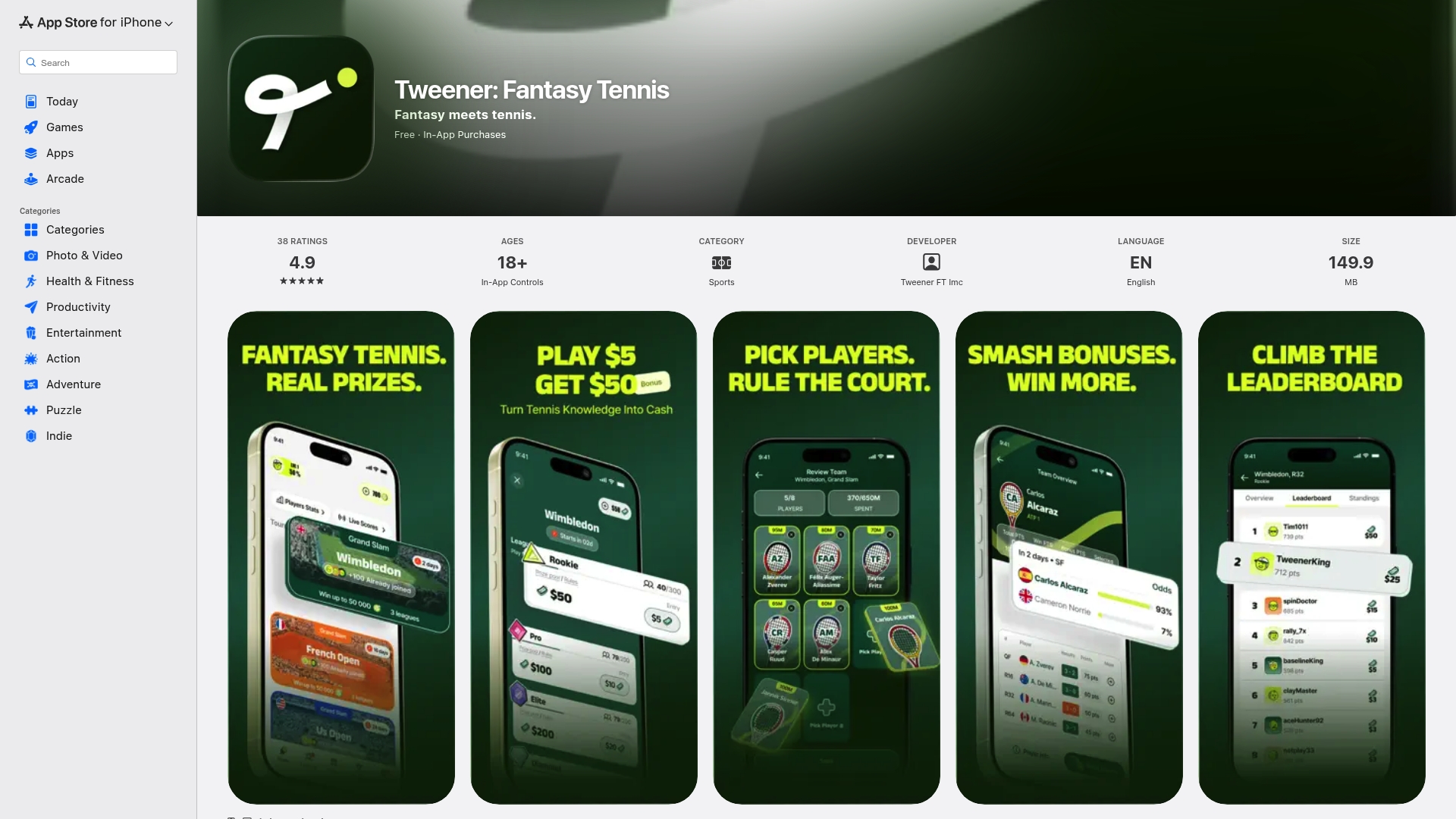
Both modes run on free coin play or cash contests where legally permitted, so you can practice reading form, surface, and head-to-head stats without needing to understand vig at all. If match analysis is what draws you to tennis betting in the first place, that same instinct is exactly what Tweener rewards. Start a Draft Mode team and put your reads to the test.
A closing thought on thinking in probabilities
The biggest shift for a new bettor isn't learning the math, it's starting to think in probabilities instead of certainties. Every price on a board is just one book's guess dressed up as a number, and your job is to decide if that guess is wrong. Practice that skill somewhere low-stakes first, whether that's tracking your own predictions or building a Draft Mode team, before you ever put real money on a line.
— Nathan
Sources
- Tennis betting rules: player retires, rain, weather delay (Action Network)
- How to bet on tennis: Complete guide for types of bets, reading odds (Sporting News)
- Sports and gambling — safer play (Responsible Gambling Council)
- GambleAware
FAQ
What does +/- mean in odds?
A minus sign marks the favorite and shows how much you need to risk to win $100. A plus sign marks the underdog and shows how much you'd win on a $100 bet.
What does a +200 odds mean?
A plus number shows how much you'd win on a $100 bet.
What does +5.5 spread mean in tennis?
A point spread around 4.5 means you win if the player keeps the margin within that number of games. Half-points are used to avoid ties.
What does 3 to 1 odds mean?
"3 to 1" matches the idea that a $100 bet at plus odds wins several times that amount, like a plus 300 number in American odds.