

Yes, you can play Shanghai Masters fantasy contests through dedicated tennis fantasy platforms, and winning takes more than picking famous names. Check the contest lock time first, then weigh current hard-court form, each player's draw path, and late-season motivation and fatigue. Some dedicated tennis fantasy platforms run Masters contests in both Draft and Pick'em modes, free and cash, which gives you a practical place to apply all four signals and also let you book courts for tennis practice to sharpen your skills before match day.
TL;DR:
- Players with recent strong hard-court form and easier draw paths offer higher value than top-ranked players with tough early opponents.
- Confirm the contest's lock time precisely, as even a one-hour difference can lead to outdated lineups and lost opportunities.
- Match your lineup strategy to contest size: anchor-focused builds suit small leagues, while upset-driven lineups work best in large, high-payout fields.
- Late-season motivation and fatigue significantly influence player performance, making it essential to evaluate players' current agendas and workload.
- Check specific rules on substitution and roster locking to avoid losing value from late withdrawals or last-minute changes before entering your lineup.
Table of Contents
- How platform rules and ATP tournament facts interact
- Key player-value factors for Shanghai: surface, draw, form, and motivation
- Contest mechanics and lock timing: what to verify before you enter
- Roster strategies for Shanghai Masters: Draft vs Pick'em
- Quick contest-day checklist and final decision rules
- Nathan's perspective: why Shanghai rewards sharp fantasy managers
- Play Shanghai Masters fantasy on Tweener
- FAQ
- Sources
How platform rules and ATP tournament facts interact
The Shanghai Masters is a Masters 1000 event, played on outdoor hard courts, and the facts that define the tournament itself (draw size, surface, prize money) are separate from the rules that decide your fantasy score. The official ATP overview lists the draw size, surface, and event details, while a 2025 tournament preview breaks down the prize money and points structure for that edition. Those numbers tell you how much a player stands to earn or how many ranking points are at stake. They say nothing about how your fantasy platform turns a win, an ace, or a break of serve into points for your roster.
That gap is where fantasy managers get caught out. Before entering any contest, confirm these items on the contest page:
- Roster size and how many players you must field per round.
- Scoring rules per round, including bonuses for upsets or straight-set wins.
- Captain or multiplier rules that double or boost one player's score.
- Budget or draft constraints that cap how many top seeds you can stack.
- The exact lock time, down to the minute.
A one-hour difference in lock time can matter more than any single pick. If a contest locks before the day's final line updates or a late withdrawal is confirmed, you're drafting on older information than a rival entering a contest that locks later. Our guide on how fantasy tennis points are calculated walks through how ATP points and fantasy scoring diverge in more detail.
Key player-value factors for Shanghai: surface, draw, form, and motivation
Shanghai sits deep in the fall swing, and that timing changes who's actually worth drafting. Ranking alone is a poor proxy for value here. Four factors matter more.
- Recent hard-court form: weigh a player's last 6 to 12 months on hard courts more heavily than their overall ranking, since Shanghai's conditions favor players who've been winning on similar surfaces recently.
- Draw path and byes: a top seed with a brutal early path to a former champion or in-form floater can be worse value than a lower seed with a clean run to the quarterfinals.
- Late-season workload and motivation: players still chasing an ATP Finals berth tend to bring more urgency than those mathematically out of contention, and fatigue from a long season shows up in shorter matches and earlier exits.
- Head-to-head and short-form trends: use these as tiebreakers between similarly valued players, not as your primary selection tool.
Novak Djokovic's history at this event is a good illustration of why reputation and current form aren't the same thing. He's won the Shanghai Masters four times, which makes him a perennial headline pick, but a fantasy manager still has to ask whether his hard-court form and motivation line up that specific week, not just whether his name is on the trophy list.
Pro Tip: Build your initial player rankings from hard-court results only, then adjust for draw path last, since the draw can shift dramatically right up until the lock.
Contest mechanics and lock timing: what to verify before you enter
Qualifying rounds finish before the main draw begins, and platform lock times don't always track ATP's own schedule. Some contests lock at the start of qualifying, others wait until the first main-draw match, and a few lock an entire round at once. That gap is where careless entries lose value before a single ball is struck.
Run through this sequence before you commit a lineup:
- Confirm whether the contest locks at qualifying, main-draw start, or per round.
- Check the substitution policy: can you swap a withdrawn player, or is your roster frozen at lock?
- Note the payout structure, since a top-heavy payout changes how much risk is worth taking.
- Cross-check the lock time against the tournament's published match schedule.
- Pick a contest format that matches your tolerance for late changes: tighter lock times suit confident, early-committed picks, while flexible substitution rules suit managers who want to react to overnight news.
Tweener's game rules page spells out scoring, roster structure, and lock policy in full, which is worth a read before your first Masters entry.
Roster strategies for Shanghai Masters: Draft vs Pick'em

Draft mode and Pick'em mode ask different things of you. Draft mode locks you into a roster built against a salary cap or draft order, so each pick has an opportunity cost. Pick'em mode is about predicting outcomes rather than managing a full roster, which lowers the ceiling for complexity but raises the value of being right about a handful of matches.
Three templates cover most Shanghai scenarios:
- Anchor-first: build around one proven hard-court performer as your captain or multiplier pick, then fill the rest of the roster with steady, lower-variance players who are unlikely to exit early. This protects your floor in smaller, private contests.
- Balanced seeds: spread your scoring across three or four seeded players instead of stacking one star, which smooths out the risk of any single upset wrecking your week.
- Upset variance: target lower-seeded players with favorable, soft draws when you're in a large-field contest where you need to separate from the pack, since a deep run from an unseeded player pays off disproportionately in GPP-style scoring.
Pro Tip: Match your template to the contest size: anchor-first and balanced-seed builds suit small private leagues, while upset-variance builds belong in large, high-payout fields where differentiation matters more than consistency.
For more on building these lineups round by round, see our fantasy tennis tips for 2026 and the anchors-and-attackers framework.
Quick contest-day checklist and final decision rules
Run this short sequence in the final hour before lock:
- Verify the lock time one last time and check for any last-minute withdrawals.
- Confirm your captain or multiplier assignment and that your roster or budget slots are fully used.
- Match your variance to contest size: low variance for small private leagues, higher variance for large-field contests.
- Do a final sanity check on surface matchups, draw anomalies, and the last week of form.
For a walkthrough on swapping players after a late withdrawal, our roster update guide covers the exact steps.
Nathan's perspective: why Shanghai rewards sharp fantasy managers
Shanghai sits at an odd point in the calendar: some players are still fighting for an ATP Finals spot, others are coasting toward the off-season, and that split creates real value gaps that casual fans miss. A fatigued headline name and a motivated mid-seed can look similar on paper and score nothing alike. That's the edge analytical managers chase, and it's why I think late-season Masters events are some of the most interesting fantasy tournaments on the calendar. Our strategy archive digs deeper into reading these windows if you want to build your own model.
— Nathan
Play Shanghai Masters fantasy on Tweener
Some platforms give users two ways to play Shanghai: Draft Mode, where you build a full roster against a budget, and Pick'em Mode, where you predict outcomes match by match. Both can run in free virtual-coin play and in cash contests where legally permitted, allowing practice before staking any real money.
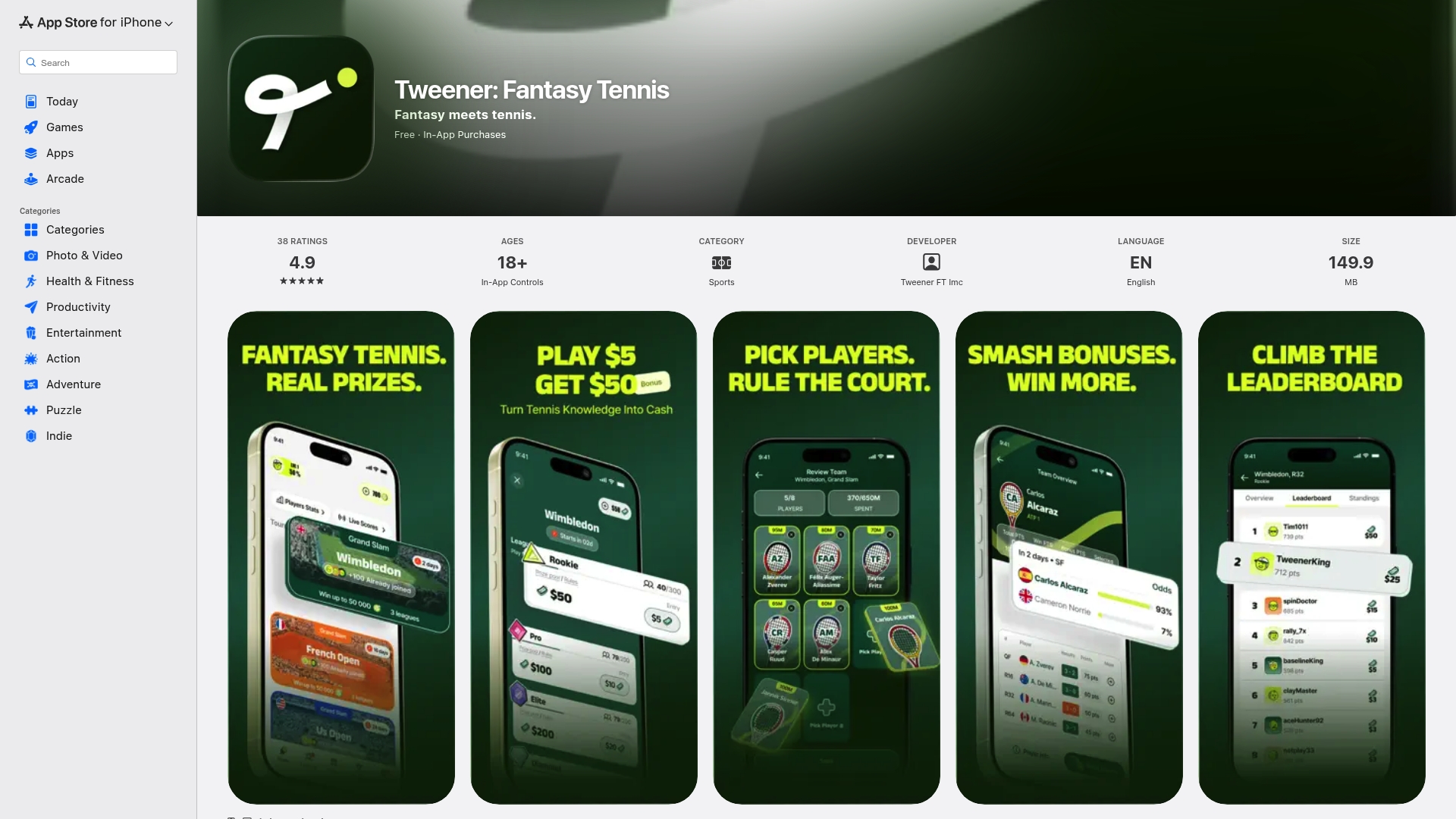
- Private leagues let you compete against up to 9 friends for the tournament.
- Captain and multiplier rules reward the draw-path research covered above.
- Lock times and roster rules are listed clearly on every contest page before you commit.
Build your Shanghai lineup now on the Tweener app, or check the Draft and Pick'em modes before the first ball drops.
FAQ
What is the prize money for the Shanghai tennis open?
Prize money changes year to year and is published in the official breakdown rather than fixed across editions. A recent tournament preview lists the full prize-money and points breakdown for a specific Shanghai Masters edition, including the winner's payout.
Has anyone won all nine Masters in one year?
No men's singles player has completed a sweep of all nine ATP Masters 1000 tournaments in a single calendar year, according to ATP Masters 1000 records. It remains one of the rarest unachieved feats in the sport.
How many times has Djokovic won the Shanghai Masters?
Novak Djokovic has won the Shanghai Masters four times, based on the tournament's own champion records. That history makes him a frequent fantasy favorite, though current form and draw path still decide his value in any given year.
Did Alcaraz withdraw from Shanghai?
Carlos Alcaraz withdrew from the 2025 Shanghai Masters as a precaution after dealing with an ankle issue, which opened up that year's field. Withdrawals like this are exactly why checking contest lock times and substitution rules matters before you finalize a roster.
Sources
- Rolex Shanghai Masters — tournament general information
- ATP Masters 1000 tournaments records & stats — TennisCourtsMap
- ATP Shanghai Masters 2025: All you need to know about prize money & points on offer — Khel Now