

TL;DR:
- Effective fantasy tennis selection relies on accurate surface performance and recent form data. Optimal lineups combine algorithmic models with human judgment, considering draw paths and live updates. Focusing on quality inputs and critical real-time information enhances winning chances over quantity of lineups.
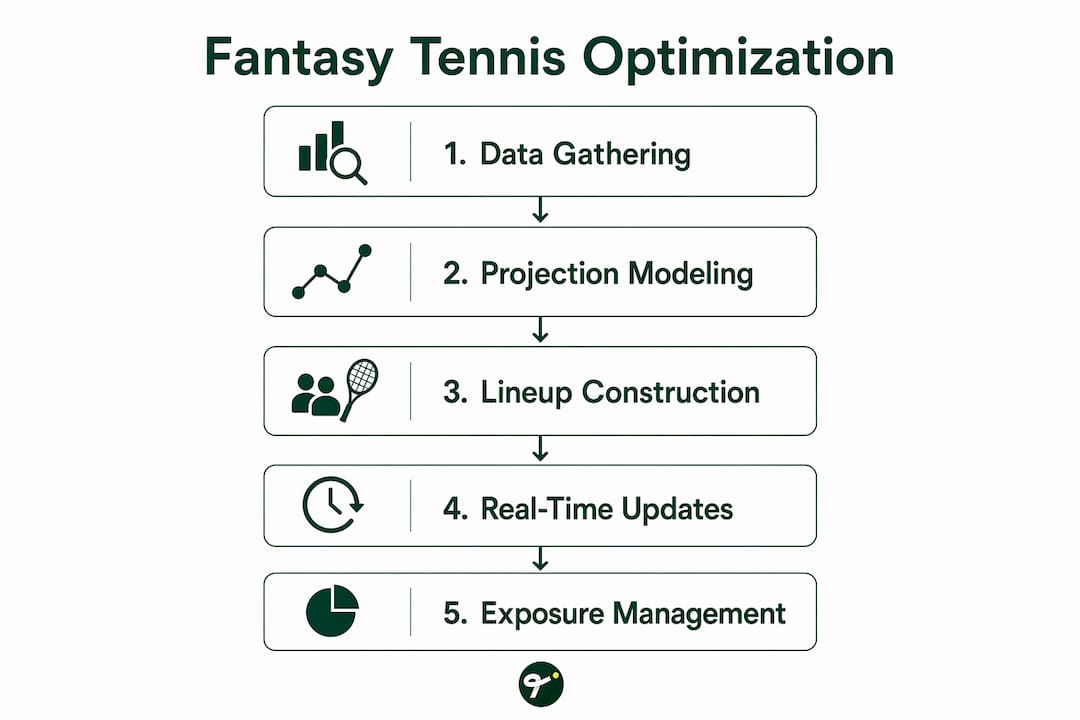
Fantasy player selection optimization is the process of using projection data, statistical models, and lineup construction rules to maximize the expected points your roster scores in any given contest. For fantasy tennis players, this means going beyond gut feel and applying the same analytical rigor that professional sports bettors use. The difference between winning a Grand Slam fantasy league and finishing mid-table often comes down to one or two player picks. This article breaks down the data tools, draft frameworks, and lineup techniques that give you a real edge in competitive fantasy tennis.
What data and tools are essential for optimizing fantasy player selection in tennis?
The quality of your projections determines the quality of your lineup. Projection quality is paramount: optimizers magnify whatever inputs you feed them, so poor projections produce poor results regardless of how sophisticated your method is.
For tennis fantasy, the most useful projection inputs are:
- Surface performance: Clay, grass, and hard court win rates vary dramatically between players. Rafael Nadal's clay dominance and Carlos Alcaraz's all-surface consistency are examples of surface data that directly affects point projections.
- Recent form: A player's results over the last four to six weeks carry more predictive weight than season averages.
- Head-to-head records: H2H data at specific tournaments and on specific surfaces refines matchup projections significantly.
- Draw difficulty: A player seeded to face weaker opponents in early rounds has a higher floor than one facing a top-10 seed in round two.
On the modeling side, Random Forest algorithms predict fantasy points with a Mean Absolute Error of 1.26 and an R-squared of 0.813 after tuning. That level of accuracy means machine learning models outperform simple averages by a wide margin. For lineup construction, mixed-integer programming models achieved profitability in 81.3% of game weeks tested. That figure shows that algorithmic lineup building is not a gimmick. It produces consistent results when paired with quality inputs.
Tweener's platform integrates ATP and WTA stats, live match data, and surface-specific performance metrics directly into the fantasy experience. That means you are not hunting for data across multiple sites before each tournament.

Pro Tip: Spend more time improving your projection inputs than tweaking your optimizer settings. A better projection model with a simple lineup rule beats a sophisticated optimizer fed with stale data.
For players who want to go deeper, predictive analytics in fantasy sports covers how algorithmic methods translate into real lineup decisions.
How to apply fantasy draft strategies for optimal tennis player selection
Draft strategy in fantasy tennis follows the same core logic as any fantasy sport: maximize value at each pick relative to what is available. The Value-Based Draft Strategy focuses on positional scarcity and cross-positional value to build the strongest possible roster.
Here is how to apply it specifically to tennis fantasy:
- Identify surface specialists early. Clay court specialists like Casper Ruud or Stefanos Tsitsipas become far more valuable at Roland Garros than at Wimbledon. Draft players whose surface strengths match the upcoming tournament schedule.
- Use tiers, not just rankings. Group players into tiers based on projected points. Once the top tier is gone, pivot to the next tier without reaching for a name. This prevents overpaying for a player just because they are well-known.
- Target draw position. A player in a favorable quarter of the draw has a higher probability of reaching the semifinals. That translates directly to more rounds played and more points scored.
- Balance stars with sleepers. Loading your roster with top seeds gives you a high floor but limits upside. One or two lower-ranked players who are in strong form can deliver outsized returns if they go on a run.
- Adjust dynamically. Monitoring positional tiers and managing supply and demand during the draft prevents wasted picks and builds roster strength. If other players in your league are targeting the same surface specialist, pivot earlier than you planned.
Pro Tip: Before any Grand Slam draft, map out the draw and identify which players have the softest path to the quarterfinals. That single exercise will improve your picks more than any other preparation step.
For a detailed walkthrough of tennis-specific draft decisions, drafting tennis players covers situational awareness and flexibility in real tournament contexts.
What advanced optimization techniques improve fantasy tennis lineup construction?
Lineup construction is where most fantasy players leave points on the table. The core principle is that cash games and GPP tournaments require fundamentally different approaches.
Cash games vs. tournament construction
Cash games reward consistency. Pick high-floor players who are likely to score at or above their projection in almost every scenario. Avoid injury risks and players with volatile records on the current surface. In cash games, you win by not losing.
Tournament play works differently. Successful fantasy players optimize for a higher 90th-percentile outcome rather than the highest mean projected points. A lineup with a slightly lower average projection but a higher ceiling wins more top prizes than a safe, chalk lineup.
Multi-lineup generation and exposure management
For large-field competitions, generating 20–150 unique lineups is standard practice. This range gives you exposure to multiple outcomes without concentrating all your entries on one scenario.
Key techniques for managing exposure:
- Set maximum exposure limits. Cap any single player at 40–60% of your total lineups. This prevents one injury or early exit from wiping out your entire entry pool.
- Use correlation stacks. In tennis, this means pairing players from the same country in Davis Cup-style events, or pairing players who are both projected to face weak opponents in the same draw section.
- Play contrarian in large fields. Low-ownership players who outperform projections deliver the most lineup differentiation. One contrarian pick in a winning lineup can move you from a mid-field finish to a top-three payout.
| Format | Primary goal | Player type | Lineup count |
|---|---|---|---|
| Cash game | Maximize floor | High-floor, consistent players | 1–3 |
| Small tournament | Balance floor and ceiling | Mix of stars and form players | 5–20 |
| Large-field GPP | Maximize ceiling | Ceiling plays, contrarian picks | 20–150 |
For more on how different contest formats shape lineup decisions, popular tournament formats explains the structural differences between fantasy contest types.
How to use real-time updates and projection adjustments during competition
Static projections built before a tournament starts become outdated fast. Monitoring real-time changes, player usage rates, and matchup dynamics improves late-swap decisions significantly. Tennis adds specific live data variables that other sports do not have.
The most important real-time signals to track:
- Injury and withdrawal news: A player who retires mid-match or withdraws before a round scores zero points. Checking official ATP and WTA feeds before lineup lock is non-negotiable.
- Weather and court conditions: Slow courts at Roland Garros favor baseliners. Fast conditions at Wimbledon favor big servers. Weather delays can also affect player fatigue across multiple rounds.
- Practice and warm-up reports: Social media posts from players and coaches often reveal form issues or physical concerns hours before official announcements.
- Odds movement: Sharp movement in match odds signals new information. If a player's odds drift significantly before a match, there is usually a reason worth investigating.
Pro Tip: Set up alerts for ATP and WTA official social accounts and follow tournament press officers on social media. Withdrawal news often appears there 30–60 minutes before it hits mainstream sports sites.
Acting on live data requires a platform that supports lineup edits close to match time. Tweener allows players to adjust their selections as tournament rounds progress, which means you can react to real-world developments rather than being locked into a pre-tournament decision.
What common mistakes to avoid when optimizing fantasy tennis player selection
Most fantasy tennis losses trace back to a small set of repeatable errors. Recognizing them is the first step to correcting them.
- Overreliance on projections without context. Projections are inputs, not answers. Manual overrides and adjustments improve outcomes when combined with optimizer output. Experienced players spend the majority of their time refining inputs, not just running the optimizer and accepting the result.
- Ignoring positional scarcity. In tennis fantasy, surface specialists become scarce at specific tournaments. Waiting too long to draft a clay court specialist at Roland Garros is the equivalent of waiting until round eight to draft a running back in football.
- Using the same strategy for cash games and tournaments. This is one of the most common and costly errors. A chalk lineup that wins cash games consistently will rarely win a large-field tournament.
- Failing to track your own results. Without reviewing which picks worked and why, you repeat the same mistakes across tournaments. Keep a simple log of your lineups, the projections you used, and the actual outcomes.
The best fantasy players treat every tournament as a data point. They review what their projections got right, what they missed, and what live data they failed to act on. That feedback loop is what separates consistent winners from one-time lucky finishers.
Key takeaways
Winning at fantasy tennis requires combining accurate projection data with format-specific lineup construction and real-time adjustment.
| Point | Details |
|---|---|
| Projection quality drives results | Poor inputs produce poor lineups regardless of how advanced your optimizer is. |
| Surface data is the most valuable input | Match player surface strengths to the tournament's court type before every draft. |
| Cash games and tournaments need different rosters | Prioritize floor in cash games and ceiling in large-field tournaments. |
| Multi-lineup exposure limits risk | Cap any single player at 40–60% of entries to protect against early exits. |
| Real-time data changes outcomes | Monitor injury news, weather, and odds movement before every lineup lock. |
Nathan's take: the part most fantasy guides skip
Most fantasy tennis guides stop at "use better projections." That advice is correct but incomplete. The part that actually separates good players from great ones is knowing when to ignore the model.
I have watched players with access to the same projection tools finish at opposite ends of the leaderboard. The difference was almost always judgment. One player saw that Jannik Sinner was carrying a minor wrist issue into a tournament and downgraded him manually. The optimizer still ranked Sinner highly because the injury had not been priced into the public data yet. The player who acted on that signal won. The player who trusted the model blindly did not.
Tennis is also unique because the draw matters more than in almost any other sport. A top-five player in a brutal quarter of the draw is a worse fantasy pick than a top-15 player with a clear path to the semifinals. Most general-purpose fantasy tools do not weight draw position heavily enough. You have to do that work yourself.
The other thing I would push back on is the obsession with generating hundreds of lineups for every tournament. More lineups create more exposure, but they also dilute your edge. If your projections are genuinely better than the field, concentrating your entries on your highest-conviction lineups produces better returns than spreading thin across 150 entries built on the same flawed model. Quality beats quantity when your inputs are strong.
The best approach combines algorithmic discipline with human judgment. Use the model to eliminate bad picks and surface undervalued players. Then apply what you know about the draw, the surface, and the player's current form to make the final call. That combination is what every draft is unique actually means in practice.
— Nathan
Tweener: fantasy tennis built for analytical players
Tweener is the only dedicated fantasy tennis platform that combines real ATP and WTA match data with a competitive league structure built around live tournaments.
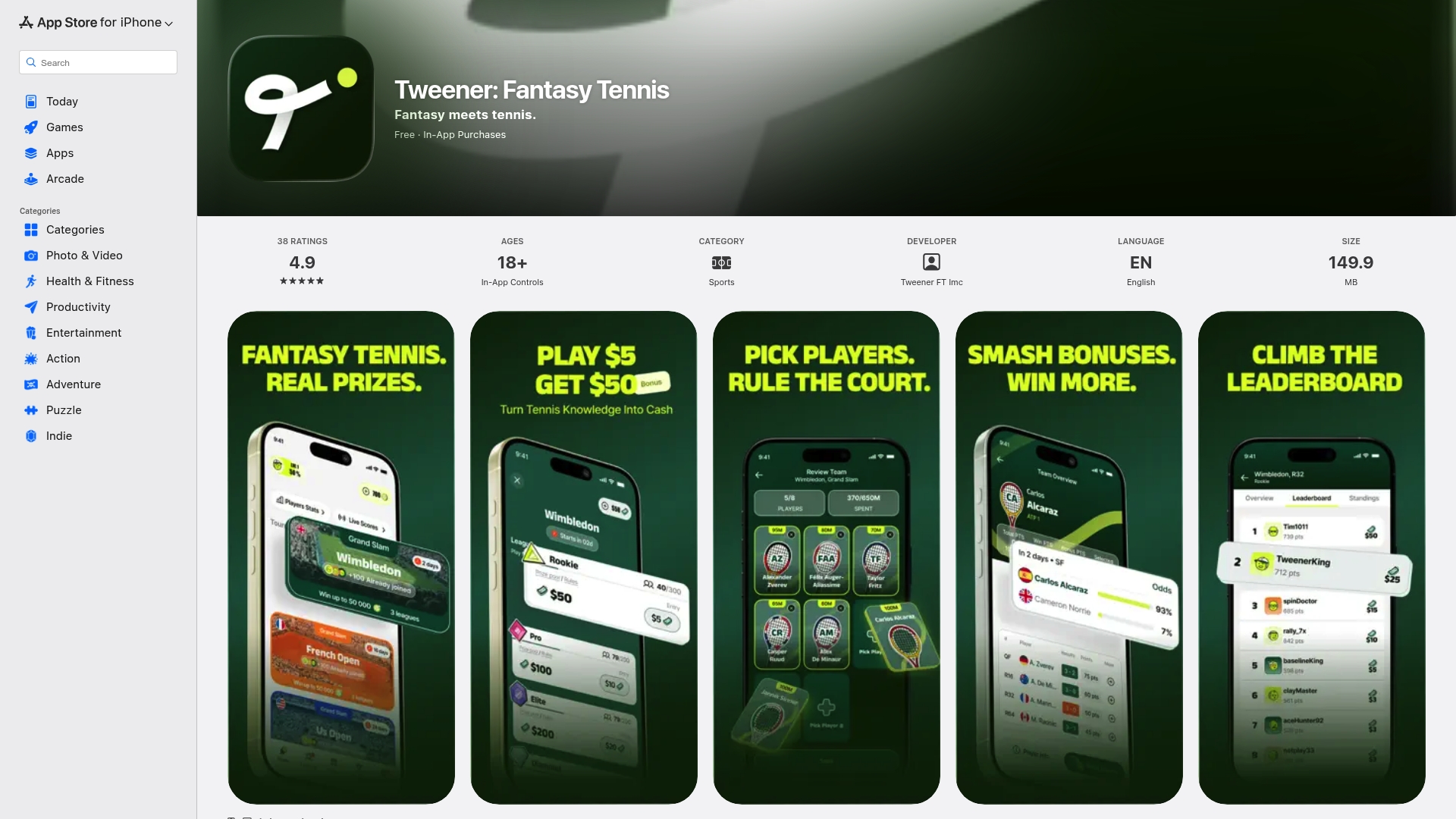
Players who take player selection seriously will find Tweener's surface-specific stats, H2H records, and real-time match data give them the analytical foundation that general fantasy platforms simply do not offer for tennis. You can compete in public leagues or set up a private league with up to nine friends for any Grand Slam. The platform runs both free and cash contest modes, making it a skill-based alternative to sports betting where your knowledge of the ATP and WTA tours is the actual edge. Download Tweener and put your player selection strategy to work in a league that rewards research over luck.
FAQ
What is the most important factor in fantasy tennis player selection?
Surface-specific performance is the single most important factor. A player's win rate and point-scoring history on clay, grass, or hard courts directly predicts their fantasy output at any given tournament.
How many lineups should I enter in a large-field fantasy tennis tournament?
Generating 20–150 unique lineups is standard for large-field competitions. This range provides enough exposure to different outcomes while keeping each lineup distinct.
What is the difference between cash game and tournament strategy in fantasy tennis?
Cash games reward consistent, high-floor players who reliably meet their projections. Tournaments reward lineups built for ceiling outcomes, including lower-ownership contrarian picks who can deliver outsized returns.
How do I use real-time data to improve my fantasy tennis picks?
Monitor ATP and WTA official channels for injury and withdrawal news before lineup lock. Odds movement and practice reports also signal new information that projections have not yet captured.
Does Tweener support advanced fantasy tennis analytics?
Tweener integrates live match data, surface performance stats, and H2H records directly into the platform. Players can adjust lineups as tournament rounds progress, supporting real-time decision-making.