

TL;DR:
- A compelling tennis fantasy team name is a strategic statement that reflects your style, builds recognition, and enhances motivation throughout the season.
- Creating a short, tennis-themed, wordplay-rich name aligned with your core strategy fosters consistency and engagement in your league competition.
Every fantasy tennis season, thousands of players agonize over their roster picks and draft strategies, then slap the first team name that comes to mind into the entry field without a second thought. That's a mistake. Your team name is your identity in every league chat, leaderboard, and matchup screen. A sharp, well-crafted name signals confidence, sets a tone, and can even anchor how you think about your weekly picks on Tweener. This guide walks you through exactly how to build a name worth keeping all season long.
Table of Contents
- Understand what makes a great tennis fantasy team name
- Gather inspiration: Sources and frameworks for unique names
- Step-by-step process: Naming your fantasy tennis team
- Mistakes to avoid and how to verify your team name
- Why the right tennis team name boosts strategy and fan engagement
- Ready to launch your winning tennis fantasy team?
- Frequently asked questions
Key Takeaways
| Point | Details |
|---|---|
| Match name to strategy | Your team name can reinforce your fantasy tennis game plan. |
| Incorporate tennis wordplay | Using tennis terms and puns helps your name stand out in any league. |
| Keep it short and memorable | Easy-to-pronounce names work better for chants and digital recognition. |
| Test before committing | Run the name by others and check for clarity in chants or on print. |
| Avoid generic choices | Originality and relevance help your team stand out from the crowd. |
Understand what makes a great tennis fantasy team name
After defining the challenge, let's clarify what separates an ordinary fantasy team name from a great one. Not every name is created equal, and the difference between a forgettable label and a legendary league identity often comes down to a few core principles.
The strongest fantasy tennis team names do several things at once. They tell other players something about your style before a single ball is struck. They also stick in memory, which matters more than you'd think when you're competing in a public league with dozens of entries. A name that other participants actually remember makes you feel like a real competitor, not just another entry in the bracket.
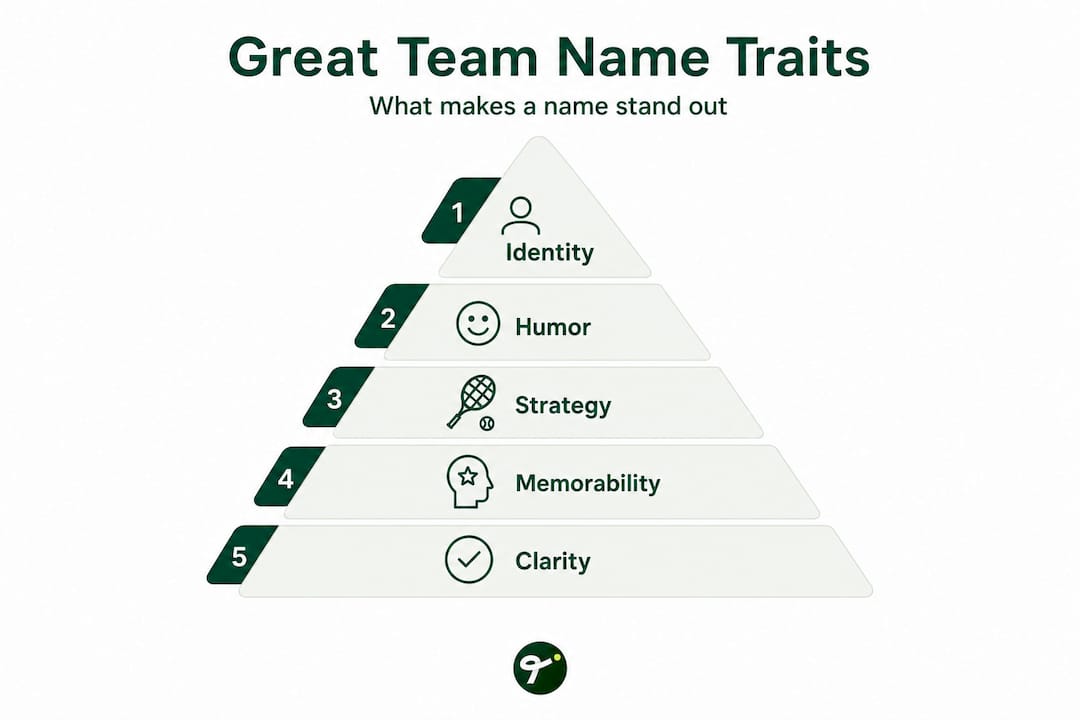
A widely recommended approach for tennis team names follows four key pillars: reflect the team's identity, use tennis-themed words, keep the name short and chantable, and add wordplay through puns, alliteration, or rhymes. These aren't arbitrary rules. They exist because names that tick all four boxes are simply more effective at building the kind of presence that keeps you motivated week after week.
Here's what each pillar actually means in practice:
- Reflect identity: Your name should hint at your strategy or personality. Are you aggressive, picking big servers? Call yourself something power-focused. Do you specialize in clay court specialists? Let the name lean into that theme.
- Use tennis terms: Words like "ace," "deuce," "volley," "topspin," and "rally" carry immediate context for anyone in your league. They signal that you know the sport, not just the fantasy game.
- Keep it short: Three to five words is the sweet spot. Names that require a second read lose their punch fast.
- Add wordplay: A clever pun earns instant goodwill. "Serving Suggestions," "Net Profits," or "The Backhand Bandits" all hit differently than "Team A."
Learning fantasy team management basics will also help you align your name with the kind of squad you're actually building. And once you understand smart selection strategies, you'll have clearer themes to draw from.
"A great team name isn't decoration. It's the first statement you make in every competition, and like any opening shot, it should be intentional."
Gather inspiration: Sources and frameworks for unique names
Once you know what makes a name effective, it's time to find creative inspiration and reliable frameworks to spark your own ideas. This is where the real fun begins.
The richest source of inspiration is tennis vocabulary itself. The sport is loaded with terms that double beautifully as wordplay material. Browse a tennis terms glossary and you'll quickly spot the building blocks of a great name. Words like "fault," "break point," "let," "smash," "lob," and "drop shot" all carry strong visual and emotional associations. Combine them with unexpected words and you get something memorable.
There are four reliable thematic frameworks that work especially well for fantasy tennis names:
- Strategy-focused: Names that reflect how you pick players. "The Break Point Believers," "Surface Specialists," or "The Depth Chargers."
- Player-inspired: Names built around a favorite ATP or WTA star. "Sinner's Squad," "Swiatek's Shadow," or "Alcaraz Anonymous." These show allegiance and create instant personality.
- Comedy-first: Lean into the absurd. "Fault Lines Only," "Double Faulted and Proud," or "Net Cord Nation" all get laughs while staying on-theme.
- Power-focused: Names that project dominance. "Ace Authority," "The Grand Slam Grinders," or "First Serve Fury."
When it comes to online name generators and AI tools, they can accelerate brainstorming but need careful handling. The key is specificity: avoid generic prompts and instead define your tone and your specific strategy before asking for suggestions. Ask for "a punny tennis fantasy team name for a player who focuses on clay court baseline grinders" and you'll get far better results than just typing "tennis team name."
Pro Tip: After using any generator, swap at least one word in the suggested name with a term that's personally meaningful to you. This turns a generic result into something with real character.
Here's a quick comparison of common naming approaches and how they perform across key criteria:
| Naming approach | Memorability | Strategic fit | Humor factor | Effort to create |
|---|---|---|---|---|
| Tennis pun | High | Medium | High | Low |
| Player-inspired | Medium | High | Low | Low |
| Surface/strategy theme | Medium | Very high | Low | Medium |
| Random generator output | Low | Low | Variable | Very low |
| Custom hybrid | Very high | Very high | Variable | Medium |
The custom hybrid wins almost every time. Mix a tennis term with your specific strategy angle and you get something no generator could spit out on its own.
Pairing a strong name with solid player drafting tips rounds out your pre-tournament preparation and keeps your identity consistent from name to lineup.
Step-by-step process: Naming your fantasy tennis team
Inspired by creative frameworks and ideas, now you're ready to follow a proven process to find the best name for your team.

Step 1: Define your team's core theme. Before writing a single name, decide what your squad will stand for. Are you building around serve-heavy hard court players? Picking deep runs at clay events? Riding a favorite player's form? Your theme is the anchor everything else hangs on.
Step 2: Brainstorm freely, quantity first. Set a timer for ten minutes and write down every name idea that comes to mind. No filtering, no judging. Aim for at least twenty options. Pull from tennis vocabulary, your player picks, your personality, and the frameworks from the previous section.
Step 3: Shortlist to five candidates. Read each name aloud. Anything that's hard to say, too long, or just doesn't feel right gets cut. Keep the five that feel sharpest.
Step 4: Run them by a friend. This step gets skipped constantly and it shouldn't. Share your top five with someone outside your head. Fresh ears catch things you miss: names that sound like something else, puns that don't land, or references that confuse non-tennis fans.
Step 5: Apply the chant test and the visual test. Could someone chant this name from the stands? Does it look clean when written out, for example on a league banner or in a chat window? These two quick checks cut weak candidates fast.
Step 6: Lock it in and commit. Pick the winner and stick with it. Consistency builds recognition across the season.
The naming process aligns naturally with the broader strategy routine of planning your fantasy week: the name's theme can remind you which players to prioritize, which surfaces matter most to your squad identity, and how to time your bonus plays and chips for maximum impact.
Here's a simple framework for evaluating your shortlist:
| Name candidate | Chant test | Visual clarity | Strategic fit | Originality | Total score (out of 5) |
|---|---|---|---|---|---|
| Net Profit Collective | ✓ | ✓ | Medium | High | 4 |
| The Ace Architects | ✓ | ✓ | High | High | 5 |
| Team Sinner | ✓ | ✓ | High | Low | 3 |
| Grand Slam Gambling Co. | ✗ | Medium | Medium | Medium | 2 |
| Topspin Tycoons | ✓ | ✓ | High | High | 5 |
Pro Tip: If two names score equally well, go with the one that better reflects your specific lineup building approach. A name tied to your actual strategy is one you'll commit to more seriously throughout the season.
Understanding fantasy sports rewards also adds extra motivation to your naming ritual. When your team name is on a leaderboard and you're competing for real prizes, you want a name that holds up under pressure.
A strong name is also the foundation of building a winning lineup mindset. When your name signals a clear identity, your player selections tend to follow more logically.
Mistakes to avoid and how to verify your team name
After you pick candidate names, it's crucial to avoid common errors and run a final check to ensure you've chosen a standout, effective team name.
The most common mistake is going too long. Names with more than five words become a burden in league chats, scoreboards, and any visual context. They get truncated, misread, or just ignored. Short names with clear rhythm get repeated.
The second most frequent error is picking something everyone else already used. Names like "Ace Squad," "The Smasher," or "Net Ninjas" show up in nearly every public league. They blend into the background instantly. A quick search of your platform's public leagues before committing can save you from this trap.
Here's a checklist of mistakes to actively avoid:
- Names that are hard to pronounce on first read
- References that only make sense to one person (inside jokes without context)
- Names that unintentionally reference something offensive or confusing
- Anything that copies a well-known brand or player name closely enough to feel like an infringement
- Names so abstract they have no connection to tennis or your strategy
Since team names often appear in chants and on jerseys, clarity and simplicity aren't optional extras. They're the baseline for a name that actually works in all contexts. A name that looks great typed out but falls apart when spoken is a problem waiting to happen.
Pro Tip: Before finalizing, search your top two name choices on social media and in common fantasy sports forums. If a name already has strong associations with someone else's team or brand, keep moving down your shortlist.
Your name should also pass what we call the "new member test." Imagine a friend joining your league mid-season for the first time. When they see your team name, do they get an immediate sense of who you are? If the answer is yes, you've nailed it.
For more guidance on the decisions that shape your entire season, including which players to center your team around, visit choosing fantasy tennis players.
Why the right tennis team name boosts strategy and fan engagement
Here's an angle that rarely gets discussed in fantasy tennis circles: the name you choose at the start of a season quietly shapes how you make decisions throughout it.
When your team is called "The Clay Court Crushers," you'll feel a subtle pull toward picking clay specialists when the schedule tilts toward Roland Garros. When your name references a specific player, you'll naturally track that player's form more closely. This isn't superstition. It's commitment psychology. Naming something makes you accountable to it.
We've seen this play out repeatedly on Tweener. Players who choose names with a clear strategic theme tend to stay more consistent in their weekly picks. They're less likely to chase random form and more likely to trust their original strategy framework. A name is a contract with yourself.
There's also a social dimension. In private leagues with friends, a sharp team name becomes a rallying point. It gets mentioned in group chats. It shows up in playful trash talk. It creates the kind of engagement that makes fantasy sports genuinely fun rather than just a points-tracking exercise. The emotional investment you put into your name translates into deeper attention to the actual sport.
Treat naming as the first act of game-week planning. Before you look at the draw, before you check player news, before you finalize your roster, spend five minutes revisiting your team name and asking: does my lineup actually match what this name promises? If it doesn't, something needs to change. Either the name or the picks.
The smart team selection philosophy connects directly here. A well-named team with a clear identity is easier to manage and easier to improve because you always know what you're building toward.
Ready to launch your winning tennis fantasy team?
You've done the work. You know what makes a name land, how to brainstorm with purpose, and how to verify you've got a winner before the tournament begins. The next step is putting all of it into practice inside an actual competition.
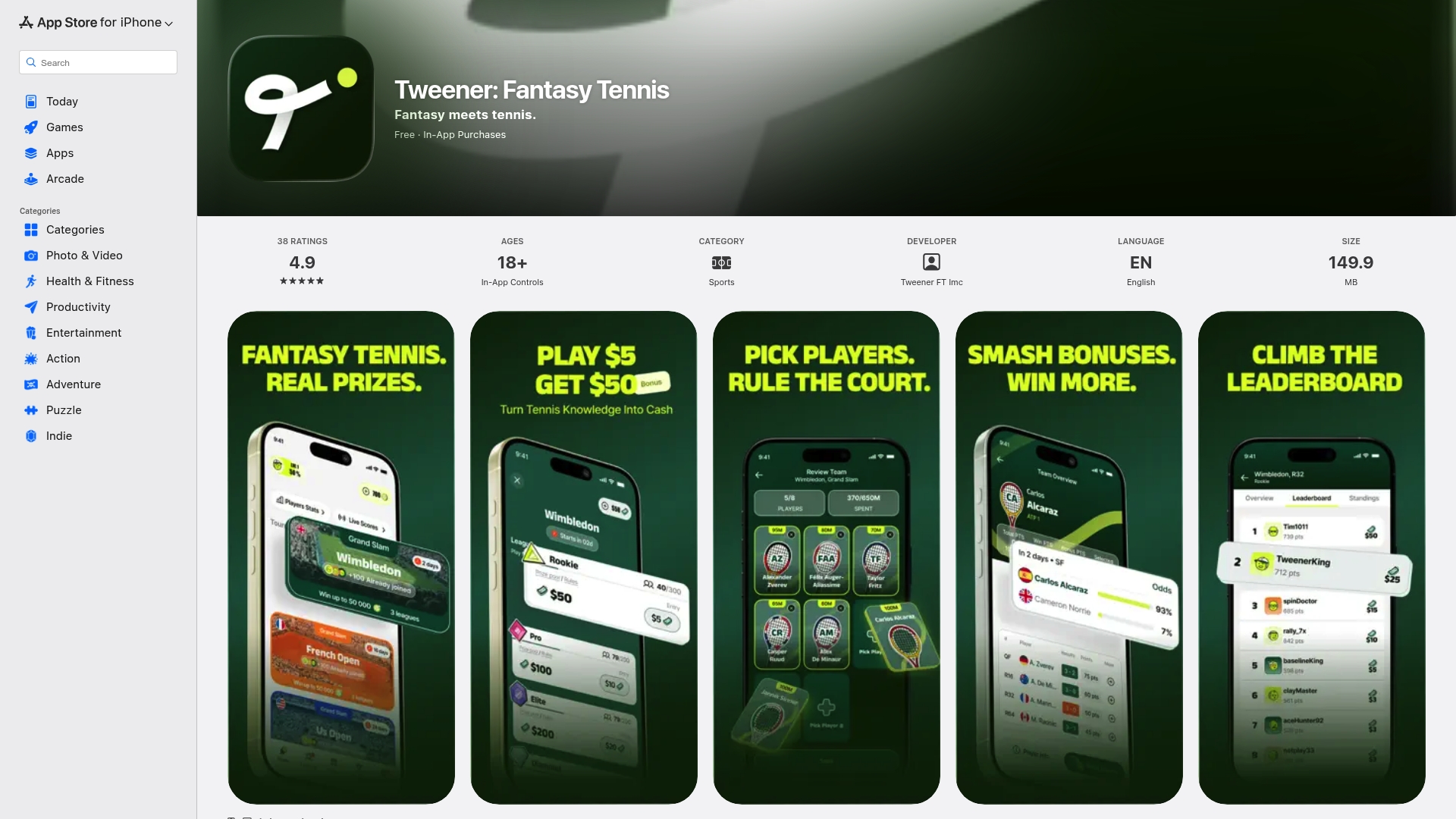
Tweener is built exactly for this. Download the app, set up your fantasy team, enter your chosen name, and start competing against ATP and WTA fans from around the world. Whether you prefer the free coin-based mode or want to step into cash competitions for real payouts, Tweener has the league format and player pool to match your ambition. Every tournament becomes a new opportunity to prove your strategy right. Your name is already set. Now it's time to back it up on the leaderboard. Join Tweener today and make your mark on the fantasy tennis scene.
Frequently asked questions
What are the most important factors in choosing a tennis fantasy team name?
Focus on names that reflect your strategy, use tennis terms or wordplay, and are short and memorable. The best names hit all four pillars: identity, tennis vocabulary, brevity, and clever wordplay.
How does naming a fantasy tennis team relate to my actual gameplay or roster moves?
A well-chosen name reinforces your intended strategy and helps guide weekly decisions. For example, ATP Fantasy mechanics like the Bonus Ball designation reward consistent weekly planning, and a name tied to your theme keeps you focused.
Can I change my tennis team name mid-season in fantasy leagues?
Most fantasy platforms allow name changes, but consistency builds recognition and psychological commitment to your strategy, so switching names frequently is generally not advisable.
Should I use an online generator for my team name?
Generators can spark solid ideas quickly, but personalizing the result with specific tennis or strategy references ensures originality and genuine connection to how you actually play.
What makes a tennis fantasy team name easy to chant or print?
Short names with clear rhythm and simple pronunciation work best across both contexts. Names used in chants or on jerseys need to be immediately readable and speakable without a second attempt.