

TL;DR:
- Effective lineup rotation involves regularly swapping players based on surface, form, and tournament schedule.
- Most fantasy tennis apps limit weekly transfers, so strategic planning maximizes points and minimizes risks.
- Mastering rotation and adaptability separates top players from casual participants over a season.
Most fantasy tennis players spend hours scouting the perfect star player, then lose their league because they never touched their lineup again. That's the trap. Picking the right players is just the starting point. The real edge comes from what you do with your roster week after week as tournaments shift surfaces, draws get brutal, and fatigue sets in. This guide breaks down exactly what lineup rotation is, how it works across mobile fantasy tennis apps, and the strategies that separate leaderboard regulars from one-week wonders. By the end, you'll know how to rotate smarter, manage risk better, and compete with confidence.
Table of Contents
- What is fantasy lineup rotation?
- How lineup rotation works in mobile fantasy tennis leagues
- Key strategies for effective lineup rotation
- Common pitfalls and advanced tips for lineup rotation
- Why mastering lineup rotation is your true X-factor
- Ready to put your lineup rotation skills to the test?
- Frequently asked questions
Key Takeaways
| Point | Details |
|---|---|
| Lineup rotation defined | Swapping players based on tournaments and surfaces is key for sustained fantasy tennis success. |
| Transfer rules matter | Managing weekly transfers and chip usage can dramatically boost your point totals. |
| Risk diversification is crucial | Spreading your picks across events prevents big score losses from single upsets or event surprises. |
| Timing and news use | Great lineup rotation means tracking tournament schedules and up-to-date news to anticipate changes. |
| Flexibility wins leagues | Constantly adapting your lineup, not just relying on big names, separates winning managers from the pack. |
What is fantasy lineup rotation?
At its core, lineup rotation means regularly swapping players in and out of your active roster to match the week's tournaments and squeeze out the most fantasy points possible. It's not panic trading. It's a planned, deliberate process that responds to the tennis calendar, player form, surface changes, and draw difficulty.
In mobile fantasy tennis leagues like ATP Fantasy or Deuce, players use limited free transfers and chips to rotate rosters across tournament swings. Most apps give you a set number of transfers per week, so every move counts. Use them wisely, and your lineup stays sharp. Waste them, and you're stuck watching the wrong players lose in the first round.
Surfaces matter more in tennis than in almost any other sport. Clay specialists like Rafael Nadal (before his retirement) dominated on the red dirt but struggled on grass. Grass court artists thrive at Wimbledon but fade on hard courts. Your fantasy tennis tips need to account for these swings. A player who scores 80 points on clay might score 40 on grass, and your rotation strategy is what bridges that gap.
Some platforms offer special tools called chips. The Swing Switch chip, for example, lets you make unlimited transfers during one tournament swing. That kind of flexibility is powerful, especially during the grass court swing when form is unpredictable and upsets are common.
Here's how a static lineup compares to an active rotation approach:
| Factor | Static lineup | Active rotation |
|---|---|---|
| Transfers used | 0 per week | 1-3 per week |
| Surface adaptation | None | Adjusted each swing |
| Injury risk exposure | High | Managed with backups |
| Points ceiling | Lower | Significantly higher |
| Required time investment | Minimal | Moderate |
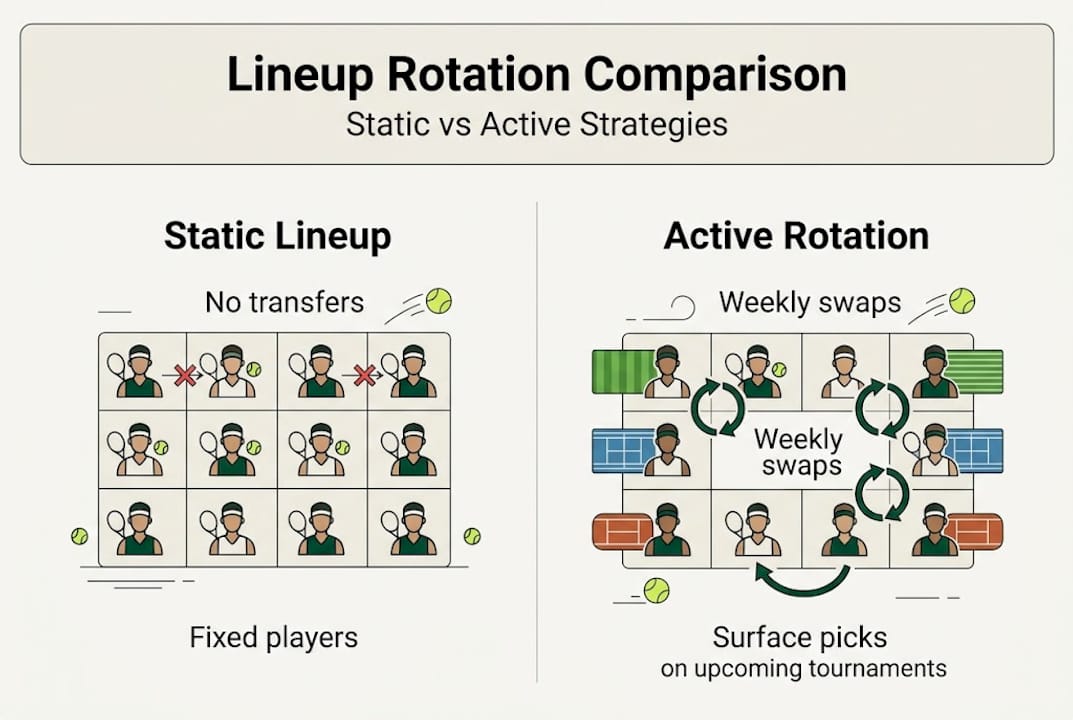
The numbers tell the story. Static lineups are easy, but they leave points on the table every single week. Active rotation through building winning lineups is how competitive players stay consistent across an entire season.
Here's what rotation actually involves in practice:
- Surface swaps: Rotating out clay specialists before the grass swing starts
- Form tracking: Moving in a player on a hot streak mid-tournament
- Scheduling awareness: Benching players with a tough draw and starting those in softer brackets
- Chip deployment: Saving the Swing Switch for a week when you need maximum flexibility
How lineup rotation works in mobile fantasy tennis leagues
Now that you know what rotation is, it's time to see how it actually works in today's best fantasy tennis leagues.

Most apps follow a similar framework: you get a limited number of free transfers each week, and any extras cost you points or require a chip. Players use 2 transfers per week, which can accumulate up to 8 if you don't use them. That accumulated bank gives you serious power during major swings like the clay court season or the U.S. Open Series.
Here's a typical rotation sequence during a two-week tournament swing:
- Week 1, pre-tournament: Review the draw, check surface form, and decide if your current roster matches the week's events
- Week 1, mid-tournament: Monitor results, watch for injury updates, and use a transfer if a key player retires or underperforms
- Week 2, pre-tournament: Evaluate your transfer bank, decide whether to spend or save, and prepare for the next event
- Week 2, chip decision: If the swing is high-value (like a Masters 1000 event), consider activating a Swing Switch for maximum flexibility
Understanding transfer limits and chip usage is where most beginners stumble. They burn two transfers in week one on minor upgrades, then have nothing left when a top seed pulls out of week two.
Pro Tip: Map out the ATP and WTA calendar at the start of each month. Identify which weeks are high-value (Grand Slams, Masters 1000 events) and save your transfer bank and chips for those moments.
Here's how the major platforms handle rotation mechanics:
| Platform | Free transfers | Chip tools | Accumulation |
|---|---|---|---|
| ATP Fantasy | 2/week | Swing Switch, Bonus Ball | Up to 8 |
| Deuce | 2/week | Various | Limited |
| Tweener | Varies by league | Custom per contest | Contest-specific |
Tweener's contest-based format is worth highlighting because it gives you flexibility that season-long games don't. Each contest has its own rules, so you can find formats and surface choices that match your rotation style, whether you prefer weekly formats or full-tournament challenges.
Key strategies for effective lineup rotation
Understanding the rules is only half the battle. The biggest wins come from smart strategy. Here's how top players maximize the power of rotation.
During dual-tournament weeks (weeks when both ATP and WTA run multiple events), spreading players across tournaments mitigates risk, and avoiding concentration on one event is the number one move. If all your picks are in one bracket and an upset wave hits, your score collapses. Spread the risk.
The Bonus Ball is one of the most underused tools in fantasy tennis. This chip lets you designate one starter to earn double points for the week. Use it on a player who has a soft draw and is in excellent form. That's not gambling; that's drafting for dual-event risk with precision.
Rotated lineups average 15% higher scores in test leagues compared to static rosters. That gap might sound small, but over a full season, 15% is the difference between finishing in the top 10 and finishing in the middle of the pack.
Here are the core strategies worth building into your weekly routine:
- Diversify by tournament: Never put more than 60% of your picks in one event during dual weeks
- Use the Bonus Ball on form, not name: A hot qualifier beats a slumping seed every time
- Track withdrawal news: Pre-tournament press conferences often reveal fatigue or minor injuries before official announcements
- Plan your chip calendar: Decide at the start of the season which three or four weeks deserve your best chips
- Rotate around draws: A top player in a brutal draw is worth less than a mid-ranked player with a clear path to the quarterfinals
Pro Tip: Follow official ATP and WTA social accounts and use platforms like Tennis Abstract for optimizing weekly picks with draw and head-to-head data before making transfers.
Common pitfalls and advanced tips for lineup rotation
Even great strategies can go sideways if you're not careful. Let's look at what trips up even veterans, and how you can avoid these traps.
The most common mistakes in lineup rotation are surprisingly consistent across skill levels:
- Missing transfer deadlines: Many apps lock lineups before the first match of the week. Miss the cutoff, and your plan is useless
- Burning chips too early: Using your Swing Switch in February instead of saving it for Roland Garros or Wimbledon is a costly mistake
- Ignoring surface transitions: Failing to rotate before a surface change is one of the fastest ways to lose ground
- Going all-in on one event: Dual-event weeks require spreading players for risk coverage; this can't be stressed enough
- Forgetting backup planning: Every week, you should have a mental backup if your top pick withdraws
Post-Slam fatigue is real and largely ignored. Players who go deep in a Grand Slam often perform below expectations in the following week's Masters event. Track this pattern and rotate accordingly. That team management fundamentals habit alone can give you a consistent edge.
Pro Tip: After every Grand Slam, flag any player who went past the quarterfinals. Those players have a significantly higher chance of early exits or withdrawals the following week.
Knowing when to gamble a chip versus play safe comes down to context. If you're leading your league by a comfortable margin, play conservative. If you're chasing points with two weeks left, activating a chip for a high-variance week makes strategic sense.
"Flexibility over fixed plans wins more leagues than any individual player pick ever will. The managers who adapt to changing draws and surfaces consistently outperform those who commit to a rigid roster." — Fantasy Tennis Lineup Strategy
These essential fantasy skills are what separate the habitual winners from everyone else. Build the discipline to check news, respect deadlines, and plan ahead, and you'll rotate with confidence instead of panic.
Why mastering lineup rotation is your true X-factor
Here's the uncomfortable truth most fantasy tennis guides won't tell you: the community obsesses over which players to draft, but almost nobody talks about when and how to move them. That silence is where champions are made.
After tracking leaderboard patterns across multiple seasons, one thing stands out clearly. The top finishers are rarely the people who picked the most star-studded roster in week one. They're the ones who adapted. They rotated around injuries, adjusted for surface shifts, and saved chips for the moments that actually mattered.
The deeper lesson here goes beyond tennis. Lineup rotation is essentially real-time risk management. You're constantly asking: where is the value this week? Where is the hidden danger? That mental framework, built through winning lineup frameworks, is transferable to any competitive decision you'll ever make. Flexibility isn't a backup plan. It's the plan.
Ready to put your lineup rotation skills to the test?
You've built a solid understanding of lineup rotation, from the basics to advanced chip strategy. Now it's time to apply it where it counts.
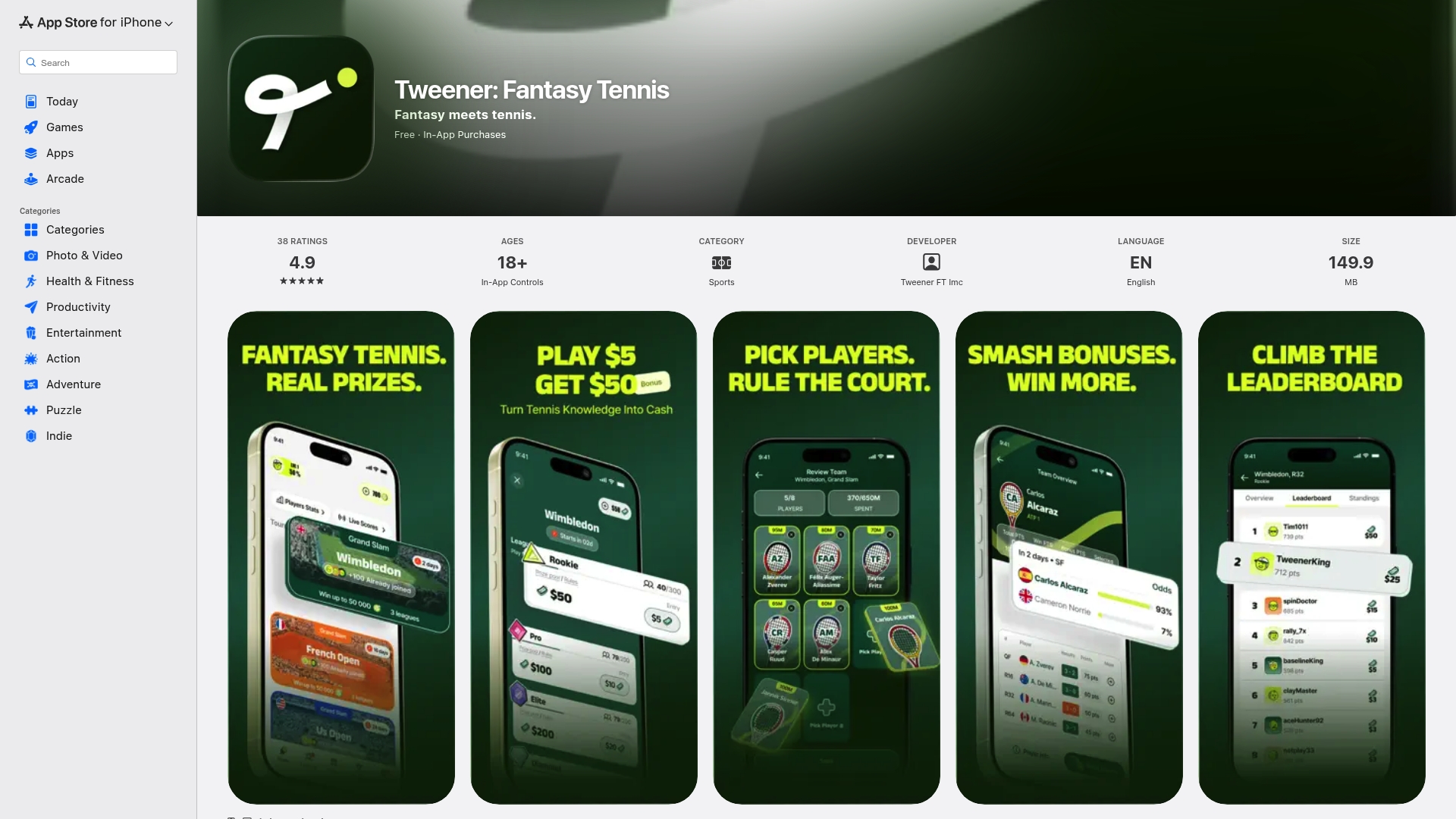
Tweener fantasy tennis gives you a live competitive environment to practice everything you just learned. Join public leagues, compete against real players, and test your rotation decisions during actual ATP and WTA tournaments. You can download the Tweener app in minutes and jump straight into a contest that fits your style. Not sure about the rules? Review the Tweener game rules before your first pick and go in with a clear plan. Your first rotation move starts now.
Frequently asked questions
What does lineup rotation mean in fantasy tennis?
Lineup rotation means changing your roster using limited transfers as tournaments change each week. It's the practice of swapping players in and out to align your team with current form, surfaces, and tournament schedules.
How many transfers are allowed per week in most fantasy tennis apps?
Most platforms allow 2 free transfers per week, accumulating up to 8 if unused. Chips like the Swing Switch can provide additional flexibility during key tournament swings.
What is the Bonus Ball in fantasy lineup rotation?
The Bonus Ball doubles points for one designated starter during the week. Use it on a player with a soft draw and strong recent form to maximize your score ceiling.
Why avoid stacking your lineup with players from one tournament?
Avoiding event concentration protects your score when upsets or weather delays hit a single bracket. Spreading picks across events keeps your total points stable even when one tournament goes sideways.