

A player pool capped at moderate levels for mid-size builds and lower percentages for mass-multi-entry slates helps keep variance manageable. The step-by-step setup follows below.
TL;DR:
- For 50 lineups, use one anchor at 30%, three core players at 20% each, and four or five contrarian picks at 5% to 10%.
- Set minimum and maximum usage for each player, add randomness or run multiple shuffles, and review batches of 10 to 15 lineups for repeated combinations.
- Track paired exposure alongside individual usage, because correlated stacks can make your portfolio rise or fall together when one matchup turns.
- Recheck targets after late news and an hour before lock; cash contests need tighter caps than tournaments because they prioritize a steadier floor.
Table of Contents
- What exposure means and why it matters for MME players
- Exposure caps and targets by number of lineups
- Setting exposure limits step by step
- Stacking, correlation, and balancing upside with protection
- Tracking exposures with a simple register
- Tweener example: exposure workflow for Draft and Pick'em slates
- Common mistakes to avoid when setting exposure limits
- Why discipline beats emotion in exposure decisions
- Build exposure-minded lineups with Tweener
- FAQ
- Sources
What exposure means and why it matters for MME players
Exposure is the percentage of your total lineups that include a given player. Related terms matter too: ownership refers to the field's exposure to a player, joint exposure tracks how often two players appear together, and an anchor is the player or pair you build your portfolio around.
Exposure shapes three things at once:
- Your upside, because a high anchor exposure multiplies your score when that player delivers
- Your downside, because the same concentration multiplies losses when the anchor flops
- Your correlation risk, since joint exposure to players who win or lose together compounds both outcomes
Multi-entry players who build lineups one at a time without a plan tend to drift toward whatever looks good that morning, which produces accidental overexposure to the slate's biggest favorite.
Exposure caps and targets by number of lineups
General DFS rules of thumb scale caps down as entry counts rise, since more lineups mean more room to diversify without sacrificing your best plays entirely.
- 1 to 10 lineups: anchor exposure of 40 to 50% on your top one or two plays, since limited entries demand conviction
- 10 to 50 lineups: core exposure at moderate percentages, spreading risk across multiple strong options instead of one
- 50 to 150 lineups: maximum exposure per player is set at lower percentages, encouraging a wider rotation of mid-tier plays
- 150-plus lineups: single-player caps are lowered further to avoid mechanical overexposure to small projection edges
Cash games call for tighter caps across the board since you're optimizing for a consistent floor rather than a tournament-winning ceiling, while GPP slates can tolerate higher anchor exposure on true difference-makers.
Mid-volume play, such as a few dozen lineups, typically employs moderate caps on your top anchor to balance exposure to your best picks without letting one bad result overly damage the portfolio.
Setting exposure limits step by step
Building exposure-aware lineups starts before you touch an optimizer. Label your player pool first, then let your tools enforce the caps you've already decided on.
- Tier your pool: sort players into anchor (your highest-conviction plays), core (solid plays you'll use often), and contrarian (low-owned pivots for differentiation)
- Set min and max usage: most optimizers let you define a floor and ceiling exposure per player, locking in your target percentage across however many lineups you generate
- Add randomness or run multiple shuffles: a small randomness setting, or several optimizer passes, keeps you from mechanically repeating the same near-identical lineup when projections are nearly tied, which role of projections in optimizer outputs makes clear is a common cause of accidental overexposure
- Batch manually when needed: build a template lineup, then create seeded variations by swapping one or two players at a time, tracking the changes in a simple spreadsheet
Pro Tip: Run your optimizer in smaller batches of 10 to 15 lineups at a time rather than one giant 150-lineup pull, so you can sanity-check exposure numbers before committing to the full set.
For a 50-lineup build, a workable allocation looks like: one anchor at 30%, three core plays at 20% each, and the remaining lineups split across four or five contrarian singletons at 5 to 10% apiece, with game or surface stacks layered on top rather than built separately.

Stacking, correlation, and balancing upside with protection
Exposure decisions don't happen in isolation. Once you know your target percentages, you have to decide how those players combine into stacks, since correlated players move your score up and down together.
- Team or surface stacks: grouping players who benefit from the same conditions (a clay specialist against a weak clay field, for example) raises your ceiling but also raises your joint exposure risk
- Paired-player caps: track how often any two players appear in the same lineup together, not just their individual exposure, since high joint exposure to a losing pair hurts more than two separate moderate exposures
- Mixed stacks: combining one highly correlated pair with otherwise independent players tempers the swing without abandoning upside entirely
This approach keeps a shot at a top prize alive while capping how much of your portfolio collapses if one matchup goes sideways.
Tracking exposures with a simple register
Exposure targets drift the moment you set them, since news, late scratches, and shifting public ownership projections change the picture right up to lock. A simple exposure register, borrowed from how risk-management frameworks structure a risk register to log identified risks and planned responses, gives you a place to track targets against actuals.
Track three numbers per player: your actual exposure percentage, projected public ownership, and joint exposure with any correlated partner. Rebalance before lock if news breaks, after a scratch or retirement, and again when moving between slates with different field sizes.
- Log the target exposure you set during tiering
- Log the actual exposure your optimizer or manual build produced
- Note the trigger and the action you took, such as cutting a cap after an injury report
Pro Tip: Set a reminder to pull your exposure numbers one hour before lock, not the night before, since late news moves ownership fast.
Tweener example: exposure workflow for Draft and Pick'em slates
A tennis-specific version of this framework plays out cleanly across a 30-lineup slate in our Draft Mode or Pick'em Mode.
- Anchor: one top seed at roughly 25 to 30% exposure
- Core: two surface-proven players at 15 to 20% each
- Contrarian: three or four lower-owned picks at 5 to 10% each, chosen for favorable second-round matchups
That allocation mirrors our own anchor rule guidance of 40 to 50% anchor exposure on the smallest entry counts, scaled down here because 30 lineups sits in the mid-size range where diversification pays off.
Common mistakes to avoid when setting exposure limits
The most frequent error is setting caps once and never revisiting them. A player's exposure target made sense on Monday; it may not make sense after Wednesday's withdrawal announcement.
A second common mistake is confusing total exposure with joint exposure.
A third mistake is copying someone else's exposure numbers without adjusting for your own entry count and bankroll. A cap built for 150 lineups does not translate cleanly to a 10-lineup build, and vice versa.
Players also tend to set exposure caps that ignore contest type. A GPP-worthy anchor exposure can wreck a cash lineup's floor, since cash games reward consistency over ceiling.
Finally, many builders skip the optimizer's randomness setting entirely, which produces lineups that look diversified on paper but are functionally near-duplicates of each other, since the tool keeps reaching for the same top-projected players absent any variation.

Why discipline beats emotion in exposure decisions
Exposure caps only work if you follow them after a bad beat. The instinct to double down on a player who just lost is strong, but it's the moment the rule exists for. Pair your exposure plan with bankroll rules like entry sizing and daily caps, since a disciplined exposure strategy means little if one bad slate wipes out your bankroll.
— Nathan
Build exposure-minded lineups with Tweener
Our Draft Mode and Pick'em Mode give you the player pool and matchup data to apply exposure thinking directly to ATP and WTA slates, whether you're testing a 40 to 50% anchor on a single contest or spreading 30 lineups across a Grand Slam draw.
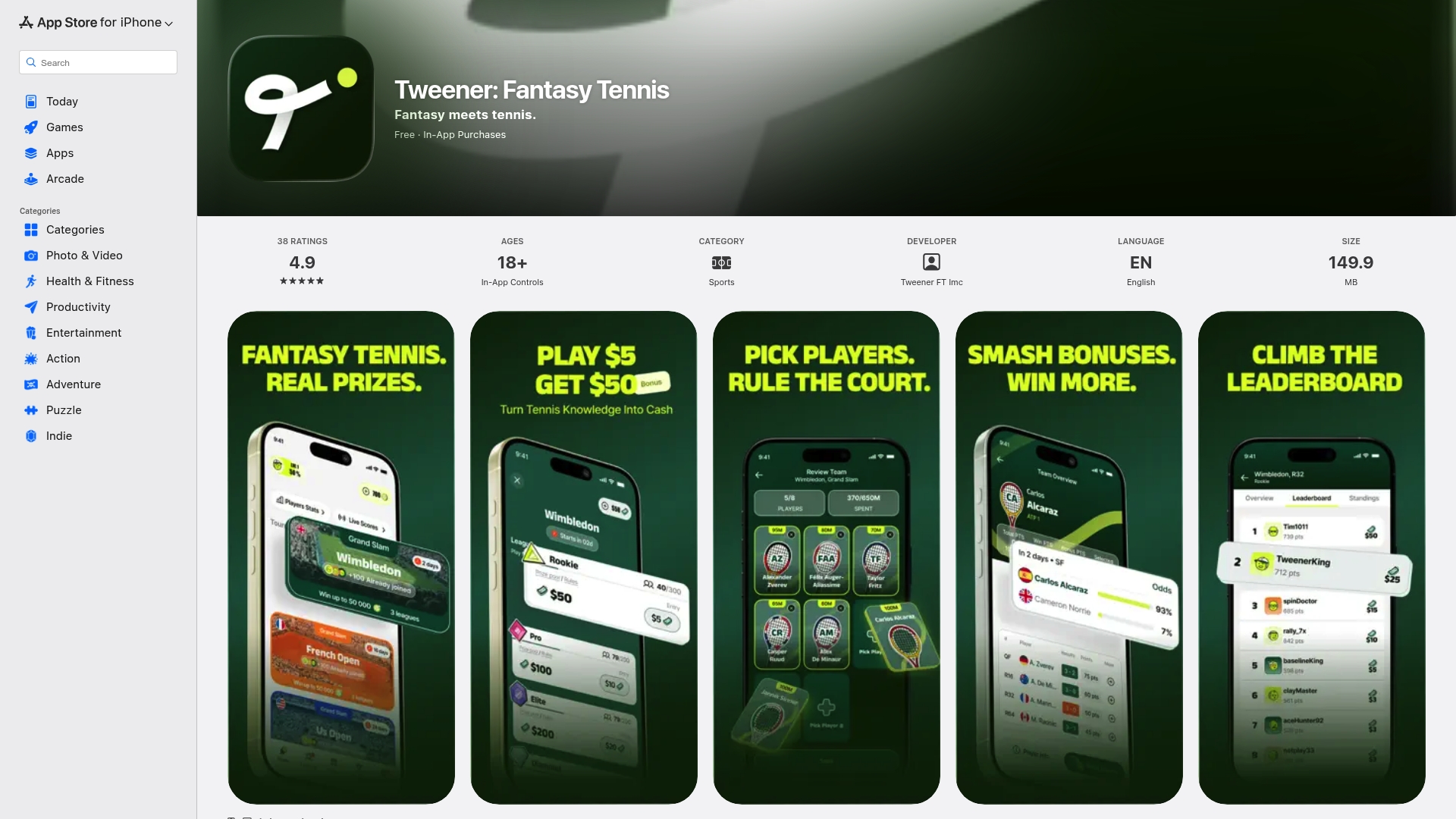
- Draft Mode lets you build full tennis rosters and apply tiered exposure across your entries
- Pick'em Mode offers a faster format for testing anchor and contrarian splits without a full draft
- Private leagues let you compete with up to 9 friends per tournament while running your own exposure plan
Pair your exposure caps with our contest selection guidance on slate sizing, then put the plan to work. Get the Tweener app and build your next tennis slate with a real strategy behind it.
FAQ
What is exposure in DFS?
Exposure is the share of your total lineups that include a specific player, expressed as a percentage.
How many lineups should feature my top player?
The right number depends on your conviction level and whether you're playing cash or GPP contests.
How does stacking affect exposure planning?
Stacking raises your joint exposure to correlated players, so a cap on any single player doesn't capture the full risk when that player is paired with others in the same lineups. Tracking joint exposure alongside individual exposure gives a clearer picture of how much of your portfolio collapses together if one matchup goes wrong.
Does Tweener support exposure-based lineup building?
Our Draft Mode and Pick'em Mode let you apply tiered exposure targets across ATP and WTA slates, including anchor, core, and contrarian splits. Both modes support private leagues with friends as well as public contests where exposure strategy applies the same way.
What optimizer settings help control exposure?
Min and max usage settings let you set a floor and ceiling percentage for each player across your full lineup set, while a small randomness setting or multiple shuffle passes prevents the optimizer from mechanically repeating near-identical lineups. Both settings work together to keep your actual exposure close to your planned targets.