

Draft rewards exclusive team building: you and your rivals each lock in your own roster, and edge comes from valuation and positional depth. Pick'em rewards line evaluation: everyone can pick the same players, and edge comes from spotting which posted stat lines are wrong. If you like roster puzzles and mock drafts, start with draft; if you'd rather grade a handful of props, start with pick'em.
TL;DR:
- Draft formats rely on roster scarcity, with each player being unique to a participant, while pick'em allows identical player selections across entries, focusing on accuracy.
- Draft winning edges come from ownership leverage and positional scarcity, whereas pick'em success depends on identifying mispriced lines before the field.
- Variance in draft is smoother due to diversified rosters, but pick'em variance spikes with the number of legs, making larger slips riskier.
- Small draft leagues favor ceiling-chasing strategies, while large pick'em contests attract sharper players who have already line-checked the best values.
- Practicing both formats helps develop different skills, with draft improving roster construction and pick'em sharpening line reading and projection accuracy.
Table of Contents
- Draft and pick'em compared side by side
- Draft formats explained: snake, auction, and best ball tactics
- Pick'em strategy: lines, slips, and correlation
- Which format fits your strengths right now
- Why Tweener is built for practicing both formats
- Why I train in both formats instead of picking one
- Try Draft Mode and Pick'em Mode on Tweener
- Where to go deeper on formats and math
- Sources
- FAQ
Draft and pick'em compared side by side
The core difference between draft and pick'em sits in how players get selected. In draft formats, every entrant builds an exclusive roster: once you take a player, nobody else in your league can. That scarcity is the whole game. In pick'em contests, selection is shared. Everyone in the pool can pick the same standout player, so your result depends less on who you picked and more on whether your pick was right, and whether the crowd agreed with you. Pick'em contests let many users select the same players, which shifts the competitive lever from access to accuracy and differential ownership.
Payout structures diverge just as sharply. Draft leagues typically run on peer-to-peer pools: entry fees get collected, and the prize pool gets split among the field based on final standings. Pick'em contests often run on fixed-payout cards, where you pick over or under on a set of lines and the payout multiplier is locked in before the contest starts, regardless of how anyone else's slip performs. That structural difference changes how you think about risk. In draft, your opponents' rosters matter. In pick'em, they usually don't, unless you're in a peer-to-peer pick'em pool rather than a house-payout one.
Where the actual edge comes from also splits along these lines:
- Draft edge: comes from ownership leverage, positional scarcity reads, and building a roster that's stronger on paper than what your league mates could assemble with the same pool of players.
- Pick'em edge: comes from spotting a mispriced line before the field does, then deciding whether to fade or follow the popular pick.
- Draft variance: tends to be smoother across a full tournament because your roster is diversified across multiple players and matches.
- Pick'em variance: spikes with slip size. A six-leg pick'em card lives or dies on one bad leg, while a two-leg card is far more forgiving.
Contest size changes the calculus in both formats. A head-to-head draft league with two entrants is close to a coin flip if your rosters are similar in quality, while a 100-person draft league rewards a ceiling-chasing build because you need to separate from a crowded middle. Pick'em contests scale differently: a small private pick'em pool with friends behaves like a bet against a spread, while pick'em mega contests can carry very large prize pools that attract sharper, more experienced players who have already done the line shopping for you. That's worth knowing before you drop into a big public pick'em slate expecting soft competition. Draft contests, in some configurations, offer a better prize-to-entry ratio for skilled players willing to grind smaller fields.
Draft formats explained: snake, auction, and best ball tactics
Draft contests aren't one format, they're three, and each changes how you value players. Snake drafts assign picks in a rotating order (1 through 12, then 12 back down to 1), so your roster is built through alternating access rather than a budget. Auction drafts hand everyone the same fake salary cap and let you bid on any player at any time, which means star players cost real capital and your patience becomes a resource. Best ball formats remove in-season management entirely: you draft once, and your lineup sets itself automatically each week based on best-performing players, which shifts almost all the skill into the draft itself.
Each variant rewards a different kind of preparation:
- Build tiers, not rankings. A flat ranked list tells you who's better, but tiers tell you when a drop-off is coming, which is the information that actually drives decisions in the moment.
- Know when to reach and when to wait. Reaching for a player a tier above your current pick makes sense when the tier below is deep; waiting makes sense when the position is scarce and about to dry up.
- Watch positional scarcity signals. If a position empties out faster than expected in the first two rounds, adjust your remaining plan rather than sticking to a pre-set script.
- Run mock drafts before it counts. Mocks expose how a format's average draft position behaves and where your rankings disagree with the field's.
- Plan around scheduling gaps. In tennis draft leagues that run across a full swing or season, staggered player commitments and rest weeks matter the same way bye weeks do in other sports, so build rosters with coverage rather than clustering all your depth at once.
In-draft reads separate good drafters from great ones. If an opponent skips an obvious value pick, they're likely locked into a positional need or a personal bias, and you can often predict their next two picks from that single tell. Pivoting off those reads, rather than following your pre-draft plan rigidly, is where experienced drafters consistently gain ground on the field.
Pro Tip: Track which tier your opponents draft from most often; if a rival keeps reaching one tier early, you can often let a tier-mate of theirs fall a round later and still get them.
Draft formats reward tactical skills that don't fully overlap with pick'em: draft position strategy, positional scarcity awareness, and mock drafting are the muscles you build here, and they transfer only partly to shared-selection formats. For tennis specifically, that means thinking in terms of surface specialists, draw strength, and round-by-round point potential rather than treating every player as a single fixed value. A deeper walkthrough of how to translate this into an actual tennis roster is worth reading if you're building your first lineup.
Pick'em strategy: lines, slips, and correlation
Pick'em strips away the roster puzzle and replaces it with a single question repeated several times: is this line right? That makes the format faster to learn but not necessarily easier to beat. Pick'em removes the salary-cap puzzle and focuses your decision entirely on whether the posted stat line for a player is too high or too low, which compresses the skill into projection accuracy rather than roster construction.
The payout structure you're playing changes how aggressively you should build slips. Posted-payout cards lock in a fixed multiplier per correct pick, so your opponents' choices don't affect your payout at all, only your own accuracy does. Peer-to-peer pick'em pools work more like a mini draft league: your slip competes directly against everyone else's picks, so differential thinking (picking against the popular side) starts to matter again. Knowing which one you're in before you build your slip changes your entire approach.
A few habits separate profitable pick'em players from the field:
- Shop lines across products when you can. The same player prop can be priced slightly differently between platforms, and that gap is free equity if you catch it.
- Treat ownership like ammunition. In peer-to-peer pick'em, fading an obvious popular pick is often more valuable than nailing another chalk pick everyone already has.
- Respect correlation inside a slate. Two props from the same match tend to move together, so stacking them doesn't diversify your risk the way two unrelated picks do.
- Weigh flex versus power multipliers carefully. Flex payouts protect you if one leg misses; power or straight multipliers pay more but need every leg to hit.
Correlation deserves extra attention because it's the most common mistake beginners make. Stacking two props from the same match, like a set-count total and a specific player's game total, feels like a strong combined read, but if the match plays out differently than expected, both legs miss together instead of independently. Correlated stacking makes hitting every leg harder than the individual probabilities suggest, which is exactly why break-even math for multi-leg slips is tougher than casual bettors assume.
A three-pick flex slip needs a relatively high accuracy per leg to break even, while a six-pick power slip requires an even higher per-leg accuracy, since a single miss usually wipes the entire card. Break-even thresholds rise sharply with slip size, which is the single most important number to internalize before building bigger cards for bigger multipliers.
Pick'em can look easier to newcomers because there's no salary cap and no roster construction to learn, but that simplicity is deceptive. The structural learning curve is lower while the accuracy bar needed to actually profit is higher, since fixed multipliers don't forgive mistakes the way a diversified draft roster can.
Which format fits your strengths right now

Before picking a lane, run through a short checklist. How much time can you commit per contest: an hour of draft prep and monitoring, or five minutes to grade a slip? Do you prefer building something over time or making a fast, focused call? How much variance can you tolerate in a single session? And how are you managing bankroll: spreading entries across many draft contests, or sizing individual pick'em slips?
Three player profiles tend to show up consistently:
- The roster builder. You enjoy mocks, tiers, and long-term planning. Start with snake draft leagues, practice tiering a player pool weekly, and track how often your early picks outperform their draft position.
- The line reader. You'd rather evaluate one prop deeply than build a whole team. Start with small pick'em slips, track your per-leg accuracy honestly, and only scale up once you're consistently clearing your break-even threshold.
- The hybrid grinder. You like both and want maximum exposure to skill-based formats. Split your practice time and track which format is actually paying off before committing real bankroll to either.
If you're not sure yet, a rough 70/30 split between your stronger format and the weaker one lets you build real reps in both without abandoning the one where you already have an edge. Pick'em and draft cultivate different, complementary skill sets rather than one replacing the other. Practicing both sharpens each: roster-construction habits improve the projection models you lean on in pick'em, and the projection discipline pick'em demands makes your draft valuations more honest.
Why Tweener is built for practicing both formats
Nathan writes about fantasy tennis strategy and data for a fantasy tennis platform where draft and pick'em formats exist side by side on the same tennis tournaments rather than as separate products bolted together.
The platform runs Draft Mode as an exclusive-roster format built around ATP and WTA tournaments, where surface, head-to-head history, and current form drive who's worth an early pick versus a late-round value grab. Pick'em Mode strips that down to focused calls on individual matches, which is where line-reading skills from the strategies above translate directly.
- Draft Mode private leagues let groups of friends build exclusive tennis rosters for a single Grand Slam, so scarcity and positional reads matter from pick one.
- Pick'em Mode rewards players who study surface splits and head-to-head data closely enough to spot a mispriced call before the field does.
- Free contests use virtual coins redeemable for rewards, so players can practice both formats before ever entering a cash contest.
For a tennis-specific walkthrough of building a draft roster, the tennis drafting guide breaks down how to weight surface specialists. For pick'em, the value-over-star-power breakdown covers how to spot lines the market has overrated.
Why I train in both formats instead of picking one
Draft and pick'em test the same underlying skill, projecting player performance accurately, but they test it from opposite directions. Draft forces you to rank players relative to each other across an entire tournament. Pick'em forces you to grade a single line in isolation and decide if the market got it wrong.
I've found the crossover effect real rather than theoretical. Getting sharper at tiering players for a draft roster makes you faster at spotting when a pick'em line is off by a tier's worth of value. Getting disciplined about per-leg accuracy in pick'em makes you less likely to overvalue a draft pick based on name recognition alone.
Start small in whichever format feels less natural, track your results honestly for a few contests, and let the data tell you where your edge actually lives.
— Nathan
Try Draft Mode and Pick'em Mode on Tweener
Tennis has never had a dedicated fantasy platform the way other sports have their major DFS operators, and that gap is what some platforms aim to close. You don't have to choose one format and abandon the other: some platforms run Draft Mode and Pick'em Mode on the same ATP and WTA tournaments, so you can put strategies into practice on real matches instead of a hypothetical slate.
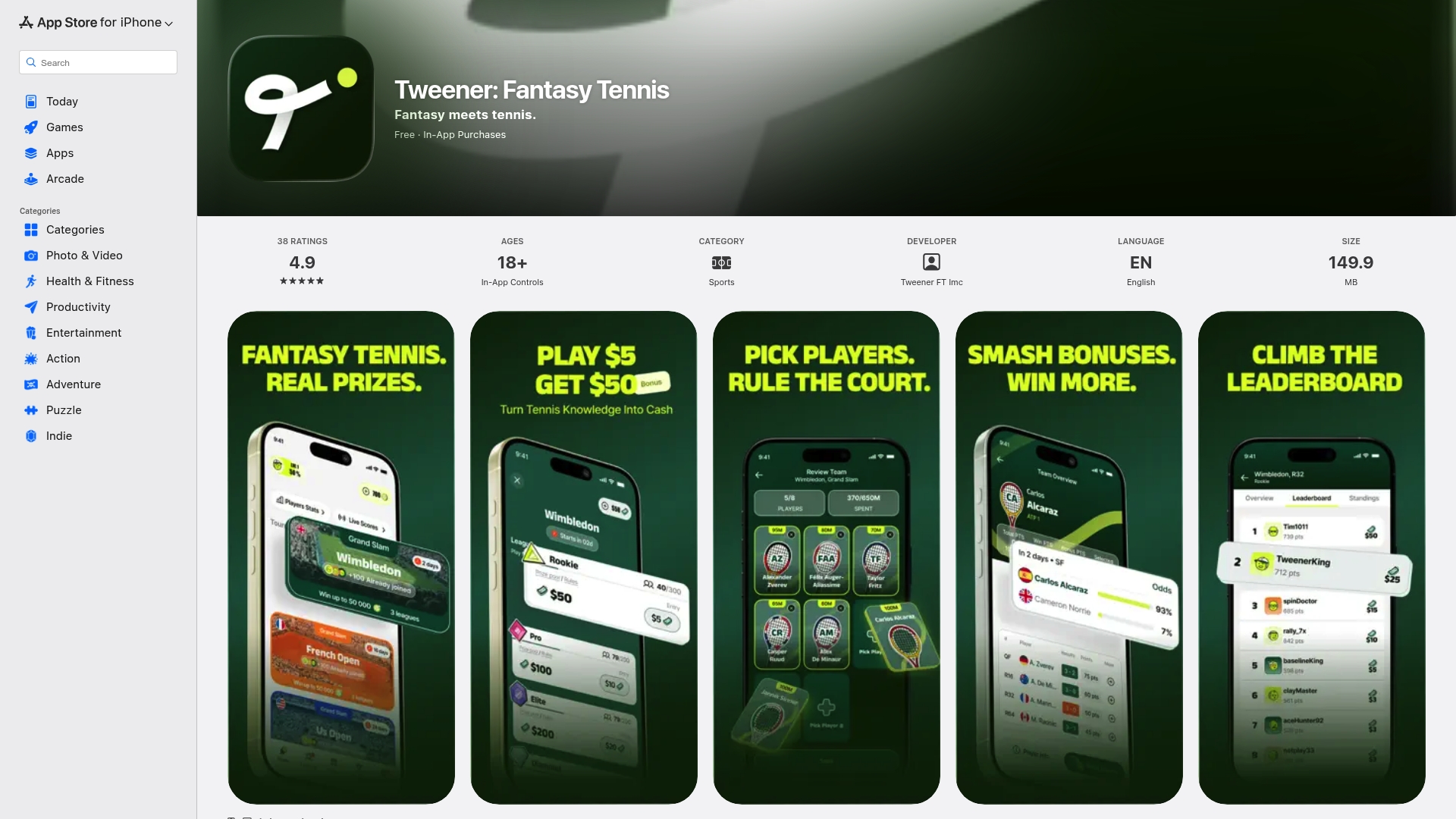
- Draft Mode lets you build an exclusive tennis roster and compete in private leagues with groups of friends per Grand Slam, using surface and head-to-head data to find value before your rivals do.
- Pick'em Mode gives you focused, match-by-match calls where line-reading and differential picks matter more than roster construction.
- Both modes run on free virtual-coin contests and real-money cash contests where legally permitted, so players can build skill before risking anything.
If you'd rather understand entry fees and payout structures before committing bankroll, the entry fee breakdown covers how contest fees affect your overall strategy. When you're ready to test either format on a live tournament, get the Tweener app and start with a free league.
Where to go deeper on formats and math
For the mechanics behind payout models and break-even math referenced above, the format comparison from Pikumil and expected value breakdown from Odds Reference both walk through the numbers in more detail. For a structural side-by-side of traditional DFS and pick'em, Betting Scanner's format guide is a solid follow-up read. For tennis-specific contest types, Tweener's own tournament format overview and contest format comparison build on the same ideas.
Sources
- Draft Fantasy vs Pick-Em Contests: Which Format Rewards Your...
- DFS vs Pick'em DFS: Which Format Has Better Expected Value?
- Traditional DFS vs Pick’em: What’s the Difference? | DFS Guides
FAQ
What's the main difference between draft and pick'em?
Draft gives each entrant an exclusive roster, so once a player is taken, nobody else can pick them. Pick'em allows everyone in a contest to select the same players, which shifts the competition toward line accuracy and differential picks rather than exclusive access.
How does pick'em scoring and payout typically work?
Many pick'em contests use fixed-payout cards where your multiplier is locked in based on how many legs you hit, independent of other entrants. Peer-to-peer pick'em pools work differently, paying out based on how your slip ranks against the field, similar to a small draft league.
Is pick'em easier to win than draft leagues?
Pick'em has a lower structural learning curve because it removes salary caps and roster building, but that doesn't make it easier to profit from. Fixed multipliers demand high per-leg accuracy, and multi-leg slips carry break-even thresholds that climb quickly as you add picks.
Should beginners start with draft or pick'em?
Beginners who enjoy planning and roster puzzles tend to do better starting with draft formats, while those who prefer quick, focused decisions often fit pick'em better. Trying both in free contests before committing cash is the most reliable way to find out which rewards your instincts.
Can I practice both formats for tennis specifically?
Yes, Tweener runs both Draft Mode and Pick'em Mode on real ATP and WTA tournaments, letting you build exclusive rosters or make focused match picks using surface and head-to-head data. Free contests using virtual coins let you test both formats before entering any cash contest.