

TL;DR:
- Successful fantasy tennis lineups rely on role-based pick lists focused on matchups, surface, recent form, and pricing. Using anchors, attackers, surface specialists, and mispriced value picks allows for strategic lineup construction and better predictability. Tweener's tools help automate this process by providing surface filters, ownership projections, and real-time alerts.
The sharpest edge in fantasy tennis comes from four role-based pick lists, not gut instinct or raw ATP rankings. Build every lineup around anchors (high-floor servers), attackers (high-ceiling, low-ownership), surface specialists, and mispriced value picks, then run each candidate through a matchup + surface + recent form + pricing filter before you lock. Tweener analysts confirm that relying on intuition and general rankings is the most common error among fantasy managers. Here is what to lock right now:
- Anchor slot: Top-seeded server on a surface matching their last 12 months of strong hold% data
- Attacker slot: Big server at low ownership, facing a returner on a fast court
- Surface specialist: Mid-ranked clay grinder with high break conversion, drawing a serve-heavy opponent on clay
- Value pick: Match-sharp qualifier who played three rounds in qualifying, priced below their projected output
Statistic: Winning just 51% of total points in a match correlates to roughly an 85% chance of winning that match — which is why underlying efficiency stats drive these lists, not highlight totals.
For cash games, load two anchors and one specialist. For large tournament slates, tilt toward one attacker and one value pick to separate from the field. Open Tweener, apply the surface filter, and lock your lineup at least 10 minutes before the first match.
Table of Contents
- How are these essential pick lists actually built?
- What do the essential pick lists look like by role?
- How do you adjust lists by tournament type and draw?
- How do you build tournament lineups with budget splits?
- When should you lock picks and how do you handle late changes?
- Key Takeaways
- Why the portfolio mindset changes everything in fantasy tennis
- Tweener puts these lists to work for you
- Useful sources
How are these essential pick lists actually built?
The one-line method: matchup × surface × recent form × pricing = projected fantasy points. Every pick on these lists passes through that sequence before it earns a slot.
The inputs, in order of weight:
- Surface-specific Elo rating (adjusted for the current surface, not career aggregate)
- Service hold % and break conversion rate from the last 12 months on that surface, not career averages
- Head-to-head filtered by surface — a 6-2 H2H on clay means nothing on grass
- Recent match length and fatigue signals — back-to-back events, long three-setters, travel days
- Draw difficulty — quarter bracket, likely third-round opponent, bye or qualifier path
- Ownership projections and salary pricing — where the market is wrong
The process flows like this:
- Set a baseline win probability using surface-adjusted Elo
- Apply a surface multiplier based on style interaction (big server on grass, returner on clay)
- Layer in high-leverage metrics: hold%, break conversion, return games won
- Adjust for ownership and pricing to find mispriced spots
- Assign a confidence tier: low, medium, or high
A pick moves from low to high confidence when the model output, surface fit, and draw path all agree. Advanced ensemble models reach 70–85% predictive accuracy when combining multiple features — model agreement is the signal, not any single stat.
Pro Tip: Use 12-month surface splits for structural tendencies and the last 5–10 matches for recent form. Anything shorter than five matches is noise; anything longer than 12 months on surface misses how a player's game has evolved.
What do the essential pick lists look like by role?
These lists are operational. For a standard slate, target two to three anchors, two attackers, one to two surface specialists, and one to two value picks depending on contest size and scoring format.

| Role | Expected ceiling | Expected floor | Surface fit | Mispricing likelihood | Risk/volatility |
|---|---|---|---|---|---|
| Anchor | Medium-high | High | Any (match surface to hold%) | Low | Low |
| Attacker | High | Low | Fast courts (grass, hard) | Medium | High |
| Surface specialist | Medium | Medium-high | Specific (clay or grass) | Medium | Low-medium |
| Mispriced/value | High | Low | Varies | High | High |
Anchor: A player whose service hold% and round-progression history make their point floor predictable. Think a big lefty server on grass who holds 85%+ and is priced as a mid-tier option. Selection criteria: hold% above 75% on surface, clean draw path, no fatigue flags. Surface-specific performance is the single most important refinement for accurate fantasy projections.
Attacker: Low-ownership, high-ceiling pick for tournament formats. A serve-dominant player facing a weak returner on hard courts, priced below their upside. Floor is volatile — they can flame out in a tight match — but the ceiling separates your lineup in GPP contests.
Surface specialist: A baseline clay grinder with a high break conversion rate drawing a serve-heavy opponent who struggles on slow courts. Career ranking may be modest; the 12-month clay stats tell the real story.
Mispriced/value pick: Qualifiers who played multiple qualifying rounds arrive match-sharp and are routinely underpriced. Models often miss this edge early in a tournament. Load one in GPP lineups when ownership is projected below 10%.
Ownership strategy: In cash games, stack anchors and avoid low-floor attackers. In large-field GPP slates, one or two contrarian value picks at under 10% ownership can be the difference between cashing and winning outright.
How do you adjust lists by tournament type and draw?
The one-line rule: tilt to floor for cash games and short single-day slates; tilt to ceiling and differentiation for large GPP or multi-day tournament formats.
Grand Slams vs. Masters 1000 vs. 250/500:
- Grand Slams (men's best-of-five): Fatigue compounds fast. Anchors who hold serve efficiently and avoid five-setters accumulate round progression bonuses that often outweigh single-match highlight stats. Deeper draws mean more qualifier upside early.
- Masters 1000: Byes for top seeds reduce early-round match sharpness. A mid-seed who played the week before may be sharper than a top seed coming off a bye.
- 250/500 events: Smaller draws, faster paths to the final. Attackers and surface specialists get more value here because the draw thins quickly and ceiling picks reach later rounds more often.
Slate format checklist:
- Confirm whether the slate is single-day or multi-day — multi-day slates reward round-bonus accumulation over single-match upside
- Check the scoring system for set bonuses and match-win weight before finalizing role mix
- On single-day slates, prioritize anchors and one surface specialist; save attacker slots for multi-day formats
- Identify the softest quarter of the draw — a top seed in a brutal quarter may be worse fantasy value than a steadier mid-seed on a clean path
- Flag any qualifiers with three or more qualifying wins; they arrive match-sharp and underpriced
Pro Tip: Byes hurt match sharpness. A top seed returning from a two-week break who draws a qualifier in round one is not automatically a safe anchor — check their last competitive match date.
How do you build tournament lineups with budget splits?
Three archetypes cover every contest type. Pick the one that matches your slate format before you touch the salary cap.
1. Conservative (cash game): Two premium anchors, one surface specialist, one mid-value pick, one attacker maximum. Reserve 55–60% of your cap for the two anchors. Ownership target: stay near the field average on anchors, avoid sub-5% picks entirely.
2. Balanced: Two anchors, one attacker, one surface specialist, one value pick. Split the cap roughly 45% anchors, 30% attacker, 25% specialist and value. This archetype works for mid-size GPP contests where you need some differentiation without going full contrarian.
3. Contrarian (large GPP): One premium anchor, two attackers, one surface specialist, one value pick under 10% ownership. Cap split: 35% anchor, 40% attackers, 25% specialist and value. High variance — built to win a tournament, not to cash consistently.
| Archetype | Anchors | Attackers | Value/Specialist | Cap % for anchors |
|---|---|---|---|---|
| Conservative | 2 | 1 | 2 | 55–60% |
| Balanced | 2 | 1 | 2 | 45% |
| Contrarian | 1 | 2 | 2 | 35% |
Pro Tip: On slates that reward game volume (sets played, games won), correlate your attacker pick with a long-match candidate — a player whose style tends toward extended baseline rallies scores more points per match than a quick-serve-and-volley specialist even when both win.
For deeper lineup templates, the Tweener lineup-building guide walks through role assignments with worked examples.
When should you lock picks and how do you handle late changes?
Lock anchors 10–30 minutes before their scheduled match time. Hold one roster slot open until 5–10 minutes before lock if your contest rules allow substitutions — that window is where the best late value appears.
48-hour window: Pull draw brackets, identify soft paths, flag any player with a match the day before (fatigue risk).
24-hour window: Check ATP/WTA injury reports, press conference notes, and weather forecasts for outdoor courts. Adjust ownership projections.
6-hour window: Monitor withdrawal announcements and lucky-loser replacements. A late withdrawal from a top seed reshuffles the entire draw value.
1-hour window: Verify opponent status, check for medical timeout history in recent matches, and watch for ownership swings on platforms that show live ownership data.
Pre-lock alert checklist:
- Opponent withdrawal confirmed or denied
- No medical timeout flags in the player's last two matches
- Back-to-back event or travel confirmed/cleared
- Ownership projection still matches your differentiation target
- Scoring format verified (set bonuses, match-win multiplier)
Fatigue from recent long matches and back-to-back events meaningfully reduces expected fantasy output — a player who played a three-hour match 18 hours ago is not the same anchor as one who had two days off. Adjust projections down before you lock, not after. The pre-lock checklist on Tweener's blog covers this sequence in detail.
Key Takeaways
Role-based pick lists built on matchup, surface, and recent form give you the most repeatable edge in fantasy tennis — anchors provide the floor, attackers provide the ceiling, and value picks separate winning lineups in large-field contests.
| Point | Details |
|---|---|
| Use role-based lists | Assign every roster slot a role: anchor, attacker, surface specialist, or value pick before selecting names. |
| Surface splits over career averages | Pull 12-month surface-specific stats; career averages hide how a player's game has shifted. |
| 51% of points = 85% win probability | Focus on hold% and break conversion, not ace totals, because efficiency stats predict outcomes. |
| Tilt by contest type | Load anchors for cash games; add attackers and value picks for GPP tournament slates. |
| Tweener for implementation | Tweener's surface filters, ownership projections, and live alerts apply these lists directly to your lineup. |
Why the portfolio mindset changes everything in fantasy tennis
Most fantasy tennis players treat their lineup like a wish list. They pick the players they want to watch, weight toward the biggest names, and wonder why they finish mid-pack. The portfolio framing fixes that.
When you assign concrete roles before you pick names, you stop chasing and start managing exposure. An anchor is not "my favorite player" — it is the slot that protects your floor. An attacker is not a gamble — it is a calculated allocation of ceiling risk. The difference sounds semantic; the results are not.
Surface interaction is where most players leave the most points on the table; understanding footwear and movement differences is key, see Padel Shoes vs Tennis Shoes: What Padel Players Need. A big server on grass and the same player on clay are two different fantasy assets, sometimes by a margin that makes the clay version unrosterable. The interaction of surface and playing style often determines fantasy value more than raw ranking. Ignoring that is the equivalent of drafting a running back without checking if they play on turf or grass.
The methodology in this article — Elo baseline, surface multiplier, high-leverage metrics, ownership adjustment — is not a black box. It is a repeatable process you can run before every slate. The players who win consistently in fantasy tennis are not the ones with the best tennis knowledge. They are the ones with the most disciplined process.
Tweener puts these lists to work for you
Tweener is the only dedicated fantasy tennis app built for analytical players who want to compete on skill, not luck. Where most sports apps leave tennis fans without a real DFS option, Tweener fills that gap with surface filters, ownership projections, and live scratch alerts that map directly onto the methodology above.
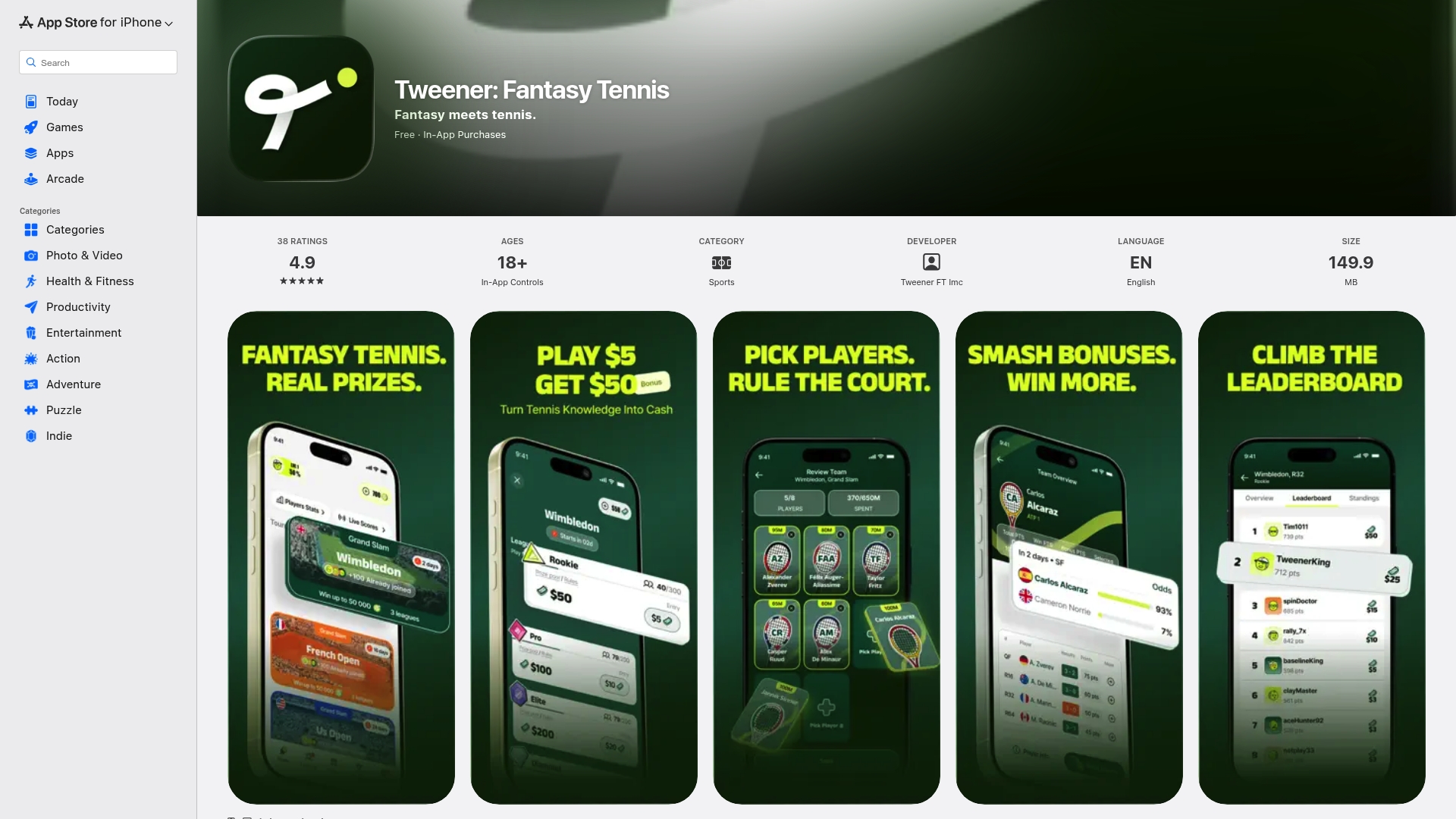
Here is the workflow: open the Tweener app, apply the surface filter for the current tournament, pull up the ownership projections to identify low-exposure value picks, select your anchors and attackers from the role-based lists, reserve one slot for late news, then lock your lineup. Private leagues let you run this against up to nine friends during Grand Slams — or enter public cash contests and GPP tournaments for real-money payouts where permitted.
Download Tweener and apply today's pick lists before the next slate locks.
Useful sources
- Fantasy tennis tips: build a winning lineup in 2026 — Tweener's applied guide covering role assignments, 12-month surface splits, and the pre-lock workflow checklist.
- Why track player performance in fantasy tennis (2026) — explains the 51% points / 85% win-probability relationship and why hold% and break conversion outperform highlight stats.
- Tennis match prediction: 7 strategies for fantasy wins — covers ensemble model accuracy ranges and the qualifier match-sharpness edge.
- Matchup Analysis in Fantasy Tennis: Your 2026 Edge — deep dive on matchup-adjusted projections and surface multipliers.
- Essential Tennis Fan Checklists for Fantasy Players — pre-lock checklist covering injury flags, ownership swings, and withdrawal monitoring.