

Why matchup analysis is the core of fantasy tennis strategy
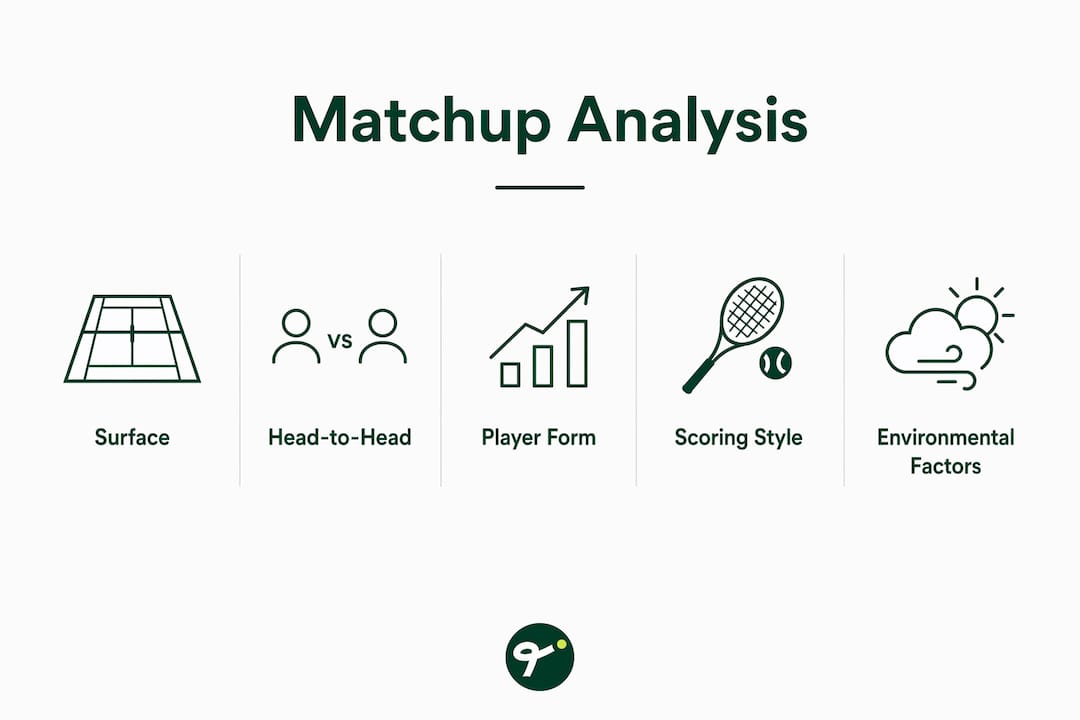
Matchup analysis in fantasy tennis means evaluating the specific variables that determine how a match will actually play out: court surface, head-to-head history on that surface, player form, fitness, and environmental conditions. It goes well beyond picking whoever is ranked highest or whoever the betting markets favor.
The role of matchup analysis in fantasy is straightforward. Rankings tell you who has been good. Matchup analysis tells you who will score points this week, on this surface, against this opponent. Those are very different questions.
Here is what a thorough matchup evaluation covers:
- Court surface and its effect on serve hold rates, break frequency, and rally length
- Head-to-head records filtered by surface, not just aggregate wins and losses
- Recent form and fitness, including match load and any physical concerns
- Match environment, such as tournament format, draw difficulty, and altitude
- Scoring format alignment, meaning which player's style generates the most fantasy points under the specific contest rules
Get these right consistently, and you stop guessing. You start building lineups with a real structural edge.
How court surface shapes every matchup you analyze
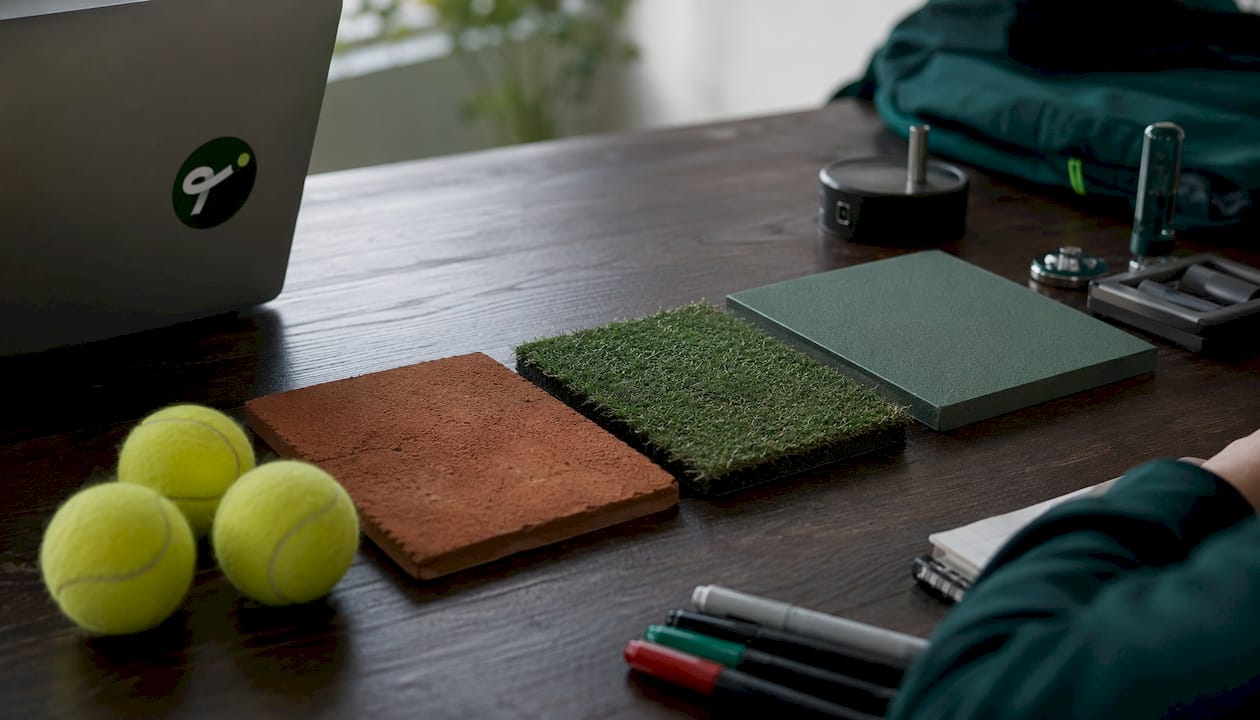
Surface is the single most important variable in tennis matchup analysis. It does not just influence outcomes; it rewrites the entire probability structure of a match.
ATP serve hold rates tell the story clearly. On hard courts, elite players hold serve 83–86% of the time. On grass, that climbs to 88–92% for the strongest servers. On clay, it drops to 75–80%. Those gaps are enormous for fantasy purposes.
On grass, a single break of serve is often decisive. Hold rates are so high that once a player goes a break ahead, the statistical probability of holding out to the set increases sharply. On clay, breaks cluster: a player who gets broken once in a set is statistically more likely to get broken again in the same set, because the physical toll of clay rallies compounds within a set.
What this means for your lineup:
- Grass: Target ace-heavy servers and players with dominant first-serve percentages. Matches tend to be shorter, with fewer total games, so straight-set wins carry outsized fantasy value.
- Clay: Look for baseliners who can sustain long rallies. Break clusters create more scoring volatility, which can work for or against you depending on your contest format.
- Hard courts: The most balanced surface. Serve hold rates sit in the middle, giving returners more realistic break opportunities than on grass.
- Altitude: High-altitude venues like Gstaad require players to adjust string tension upward to control ball flight. Topspin-heavy players with aggressive baseline games tend to adapt better than flat hitters who rely on pace alone.
Pro Tip: Before locking any lineup, check the specific tournament's altitude and recent weather forecasts. A rainy, slow hard court plays closer to clay than to its normal surface speed, which shifts break probabilities and rally lengths.
Why raw head-to-head records mislead fantasy players
A head-to-head record without surface context is close to useless for fantasy decisions. Carlos Alcaraz leads Daniil Medvedev 6–3 overall, but that aggregate number hides the real story. Their six hard-court meetings show Alcaraz ahead 4–2. On grass, Alcaraz leads 2–1. Medvedev's clay record sits at 50–39 (56.18%) for his career, compared to Alcaraz's 108–20 (84.38%) on the same surface. If you only looked at the overall H2H, you would miss how lopsided the clay matchup actually is.
The same principle applies across the tour. Shevchenko leads Tsitsipas 1–0 on indoor hard courts, having beaten him in straight sets at the 2025 United Cup. That single result means almost nothing for predicting their clay matchup at Gstaad, where Tsitsipas's heavy topspin and aggressive baseline game are structural advantages.
Avoid these common H2H mistakes:
- Using aggregate records across surfaces without filtering for the current playing surface
- Overweighting old results from three or more years ago, when player styles and rankings were materially different
- Ignoring surface-specific win rates in favor of raw match counts
- Treating indoor hard and outdoor hard as equivalent, when ball behavior and conditions differ meaningfully
The most predictive H2H data is recent and surface-specific. Two meetings on clay in the last 18 months tell you far more than a 10-match aggregate spanning multiple surfaces and years.
Balancing volatility and safety in your fantasy lineup
The instinct to fill a lineup with the safest, highest-ranked favorites is exactly what keeps most fantasy players in the middle of the pack. Tennis DFS analyst Kevin Roberts puts it directly: prioritize lineup ceiling and embrace volatility. Tournament formats reward the lineup that scores the most, not the one that avoids risk most carefully.
That does not mean ignoring favorites. It means pairing them with high-upside underdogs who have genuine surface advantages in their specific matchup.
Practical strategies for building winning lineups with this approach:
- Identify surface specialists at lower ownership. A clay specialist facing a hard-court player on red dirt is often underpriced relative to their actual win probability.
- Target competitive match environments. Three-set matches generate more total games, more aces, more break points, and higher fantasy totals than quick straight-set wins by heavy favorites.
- Exploit ownership inefficiencies. Most casual players follow rankings, not matchup quality. A lower-owned player with a dominant surface advantage gives your lineup separation from the field.
- Align picks with your scoring format. If your contest rewards aces heavily, a big grass-court server becomes more valuable than their ranking suggests. If break points score well, target returners on clay.
Pro Tip: In large tournaments, one or two contrarian picks with genuine matchup backing can separate your lineup from hundreds of others who all picked the same chalk. The goal is not to be different for its own sake, but to find spots where the matchup data supports a pick the field is ignoring.
Using point-by-point data and pre-match theses to read match flow
Final scores hide most of what actually happened in a tennis match. Two players can both win 6–4, 6–4, but one may have held serve comfortably throughout while the other saved repeated break points across every service game. Point-by-point data reveals which player is actually controlling service games, where momentum shifted, and how pressure points were handled.
For fantasy purposes, the most useful granular metrics are:
- First-serve percentage and first-serve points won, which indicate whether a player is controlling their service games or grinding through them
- Return points won and break point conversion, which show how much pressure a player generates on the other side of the net
- Pressure-point performance, including break point save rate and tiebreak record, which often predict outcomes in tight matches better than overall win rates
Building a pre-match thesis before you finalize your lineup sharpens all of this. Ask specifically: will this match be serve-dominated or return-dominated? A grass-court match between two elite servers like Jannik Sinner and Alexander Zverev at Wimbledon, where Sinner posted 85.27% first-serve points won across six matches, is almost certainly going to be serve-dominated. That thesis tells you to expect fewer breaks, more tiebreaks, and that the player who wins the first set has a strong structural advantage.
Steps to apply this in practice:
- Pull first-serve percentage and points-won data for both players on the specific surface
- Check recent return stats to assess whether either player can realistically threaten serve
- Form a hypothesis on match length and break frequency
- Select players whose fantasy scoring profile fits that hypothesis
Expert insights from Tweener's matchup analysis approach
Tweener's analytical content, including contributions from Nathan's blog, consistently emphasizes that player fitness and recent form can shift projected fantasy scoring more than any historical data point. A player coming off a five-set match two days earlier carries fatigue that does not show up in their career surface record.
Case studies from matchup-driven fantasy picks illustrate this well. At Gstaad, Tsitsipas's aggressive baseline game and heavy topspin are structural assets on slow clay at altitude, but his one-handed backhand is a documented vulnerability under sustained pressure. A fantasy player who identified Rinderknech's 11.39 aces per match and aggressive net approach as a stylistic counter to Tsitsipas's baseline construction had a genuine analytical edge, regardless of the betting odds.
Common pitfalls that cost fantasy players points:
- Recency bias: Overweighting a player's last two results without checking whether the surface or opponent quality was representative
- Ignoring physical load: A player deep in a tournament on clay, having played multiple long matches, faces compounding fatigue that affects serve hold rates and break recovery
- Treating weather as background noise: Wind and humidity directly affect ball flight and spin effectiveness, particularly for topspin-heavy baseliners
- Chasing ownership: Picking a player because they are popular in the field, rather than because the matchup data supports them
- Misreading scoring format: Selecting a player whose style generates wins but not fantasy points under the specific contest rules
The advanced metrics that separate elite fantasy players from the field include pressure-point win rates, serve percentage broken down by opponent return style, and net-point conversion. These are not exotic numbers. They are available in ATP match data and on platforms built for tennis analytics. The players who use them consistently build lineups that the field cannot replicate by following rankings alone.
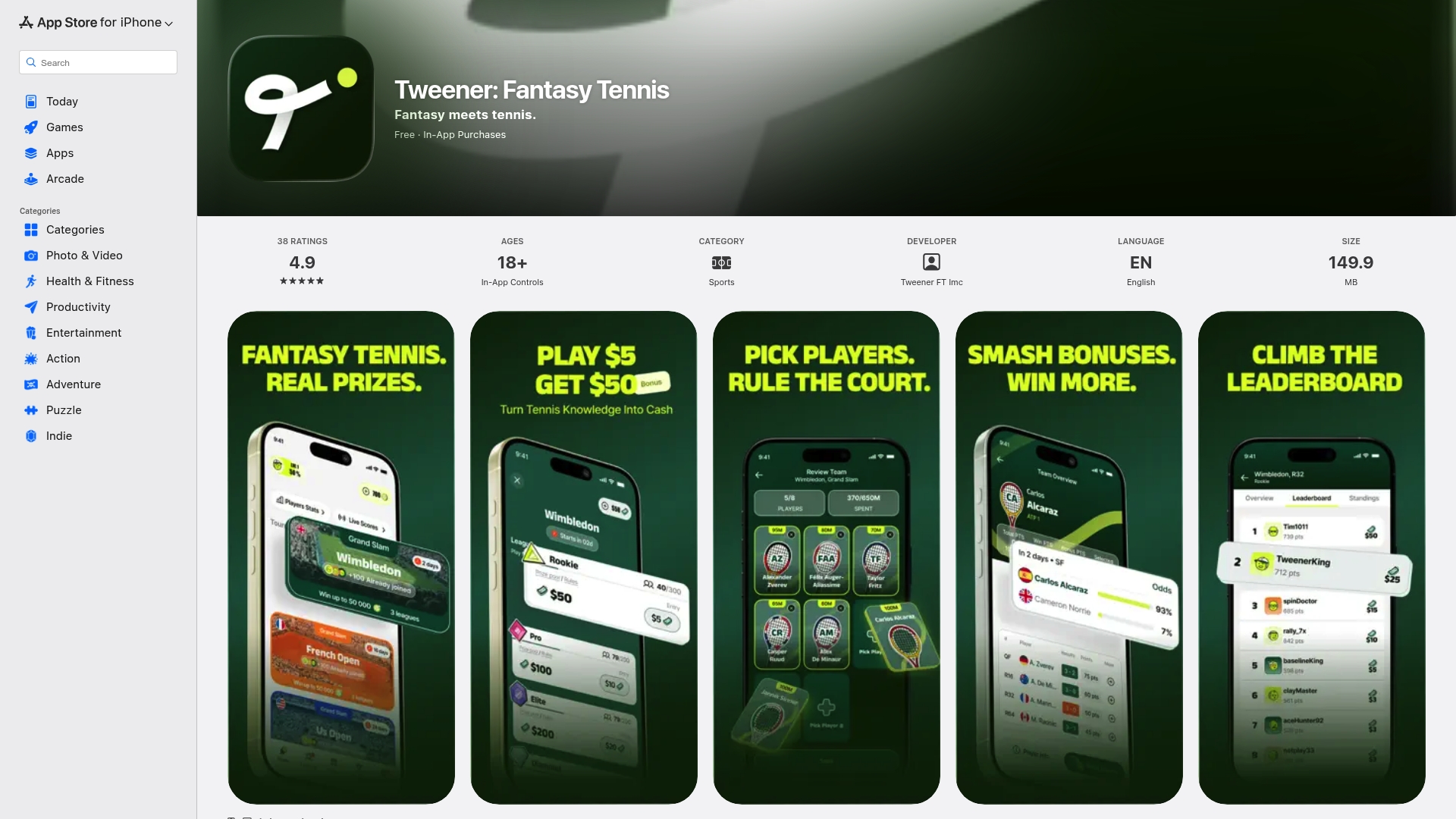
Tweener is built specifically for this kind of analytical play. The platform lets you compete in fantasy tennis using real ATP and WTA players across live tournaments, with private leagues for Grand Slams and public contests where matchup knowledge is your primary edge.
Key Takeaways
Matchup analysis is the foundation of every winning fantasy tennis lineup: surface, head-to-head context, form, and scoring format alignment all matter more than rankings alone.
| Point | Details |
|---|---|
| Surface drives everything | ATP serve hold rates range from 75–80% on clay to 88–92% on grass, reshaping break probability and fantasy scoring potential. |
| Filter H2H by surface | Aggregate head-to-head records mislead; surface-specific recent results predict fantasy outcomes far more accurately. |
| Ceiling beats safety | Pairing reliable favorites with surface-specialist underdogs at low ownership creates the lineup separation that wins tournaments. |
| Build a pre-match thesis | Deciding whether a match will be serve- or return-dominated before lineup lock sharpens every pick you make. |
| Fitness and form shift projections | Recent match load and physical condition can override historical surface data when projecting fantasy scoring. |