

TL;DR:
- Researching tennis matchups involves analyzing player statistics, match context, and behavioral patterns to improve predictions. Using surface-specific metrics like the Dominance Ratio and ELO ratings provides a deeper understanding of player performance than rankings alone. Combining statistical analysis with scouting and a structured workflow enhances accuracy and competitive advantage in fantasy tennis.
Researching tennis matchups is a systematic process of analyzing player statistics, match context, and behavioral patterns to gain a competitive edge in predictions and fantasy tennis. Tools like Tennis Abstract, The Stat Wire, and the official ATP and WTA sites give you the raw material. Metrics like the Dominance Ratio and surface-specific ELO ratings turn that raw material into real decisions. Whether you play on Tweener or just want sharper picks before a Grand Slam, this guide walks you through every layer of the process.
How to research tennis matchups: the core statistics that matter
The Dominance Ratio is the single most predictive stat in tennis analytics. It measures serve and return efficiency together, and it explains 76% of match outcome variance across more than 197,000 matches dating back to 1968. That means a player who controls both serve and return games wins the overwhelming majority of the time, regardless of ranking.
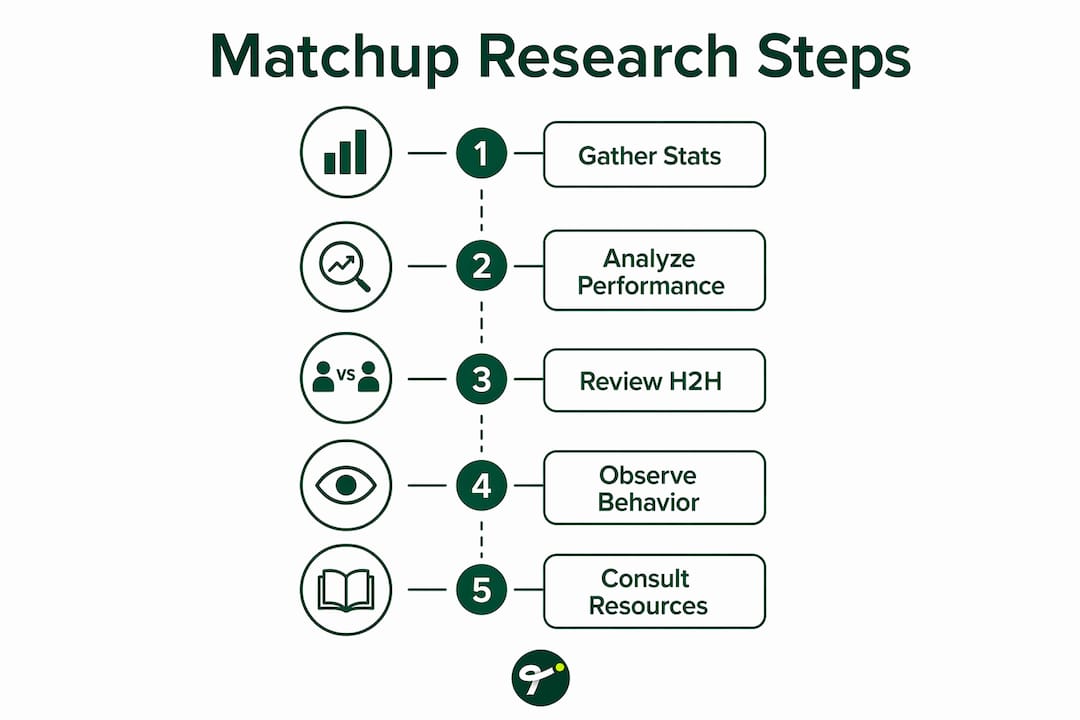
Break point conversion rate is the next metric to study. It is the largest performance gap between top-50 players and lower-ranked competitors, with a 3.25 percentage point difference recorded in Q1 2026. That gap is bigger than the difference in serve speed or first-serve percentage. A player who converts break points consistently controls match tempo in a way that raw power never guarantees.
Surface-specific ELO ratings add another layer of precision. Global rankings treat a clay specialist and a grass specialist as equals if their overall records match. Surface-weighted ELO corrects that distortion. A player ranked 10th overall can perform like a top-3 player on grass. Ignoring surface context is the most common mistake in amateur matchup analysis.
Two more advanced metrics deserve attention:
- Style vectors: These model how a player disrupts an opponent's preferred tempo through varied spin, speed, and trajectory. A player who forces errors by changing pace beats a player who simply hits harder.
- Pressure performance: Points won on break point and tiebreak situations reveal mental consistency that aggregate stats hide entirely.
How do head-to-head records and recent form predict outcomes?
Head-to-head records are useful only when you weight them correctly. A 6-2 H2H advantage means little if four of those wins came on clay and the upcoming match is on hard court. Weight records by surface first, then by tournament tier. Grand Slam results count double compared to ATP 250 events in any serious matchup research workflow.
Score patterns inside H2H records reveal tactical realities that win-loss columns miss. A player who loses 7-5, 7-5 repeatedly faces a tactical problem, not a skill gap. Tight losses in close sets signal that one or two pattern adjustments could flip the result. A player who loses 6-1, 6-2 consistently faces a genuine skill mismatch. Knowing the difference changes how you evaluate the upcoming match.
Recent form covers the last 10–20 matches and focuses on momentum, not just wins. A player coming off three consecutive three-set battles carries fatigue into the next round. A player who has won four straight in under 90 minutes carries physical and mental momentum.
- Pull the last 15 match results from the ATP or WTA official site.
- Note the number of sets played per match to assess fatigue load.
- Check whether recent wins came against top-50 opponents or lower-ranked players.
- Identify surface consistency: did the form hold across surfaces or only on one?
- Cross-reference recent form against the upcoming opponent's style to spot mismatches.
Pro Tip: When a player's recent form looks strong but their H2H against the specific opponent is poor, trust the H2H. Nemesis dynamics in tennis are real and persistent.
What scouting and behavioral indicators complement statistical research?
Statistics tell you what happened. Scouting tells you why and what is about to happen. The two work together, and skipping scouting leaves a significant gap in any serious analysis.

Opponent body language is the first scouting layer. Shoulder rotation and footwork positioning before a shot predict shot direction before the ball is struck. A player who drops their shoulder early telegraphs a cross-court forehand. A player who opens their stance signals a down-the-line play. Reading these micro-movements gives a predictive advantage that no spreadsheet provides.
Serve placement patterns are equally revealing. Most players have a dominant serve zone they return to under pressure. Tracking where a player serves on second serve at 30-40 in the third set tells you more about their mental state than their season serve percentage. Video footage from prior matches on the same surface is the best source for this data.
Between-point behavior is the most underused scouting tool. Reading hesitation and rhythm shifts between points reveals momentum changes before they show up in the score. A player who starts bouncing the ball more slowly before serving is slowing themselves down mentally. A player who walks faster and bounces quickly is locked in.
- Watch warmup routines for signs of physical discomfort or limited range of motion.
- Track rally length preferences: does the player push for short points or grind from the baseline?
- Note how a player responds after losing a long game. Do they reset quickly or carry frustration?
- Use YouTube match archives and official ATP/WTA match replays for pre-match video scouting.
Pro Tip: For fantasy tennis on Tweener, combine scouting notes with stats before each tournament round. Players who show strong mental resets between points consistently outperform their ranking in later rounds.
Which online resources offer the best data for tennis matchup analysis?
The best resources for tennis research each serve a distinct purpose. Using only one source leaves gaps in your analysis.
| Resource | Strengths | Best use case |
|---|---|---|
| Tennis Abstract | Deep filters, serve and return splits, surface breakdowns | Granular stat research on specific players |
| The Stat Wire | AI-powered analytics, Dominance Ratio, style vectors | Advanced predictive modeling and betting value |
| ATP/WTA official sites | Official rankings, draw results, live scores | Current form, draws, and tournament context |
| Matchstat | H2H records, surface-specific win rates | Head-to-head and historical pattern research |
| BallClash | Tactical articles, anticipation guides | Scouting and behavioral pattern education |
Tennis Abstract is the starting point for analyzing tennis player statistics at a granular level. You can filter by surface, tournament tier, and opponent ranking to isolate exactly the context you need. The Stat Wire goes further with AI-driven models that incorporate style vectors and pressure metrics. ATP and WTA official sites remain the most reliable source for current draws and seedings.
Matchstat fills the H2H gap. It tracks surface-specific win rates across years and lets you compare two players across every shared tournament they have entered. For fantasy players on Tweener, Matchstat is particularly useful before Grand Slams when historical data on specific surfaces carries the most weight.
How to build a step-by-step research workflow for tennis matchups
A repeatable workflow separates consistent analysts from lucky guessers. This five-step process covers every variable that matters before a match or fantasy contest.
- Surface and context check: Confirm the surface, tournament tier, and round. Grand Slam performance counts double compared to ATP 250 results in any weighted analysis.
- Form and momentum review: Pull the last 15 match results. Count sets played to assess fatigue. Note whether wins came against quality opponents.
- Weighted H2H analysis: Filter H2H records by surface and tournament tier. Read score patterns to identify tactical versus skill gaps.
- Odds comparison: Compare your statistical expectation against bookmaker odds or fantasy ownership percentages. A player the market undervalues is where the edge lives.
- Stake sizing and risk management: Allocate more to high-confidence picks and less to volatile matchups. For fantasy contests on Tweener, this means managing your entry risk across multiple tournaments rather than concentrating on one.
The biggest mistake in tennis matchup research is treating every match as equally predictable. A first-round match at a 250-level event between two players with no H2H history on the surface carries far more uncertainty than a quarterfinal between two players with 10 prior meetings on clay. Size your confidence accordingly.
Player fatigue and travel stress are the two most underweighted variables in amateur analysis. A player who flew from Asia to Europe for a clay swing and played three-set matches in the first two rounds carries a measurable physical disadvantage. Adjust your confidence level down when fatigue signals are present. A performance tracking workflow that logs match duration and travel schedules makes this adjustment systematic rather than guesswork.
The most common pitfall is overweighting recent results without surface context. Carlos Alcaraz losing on an indoor hard court in February tells you almost nothing about his clay performance at Roland Garros. Keep surface context at the center of every assessment.
Key takeaways
Effective tennis matchup research combines surface-specific statistics, weighted H2H records, and behavioral scouting into a repeatable five-step workflow that consistently outperforms single-metric analysis.
| Point | Details |
|---|---|
| Dominance Ratio is the top metric | It explains 76% of match outcome variance and outperforms ranking-based predictions. |
| Surface-specific ELO beats global rankings | A player ranked 10th overall can perform like a top-3 player on their best surface. |
| Score patterns reveal tactical gaps | Repeated tight losses signal fixable tactical problems, not permanent skill deficits. |
| Scouting adds what stats miss | Body language and between-point behavior reveal momentum shifts before the scoreboard does. |
| Workflow consistency beats one-off research | A five-step repeatable process produces better results than ad hoc analysis across a season. |
Why I think most tennis fans are leaving half their edge on the table
I have spent years watching tennis fans obsess over ATP rankings and ignore surface ELO entirely. The ranking tells you who won the most points over the past year. Surface ELO tells you who is most likely to win this match on this court. Those are completely different questions, and the second one is the one that matters.
The insight that changed my approach was understanding that a 1–2% difference in total points won translates to a 10–15% difference in match win rate. Tennis scoring amplifies small edges into large outcome differences. That means the analytical work you put in before a match compounds. A slightly better read on serve patterns or fatigue load does not produce a slightly better prediction. It produces a significantly better one.
The future of this space is AI-enhanced models that combine style vectors with real-time scouting data. The Stat Wire is already moving in that direction. But the analysts who will get the most out of those tools are the ones who already understand the underlying variables. Learn the metrics first. The tools will follow.
My advice: track your predictions, note your reasoning, and review where you were wrong. The fastest way to improve your tennis matchup analysis is to build a feedback loop between your pre-match research and post-match results. Most fans never do this. The ones who do get noticeably sharper within a single Grand Slam cycle.
— Nathan
Put your research to work on Tweener
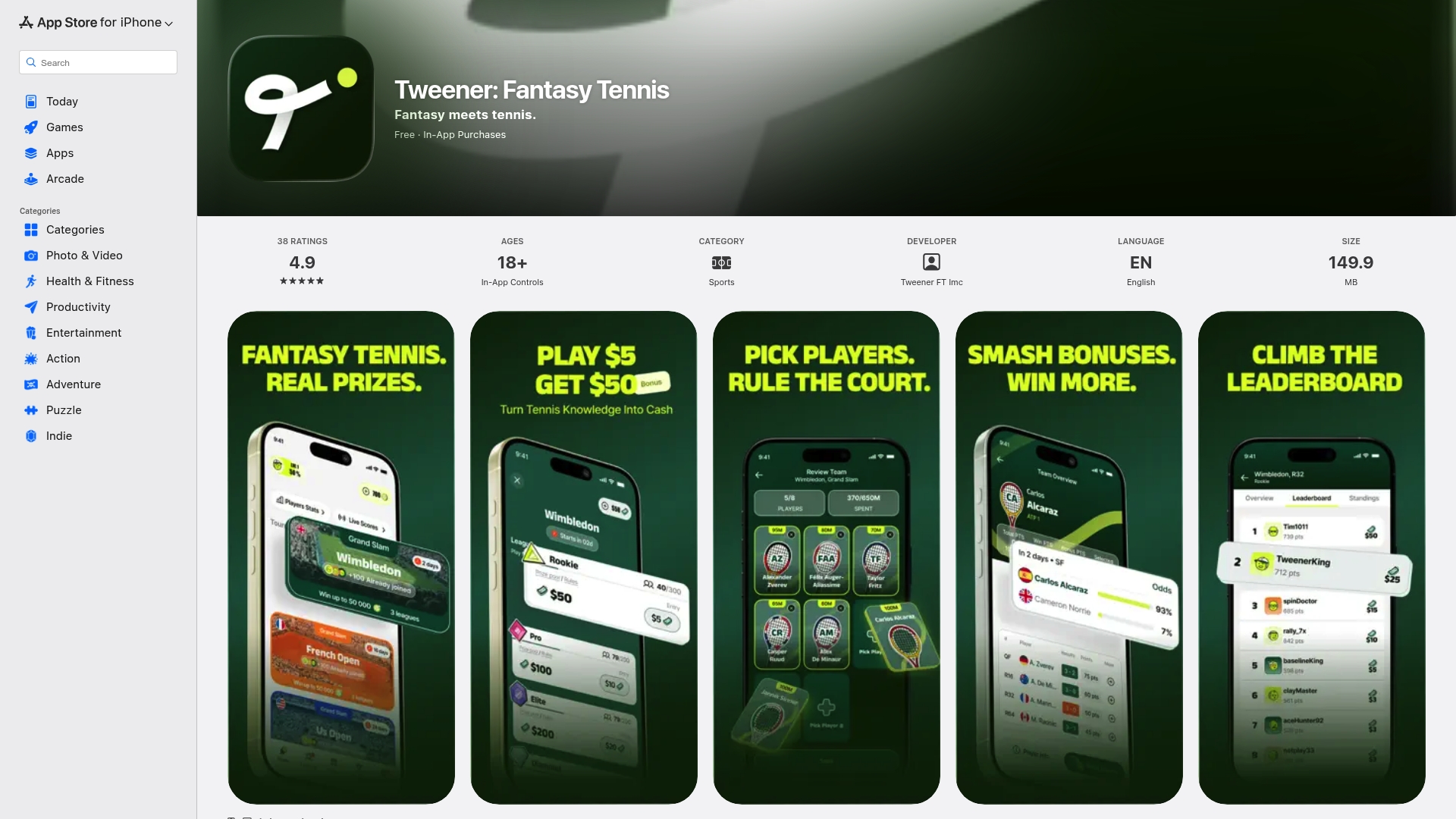
All the research in this guide becomes a real competitive advantage when you have a place to use it. Tweener is the fantasy tennis app built for fans who take ATP and WTA matchups seriously. You build teams from real players, compete in public leagues or private leagues with up to nine friends, and earn points based on live tournament results. The strategic layer is real: surface knowledge, form analysis, and H2H research directly translate into better picks and better outcomes.
Tweener is the closest thing tennis has to a DraftKings or FanDuel built specifically for the sport. Download the app and put your matchup research into action starting with the next Grand Slam draw.
FAQ
What is the most predictive statistic in tennis matchup research?
The Dominance Ratio, which combines serve and return efficiency, explains 76% of match outcome variance. It is more predictive than rankings or serve speed alone.
How do I use head-to-head records correctly?
Filter H2H records by surface and tournament tier before drawing conclusions. Grand Slam results carry double the weight of ATP 250 results in any serious analysis.
Which websites are best for researching tennis matchups?
Tennis Abstract, The Stat Wire, Matchstat, and the official ATP and WTA sites each serve different purposes. Use Tennis Abstract for granular stats, The Stat Wire for advanced predictive models, and Matchstat for surface-specific H2H records.
How does scouting complement statistical analysis in tennis?
Scouting reveals behavioral patterns like serve placement tendencies and between-point mental state that statistics cannot capture. Combining both produces more accurate match predictions than either approach alone.
How do I compare tennis players for fantasy sports contests?
Start with surface-specific ELO ratings and recent form, then layer in H2H records weighted by surface and tournament tier. For fantasy contests on Tweener, also factor in draw difficulty and projected match load across the tournament week.