

TL;DR:
- Virtual coins are a finite budget used to build a strategic tennis lineup, not just scoreboard points.
- Effective use of virtual coins involves balancing star players with value picks, maximizing full budget utilization.
- Mastering coin management and draw analysis provides a competitive edge for consistent success.
Most fantasy sports fans treat virtual coins like a scoreboard number: the more you have, the better you're doing. That's a mistake. In fantasy tennis, virtual coins are actually your budget, your constraint, and your greatest strategic tool all at once. They force you to make real decisions, not just pick the five players you already know. This article breaks down what virtual coins are, how top tennis fantasy platforms use them, and the advanced tactics that separate casual players from consistent winners. If you've been picking lineups by gut feeling, this is where that changes.
Table of Contents
- What are virtual coins in fantasy sports?
- How virtual coins shape tennis fantasy platforms: salary caps, credits, and more
- Advanced strategies for managing virtual coins and maximizing value
- Common pitfalls and expert nuances with virtual coins
- Putting it all together: winning with virtual coins in tennis fantasy
- Why mastering virtual coins is the real edge in fantasy tennis
- Ready to test your strategy and win? Try Tweener today
- Frequently asked questions
Key Takeaways
| Point | Details |
|---|---|
| Virtual coins build strategy | Managing your budget is key to winning in fantasy tennis, not just picking stars. |
| Platform rules matter | Understand each tennis fantasy game’s coin system and scoring for smarter lineups. |
| Advanced tips increase wins | Use stack strategies, value picks, and bankroll control for long-term fantasy success. |
| Real rewards available | Many fantasy tennis platforms offer prizes for high-performing, strategic play. |
What are virtual coins in fantasy sports?
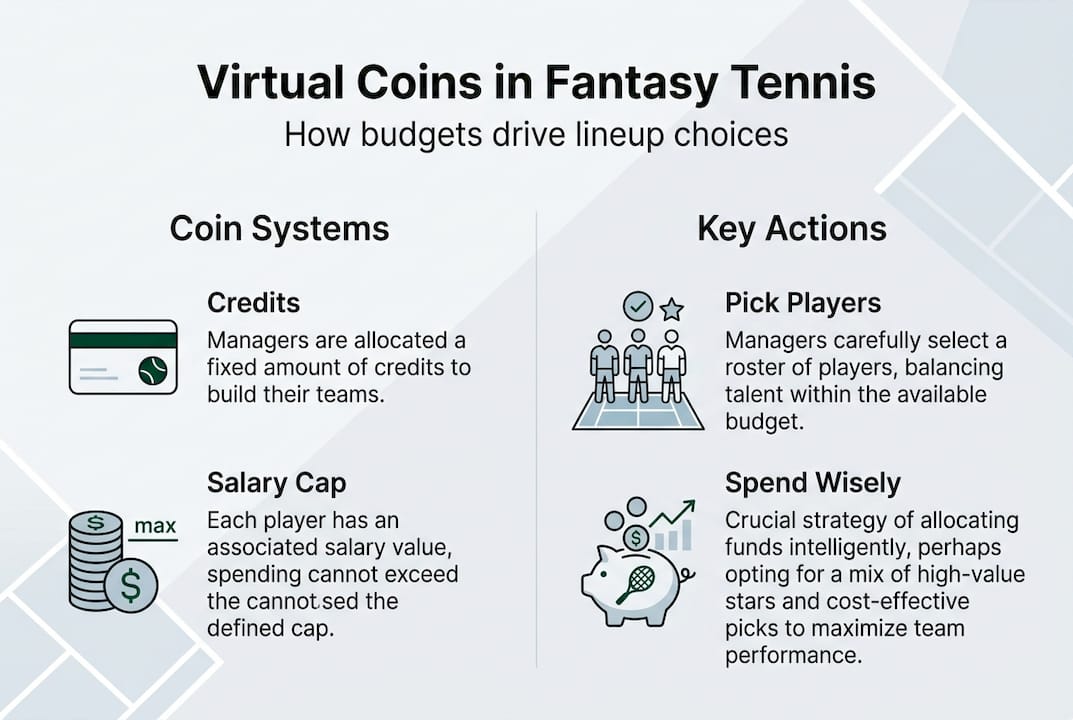
Virtual coins go by many names depending on the platform. You'll hear them called credits, salary caps, or simply budgets. But regardless of the label, they all do the same thing: they give you a fixed amount of fictional currency to spend when building your fantasy roster. Every player on the platform has a price tag, and your job is to assemble the best possible lineup without going over your limit.
It's important to separate virtual coins from points. Points are what you earn during a contest based on how your players perform in real matches. Coins are what you spend before the contest even starts. Confusing the two is one of the most common mistakes new players make when learning fantasy tennis terms.
Here's why this distinction matters so much in tennis specifically:
- Carlos Alcaraz might cost 40 out of your 100 available credits
- That leaves only 60 credits for your remaining seven players
- Every coin you spend on a superstar is a coin you can't spend elsewhere
- Value picks at the bottom of your roster often decide who wins and who loses
"In DFS platforms like DraftKings and FanDuel, virtual coins refer to the salary cap system used to build lineups, ensuring competitive balance across all contestants."
The budget varies by platform. ATP Fantasy uses 100-credit budgets, FanDuel operates with a $60,000 salary cap, and DraftKings uses $50,000. These aren't arbitrary numbers. They're designed to prevent everyone from stacking the same three superstars and calling it a strategy. Virtual coins introduce the same kind of resource tension that real sports managers face every single day.
How virtual coins shape tennis fantasy platforms: salary caps, credits, and more
Now that you understand what coins are, let's look at how they actually work across the major platforms. Each one takes a slightly different approach, but the core logic is the same.
ATP Fantasy, FanSlam, and FantasyFi all use credit-based systems where players are priced according to their ATP or WTA rankings. Higher-ranked players cost more. That sounds obvious, but the pricing creates real lineup puzzles that reward research over instinct.
Here's a quick comparison of how the major platforms handle budgets:
| Platform | Budget | Roster size | Scoring highlights |
|---|---|---|---|
| ATP Fantasy | 100 credits | 8 players | Rounds won, aces, upsets |
| FanDuel | $60,000 | Varies | Match stats, wins |
| DraftKings | $50,000 | Varies | Games won, aces, breaks |
| FanSlam | Credits-based | 5-8 players | Wins, rankings upsets |
Let's use a real example. Say you're building an ATP Fantasy lineup and you want Carlos Alcaraz at 40 credits. That's 40% of your entire budget on one player. He might dominate and earn you 80 points. But if he exits early in Round 2, you've wasted nearly half your coins on a bust. Meanwhile, someone who split those 40 credits across two solid mid-tier players might have two players still alive in the quarterfinals.
This is why over 80% of winning lineups use their full available budget. Leaving coins unspent is essentially leaving roster value on the table. Every unused credit is a missed opportunity to add a player who could score points.
For those interested in taking things further, a solid real money fantasy tennis guide can help you understand how coin strategy translates when real stakes are involved. You can also explore how fantasy tennis rewards work across different contest formats.
Advanced strategies for managing virtual coins and maximizing value
Understanding platforms is only the start. Winning consistently requires a sharper approach to how you allocate your budget.

1. Find hidden value before the tournament starts Look for players who are priced low but entering a favorable draw. A player ranked 40th who avoids top seeds in the first three rounds is worth far more than their price suggests. These are the picks that win contests.
2. Adapt as the tournament progresses Many platforms allow lineup changes between rounds. If a top seed picks up an injury or a surprise withdrawal happens, prices may not adjust immediately. That's your window to grab a newly valuable player before the platform catches up.
3. Apply bankroll management to your coin spending Even in free-coin contests, treat your budget like real money. Only risk 5-10% of your total budget per contest if you're playing multiple entries. This keeps you in the game longer and reduces the damage from one bad lineup.
4. Stack mid-tier players strategically Instead of spending 40 credits on one superstar, try two players at 18-20 credits each. You get more coverage, more chances to score, and more flexibility in the rest of your roster.
5. Monitor draw brackets closely A player in a weak quarter of the draw is a value pick even at a slightly higher price. Coins spent on a player with a clear path to the semifinals are coins well spent.
Pro Tip: Early tournament upsets are your best friend. When a high-priced favorite exits in Round 1, players who picked cheaper alternatives suddenly have a massive coin advantage for the rest of the event. Check fantasy tennis lineup tips for more on reading draw structures before you lock in your picks.
Good fantasy team management is about patience and precision, not just picking the biggest names.
Common pitfalls and expert nuances with virtual coins
Even with solid strategies, pitfalls are everywhere. Here's what experienced players know that most beginners miss.
Over-investing in big names is the number one mistake. Spending 70% of your coins on two superstars leaves you with five or six bargain-bin players who rarely score enough to compensate. Spread your budget. Balance matters more than star power.
Ignoring contest rules is the second trap. Some platforms have minimum player requirements, positional restrictions, or rules about how many players from the same nationality you can include. Violating these can void your lineup entirely. Read the rules before you build.
"Salary relief, game scripts, backup values, and player minimums are edge cases that can make or break a DFS lineup if ignored."
Here's what separates expert players from the pack:
- Contrarian picks: If 80% of the field is on Djokovic, picking a credible alternative differentiates your lineup. You don't win contests by doing what everyone else does.
- Alternate stacking: In team sports, stacking means picking players from the same team. In tennis, it means selecting players from the same match or draw section who are likely to go deep together.
- Withdrawal awareness: Player withdrawals before or during a tournament can completely reshape the value landscape. The best players monitor this in real time and adjust their rosters immediately.
Pro Tip: Check injury news and withdrawal lists the morning of each round. One last-minute scratch can flip the value of three or four other players in the same draw section. Smart drafting of tennis players always accounts for this.
Understanding fantasy prize structures also helps you decide how aggressive or conservative to be with your coin allocation in a given contest.
Putting it all together: winning with virtual coins in tennis fantasy
With these lessons in mind, here's a practical framework for building your next winning tennis fantasy lineup.
Step-by-step lineup construction:
- Set your anchor pick. Choose one high-value player you believe will go deep. Spend no more than 35-40% of your budget here.
- Identify two value picks. Find mid-tier players with favorable draws. These should cost 15-20% of your budget each.
- Fill the rest with strategic depth. Use remaining coins on lower-priced players with upside. Look for players entering form or facing weak opponents.
- Check the total. Make sure you've spent as close to your full budget as possible without going over.
- Review the rules. Confirm your lineup meets all platform requirements before submitting.
Here's what a balanced lineup might look like across platforms:
| Player tier | ATP Fantasy credits | Role in lineup |
|---|---|---|
| Top seed (anchor) | 35-40 | High floor, reliable scorer |
| Mid-tier value pick | 18-22 | Upside, favorable draw |
| Mid-tier value pick | 15-18 | Consistency, low risk |
| Budget depth players | 8-12 each | Volatility, upset potential |
ATP Fantasy offers free entry with real prizes including tickets and merchandise, making it a great place to test this framework without any financial risk. Scoring includes rounds won, aces, and upset bonuses, so a well-balanced lineup can outscore a star-heavy one in any given week.
Exploring fantasy team competitions helps you understand which contest formats reward this balanced approach most. And if you're looking for specific player recommendations, 2026 fantasy tennis picks can point you toward the value plays worth targeting right now.
Why mastering virtual coins is the real edge in fantasy tennis
Here's the uncomfortable truth most fantasy guides won't tell you: the players winning consistently aren't the ones who know tennis best. They're the ones who understand budgeting best.
New players almost always assume that more coins spent on bigger stars equals more wins. It doesn't. The best lineup isn't the one with the most expensive players. It's the one that extracts the most value from every single credit available.
Coin management forces you to make hard choices. Do you take the safe anchor pick or gamble on a rising player? Do you diversify across eight solid options or concentrate on three elite ones? These decisions reveal your actual strategic thinking, not just your tennis knowledge.
Long-term success in fantasy tennis comes from exploiting inefficiencies, spotting undervalued talent before the crowd does, and adapting quickly when the tournament landscape shifts. Virtual coins don't create those skills. But they reveal them. That's why tennis fantasy platforms built around coin systems consistently produce more engaged, more strategic players than any other format.
Ready to test your strategy and win? Try Tweener today
Once you feel ready to put smart coin strategy into action, here's your next move.
Tweener is built specifically for tennis fans who want more than just watching. The platform uses a smart virtual coin system that rewards strategic lineup building across real ATP and WTA tournaments. You can compete in free contests using virtual coins, earn rewards like gift cards, and join a global community of tennis fantasy players who take the game as seriously as you do.
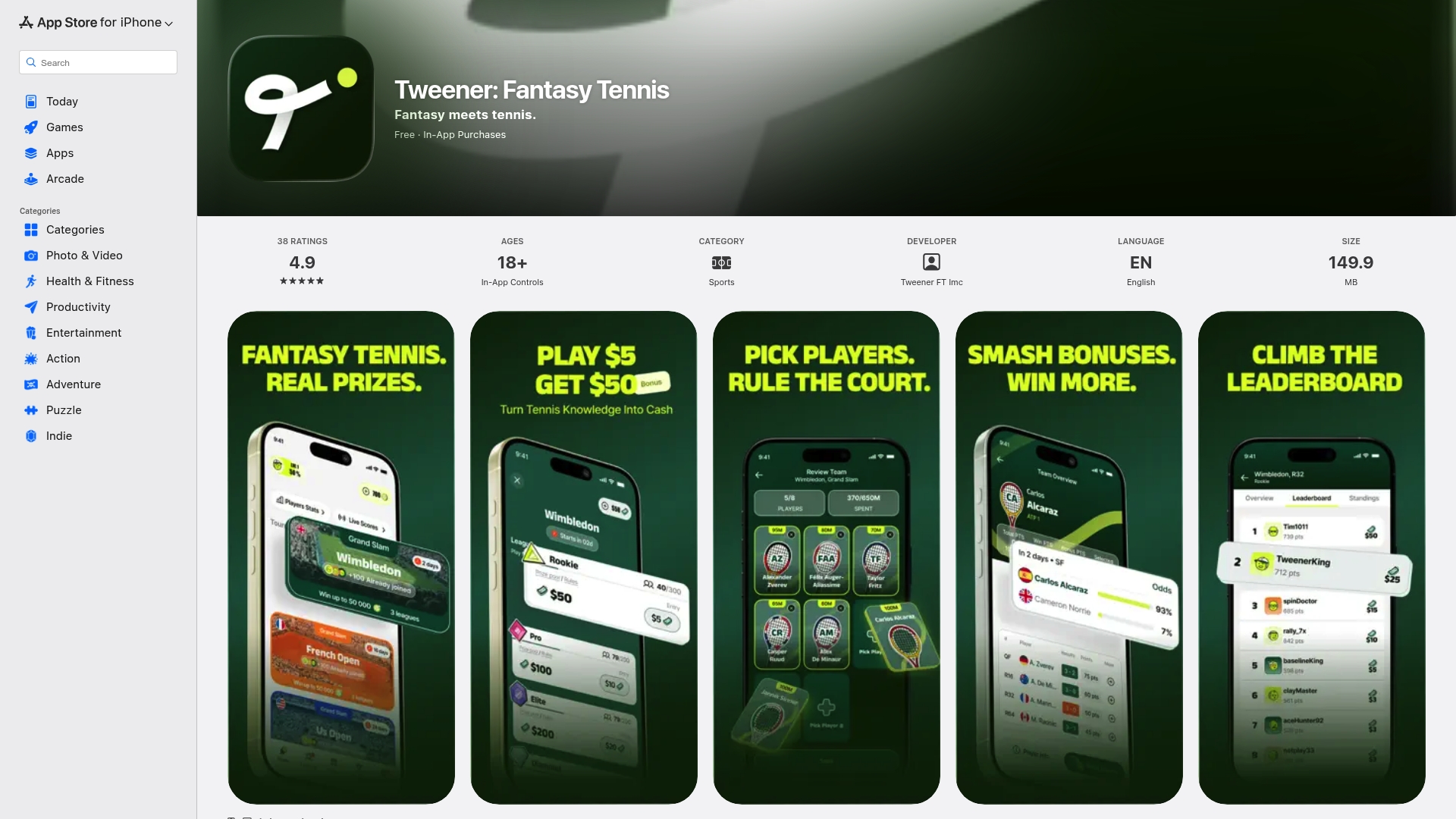
Explore Tweener to see how the platform works, or go straight to download the Tweener app and start building your first lineup today. Free mode is available immediately, so there's no reason to wait.
Frequently asked questions
What are virtual coins in fantasy sports?
Virtual coins are digital credits or salary caps used to build your team lineup. Each player pick costs coins, so DFS platforms like DraftKings and FanDuel use this system to force strategic choices across every roster slot.
How do fantasy tennis platforms use virtual coins?
Platforms assign a credit value to each player based on ranking, then give users a set budget to build a full lineup. ATP Fantasy uses 100-credit budgets, which encourages balance and discourages stacking only the top names.
What's a smart strategy for spending virtual coins?
Prioritize value picks with favorable draws, use your full budget, and avoid concentrating too many coins on one player. Only invest 5-10% per contest if you're managing multiple entries for sustainable, long-term play.
Can you win real prizes using virtual coins in tennis fantasy?
Yes. ATP Fantasy offers real prizes including tickets and merchandise for top finishers in free-entry contests, making coin-based strategy both fun and genuinely rewarding.