

Anchor-first, ceiling-first, game-stack, and contrarian formations are the four core fantasy-tennis formation types. Use anchors for cash stability, ceiling-first for large GPPs, game-stacks when matches project long, and contrarian builds to gain ownership leverage in crowded fields. Here is how each one works on Tweener.
The four formations at a glance:
- Anchor-first: Lock in two or three high-floor players; best for Tweener cash games where consistent scoring beats home runs.
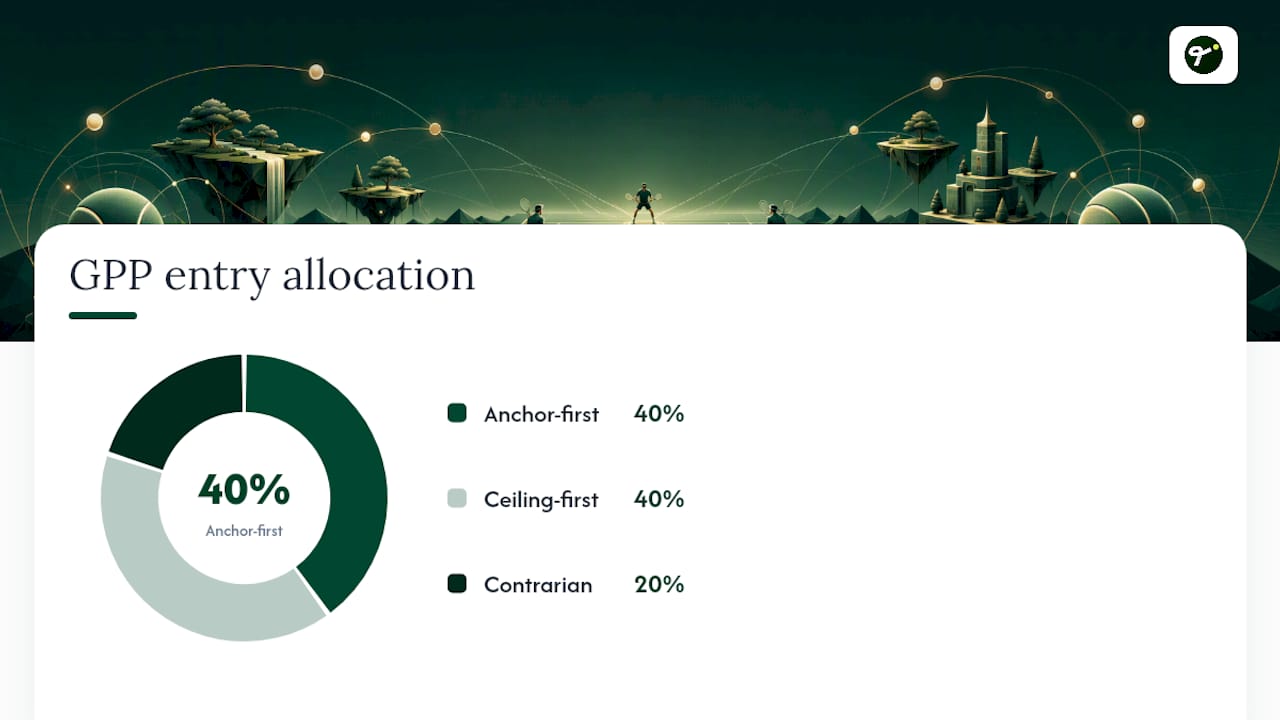
- Ceiling-first: Load up on upside plays and a premium captain; built for Tweener GPP and large-field contests.
- Game-stack: Concentrate salary on players in matches that project to go deep (three sets, long rallies); ideal for Grand Slam slates.
- Contrarian/Volatility-focused: Roster low-owned underdogs with upset potential; the right move for multi-entry GPPs where differentiation wins.
Key Takeaways
Matching your formation to your contest type, reserving salary for late pivots, and penalizing fatigued players are the three decisions that separate consistent Tweener performers from casual entrants.
| Point | Details |
|---|---|
| Formation matches contest type | Use anchor-first for cash games, ceiling-first for GPPs, contrarian for multi-entry differentiation. |
| Reserve salary for pivots | Keep 10–15% of salary unspent until 60 minutes before lock to capture withdrawal value. |
| Penalize roster fatigue | Fade players who played a long match within 24–36 hours unless salary discount compensates. |
| Adjust for surface and tour | ATP slates reward high hold%; WTA slates reward returners due to higher break frequency. |
| Tweener for deployment | Tweener's captain multiplier, stat filters, and live swaps make executing any formation fast. |
Table of Contents
- What types of tennis team formations fit each contest?
- How to build any formation on Tweener step by step
- Which player metrics should you actually weigh?
- Four reusable lineup templates for Tweener
- Common formation mistakes and how to fix them
- How to adjust formations during a tournament
- How Tweener's scoring changes your formation choices
- The formation approach I actually trust
- Tweener puts these formations to work immediately
- Sources
What types of tennis team formations fit each contest?
Matching the right formation to the right contest is where most Tweener players leave points on the table. The guide to building winning tennis lineups breaks down how anchors, ceiling attackers, game stacks, and volatile underdogs each serve a distinct purpose depending on the format you are entering.
Anchor-first belongs in cash games. You need players who will score, not players who might score. Two reliable top-10 players with strong hold percentages on the current surface cover your floor. Variance kills you in head-to-head and 50/50 formats.
Ceiling-first is the GPP workhorse. In a large-field Tweener contest, finishing in the money requires outscoring hundreds of other rosters. That means accepting more variance in exchange for a shot at a big week. Load your captain slot with a player who can go on a deep run, and fill the rest of the roster with mid-priced attackers who have upset potential.
Game-stack formations target specific matches rather than individual players. When a draw pairs two baseline grinders on clay, or two big servers on grass who are likely to push each other to three sets, you want players from that match; choosing the right footwear can also make a difference, see Padel shoes vs Tennis shoes for comparison. Longer matches generate more fantasy points, and best-of-five Grand Slam formats reward stamina-oriented players even more than standard tour events.
Contrarian builds are a multi-entry tool. If you are running five or more entries in a GPP, at least one should carry a low-owned player with a real path to an upset. When that player delivers, you separate from the field. When they do not, your other entries absorb the loss.
Tournament-stage rules of thumb:
- Early rounds: favor anchors and game-stacks; the draw is wide open and chalk is safer.
- Quarterfinals onward: tilt toward ceiling plays; surviving players are battle-tested and the field is thinner.
- Private league finals: contrarian exposure matters less; prioritize the highest-ceiling captain you can afford.
Pro Tip: In multi-entry slates, run at least one anchor-first lineup and one ceiling-first lineup simultaneously. They hedge each other naturally — the anchor entry protects your cash, the ceiling entry hunts the big score.
How to build any formation on Tweener step by step
The sequence below works for every formation. Adjust the percentages by formation type.
- Check the draw. Identify which matches project long (surface, styles, H2H) and which are likely quick. This determines whether game-stack or anchor logic applies.
- Shortlist by surface and recent form. Prioritize the last 5–10 matches on the current surface, not career averages. A player who won Wimbledon three years ago but has gone 2-8 on grass this season is not an anchor.
- Set your captain. The captain multiplier on Tweener amplifies points, so this slot carries the most leverage. In cash games, captain your safest high-floor player. In GPPs, captain the player with the highest ceiling even if ownership will be elevated.
- Allocate salary by formation.
| Formation | Captain % | Core anchors % | Mid-value % | Value/underdog % |
|---|---|---|---|---|
| Anchor-first | 20% | 50% | 15–20% | 5–10% |
| Ceiling-first | 22% | 30% | 25% | 10–15% |
| Game-stack | 20% | 50% | 20% | 10–15% |
| Contrarian | 18% | 30% | 20% | 15–20% |
- Reserve 10–15% of salary for late pivots. Withdrawals and draw changes happen constantly on tour. Leaving that salary buffer lets you pivot to a suddenly favorable play without blowing your cap.
- Final injury and practice check. Lock only after confirming your players are on court.
Pro Tip: Set a hard lock reminder 45 minutes before the first match. That window is when withdrawal news drops most often, and it is exactly when a salary buffer pays off.
Which player metrics should you actually weigh?
Surface-specific metrics drive DFS value more than any other single factor. Here is the priority order:
- Recent surface form (last 5–10 matches): The single strongest predictor. Ignore career clay records for a player who has not touched clay in 18 months.
- Hold % and break %: High hold % signals a server who will stay in matches; high break % signals a returner who can steal sets. On grass, hold % matters most. On clay, break % and rally length dominate.
- Ace rate: Relevant on grass and fast hard courts. A player averaging 12 aces per match on grass is a ceiling play; the same player on clay is not.
- Return games won: Underrated in WTA slates. WTA has higher break rates than ATP, so returners generate more fantasy points per match on average.
- Tiebreak record: A player who consistently wins tiebreaks extends matches and scores more points.
- Injury and retirement history: One retirement tanks your lineup. Check practice reports and press conferences before locking.
Roster fatigue is a real liability. Players coming off deep runs, especially those who played five-set matches in the prior round, carry meaningful underperformance risk. The tournament schedule affects rest cycles significantly. As a rule of thumb: fade any player who played a three-set-plus match within 24 hours unless their salary drops enough to compensate.
ATP vs WTA formation adjustments: ATP slates reward serve-dominant players because breaks are rarer, making hold % the key metric. WTA slates have higher break frequency, so returners and momentum-swing players generate more consistent fantasy value. Adjust your anchor selections accordingly.

Pro Tip: Cross-check your statistical picks against qualitative signals: practice reports and travel flags catch things the numbers miss. A player who flew in from a different continent two days ago is a fatigue risk the stat sheet will not show.
Four reusable lineup templates for Tweener
| Slot | Anchor-first | Ceiling-first | Game-stack | Contrarian |
|---|---|---|---|---|
| Captain | Top-5 seed, high hold% | High-ceiling attacker | Best player in target match | Mid-priced upset threat |
| Core 1 | Top-10, strong surface form | Mid-tier attacker | 2nd player in target match | Reliable anchor (safety net) |
| Core 2 | Top-15, consistent scorer | Value server | Anchor outside target match | Low-owned surface specialist |
| Mid-value | Solid mid-tier, safe draw | Low-owned upside play | Value returner | Second contrarian pick |
| Value/bench | Budget filler, safe draw | Budget underdog | Budget filler | Budget chalk (protect floor) |
Rationale by template:
- Anchor-first targets a floor around 70–75% of the max possible score. Use it in cash games and head-to-heads. The ceiling is capped, but you cash consistently.
- Ceiling-first accepts a lower floor in exchange for a 20–30% chance at a top-5 finish in a large GPP. Captain choice is everything here.
- Game-stack lives or dies with one match. When the target match goes three sets, this lineup scores big. When it ends in a quick straight-set win for the favorite, you are likely out of the money.
- Contrarian is a tournament-differentiator. Run it as one of several entries, never as your only lineup.
Quick swaps for surface and tour:
- Grass slates: upgrade ace-rate players in captain and core slots; downgrade clay grinders.
- Clay slates: prioritize break % and rally-length stats; fade big servers with poor clay records.
- WTA slates: shift mid-value and value slots toward returners and momentum players.
- Grand Slams: upgrade stamina players (grinders who win in four or five sets) across all formations.
Common formation mistakes and how to fix them
- Ignoring surface splits. Rostering a player based on overall ranking rather than surface-specific form is the most common error. Fix: filter by surface record before any other metric.
- Chasing last week's hot play. A player who went deep at the prior tournament is now a popular pick and often fatigued. Fix: check their schedule and rest days before rostering.
- Overloading volatile underdogs. One contrarian spot per lineup is leverage. Three contrarian spots is a lottery ticket. Fix: cap underdog exposure at one slot in cash games, two in GPPs.
- Misusing the captain multiplier. Captaining a safe player in a GPP wastes the multiplier's upside potential. Fix: in GPPs, captain the player with the highest ceiling, not the safest floor.
- Forgetting roster fatigue. Deep runs drain players physically. Fix: check the roster update checklist and penalize any player who played a long match within the last 24–36 hours.
- Not checking draw changes. Walkovers and withdrawals shift the value of adjacent players overnight. Fix: check the draw 60 minutes before lock, every time.
- Stacking the wrong match. Game-stacking a match that ends 6-1, 6-2 destroys your lineup. Fix: target matches where both players have comparable surface form and H2H is close.
- Locking too early. Injury news drops late. Fix: never finalize a lineup more than an hour before the first ball.
Pro Tip: Run a 5-minute pre-lock audit: confirm each player is active, check their last match length, verify no draw changes, and confirm your captain still makes sense for the contest type.
How to adjust formations during a tournament
Live management separates disciplined Tweener players from casual ones. The step-by-step roster management process covers this in detail, but the core principles are:
When to swap an anchor: Only replace a core anchor if they withdrew, are visibly injured, or their draw shifted dramatically (e.g., they now face a top-3 opponent instead of a qualifier). Do not swap an anchor because they lost the first set.
When to swap an attacker: Swap a ceiling play if their opponent is playing significantly better than projected, or if a lower-owned alternative has opened up due to a withdrawal elsewhere in the draw.
Hedging across entries:
- In a 5-entry GPP, run roughly two anchor-first lineups, two ceiling-first, and one contrarian. That spread gives you cash protection and a shot at the top.
- As the tournament progresses and the field narrows, shift the balance toward ceiling plays. The surviving players are better, matches are tighter, and upside matters more.
Rail management: Stagger your lock times across entries when the slate has multiple match windows. Lock your anchor entries first, then use the remaining salary buffer to react to early-round results before locking your GPP entries.
Pro Tip: Preserve partial exposure by keeping at least one entry with a different captain than your other lineups. Independent paths to victory matter more than consensus in a large field.
How Tweener's scoring changes your formation choices
Tweener's scoring rewards specific actions that should directly shape which formation you deploy:
- Captain multiplier: Points earned by the captain are multiplied, making captain selection the highest-leverage decision in any lineup. In cash games, this pushes you toward safe high-floor captains. In GPPs, it rewards bold captain choices.
- Points for aces, breaks, and games won: Formations built around big servers (ace-heavy players) score differently than those built around grinders. On fast surfaces, an ace-rate captain in a ceiling-first build can outscore a grinder captain by a wide margin.
- Cash vs GPP vs private leagues: Cash games punish variance; the anchor-first formation's 70–80% anchor allocation aligns directly with that constraint. GPPs reward differentiation; ceiling-first and contrarian builds exploit low ownership. Private leagues with friends often have smaller fields, which shifts the math toward moderate ceiling plays rather than extreme contrarian exposure.
The formation approach I actually trust
Most fantasy tennis players pick a formation once and stick with it all tournament. That is the wrong instinct. The draw changes, fatigue accumulates, and the value landscape shifts round by round.
My actual approach: start with an anchor-first lineup as the baseline, then build one ceiling-first entry on top of it. Those two lineups cover most scenarios. The anchor entry cashes when the chalk holds. The ceiling entry wins the week when something unexpected happens, which in tennis is more often than people expect.
It sounds conservative, but that buffer has unlocked more value than any clever contrarian pick I have ever made. A withdrawal the morning of a match can hand you a premium player at a discount, but only if you have the salary room to act.
For more on building these lineups systematically, the ATP fantasy team guide and the fantasy picks optimization guide are worth reading before your next slate.
Tweener puts these formations to work immediately
Tweener is the only high-quality DFS fantasy tennis app built specifically for ATP and WTA fans. Every formation in this guide maps directly to a contest type on the platform: cash games for anchor builds, large-field GPPs for ceiling plays, and private leagues for up to 9 friends across Grand Slam tournaments.
The captain multiplier, salary cap interface, and stat filters let you execute any of these templates in minutes rather than hours. Live swap functionality means you can react to withdrawals and draw changes without starting over. Whether you are playing free with virtual coins or entering a paid cash contest, the formation logic is the same.
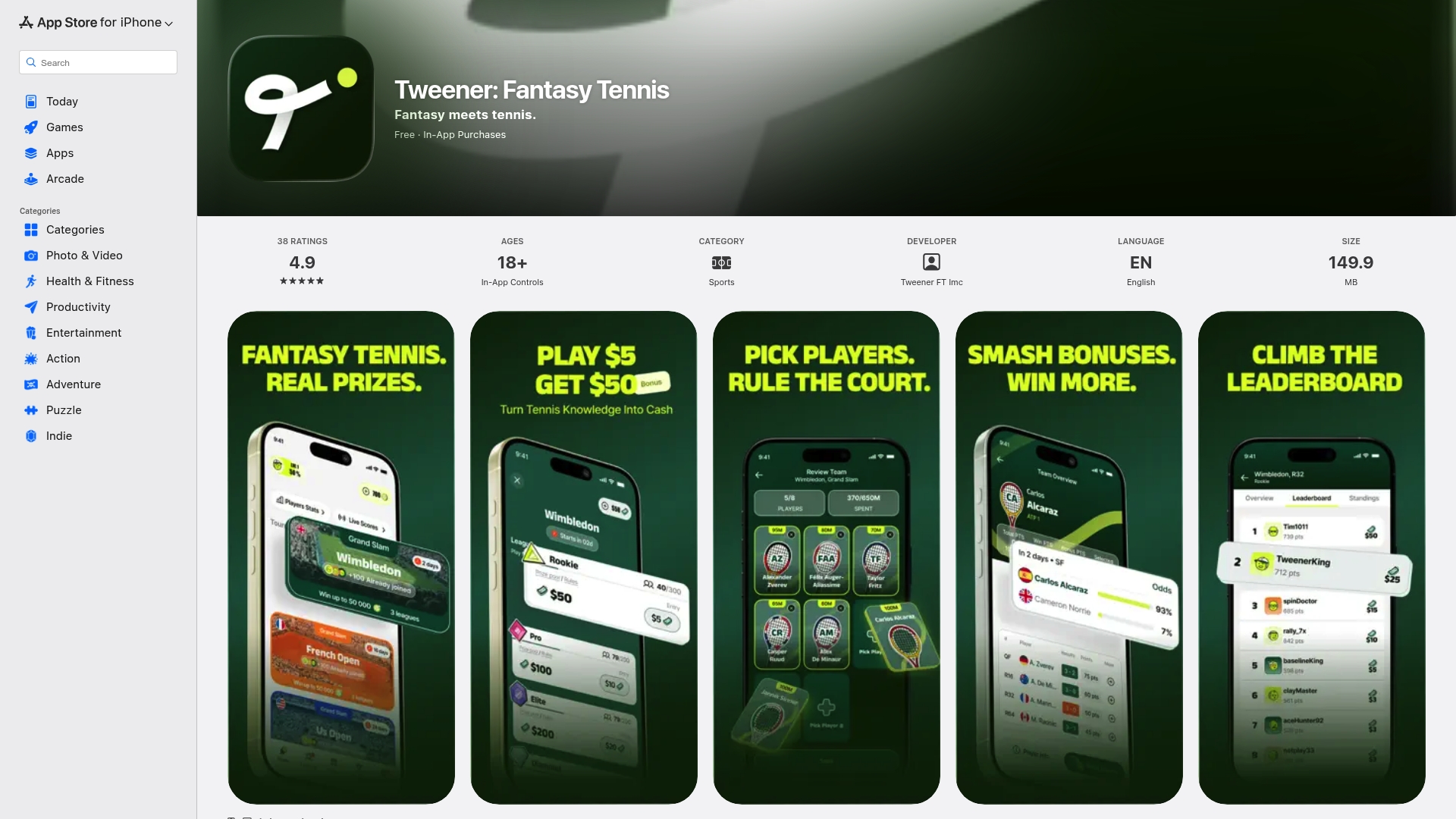
Download Tweener and build your first formation before the next tournament slate locks. The Tweener app is available now, and the next Grand Slam is closer than you think.
Sources
The following Tweener guides and DFS strategy resources support the analysis in this article:
- Tennis DFS Guide: How to Build Winning Daily Fantasy Tennis Lineups