

A public league is open to anyone who signs up, so you play strangers and the platform sets the rules. A private league is invite-only, so you play people you chose and the creator sets the rules. In fantasy tennis, the right pick depends on whether you want a fast, competitive field or a Grand Slam bragging-rights fortnight with friends. Most serious players end up using both.
This guide breaks down the real differences, then applies them to tennis, where a tournament is a seven-round knockout and one early upset can wreck your week.
TL;DR
- Public leagues are open to anyone, fill automatically, and use standard settings. They are the quickest way to find competition and learn the game.
- Private leagues are invite-only. The creator controls who joins and how the league runs, which means you know everyone is showing up.
- Tennis changes the math. Tournaments are short and brutal, so field size, scoring and lineup deadlines matter more than they do in a season-long sport.
- On Tweener, you can join public leagues or create a private one for a Grand Slam with up to 9 friends. Free play uses virtual coins, and cash contests are available only where legally permitted.
Table of Contents
- What is the difference between a public and a private league?
- Who controls the rules?
- How do you get in?
- Why tennis makes this choice different
- Size, stakes and entry fees
- How to choose: a simple decision guide
- Perspective: why we built both
- Try both formats on Tweener
- FAQ
- Sources
What is the difference between a public and a private league?
The core split is access. According to a fantasy sports primer from Dummies, a public league is open to anyone who signs up until every roster slot is taken, while a private league works by invitation, and you can only get in if you have the league information and password.
Everything else follows from that one difference:
| Public league | Private league | |
|---|---|---|
| Who can join | Anyone, until the league is full | Only people you invite |
| Who sets the rules | The platform, using standard settings | The league creator |
| Opponents | Strangers | Friends, coworkers, a group chat |
| Commitment risk | Some opponents may go quiet | You choose people who will show up |
| Best for | Finding a game fast, learning, meeting new rivals | Rivalries, trash talk, tournament-week events |
The same primer notes that the commissioner of a private league can tailor roster requirements, scoring and other settings, which is the main thing that separates it from a public one. It also warns that some heavily customized formats are not ideal for beginners.
Who controls the rules?
In a public league, nobody on your side of the screen does. The platform picks the format, the scoring and the start time. That is a feature, not a flaw: you do not have to read a custom rulebook, and every entrant plays under identical conditions.
In a private league, one person acts as commissioner. That person decides how many players, which scoring applies, and when the league starts. If you are the creator, the job is mostly about setting expectations early so nobody argues in the middle of a quarterfinal. Our guide on common fantasy league rules every commissioner should set lists the ones that prevent most disputes.
How do you get in?
Public leagues: browse the open lobbies, pick one with a spot and a format you like, and join. There is no invitation and no waiting for someone to approve you. Our walkthrough on finding open tennis spots in public fantasy leagues shows how this works on Tweener.
Private leagues: someone creates the league, then shares an invite with the people they want. The creator typically sends a link or code through a text or group chat. If you are building one, see how to invite friends to a fantasy league for the cleanest way to get everyone in before the draw locks.
A quick note on visibility: some platforms let a private league be viewable by outsiders without letting them join. Viewing a standings page and being a member are separate things.

Why tennis makes this choice different
Season-long fantasy football gives you months to recover from a bad week. Tennis does not. A Grand Slam main draw starts with 128 players in each singles event, and a single upset in round one can erase a pick before your coffee gets cold. That compresses the whole experience into days, and it changes what you want from a league.
Short tournaments reward commitment
The biggest risk in any public league is the opponent who stops paying attention. The Dummies primer flags inactivity as an unavoidable risk when you play strangers, while a private league lets you make sure everyone is committed. In a two-week tournament, that matters a lot. If a rival forgets to set a lineup before the first serve, the whole competition feels hollow.
Public tennis leagues on Tweener are built around contests that start and finish quickly, so inactivity has less time to rot a field. Still, if you want guaranteed engagement, a private league with a group chat attached is hard to beat.
Surface and form are the edge
Tennis rewards research. A clay specialist who looks ordinary on hard courts can dominate in Paris. A player's head-to-head record against a specific opponent, recent form and the surface can all point to a better pick than raw ranking does. In a public field, you are competing against people who also research. In a private league, your friends may not, so the same homework pays off more reliably.
We cover the thinking in how to outsmart your rivals in fantasy tennis leagues.
Withdrawals and late changes hit everyone
Tennis has an extra wrinkle: players withdraw, retire mid-match or get moved around when the draw changes. Public leagues apply the platform's standard rules to all of this. In a private league, your group should agree in advance how to handle it. Either way, read our piece on setting alternates before lock, because a correction in the days before play can flip a result.
Size, stakes and entry fees
League size changes how hard it is to find value. The Dummies primer suggests that eight to twelve owners is a good balance in a custom league: too few and talent is not spread enough, too many and good players are spread so thin that general knowledge no longer helps you evaluate them. That advice comes from football, but the logic carries over. In tennis, a Grand Slam draw is big enough that a smaller group of friends still has plenty of realistic picks.
On Tweener, a private Grand Slam league fits you plus up to 9 friends. That is a manageable group: everyone can see who picked whom, and the leaderboard stays readable. If you want a bigger crowd, a public league is the better home.
Stakes are the other axis. Free play and cash contests both exist on Tweener:
- Free mode: you play with virtual coins, which you can earn through gameplay and other in-app activities and redeem for rewards such as gift cards.
- Cash mode: you deposit money to enter paid contests for real-money payouts, where legally permitted. Availability depends on your state.
We do not publish a fixed price for the modes on our site, because entry fees depend on the contest. For a plain-language breakdown of how fees work, see entry fees in fantasy sports.
How to choose: a simple decision guide
Pick a public league if:
- You are new to fantasy tennis and want to learn against real competition.
- Your friends are not into tennis (yet).
- You want to test a strategy against a broad field and see where you land on the leaderboard.
- You want a game running right now, with no setup.
Pick a private league if:
- You already have a group that watches the Slams together.
- You want custom stakes, side bets for pride or a trophy.
- You want to know every opponent will set a lineup.
- You enjoy being the commissioner and shaping the format.
If you cannot decide, run both. A public league tells you how good your reads really are. A private league tells you who gets to talk in the group chat.
Perspective: why we built both
We built Tweener because tennis never had its own daily fantasy home. Football fans have a dozen places to draft a team. Tennis fans got a spreadsheet and a group chat.
That is why we offer both formats. Public leagues give you a real field and a fast way to test your reads on surfaces, form and head-to-head records. Private leagues turn a Grand Slam into an event, with you and up to 9 friends picking players and arguing about every upset.
We think of fantasy tennis as a skill game. You are not guessing a coin flip: you are weighing a player's clay record, how they handle a best-of-five, and whether the draw sets them up for a soft first week. Draft Mode and Pick'em Mode give you two ways to apply that skill, and free play with virtual coins lets you sharpen it before you ever consider a cash contest.
Our advice: start public, learn what wins, then take that edge into a private league with your friends.
Nathan
Try both formats on Tweener
Tweener is a mobile fantasy tennis app built around real ATP and WTA players. You can join a public league in minutes, or set up a private league for the next Grand Slam and invite your group. Pick your players in Draft Mode or Pick'em Mode, earn points from real match results, and play for free with virtual coins or, where it is legally permitted, in cash contests. Cash play is available in select US states.
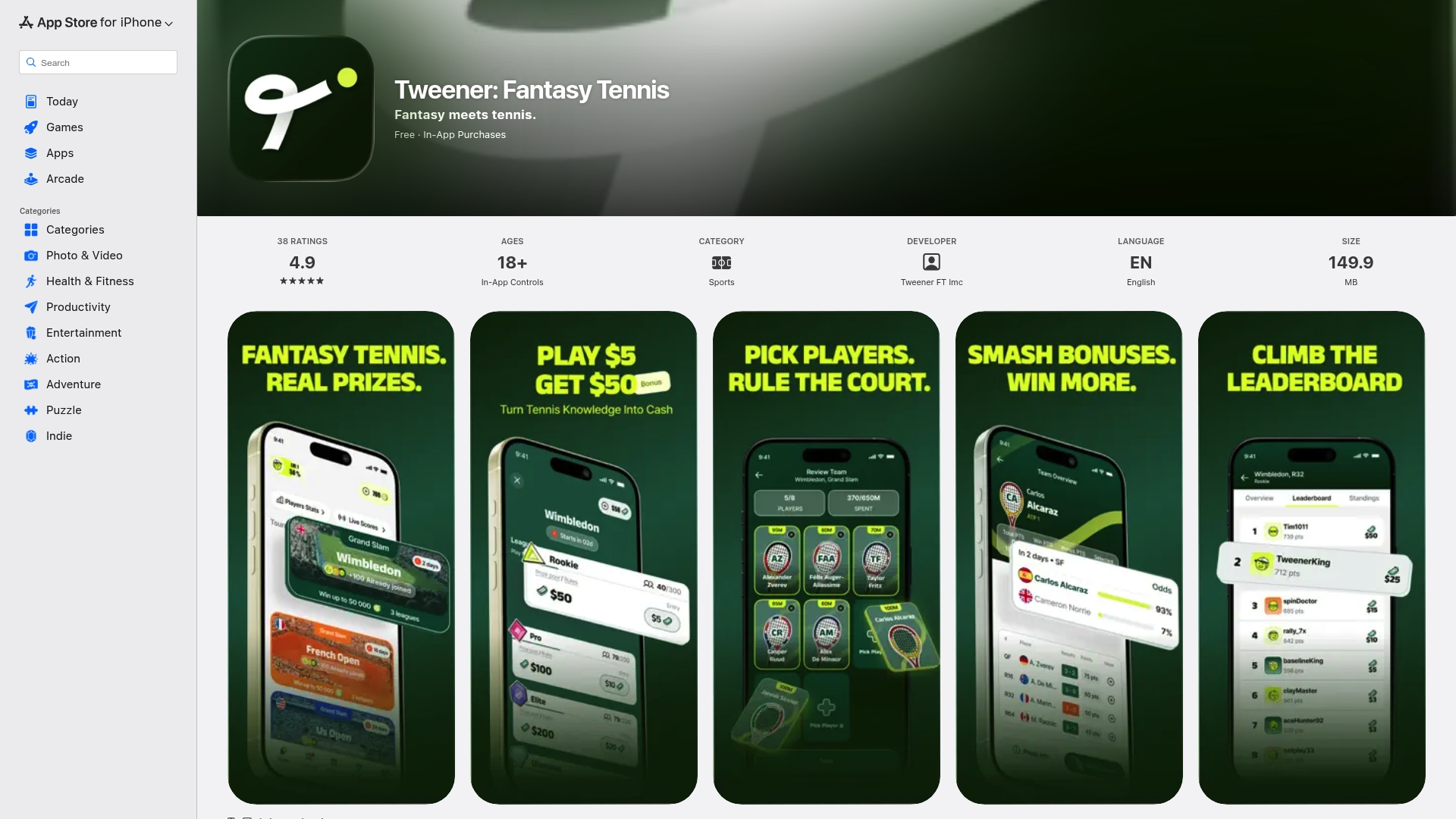
Ready to play? Open Tweener and join a public league or start your own. If you want to set up a Slam with friends first, our guide to drafting friends into a private fantasy tennis league walks you through it step by step.
FAQ
What is a private league?
A private league is an invite-only league where the creator decides who joins and how the league runs. You need an invitation or a code to get in. It suits friend groups, office pools and any competition where you want to know every opponent.
Are public leagues free?
It depends on the platform and the contest. Many public leagues are free to enter, while others charge an entry fee for cash prizes. On Tweener, free play uses virtual coins, and cash contests are available only where legally permitted.
Can I play in both public and private leagues at once?
Yes, and many players do. A public league is a good benchmark for your picks against a wider field, while a private league is the social game with friends. Just make sure you set lineups in each before the tournament locks.
Which is better for beginners?
Public leagues are usually easier to start with because the rules are standard and there is nothing to configure. Once you understand how scoring works, a private league gives you more room to customize. Highly customized setups are generally not recommended for brand-new players.
How many people can I invite to a private Tweener league?
You can compete with up to 9 friends in a private league for each tournament, including Grand Slams. If you want a larger field, a public league is the way to go.