

The fastest way to play tennis with friends privately is to create a private league inside a dedicated fantasy tennis app, since it handles invites, live scoring, and rules automatically. A DIY house league with a shared spreadsheet works fine for two or three friends who want full control over odd rules. For anyone who wants scoring tied to real ATP and WTA results without babysitting a spreadsheet, Tweener's private league mode, with free and cash options, is the practical choice.
TL;DR:
- App-based private leagues like Tweener are ideal for groups larger than five, with automated live scoring and real-time leaderboards.
- DIY house leagues are suitable for small groups under five but are not scalable and require manual updates or multiple disputes.
- Lock your league format, scoring rules, and run a mock draft before the real tournament to prevent confusion and disputes.
- Use automatic scoring pulling from ATP and WTA live match data to reduce disputes and manual errors during the league.
- Tweener offers a risk-free way to create private leagues with virtual coins and cash options, supporting Grand Slam tournaments and up to nine players.
Table of Contents
- What are the best options for private fantasy tennis leagues?
- How do you set up a private fantasy tennis league?
- What scoring and roster rules should you choose?
- How do you manage invites, prizes, and league admin?
- Why Tweener fits organizers of private fantasy leagues
- An organizer's honest take on what actually matters here
- Start your private league with Tweener
- Resources for league rules and organizer tools
- Sources
What are the best options for private fantasy tennis leagues?
Three paths lead to a working private league, and picking the right one depends less on preference than on group size and patience for admin work.
App-based private leagues run on platforms built specifically for fantasy tennis. You get automated scoring pulled straight from live match data, shareable invite links, and real-time leaderboards during a tournament. This is the right call for groups of 4 to 20 players who want to draft, watch, and compete without touching a formula. Tweener falls into this category, with private invites tied directly to major tour-level events.
General fantasy or sportsbook platforms sometimes bolt tennis onto a lineup built for football or basketball. The tennis contests exist, but private-league tools are often an afterthought, limited invite counts, no surface-specific stats, scoring that treats a five-set Grand Slam match the same as a best-of-three ATP 250. If tennis is a side dish on the menu, the private-league experience usually shows it.
DIY house leagues still have a place. A tight group of three friends who want to draft players in a group chat, track points on a shared spreadsheet, and argue about tiebreaker rules over text can absolutely make that work for a single tournament. It just does not scale past a handful of people before someone forgets to update the sheet mid match.
Before picking a path, run through this checklist:
- How many players are joining? Under 5, a spreadsheet survives. Over 5, you want software.
- Does anyone want cash stakes, or is this virtual coins and bragging rights only?
- How much manual scoring are you willing to do during a five-hour Alcaraz five-setter?
- What's your tolerance for disputes over a missed point or a late roster swap?
How do you set up a private fantasy tennis league?
Launching a private league is mostly a sequencing problem. Get the order right and the first week runs itself.
- Pick your format first. Season-long leagues track player performance across a whole tour swing. Tournament-specific leagues, the most popular structure for Grand Slams, reset every event, which keeps the stakes fresh for each major. Daily contests fit fans who want a one-off bet-the-day feel without a season commitment.
- Lock your scoring model before anyone drafts. Decide whether points come from match wins, games won, or a hybrid, and settle tiebreaker rules now, not in week three when it actually matters.
- Choose entry type. Virtual coins keep things casual and let new players test the format risk-free. Cash entry raises the stakes but means confirming your platform allows it in your state.
- Set up invites and privacy. Generate a private invite link, cap the roster at a number that fits your group (Tweener supports leagues designed for small to medium groups of friends per tournament., and decide whether it's a snake draft or a straight pick'em format.
- Run a mock week. Before the real tournament starts, do a practice draft. This catches scoring confusion and roster size arguments before real games are on the line.
- Publish the schedule and assign one person as commissioner. Someone has to own dispute resolution and reminder texts. Rotate the job if the league runs multiple tournaments.
Pro Tip: Run your mock draft using last year's tournament bracket. It forces everyone to think about surface and form without the pressure of live stakes, and it exposes any scoring confusion while it's still cheap to fix.
Groups organizing recurring in-person tennis, not fantasy, use a similar sequencing logic. LeagueTennis sets playing levels and season length before matches begin specifically to avoid mid-season format fights, a lesson that transfers directly to fantasy drafts.

What scoring and roster rules should you choose?
Scoring format shapes strategy more than any other single decision you'll make as an organizer.
Per-point or per-game scoring rewards depth. A player who grinds through a close three-setter without winning racks up points even in a loss, which favors rosters built on volume and consistent performers over pure upset hunters. Match-based scoring, by contrast, is simpler to explain to casual players and mirrors how most fans already watch tennis: win the match, get the points. If your league skews toward people who've never played fantasy sports before, match-based scoring lowers the learning curve considerably.
Roster construction matters just as much:
- Salary-cap drafts force strategic tradeoffs, since you can't just stack five top-ten seeds on one roster.
- Snake drafts are simpler to run and feel fairer in small private groups, since everyone gets a shot at a top pick.
- Auction formats work for leagues with strong personalities who enjoy negotiating for Sinner or Świątek in real time.
Captain multipliers (doubling points for one designated player each round) add a strategic layer worth the extra rule. Emergency substitution rules for injury withdrawals prevent a league from being decided by a walkover in round one.
Live scoring that pulls directly from ATP and WTA match feeds is what actually kills disputes before they start. Organizer-facing tools that automate match assignment and rating calculations save real time and cut down the manual errors that derail small private leagues, the same logic applies whether you're running a physical ladder league or a fantasy roster tied to live results. Understanding how fantasy tennis points map to actual match stats before your league starts saves everyone an argument in week two.
How do you manage invites, prizes, and league admin?
Running the league day to day is where good intentions fall apart, usually over communication, not rules.

Send invites with a hard confirmation deadline and a clear no-show policy. If someone hasn't drafted 24 hours before a tournament starts, decide in advance whether they get auto-filled or dropped, don't improvise it live. A group chat or a dedicated league channel works better than scattered texts for draft reminders and match-day trash talk. Flex-style scheduling built around predictable weekly windows, borrowed from real-world tennis leagues, reduces the same no-show friction in fantasy drafts that it does on physical courts.
Prizes range from virtual coin payouts and gift cards to real cash, depending on your platform and mode. Whichever you choose, write the payout structure down before the tournament starts, not after someone wins.
- Confirm your platform's terms of service and your local laws before hosting any cash contest.
- Document scoring rules and prize splits in a shared note everyone can access.
- Assign one commissioner to handle disputes, and treat that decision as final once made.
Pro Tip: Screenshot your final scoring rules and pin them in the group chat before the draft. Half of all league disputes come from someone misremembering a rule that was only ever said out loud.
Why Tweener fits organizers of private fantasy leagues
Tweener was built around the exact gap most fantasy platforms leave open: tennis never had a real Fanduel or DraftKings equivalent, and casual apps treat it as an afterthought. Tweener lets you create private leagues with invite links tied directly to live ATP and WTA tournaments, including Grand Slams, where you can compete against up to nine friends per event.
The platform runs two modes: free play with virtual coins redeemable for rewards, and cash contests where legally permitted, so you can test a league risk-free before anyone puts money in. Tweener also publishes its scoring and game rules openly, along with blog strategy content for organizers who want a real edge, not just a scoreboard.
An organizer's honest take on what actually matters here
Most advice about private fantasy leagues obsesses over picking the "best" scoring system, as if there's one correct formula waiting to be discovered. There isn't. The leagues that fall apart aren't the ones with imperfect scoring rules, they're the ones that never locked their rules before the draft happened. Ambiguity is the actual killer, not scoring philosophy.
The conventional wisdom also undersells how much a mock draft prevents. Everyone talks format and roster size, almost nobody suggests running a practice week, yet it's the single cheapest way to catch a broken rule before real stakes are attached.
If you're organizing a group this season, prioritize sequencing over sophistication: lock the format, publish the rules in writing, run one mock week, then draft. The platform matters far less than most guides suggest, as long as it handles live ATP and WTA scoring automatically. That's the part no spreadsheet does well, and it's exactly where tennis has lacked its own version of what football and basketball fans have had for years.
— Nathan
Start your private league with Tweener
Tweener is the ready-built answer to the gap this whole guide keeps circling: tennis fans wanting the "Fanduel of tennis" experience without building it themselves in a spreadsheet. Open the app, tap "create private league," and you're drafting friends into a Grand Slam bracket in minutes.
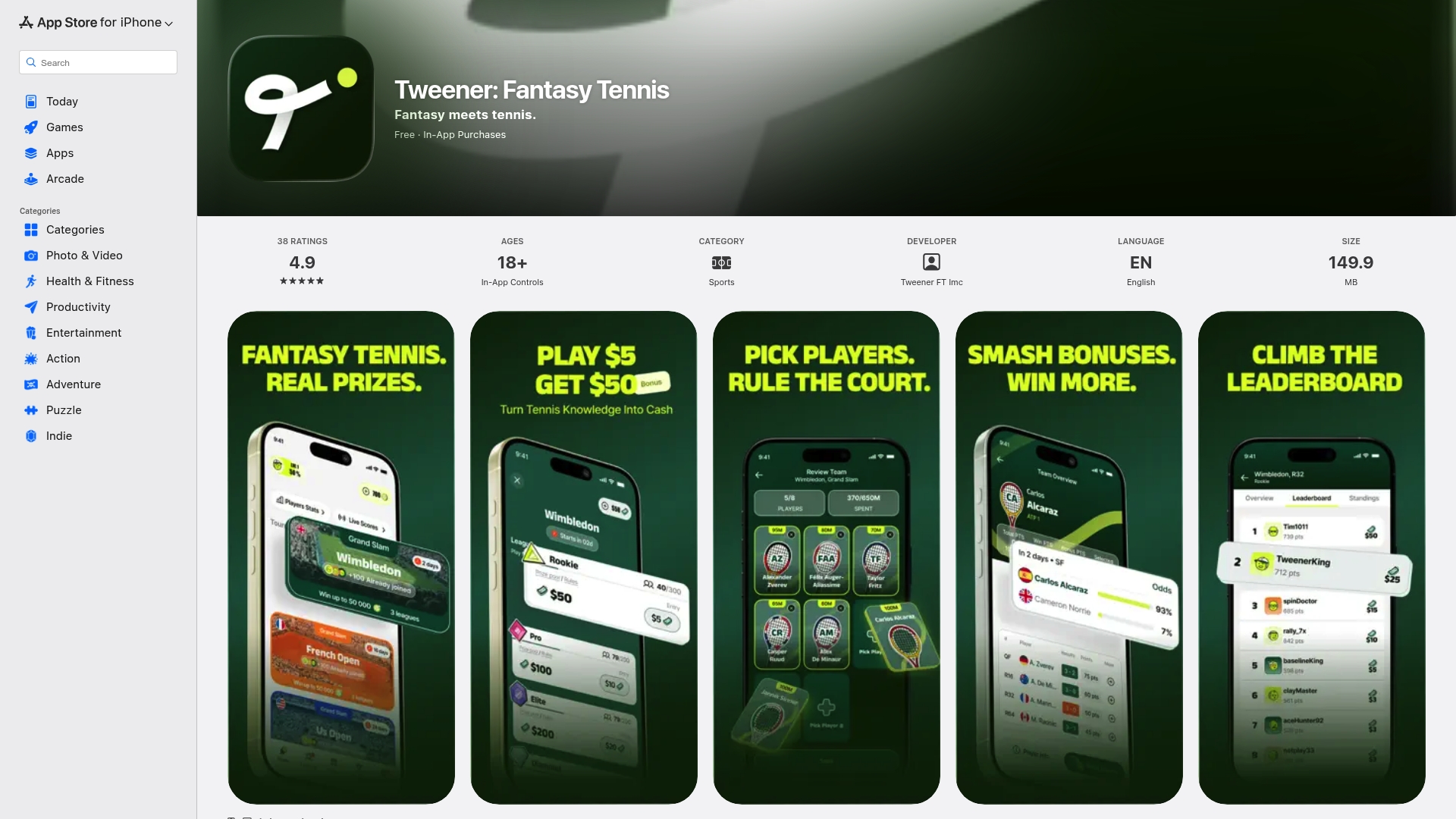
Start in free mode with virtual coins to test your scoring rules and roster settings risk-free. Once your group has confirmed the format works and checked local rules on cash contests, switch to paid entry and play for real stakes. Head to Tweener's private league page to see the full feature set, or go straight to the App Store listing to download it and get your first draft on the calendar before the next Slam starts.
Resources for league rules and organizer tools
For scoring specifics and setup steps, Tweener's game rules page and private league setup guide cover the mechanics directly. Organizers curious how in-person leagues structure formats can check Tennis League Network or Global Tennis Network's organizer software for scheduling ideas that translate well to fantasy play.
Sources
- Flex Tennis Leagues | Weekly Matches Near You | Ultimate Tennis
- Leaguetennis
- Tennis League Network
- Global Tennis Network | GTN - Tennis Software