

Public fantasy leagues live in several places: your fantasy platform's own public lobby, official game pages tied to live events, and community forums like subreddits or Discord servers where managers post open spots. Both free and cash contests exist in each. Your fastest move is to open your app's "join public league" flow, filter by draft time and experience level, and grab a league with a draft you can actually attend. If tennis is your sport, look for a tennis-specialist app with public contest lobbies built around real tournaments.
TL;DR:
- Choose best ball if you want no weekly lineup work, pick’em for single event contests, or auction drafts when valuation matters more than draft position.
- Free leagues usually offer virtual rewards, while paid contests may feature guaranteed prize pools or pay only top finishers; tiered payouts spread winnings more widely.
- Most platforms lock you into a public league after its draft, so check its cancellation policy before confirming a season long commitment.
- Season long leagues fill before the season, while tournament contests close before the first match; check deadlines early and refresh open spot listings near drafts.
- Tennis scoring varies by platform and can reward match wins, sets, games, aces, and break points, so review rules and track draws and court surfaces.
Table of Contents
- Where to find public leagues: platform lobbies, official contests, and communities
- Comparing draft, auction, best ball, and pick'em formats
- How to join a public league: steps and what to verify first
- Finding open spots and timing your entry right
- Why a tennis-specialist app helps with public tennis contests
- How scoring works in a public fantasy tennis league
- Timeline of a typical public league season or contest
- How to handle disputes and rule clarifications
- Social and community features inside public leagues
- When public leagues are the right call
- Get started with Tweener for tennis public leagues
- FAQ
- Sources
Where to find public leagues: platform lobbies, official contests, and communities
Many fantasy platforms make public leagues easy to find. On ESPN, for example, the join a public league flow matches you with other managers of similar experience and lets you filter by scoring type, draft type, and draft date and time, so you're not stuck in a league full of mismatched schedules. That filtering matters more than it sounds: a snake draft scheduled for a weeknight you're busy is a wasted slot.
Official game pages are the second stop. Seasonal pick'em contests and tournament-based lobbies, like ESPN's NFL Pick'em, run free public contests tied directly to live events rather than season-long commitments. These are lower-friction than a full draft league and a good way to test a new sport or format without much setup.
Community sources round out the search. Subreddits, Discord servers, and league marketplaces regularly post open-spot threads when a manager drops out or a commissioner needs one more team. These spots move fast, so treat them like a waitlist you check daily rather than a one-time search.
A few tactics make the hunt easier:
- Set alerts or reminders for draft dates so you don't miss a league that fits your schedule.
- Use "open spots" or "join now" filters instead of scrolling full league directories.
- Save searches for upcoming tournament or event-based contests so new lobbies show up automatically.
Pro Tip: Check platform lobbies in the morning and again in the evening during peak signup season; cancellations and new postings cluster around those windows.
Comparing draft, auction, best ball, and pick'em formats
The format you choose decides how much weekly work you're signing up for. A snake or standard draft builds a season-long roster you manage with trades and waiver claims. An auction gives every manager a budget to bid on players, which rewards valuation skills over draft-position luck. Best ball removes weekly lineup setting entirely: your highest scorers each week count automatically, so it suits managers who want less maintenance. Pick'em skips rosters altogether. You make picks against a schedule or matchups, which fits shorter, event-based contests better than a full season.
Entry costs scale with the format and the platform. Free or virtual-coin leagues exist mainly for social play and redeemable rewards. Low-stakes cash contests typically have modest entry fees for a season or single event. Mid-to-high-stakes leagues charge more per entry, and organized high-stakes contests, like those run through the NFBC high-stakes fantasy network, feature structured entry fees with large guaranteed prize pools.
Prize structures matter as much as the entry fee:
- Free leagues typically pay out virtual rewards or in-app currency rather than cash.
- Paid contests can use guaranteed prize pools, where the payout is fixed regardless of entries, or top-heavy structures that reward only the top few finishers.
- Tiered payout formats spread money across more places, which lowers variance but also lowers the biggest possible win.
Match the format to your actual goal. If you want a casual, low-pressure season, a free best-ball or draft league covers it. If you want to test real decision-making skill, a low-stakes auction or draft league adds enough weekly stakes to matter. If you're chasing a bigger payout and can tolerate more variance, a high-stakes guaranteed-pool contest is the better fit.
How to join a public league: steps and what to verify first
Joining is mechanically simple, but the details you skip now tend to surface as problems later.
- Sign in to your fantasy platform of choice.
- Open the public lobby or "join public league" feature.
- Set your preferences: experience level, scoring format, and draft type.
- Review the available leagues and pick one with a draft time you can attend.
- Confirm your entry, including any fee and payment method, before the draft locks.
Before you commit, verify the details that cause the most regret: the draft date and time, roster size, scoring rules, entry fee amount, how and when payouts get processed, and the platform's code of conduct for disputes or inactive managers.
The biggest surprise for first-timers is commitment. According to ESPN's own support documentation, once a public league successfully drafts, you typically cannot leave it for the rest of the season. That single rule turns a casual signup into a season-long obligation, so confirm the cancellation or leave policy before you finalize anything.
If you're entering a cash contest, confirm two more things: that paid fantasy contests are legally available in your state, and which payment processor the platform uses for deposits and withdrawals.
Pro Tip: Screenshot the league's scoring settings right after you join; platforms occasionally let commissioners adjust rules mid-season, and a record protects you if a dispute comes up later.
Finding open spots and timing your entry right
Open spots appear and disappear fast, especially close to draft day. Platform waitlists and "open spots" filters are your first tool: refresh them in the hours before a scheduled draft, since last-minute cancellations are common and often the only way into an otherwise full league.
Community venues are your second channel. Subreddits, Discord servers, and league marketplaces regularly post replacement-manager requests when someone drops out mid-draft or goes inactive early in the season. These posts move quickly, so following the right channels ahead of time beats searching after the fact.
Timing differs by contest type. Event-based or tournament contests, like pick'em pools tied to a specific tournament, open and close around that event's schedule, so you need to join before the event starts rather than mid-run. Season-long lobbies, on the other hand, fill up earlier in the pre-season window, which means waiting too long often means scanning drop-in feeds instead of fresh openings.
A few habits make this easier:
- Set calendar reminders for known signup windows, especially right before a season or major tournament starts.
- Follow active community channels so you see replacement-spot posts as they're posted.
- Keep your payment method ready so you can register the moment a slot opens, since good spots rarely stay open long.
Why a tennis-specialist app helps with public tennis contests
General fantasy platforms are built around football, baseball, and basketball first, which means tennis often gets an afterthought scoring system or no dedicated public lobby at all. We built our platform around professional tennis from the ground up, with play available through both Draft Mode and Pick'em Mode.
A few things that matter when you're choosing where to play tennis fantasy:
- We offer ways to play that let you match the format to how much you want at stake.
- Draft Mode suits readers who want to build a tournament roster and track ATP and WTA players match by match; Pick'em Mode suits readers who want quicker, lower-commitment picks tied to specific matchups.
- Our guide to drafting tennis players walks through player selection for anyone building a tournament roster for the first time.
How scoring works in a public fantasy tennis league
Scoring in a public tennis league is built around real match statistics rather than season-long box scores, which is a bigger shift than it sounds if you're coming from football or baseball. Points typically accrue per match based on what your selected player actually does: match wins, sets won, games won, aces, and break points converted all commonly feed into a scoring formula, with bonus points often awarded for upsets or straight-set wins.
Because tennis scoring happens match by match rather than week by week, a single tournament can swing your public league standings fast. A player who wins three rounds in a Masters 1000 event can outscore a seeded favorite who loses early, which rewards managers who track draws and surface form rather than just picking the highest-ranked names.
Surface matters more in tennis scoring than most sports translate well. A player who performs well on clay doesn't automatically repeat that form on hard courts, so public leagues that run across a full season reward managers who adjust rosters tournament by tournament rather than setting a lineup once and leaving it.
Scoring rules vary by platform and contest, so the exact point values for a break point or a bagel set aren't universal. Before you draft, check the specific league's scoring settings rather than assuming they match a different platform or a previous contest you played.

Timeline of a typical public league season or contest
A season-long public fantasy league usually follows a predictable arc: a signup window before the season starts, a scheduled draft date, a regular season where you manage your roster weekly or match by match, and a final scoring period that closes out standings once the season or tournament concludes.
For tournament-based contests, the window is much tighter. Signups typically open once the draw is announced, the "draft" or pick window closes before the first match of the event, and scoring runs continuously as matches are completed, finishing when the tournament concludes.
A few dates matter more than others. The draft or entry deadline is the hard cutoff, since most public leagues lock your spot and your roster once that passes. Mid-contest, watch for any roster-change deadlines if the format allows swaps between rounds. At the close, payout timing depends on the platform and contest type: free leagues usually distribute rewards shortly after final scoring, while cash contests may take a few business days to process withdrawals.
Knowing this timeline ahead of time helps you avoid two common mistakes: joining a season-long league too late to get a real draft slot, or missing a tournament contest's entry window because you assumed it worked like a season-long format.
How to handle disputes and rule clarifications
Most public leagues run on platform-wide rules rather than custom settings, which limits disputes but doesn't eliminate them. The first step when something looks wrong, a scoring error, a missed roster lock, or a questionable trade, is to check the platform's code of conduct or help center article for that specific rule before assuming it's a bug.
If the issue is a scoring discrepancy, most platforms have a correction window right after matches are scored, so report it quickly rather than waiting until the end of the contest. Our internal guide on common fantasy league rules covers the kinds of settings commissioners typically lock in, which is useful context for understanding what's actually adjustable in a public league versus what's fixed platform-wide.
For contests involving real money, check the platform's stated support channels before escalating anywhere else. Public leagues don't have a commissioner you know personally, so disputes generally route through platform support rather than a private conversation, which means documentation (screenshots of scoring, entry confirmations, roster locks) matters more than it would in a private league with friends.
Social and community features inside public leagues
Public leagues aren't purely solitary even though you're often playing against strangers. Most platforms include in-league chat, which becomes a useful spot for trade talk, trash talk, or clarifying a rule everyone's confused about. Leaderboards update in real time during scoring periods, letting you track your rank against the full field rather than guessing where you stand.
Sharing results has become a bigger part of the experience too. Many platforms let you post standings or standout performances to social feeds, and community spaces like subreddits and Discord servers often run their own informal leaderboards or recap threads alongside the official in-app ones. For tennis specifically, this matters during a Grand Slam: tracking a draw with a group, even a public one, adds a layer most fans don't get from watching matches alone.
These features don't replace the structure of a private league with people you know, but they do turn a public contest into something more social than a solo bracket pick.
When public leagues are the right call
Public leagues win when you want speed: quick entry, fresh opponents, and access to an event-based contest without recruiting anyone. They're the right default for trying a new format or jumping into a single tournament.
Private leagues earn their place when continuity matters: the same group, the same rules, across an entire Grand Slam season. My rule of thumb is simple. Use public leagues to experiment, and once you find a format you like, move it into a private league with people you actually know for the long run.
— Nathan
Get started with Tweener for tennis public leagues
If tennis is your sport, we built Draft Mode and Pick'em Mode for fantasy contests tied to real ATP and WTA tournaments.
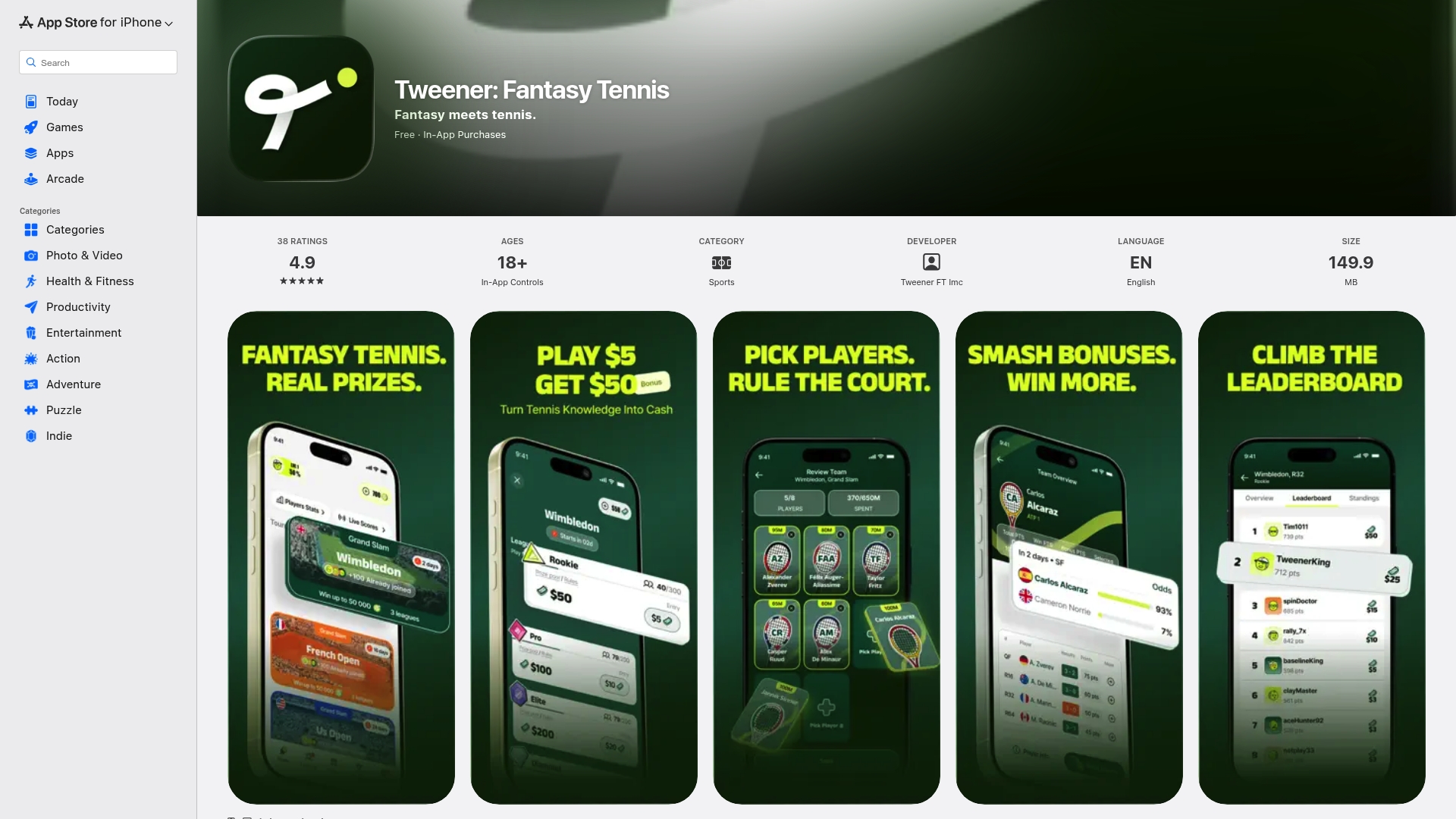
Play in free contests, or cash contests where legally permitted, once you're ready for real stakes. Visit our Draft Mode and Pick'em Mode page to find an open public tennis contest, or download the app to get started before the next tournament draw.
FAQ
How do I join a public fantasy league on ESPN?
Open ESPN's public league join flow, set your preferences for scoring type, draft type, and experience level, then select a league with a draft time that works for your schedule. The platform matches you with managers of similar experience automatically.
Is there a public fantasy league for baseball?
Yes, major fantasy platforms run public baseball leagues alongside football, basketball, and other sports, typically through the same public lobby or join-league feature used across their game catalog. Format and scoring options vary by platform, so check the specific league settings before joining.
Does ESPN fantasy offer cash prize leagues?
ESPN's standard public leagues are free to join and typically pay out through pick'em contests and promotional prizes rather than guaranteed cash pools. For structured cash contests with guaranteed prize pools, dedicated high-stakes platforms like NFBC are a more common fit.
Which fantasy football platform is best for free public leagues?
Platforms like Fleaflicker and ESPN both offer free public leagues with commissioner tools, customizable formats, and year-round availability at no cost. The better fit depends on whether you want more customization options, which Fleaflicker emphasizes, or a simpler, higher-traffic public lobby, which ESPN offers.
Can I leave a public league after the draft?
Most platforms lock your membership once a public league successfully drafts, meaning you typically cannot leave it for the rest of the season. Confirm the specific cancellation policy before you finalize your entry, especially for cash contests.
Sources
- Fantasy Football Join a Public League - ESPN
- Join a Public (Standard) League – ESPN Fan Support
- Home - NFBC | NFFC | NFBKC | NFHC | High Stakes Fantasy ...
- Free Fantasy Football Leagues · NFL