
TL;DR:
- Grass produces a fast, low, skidding bounce that favors aggressive serve and volley tactics. Short points, early ball contact, and precise shot placement are the strongest predictors of success on grass courts. Players should adapt their movement, footwear, and shot selection to exploit the surface's physics and unpredictable conditions.
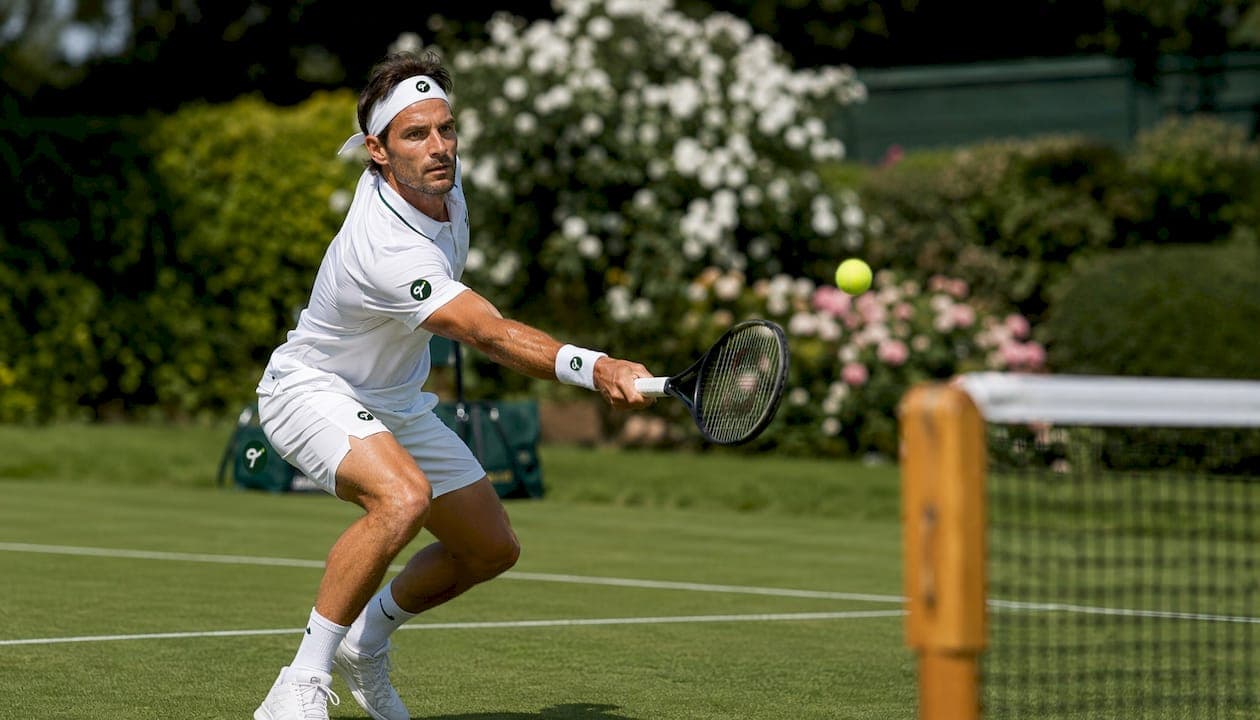
Grass produces a low, fast, skidding bounce that cuts reaction time and compresses points into a handful of shots. That single physical fact reshapes every decision on court, from serve placement to footwear to fantasy lineup construction.
- Serve dominance surges. The skidding bounce amplifies flat and wide serves, making them harder to read and return cleanly.
- Slice and flat groundstrokes thrive. Topspin loses much of its vertical kick on grass; slice stays low and forces opponents into awkward, cramped contact points.
- You have to take the ball earlier. Waiting for the ball to rise to a comfortable height, as you would on clay, is a losing strategy. The ball stays low and accelerates away.
Research from longitudinal Wimbledon performance analysis (Fitzpatrick et al.) shows that winning more short points (0–4 shots) is the single strongest match-level predictor of victory on grass. That finding shapes everything below: the physics, the tactics, the footwork, and the fantasy signals worth tracking.
Table of Contents
- How does grass change the ball's bounce?
- How do grass court tactics and match dynamics shift?
- How should you move and what shoes do you need on grass?
- Why does grass speed vary so much across venues and days?
- What does the research actually say about grass court performance?
- Key Takeaways
- The part most players get wrong about adapting to grass
- Useful sources for further reading
How does grass change the ball's bounce?
The answer is friction, or rather the lack of it. Grass courts have lower friction than clay or hard courts, which means the ball loses less horizontal speed at the moment of impact. On clay, that friction grabs the ball, slows it forward, and kicks it upward. On grass, the ball skids through, keeping most of its horizontal momentum while barely gaining height.
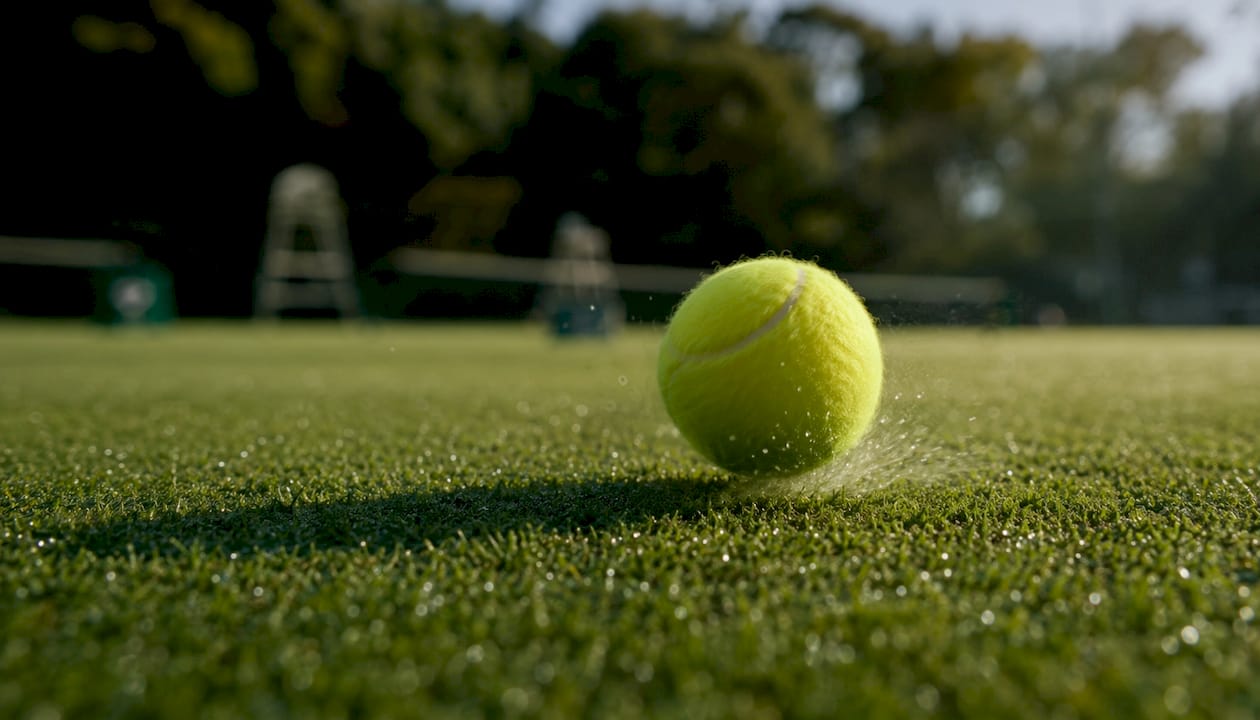
Two physics terms are worth knowing here. The coefficient of restitution describes how much energy a ball retains after impact; grass returns more horizontal energy than clay does. Skid refers to the ball sliding along the surface rather than gripping and rotating upward. Both effects combine to produce the signature grass bounce: fast, flat, and low.
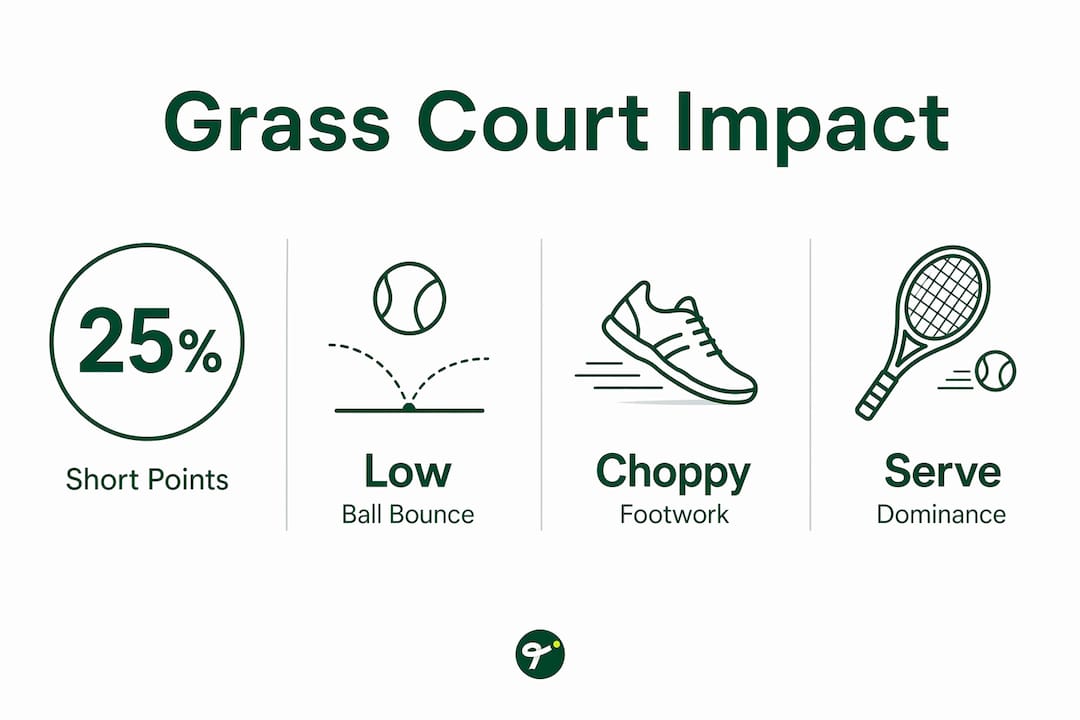
Spin behaves differently here too. Topspin loses vertical rebound on grass because the surface does not give the ball enough friction to convert that spin into height. A heavy topspin forehand that bounces shoulder-high on clay might sit at hip height or lower on grass. Slice, by contrast, skids even more aggressively because its backspin actively resists upward deflection, keeping the ball below knee level.
Picture the ball's path at impact as two vectors: one pointing down into the court, one pointing forward. On clay, friction converts some of that forward vector into upward bounce. On grass, that conversion barely happens. The ball exits impact at a shallower angle, faster, and lower. At Wimbledon, where the All England Club maintains courts to precise specifications, this effect is most pronounced in the first few days of a tournament when the grass is freshest and most uniform.
How do grass court tactics and match dynamics shift?
The dominant tactical pattern on grass is simple: get to a short-point outcome before your opponent does. Grass disproportionately rewards aggressive, serve-first tactics, and the players who win most often are those who force errors or land outright winners within the first three or four shots.
What works on grass:
- Wide and body serves with flat pace. The skidding bounce drags the returner off the court or jams them at the hip. Lateral placement matters more than raw speed.
- Serve-and-volley or serve-plus-one. Following a strong serve to the net closes angles and ends points before a rally develops.
- Taking the ball on the rise. Waiting for the ball to peak gives your opponent time to reset. Stepping in and striking early keeps the pressure on.
- Aggressive slice placement. A deep slice to the backhand corner stays low, forces a defensive reply, and sets up an approach or winner.
What to avoid:
- Long, loopy topspin rallies. They give the ball time to sit up and let your opponent find rhythm.
- Passive returning. Blocking the ball back without direction invites an easy put-away.
Coaches and performance analysts note that serves and returns are under-practiced relative to their match importance, particularly for grass. A representative grass prep session should include live return drills against wide and body serves, not just baseline rally work.
Pro Tip: Set up a serve-and-return drill where the server targets three zones (wide, body, T) and the returner must redirect the ball crosscourt within two shots. Run 20 minutes of this before any baseline work. It mirrors the actual decision tree of a grass-court point.
For fantasy purposes, this tactical reality has a direct implication. Players with strong first-serve percentage, high ace rates, and efficient short-point records at grass events carry a measurable edge. Surface-aware fantasy picks start with those numbers, not just overall ranking.
How should you move and what shoes do you need on grass?
The core movement change is this: shorter, choppier steps replace the long sliding strides that work on clay. Grass offers less friction underfoot, so a long step can send your foot sliding past the ball. The correct adjustment is to stay lower, shorten your stride, and plant more deliberately before each shot.
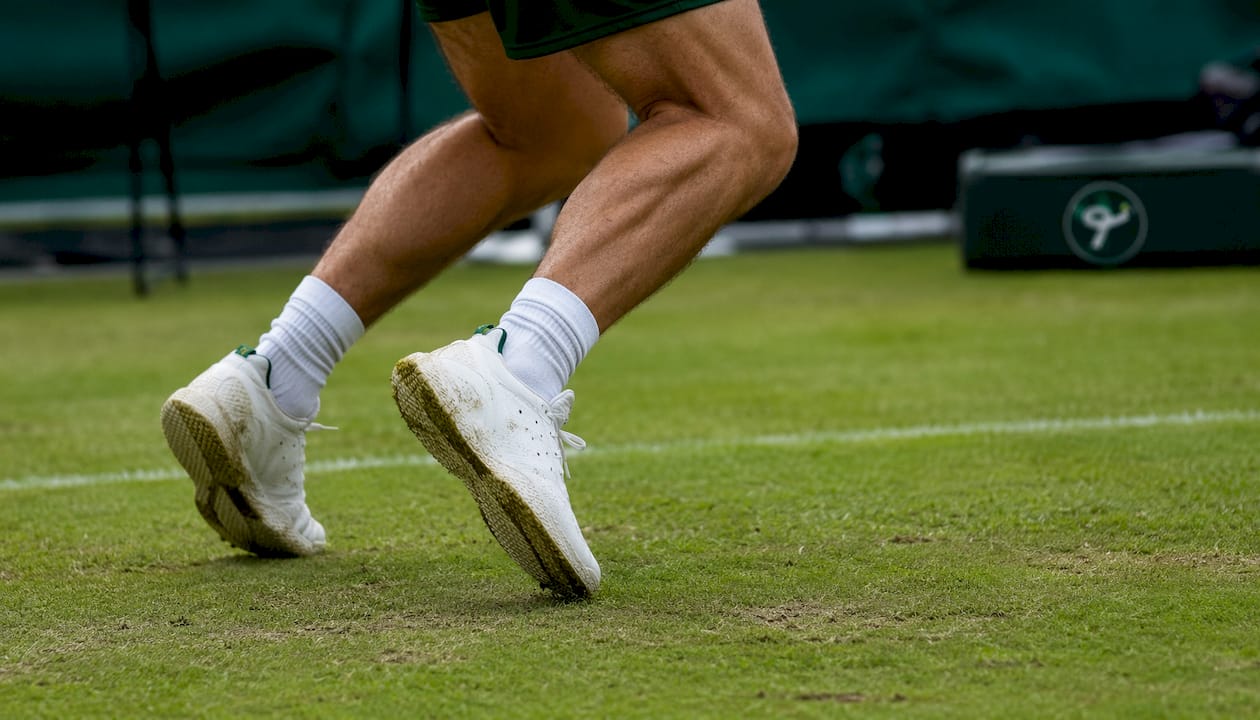
Transitioning from clay to grass requires rethinking footwork almost entirely. Clay players learn to slide into the ball and use that slide to generate rotation. On grass, that slide becomes a liability. The goal is controlled, compact movement with a lower center of gravity throughout the rally.
Footwear matters more than most recreational players realize. Grass-specific shoes have a flat outsole with small rubber pimples or nubs that grip the turf without tearing it. Standard hard-court shoes have a herringbone tread that can rip up the grass surface and still leave you slipping. Clay shoes are even worse on grass because their deep tread fills with turf and provides almost no grip. If you are playing on a maintained grass court, the right shoe is not optional.
One physical effect that catches players off guard is what practitioners call "grass ass," a colloquial term for the heightened quad and glute fatigue that builds from sustaining a low, bent-knee posture across an entire match. Targeted lower-body conditioning in the weeks before a grass event, specifically wall sits, lateral band walks, and split-squat holds, reduces this fatigue and lowers the injury risk that comes with tired legs on a slippery surface.
Pro Tip: Practice the "grass stance" drill: stand in your ready position with knees bent to roughly 120 degrees and hold it for 30 seconds between points during a practice set. It builds the postural endurance you need to stay low through a full match.
Why does grass speed vary so much across venues and days?
"Grass" is not a single surface. The speed and bounce you experience depend on grass species, soil composition, mowing height, humidity, and how far into a tournament the court has been played on.
Perennial ryegrass is the standard choice for top tournament lawns, including Wimbledon, because it is durable and relatively consistent. But even within a single venue, courts play differently depending on their orientation (sun exposure affects drying rate), their position in the draw (show courts get more traffic), and the weather that week.
The main variables to track:
- Grass species and blend. Ryegrass gives more consistency than older mixed-grass courts, but variation remains.
- Soil compaction. Harder soil produces a truer, faster bounce. Softer, wetter soil absorbs more energy and slows the ball.
- Mowing height. Shorter grass means less friction and a faster, lower bounce.
- Humidity and heat. Heat and dry conditions can make the leaf dry out and grip the ball more, paradoxically slowing the court. Humid conditions keep the grass slick.
- Tournament wear. Courts start lush and consistent, then develop worn patches and exposed soil as the event progresses.
That last point deserves emphasis. Courts move from lush and slippery early to worn and unpredictable later, with bare soil patches creating awkward, low-skidding or erratic bounces. A ball that lands on a worn baseline patch in the second week of Wimbledon behaves nothing like the same shot in round one. Players should expect more awkward bounces as wear increases and adjust their approach shot risk tolerance accordingly.
Fantasy and scout checklist for tournament week:
- Check the weather forecast before each round. Rain delays and wet courts slow play and favor baseliners.
- Note which courts are showing visible wear by the quarterfinals.
- Track observed bounce variability in early-round matches on the same court your player will use.
- Monitor player comments in press conferences about court speed. When multiple players flag a change, it is real.
What does the research actually say about grass court performance?
The clearest evidence comes from longitudinal match analysis at Wimbledon. Fitzpatrick et al. found that short points predict match outcomes more reliably than any other performance characteristic on grass. Winning the 0–4 shot exchanges is not just a stylistic preference; it is the strongest statistical signal of who wins the match.
| Performance factor | What the research shows |
|---|---|
| Short-point dominance (0–4 shots) | Strongest match-level predictor of wins at Wimbledon (Fitzpatrick et al.) |
| Serve and return practice time | Under-represented in most training sessions relative to match importance |
| Slice and flat groundstrokes | More effective on grass than topspin due to low friction and skid effect |
| Lateral serve placement | Amplified by skidding bounce; wide serves pull returners off court more than on clay |
| Court wear progression | Bounce becomes less predictable in later rounds; risk tolerance should adjust |
A comparative study of top-five ATP players found that grass courts produced the highest mean values for forehand winners, backhand winners, and volley winners across all surfaces, reflecting how the surface rewards aggressive, committed shot-making over extended defensive consistency.
The practical warm-up checklist before a first grass session:
- 10 minutes of low-stance lateral shuffles to activate glutes and quads
- Serve practice targeting all three zones (wide, body, T) with a focus on flat pace
- Return drill: live returns against a server, redirecting crosscourt within two shots
- Approach shot practice from mid-court, finishing at the net
For coaching session design, the research implication is direct: allocate more practice time to serve and return under representative conditions, not just baseline rallying. The match is decided in the first few shots; practice should reflect that.
Key Takeaways
Grass courts reward early aggression, precise serve placement, and compact footwork, and the players who master those three things win the short-point exchanges that decide matches.
| Point | Details |
|---|---|
| Low, skidding bounce | Grass's low friction keeps the ball fast and flat, forcing earlier contact than clay or hard courts. |
| Short points decide matches | Fitzpatrick et al. found winning 0–4 shot exchanges is the top predictor of match wins at Wimbledon. |
| Serve and slice are weapons | Flat serves and aggressive slice placement exploit the skid effect more than topspin-heavy play. |
| Footwear and footwork matter | Grass-specific pimpled soles and short, choppy steps prevent slipping and reduce injury risk. |
| Court conditions shift across rounds | Worn patches and weather alter bounce unpredictably; adjust risk tolerance and fantasy picks as the tournament progresses. |
The part most players get wrong about adapting to grass
The conventional advice is to "play more aggressively on grass." That is true but incomplete, and for most players it leads to a specific mistake: they try to force a style that does not fit their game instead of adapting what they already do well.
Top practitioners are clear that players do better on grass when they adapt their existing strengths rather than wholesale reinventing their game. A strong baseliner does not need to rush the net on every point. What they do need is to take the ball earlier, compress their backswing, and accept that their topspin will not generate the same height it does on clay.
The drill worth prioritizing is a simple return-of-serve sequence: stand a foot inside the baseline, have a partner serve at 70–80% pace to all three zones, and practice redirecting the ball with a compact, flat or slightly underspin swing. The goal is not to blast winners. It is to build the timing reflex for a ball that arrives faster and lower than you expect. Do that for 20 minutes before any grass session and the adjustment happens faster than any amount of baseline rallying.
For fantasy players, the surface insight that matters most is this: look at a player's grass-specific head-to-head record and their first-serve percentage on grass, not their overall ranking. A player ranked 15th who has a 68% first-serve win rate on grass and a history of short-point efficiency is a better Wimbledon pick than a clay specialist ranked 8th. Surface-aware analysis is where the real edge lives, and it is exactly the kind of thinking that separates a sharp fantasy lineup from a guess.
Useful sources for further reading
-
Grass vs. Clay Courts: How Physics Shapes Play at Wimbledon — Northeastern University. Best for the friction and skid physics explanation, and for understanding how court conditions change across a tournament. Cite when explaining the bounce mechanics.
-
Important Performance Characteristics at Wimbledon: Implications for Coaches — Fitzpatrick et al., ITF Coaching journal. The primary evidence source for short-point dominance and serve/return practice recommendations. Use for any statistical claim about match predictors on grass.
-
Hard, clay, grass & astroturf: Tennis court surface guide — LTA. Practical coaching overview of spin behavior and surface characteristics. Good for explaining topspin vs. slice on grass.
-
Wimbledon 2025: Players critical of 'slower' grass courts — BBC Sport. Player and coach accounts of how weather and maintenance alter perceived court speed. Use for the variability section and weather effects.
-
Adapt and survive: What makes grass the trickiest surface in tennis — WTA Tennis. Practitioner perspective on individualized adaptation vs. forcing a new style. Best for the perspective section and tactical nuance.
-
How to play tennis on grass at Wimbledon — The Athletic / NYT. Covers physical conditioning demands, including lower-body fatigue. Use for the movement and footwear section.