
TL;DR:
- Weather significantly impacts tennis by altering ball physics, court conditions, and player endurance. Players and tournaments that adapt their equipment and strategies to weather conditions gain a competitive edge.
Weather directly determines how a tennis match plays out, shaping ball speed, court conditions, and player endurance from the first point to the last. Temperature, humidity, wind, and precipitation each change the game in ways that go far beyond simple discomfort. The 2026 French Open made this impossible to ignore, with temperatures exceeding 32°C turning Roland Garros clay into a surface that played faster than most hard courts. Understanding why weather affects tennis matches gives players and fans a genuine edge, whether you are preparing for a match or picking a fantasy roster on Tweener.
Why weather affects tennis matches: the core science
Weather changes tennis because it changes physics. Air density, surface hardness, and ball pressure all respond to temperature and humidity. When those variables shift, every element of the game shifts with them.
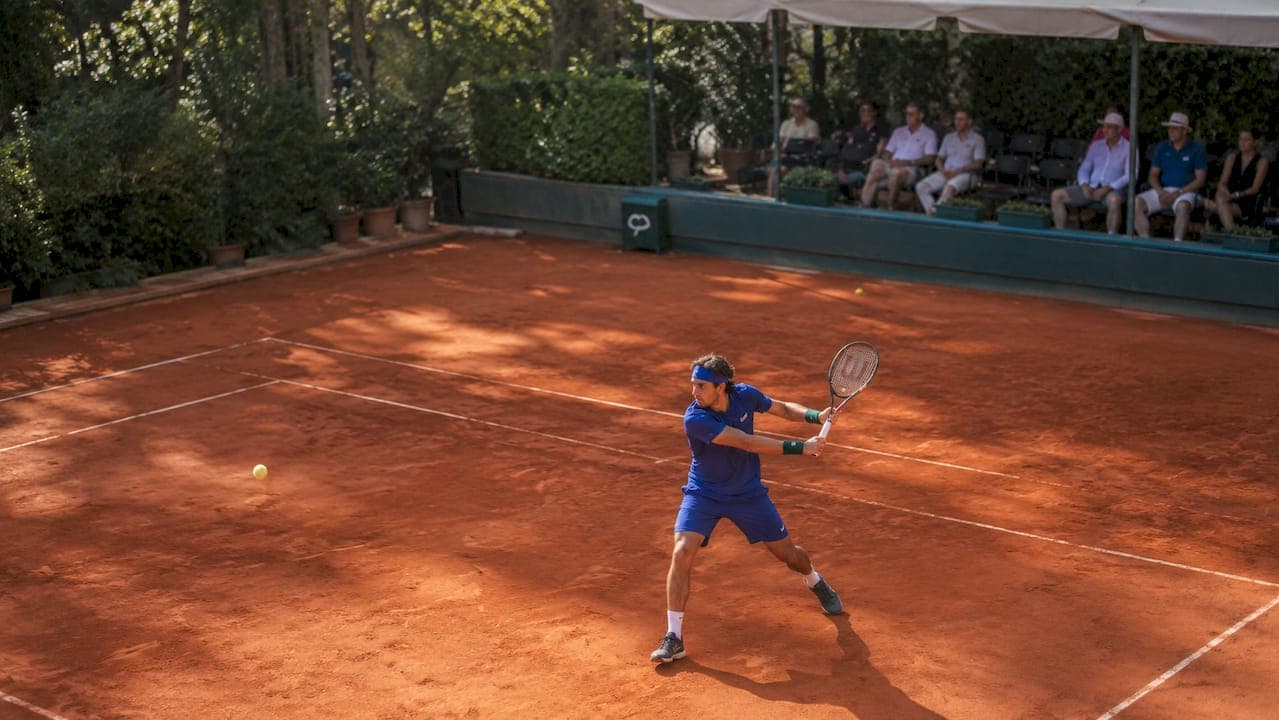
The most direct effect is on the ball itself. Hot air is less dense than cold air. A ball traveling through thinner air experiences less drag, so it moves faster and bounces higher. Temperatures above 32°C cause this effect on clay, hardening the surface and speeding play in ways that favor aggressive baseliners over grinders. That is a complete reversal of what clay is supposed to do.
The court surface itself reacts to weather. Clay topdressing dries and hardens quickly in heat, raising both bounce height and ball speed. Moisture does the opposite, softening the surface and slowing the ball down. The same court can play like two completely different surfaces depending on the weather that day.
Player physiology is the third layer. Heat, cold, and humidity all affect how muscles function, how efficiently the body cools itself, and how long a player can sustain high-intensity effort. These are not marginal effects. They change who wins.
How does temperature affect tennis performance?
Heat is the most studied and most disruptive weather factor in professional tennis. Its effects stack on top of each other in ways that compound quickly.
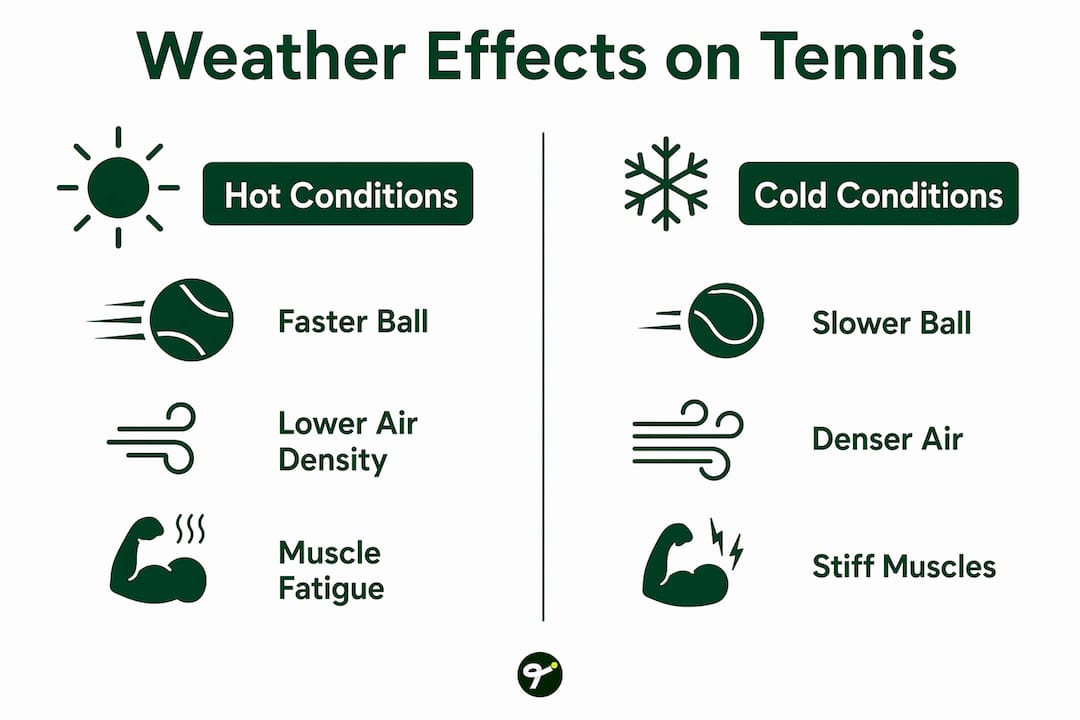
Higher temperatures thin the air and increase internal ball pressure. The result is a faster, livelier ball that sits up higher after the bounce. Players like Iga Swiatek have noted that heat demands greater touch and control because the ball comes through the hitting zone faster and with more pace. Defensive players who rely on heavy topspin and high bounce to push opponents back lose their biggest weapon when the court is already doing that for everyone.
String tension is another factor most fans overlook. Heat causes strings to lose tension, creating a livelier but harder-to-control string bed. Players increase string tension in hotter conditions to regain shot control and prevent the ball from flying long. Getting that adjustment wrong by even a few pounds per square inch changes the feel of every groundstroke.
The physiological toll is severe. Extreme heat raises heart rate, accelerates sweat loss, and increases the risk of muscle cramps, according to University of Roehampton research on environmental physiology in tennis. A player who cramps in the third set of a five-set match is not just uncomfortable. Their movement, shot selection, and mental focus all deteriorate.
Major tournaments now use Wet Bulb Globe Temperature, or WBGT, as the standard measurement for heat policy decisions. WBGT integrates air temperature, humidity, wind speed, and solar radiation into a single number that reflects actual physiological stress, not just the thermometer reading. At 30.1°C WBGT, players receive 10-minute breaks between sets. Above 32.2°C, matches can be suspended entirely. Wimbledon, the French Open, and other major events standardized these policies in 2026.
Pro Tip: If you play in high heat, string your racket two to three pounds tighter than your normal tension. You will get back the control the heat takes away.
Key heat effects at a glance:
- Ball travels faster and bounces higher due to lower air density
- Clay hardens, removing the surface's natural speed-reducing properties
- String tension drops, requiring pre-match equipment adjustment
- Heart rate and sweat loss increase, accelerating fatigue
- Cramp risk rises sharply in matches lasting more than 90 minutes
What happens to tennis in cold and damp conditions?
Cold weather flips every heat effect in the opposite direction. The ball becomes heavier, the bounce drops lower, and the pace of play slows considerably. Switching from 14°C to 30°C changes ball flight and court dynamics so drastically that players describe it as a different sport.
In cold conditions, the air is denser and the ball loses internal pressure. It travels slower, sits lower after the bounce, and gives defenders more time to retrieve. Rallies get longer. Points become more about construction and patience than power. Players who thrive on short, aggressive exchanges find cold conditions actively work against their game style.
Damp clay absorbs moisture and softens. The surface grips the ball more on contact, killing pace and lowering bounce further. A heavy topspin forehand that would sit up invitingly in heat skids through low and fast in damp conditions, making it genuinely difficult to attack.
Muscle function is the hidden cost of cold weather. Cold muscles are stiffer, slower to react, and more prone to strains. Players need longer warm-up periods before they can move and swing at full intensity. Skipping that preparation in cold conditions is how soft-tissue injuries happen.
Pro Tip: In cold conditions, wear compression layers and extend your warm-up by at least 10 minutes. Your muscles need more time to reach the temperature required for explosive movement.
Cold-weather tactical shifts:
- Favor high-percentage, deep groundstrokes over aggressive angle play
- Extend rallies and wait for opponents to make errors rather than forcing winners
- Use slice backhand more often, as the lower bounce suits the conditions
- Increase warm-up duration to protect against muscle strains
How do wind, humidity, and rain change a tennis match?
Wind, humidity, and precipitation each introduce a different kind of disruption. Wind is the most unpredictable because it changes direction and intensity mid-point.
Wind
Wind speeds above 20 mph regularly cause match delays because the conditions create unfair advantages and force errors that have nothing to do with skill. A serve that would land in becomes a fault. A passing shot that would clip the line sails wide. Tournament policies restrict play in sustained high winds for exactly this reason.
The tactical response to wind is counterintuitive. Most players try to hit harder to fight the wind. The better approach is to hit flatter and lower, reducing the ball's exposure to wind resistance. Topspin shots that travel high through the air are the most affected. Flat drives and slices stay in the wind's lower, more stable layer.
Humidity
Humidity causes balls to absorb moisture, making them heavier and slower in flight. The effect on bounce is also significant. A heavier ball sits lower and kicks less, changing the rhythm of groundstroke exchanges. Players who rely on heavy topspin to generate high, kicking balls lose effectiveness when the ball already feels like a wet sponge.
High humidity also limits sweat evaporation, which is the body's primary cooling mechanism. When sweat cannot evaporate efficiently, core body temperature rises faster. Effective heat management in humid conditions requires tailored policies that account for different players' physiological vulnerabilities, not just a single temperature threshold.
Rain
- Light rain makes court surfaces slippery, increasing the risk of falls and ankle injuries.
- Waterlogged balls become unpredictably heavy and lose their aerodynamic consistency.
- Match officials suspend play when conditions create safety risks or compromise competitive fairness.
- Light rain can waterlog balls and make courts slippery, leading to delays or cancellations even when the rain itself appears manageable.
Rain delays also disrupt rhythm and momentum, which are real competitive factors. A player who is dominating a match physically and mentally loses that edge during a 90-minute rain delay.
How do players and tournaments adapt to weather challenges?
Adaptation separates professionals from everyone else. The best players treat weather as a variable to manage, not a complaint to make.
Equipment adjustments come first. String tension changes based on temperature are standard practice at the professional level. Racket grip size and overgrip thickness also affect feel in wet or sweaty conditions. Players who arrive at a tournament without testing their equipment in the local weather are already behind.
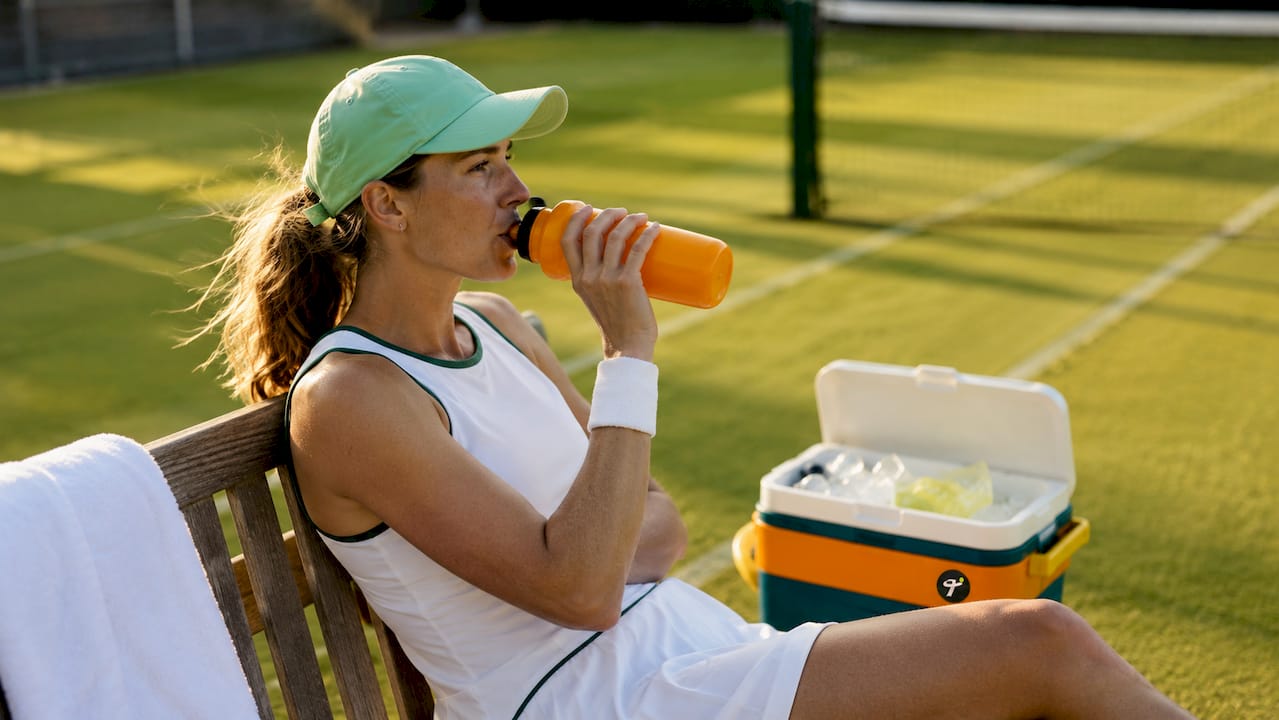
Cooling strategies during matches are now a formal part of professional tennis. Ice towels applied to the neck and wrists lower skin temperature quickly. Cold water immersion during extended breaks reduces core body temperature. Shade breaks between games in extreme heat give the cardiovascular system a brief recovery window.
Tournament scheduling is the largest-scale adaptation. Organizers move matches to early morning or evening slots when afternoon heat peaks above safe WBGT thresholds. Indoor venues with climate control eliminate weather as a variable entirely, though outdoor Grand Slams cannot use that option for main draw matches.
Pro Tip: Track the weather forecast for your match location 48 hours in advance. Adjust your string tension, warm-up plan, and hydration strategy before you arrive at the court.
Player-level tactical adjustments by condition:
- Heat: Shorten points, attack second serves aggressively, stay close to the baseline
- Cold: Extend rallies, use slice to keep the ball low, target the opponent's weaker side
- Wind: Hit flatter, aim for the center of the court, reduce risk on big shots
- Humidity: Hydrate aggressively, change grip tape between sets, pace effort across games
Understanding weather also feeds directly into tennis match prediction for fantasy purposes. A clay court specialist picked for a hot-day match at Roland Garros faces a very different challenge than the same player on a cool, overcast afternoon.
Key Takeaways
Weather conditions directly determine ball behavior, court speed, and player endurance, making them one of the most underrated factors in predicting tennis match outcomes.
| Point | Details |
|---|---|
| Heat speeds up play | Temperatures above 32°C thin the air and harden clay, making balls faster and bounces higher. |
| Cold favors endurance players | Lower temperatures slow the ball and drop the bounce, rewarding patience over power. |
| WBGT guides safety decisions | Tournaments use Wet Bulb Globe Temperature, not air temperature alone, to trigger heat breaks and suspensions. |
| Wind and humidity alter ball physics | Wind above 20 mph causes delays; humidity makes balls heavier and limits player cooling. |
| Equipment adjustment is non-negotiable | Players raise string tension in heat and extend warm-ups in cold to stay competitive. |
Weather is the variable most fantasy players ignore
Weather is the most undervalued factor in tennis analysis. I have watched countless fantasy players and bettors build their picks entirely around head-to-head records and surface statistics, then lose because they ignored a 35°C forecast that turned a clay court into something closer to a hard court.
The 2026 French Open was a perfect case study. The Paris heat wave did not just make players uncomfortable. It changed the fundamental character of Roland Garros. Players who thrive on slow, high-bouncing clay suddenly found themselves on a surface that rewarded flat hitting and aggressive net approaches. Anyone who understood that shift before the tournament had a real edge.
The new WBGT-based heat policies are a step forward, but they also create a new variable to track. A match suspended mid-set and resumed the next morning plays differently than a match completed in one session. Momentum resets. Physical recovery changes the dynamic. These are factors that show up in outcomes and almost nobody accounts for them.
My honest view is that coaching and tactical preparation for weather should be as standard as surface preparation. A player who knows how to adjust string tension, manage hydration in humidity, and read wind patterns has a genuine competitive advantage. Most players at the club and recreational level never think about any of this until they are already losing.
— Nathan
Tweener gives you the edge when conditions change
Weather shifts match outcomes in ways that most fans never see coming. Tweener is built for the fans who do.

Tweener is the only high-quality daily fantasy tennis platform that puts real ATP and WTA match data in your hands during live tournaments. When you know that a 34°C afternoon at Roland Garros favors aggressive baseliners over defensive grinders, you can build a fantasy roster that reflects that reality. Join public leagues or set up a private league with up to nine friends for every Grand Slam. Pick your players, track their performance in real time, and compete for real rewards. Tweener turns weather knowledge and tennis analysis into a genuine competitive advantage.
FAQ
Why does heat make tennis balls faster?
Heat thins the air, reducing drag on the ball as it travels. Higher temperatures also increase internal ball pressure, making the ball livelier off the court surface.
What is WBGT and why do tennis tournaments use it?
Wet Bulb Globe Temperature integrates air temperature, humidity, wind, and solar radiation into one number that reflects actual physiological stress on players. Tournaments use it because air temperature alone does not capture how hard the body has to work to stay cool.
How does wind above 20 mph affect a tennis match?
Wind at that speed creates unpredictable ball movement that produces forced errors unrelated to player skill. Tournament rules allow officials to delay or suspend matches when sustained wind reaches levels that compromise competitive fairness.
Does humidity affect tennis ball performance?
Humidity causes balls to absorb moisture, making them heavier and slower in flight with a lower, less predictable bounce. High humidity also limits sweat evaporation, which accelerates player fatigue.
How do professional players adjust their equipment for weather?
Players raise string tension in hot conditions to compensate for the tension loss caused by heat, regaining shot control. In wet or humid conditions, they change overgrips more frequently to maintain a secure hold on the racket.