
TL;DR:
- Coaching during tennis matches primarily influences tactical execution and psychological resilience rather than immediate technical improvements.
- It is permitted only during specific 90-second changeovers and between sets, with all communication ending before the time is called.
Coaching in tennis matches is the process of delivering tactical, psychological, and technical guidance to players during designated non-playing intervals to improve performance and strategic adaptability. The ATP and WTA now permit on-court coaching during changeovers and between sets, making the coach's sideline role more structured and consequential than at any point in the sport's history. Research confirms that coaching communication affects player mood and effort regulation more immediately than it changes technical execution. For fans, players, and coaches who want to understand what actually shifts the outcome of a match, the answer often starts in the coach's box.
How coaching is regulated during tennis matches
The role of coaching in tennis matches operates within a defined legal framework. ATP and WTA coaching windows fit within 90-second changeovers, and all communication must stop before the chair umpire calls time. That constraint shapes everything about how coaches prepare and deliver information.
Coaches communicate through two main channels: verbal instruction when proximity allows, and hand signals or visual cues from the player's box during live play. The shift toward tactical sideline adjustments has moved tennis closer to basketball and soccer in terms of real-time strategic management. That comparison matters because it reframes what a tennis coach actually does during a match.
Key structural rules governing in-match coaching in 2026:
- Coaching is permitted only during changeovers and between sets, never during active points
- Communication must end before the umpire calls time on the 90-second break
- Verbal coaching from the player's box is allowed in most ATP and WTA events
- Hand signals and visual cues are used when verbal communication is impractical
- Coaches may not enter the court during a match except in medical situations
Elena Rybakina has stated that closer coach proximity improves the quality of advice she receives during matches. That is not a minor preference. When a coach can be heard clearly, the player absorbs the message faster and returns to the baseline with a sharper focus.
Pro Tip: Coaches should prepare a prioritized list of no more than three tactical adjustments before each match. When the 90-second window opens, you deliver the single most relevant point, not the full list.
Does coaching actually improve player psychology?
The psychological impact of coaching during matches is measurable and significant. Research shows that verbal encouragement improves mood in youth tennis players with statistical significance (p<0.001), though it does not produce an immediate increase in successful ball scores. That finding is counterintuitive but important. Coaching does not instantly fix a player's forehand. It keeps the player mentally engaged long enough to fix it themselves.
"The coach's job is not to solve the problem on the court. It is to give the player the tools to solve it themselves." — Paul Annacone, former coach of Pete Sampras and Roger Federer
Encouragement also has a longer arc. Mood improvements from verbal support are linked to higher motivation and sustained sports participation in youth athletes. A player who feels supported during a tough third set is more likely to stay competitive, stay in the sport, and develop over time.
Practical strategies for using encouragement effectively during matches:
- Use specific praise rather than generic phrases. "That was a great approach to the net" lands harder than "Good job."
- Acknowledge effort, not just outcomes. Players who feel seen for their work stay motivated through errors.
- Keep emotional tone steady. A coach who panics during a break of serve transfers that anxiety directly to the player.
- Reserve strong motivational language for critical moments. Overuse dilutes its impact.
The psychological relationship between coach and player is one of the most complex in professional sport. Trust and understanding beyond technical skills are what determine whether a player actually absorbs coaching input during high-pressure moments. Without that foundation, even the best tactical advice gets filtered out under stress.
What tactical coaching strategies work best mid-match?
Tactical coaching during matches is most effective when it is specific, brief, and tied to observable patterns. Coaches who arrive at a changeover with a clear read on the opponent's tendencies can deliver a pivot that changes the match's trajectory within two games.
The most effective tactical adjustments coaches make during matches follow a consistent structure:
- Identify the pattern. Name what the opponent is doing repeatedly. "She is pulling you wide on the deuce side and attacking your backhand."
- Give one counter. Offer a single adjustment, not a menu of options. "Start serving out wide to her backhand to open the court."
- Set a target. Define what success looks like in the next game. "Win the first point in three of the next four service games."
- Confirm understanding. Ask the player to repeat the key point back. This locks in retention under pressure.
Research on junior players confirms that combining coach feedback with motor imagery produces better performance gains than feedback alone. The feedback-imagery loop works like this: the coach describes the correct movement, the player visualizes executing it, and that mental rehearsal strengthens the neural pathway before the next point begins. It takes under 30 seconds and fits inside a changeover.
Elite player Mirra Andreeva uses simple self-talk cues under pressure to maintain function during matches. That approach mirrors what good coaches deliver: not a lecture, but a single phrase that anchors the player's attention on the right thing.
Pro Tip: Build a pre-match "tactical menu" with your player. Assign short code phrases to each adjustment so you can communicate a complex strategy in two words during a changeover.
| Coaching Approach | Best Use Case |
|---|---|
| Verbal tactical cue | Adjusting serve direction or return position |
| Motor imagery prompt | Correcting a technical error under pressure |
| Motivational encouragement | Sustaining effort during a momentum shift |
| Pattern recognition feedback | Countering a repetitive opponent tactic |
Pre-match preparation that includes opponent-specific tactical packages allows coaches to implement structured pivots rapidly. The coach who walks into a match with three prepared adjustments and clear trigger conditions will always outperform the coach who improvises from the stands.
Solo decision-making vs. coached match play: what changes?
Tennis has a long history of players managing matches entirely on their own. Grand Slam events only recently began allowing coaching, and the debate about its effect on player autonomy is still active. The question is not whether coaching helps. The question is whether it changes the kind of player tennis produces.
The case for coaching during matches is strong on tactical grounds:
- Players can access real-time pattern analysis they cannot generate alone under pressure
- Coaches provide emotional regulation support that extends competitive engagement
- Strategic flexibility increases when players have a trusted second perspective
- Younger players develop faster when coaching feedback is available during competition
The case for limiting coaching centers on player development and independence. Coaches equip players with decision-making tools rather than directing every solution. When that principle breaks down and a coach starts solving problems instead of building capacity, the player becomes dependent on sideline input rather than developing internal problem-solving skills.
| Factor | Solo Match Play | Coached Match Play |
|---|---|---|
| Tactical adjustments | Player-driven, slower | Coach-assisted, faster |
| Psychological support | Internal only | External reinforcement available |
| Decision-making autonomy | High | Shared |
| Adaptability under pressure | Depends on experience | Enhanced by coaching input |
The constraint-led approach in coaching emphasizes shaping the player's perception and decision-making rather than prescribing technique fixes. That philosophy translates directly to match coaching. The best coaches do not tell players what to do. They ask the right question at the right moment so the player arrives at the answer independently. That distinction separates coaches who build champions from coaches who create dependency.
Key takeaways
Coaching in tennis matches shapes tactical execution and psychological resilience more than it produces immediate technical improvements, making the coach's role that of a strategic facilitator rather than a direct problem solver.
| Point | Details |
|---|---|
| Coaching windows are fixed | ATP and WTA allow coaching only during 90-second changeovers and between sets. |
| Psychology responds first | Verbal encouragement improves mood and effort before it changes technical performance. |
| Short cues outperform long advice | Concise tactical phrases and motor imagery prompts produce faster player absorption. |
| Pre-match prep drives in-match success | Coaches with prepared tactical menus can pivot strategy within a single changeover. |
| Autonomy must be preserved | The best coaching builds player decision-making capacity rather than replacing it. |
What i've learned watching coaching decisions decide matches
I have spent years analyzing professional tennis at the level where coaching decisions are visible in the data. The pattern I keep seeing is this: the coaches who change matches are not the ones with the most technical knowledge. They are the ones who deliver the right single idea at the right moment.
Carlos Alcaraz's team is a good example. His coaching staff does not overload him with information during changeovers. They identify one pattern, name it clearly, and let him execute. That simplicity is not laziness. It reflects a deep understanding of how much a player can actually process between points under match pressure.
The criticism of on-court coaching that I find most credible is not about fairness. It is about what happens when coaching becomes a crutch. Players who learn to wait for sideline input during difficult moments stop developing the internal problem-solving capacity that separates good players from great ones. The coach-player relationship works best when it builds independence, not reliance.
For coaches reading this: your most important work happens before the match starts. The tactical menu, the opponent analysis, the agreed-upon cues. When the match begins, your job is to deliver one clear idea per changeover and trust the player to execute. That restraint is harder than it sounds, and it is what separates elite coaching from noise.
For players: the coaching window is not a rescue. It is a calibration. Walk into it with a specific question and walk out with one answer. That is how you use it well.
— Nathan
Take your tennis strategy further with Tweener
Understanding coaching strategy gives you a real edge when analyzing matches. Tweener is the premier DFS fantasy tennis platform built for fans who think analytically about the sport. You can apply everything you know about match prediction strategies and coaching impact directly to your fantasy picks, selecting ATP and WTA players based on tactical form, surface performance, and head-to-head data.
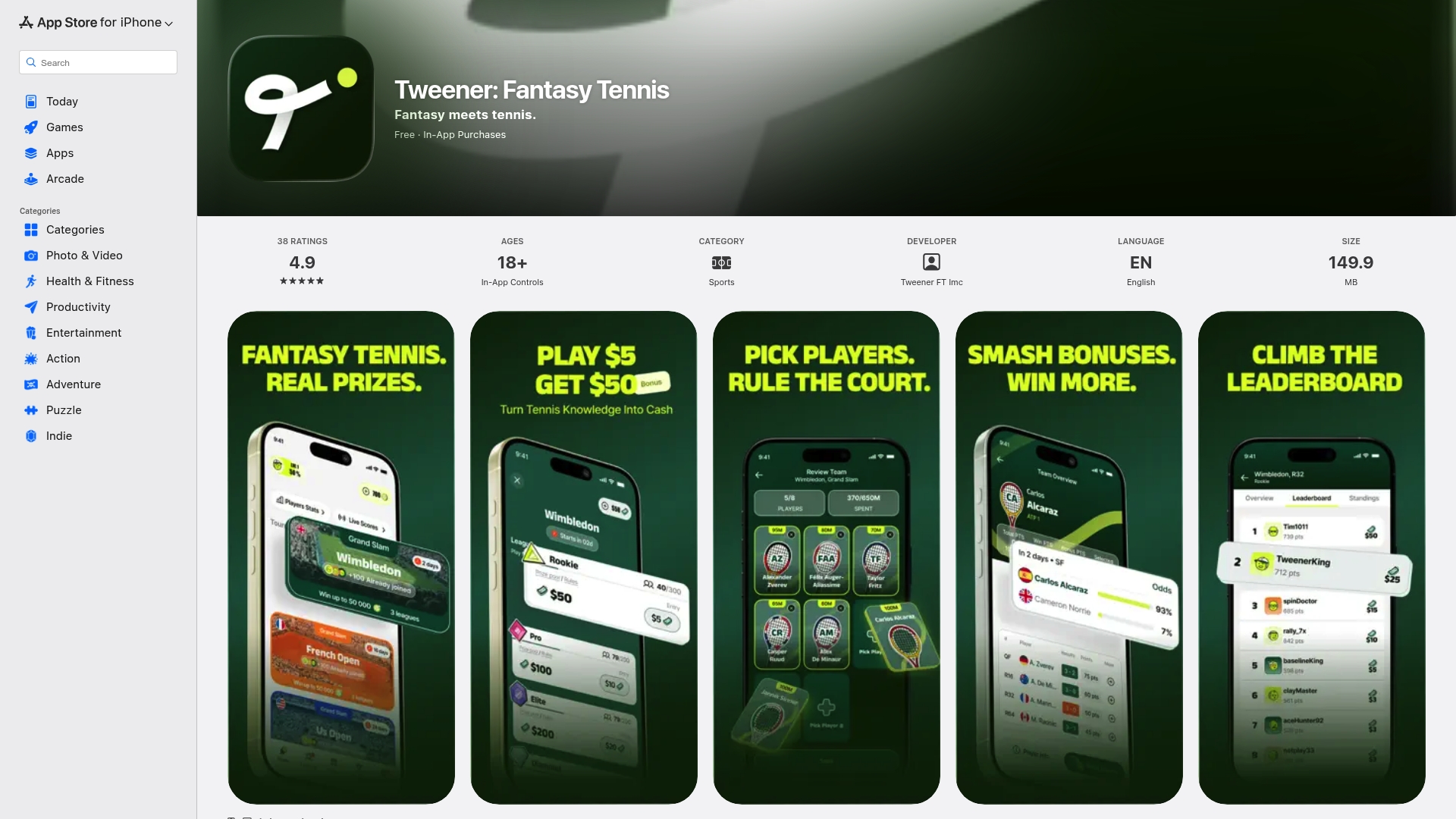
Tweener lets you compete in public leagues or private contests with up to 9 friends across real Grand Slam and tour events. The free mode uses virtual coins redeemable for gift cards. The cash mode offers real-money payouts where permitted. If you follow tennis closely enough to care about what happens in a coach's box, you are exactly the kind of fan who will thrive on Tweener. Download the app and put your tennis knowledge to work.
FAQ
What is the role of coaching in tennis matches?
Coaching in tennis matches provides players with tactical, psychological, and technical guidance during changeovers and between sets. The coach's primary function is to help players adjust strategy and maintain mental focus rather than solve problems directly.
When are coaches allowed to communicate during a match?
Coaches may communicate during 90-second changeovers and between sets, and all communication must stop before the chair umpire calls time. Verbal coaching from the player's box is permitted in most ATP and WTA events in 2026.
Does coaching improve performance immediately?
Research shows coaching improves mood and effort regulation significantly but does not always produce immediate gains in technical performance scores. The psychological benefits of encouragement build competitive resilience over the course of a match.
What makes coaching communication effective under pressure?
Short, specific cues outperform lengthy technical explanations during match coaching windows. Combining coach feedback with motor imagery produces stronger performance gains than feedback alone, particularly in junior players.
How does coaching affect player autonomy?
Effective coaching builds a player's decision-making capacity rather than replacing it. Coaches who deliver tools and frameworks during changeovers produce more adaptable players than those who direct every tactical choice from the sideline.