

TL;DR:
- The fantasy tennis waiver wire allows managers to claim unclaimed players during specific windows, but rules vary by platform. Proper timing, understanding platform mechanics, and initial team building are crucial for success. Managers who focus on strong drafts and precise waiver use tend to outperform those who rely heavily on constant claims.
The fantasy tennis waiver wire process is the mechanism that lets managers claim unclaimed players from a shared pool during a set window, giving every team a fair shot at available talent. Unlike football or baseball, where waiver rules are nearly universal, tennis fantasy rules vary dramatically by platform. Some leagues run a formal waiver wire with priority rankings and claim windows. Others replace it entirely with free weekly switches and penalty fees for extras. Knowing which system your league uses is the first decision that shapes every roster move you make all season.
What is the fantasy tennis waiver wire process and how does it vary by platform?
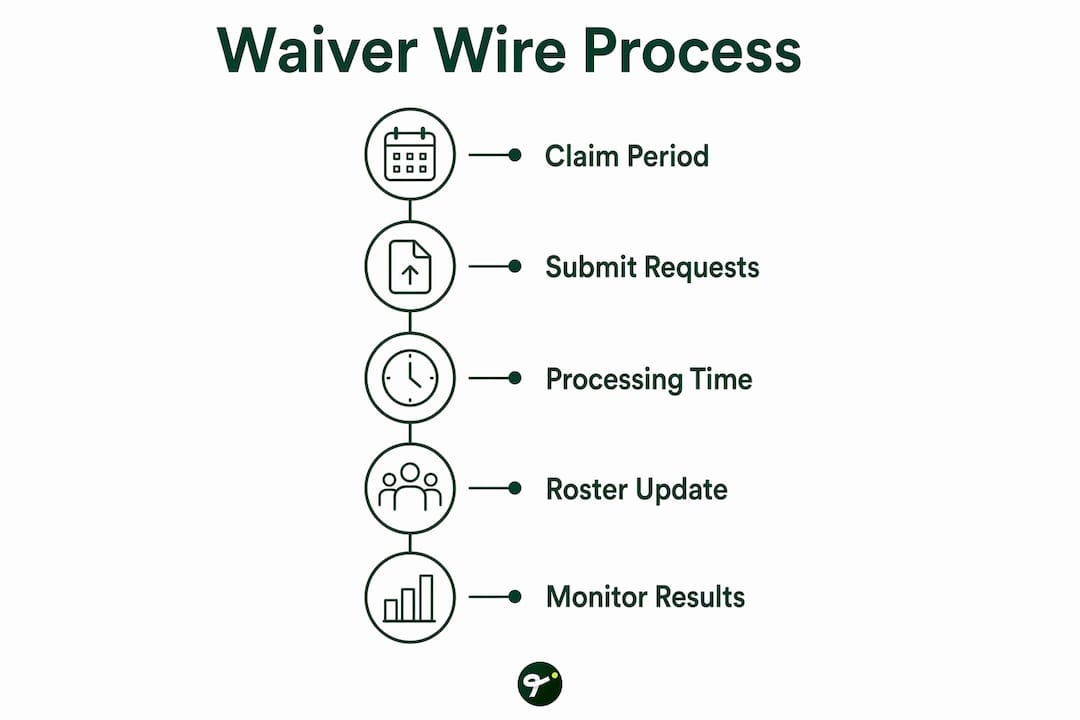
The waiver wire process gives managers a structured way to add unclaimed players to their rosters. A manager submits a claim during an open window, the system processes all claims at a set time, and the player goes to the highest-priority claimant. Priority typically resets or rotates after each successful claim, which keeps the competition fair across the league.
The problem in fantasy tennis is that platform mechanics differ enough to require a completely different approach on each one. The Drop Shot uses a true waiver wire system where claims compete against each other and process on a set schedule, commonly on Tuesday or Thursday. The official ATP Tour Fantasy skips waivers entirely and gives each manager two free weekly switches, with a credit penalty for any additional moves beyond that limit.
Key terms every manager needs to know
- Waiver claim: A formal request to add a free-agent player, processed in priority order at a scheduled time.
- Free switch: A no-cost roster swap available a set number of times per week, used on platforms without a waiver wire.
- Swing Switch chip: Allows unlimited roster resets for one week without point penalties, giving managers a full reset when the draw breaks badly.
- Alternates: Backup players who score points automatically when a starter withdraws due to injury or a walkover.
- Roster lock: The deadline after which no changes are permitted for that round or tournament day.
Understanding roster lock timing is non-negotiable. Missing a lock by minutes means carrying a withdrawn player for an entire round with zero points. On waiver-based platforms, claims submitted after the lock window closes roll over to the next cycle, which can cost you a full tournament day.
Pro Tip: Before your season starts, write down your platform's claim processing day, roster lock time, and the number of free switches you get per week. Treat these like match schedules. Missing them is as costly as picking the wrong player.
How to strategically use the waiver wire to build a stronger roster
The waiver wire is a reactive tool, not a foundation. Initial roster construction drives the majority of your season performance, and waivers exist to patch the gaps that injuries and late scratches create. That framing changes how you approach every claim.

Prioritize depth over upside when claiming
The most common mistake is chasing upside on the waiver wire. Managers see a lower-ranked player win two rounds and immediately claim them, only to watch that player lose in the next round on a surface that does not suit their game. The smarter move is to claim players who solve a specific roster problem: a clay-court specialist when your squad is surface-thin heading into the Monte-Carlo Masters, or a reliable first-round performer when your starter is nursing a shoulder issue.
Time your claims around the draw and surface calendar
- Check the draw the moment it releases. Favorable draws create short-term value. A player landing in the easy half of a 250-level event becomes a strong waiver target even if their ranking does not suggest it.
- Cross-reference surface stats before claiming. A player averaging strong hold percentages on clay is worth more at Roland Garros than a hard-court specialist who made a deep run at the Australian Open.
- Submit claims early in the window. On platforms with priority-based processing, submitting early does not change your priority rank, but it prevents technical errors or forgotten deadlines from costing you the claim.
- Use the Swing Switch chip before claiming, not after. If your roster is broken by multiple withdrawals, activating the Swing Switch chip gives you a full reset. Burning a waiver claim on a player you will drop in two days wastes priority.
- Target players with upcoming schedule density. A player entered in back-to-back tournaments offers more scoring opportunities than a specialist who peaks at one event per month.
Monitoring player form and injury updates daily separates managers who win leagues from those who finish mid-table. Dominic Thiem, who has offered fantasy tips for events like the Monte-Carlo Masters, stresses blending high-cost stars with affordable options matched to surface and form. That same logic applies directly to waiver pickups: the best claim is rarely the biggest name available.
Pro Tip: Set a phone alert for your platform's waiver processing time every week. Treat it like a match alarm. The managers who win leagues are the ones who never miss a claim window.
What tools and requirements do you need to navigate the waiver wire?
Effective waiver management requires knowing your platform's rules before you need them. The table below summarizes how the two most common fantasy tennis structures handle roster changes.
| Feature | Waiver wire platforms (e.g., The Drop Shot) | Switch-based platforms (e.g., ATP Tour Fantasy) |
|---|---|---|
| Player acquisition method | Waiver claim with priority ranking | Free weekly switches |
| Free moves per week | Varies by league settings | 2 free switches |
| Extra move cost | Priority loss or waiver credit | Credit penalty per additional switch |
| Processing schedule | Set day, commonly Tuesday or Thursday | Immediate on submission |
| Roster lock impact | Claims after lock roll to next cycle | Switch blocked after lock |
| Chip support | Platform-dependent | Swing Switch, Alternates |
Beyond the platform itself, external resources sharpen your decisions. The ATP Tour and WTA Tour official sites publish entry lists and withdrawals in real time. Tennis analytics sites track surface win rates, break point conversion, and head-to-head records. Cross-referencing these before submitting a claim takes five minutes and prevents costly mistakes.
Credit budget limits matter on switch-based platforms. Every extra move beyond your free allowance costs credits, and running out mid-tournament leaves you unable to replace a withdrawn player. Managers who burn through credits early by making impulsive switches often finish the back half of a tournament with a broken roster and no way to fix it.
Pro Tip: Track your remaining credits or waiver priority in a simple notes app. Knowing your budget before a claim decision prevents panic moves that drain resources you need for the final rounds.
What are the most common waiver wire mistakes and how do you fix them?
The waiver wire punishes managers who do not understand the timing rules of their specific platform. These are the problems that appear most often, and the fixes are straightforward once you know what to look for.
- Missing the claim window. Waiver windows close before roster lock. If you submit a claim after the window closes, it processes in the next cycle. Check your platform's exact cutoff time, not just the general lock time.
- Losing priority without gaining value. On platforms where a successful claim drops your priority rank, claiming a marginal player costs you position for a better one later. Hold priority for players who genuinely improve your roster.
- Ignoring late scratches. Tennis withdrawals happen hours before match time. A player who was healthy on monday can pull out by wednesday morning. Check injury news the day of roster lock, not the day before.
- Overlooking walkover risk. Alternates score points when starters withdraw due to walkovers. Managers who skip alternates in their roster construction have no safety net when a top player pulls out in round one.
- Assuming all platforms process claims the same way. Waiver rules are not universal in tennis fantasy. A strategy that works on one platform fails on another. Verify the rules for each league you join.
The biggest waiver wire mistake is not missing a claim. It is misunderstanding which type of system your platform uses and building a strategy for the wrong one. Verify your platform's mechanics before the first tournament begins, not during it.
Penalty costs for extra switches add up faster than most managers expect. On ATP Tour Fantasy, each move beyond the two free weekly switches costs credits from your budget. Managers who make three or four impulsive switches early in a tournament often find themselves unable to react when a genuine injury crisis hits in the quarterfinals.
How does the waiver wire fit into your full-season fantasy tennis plan?
The waiver wire plays a supporting role in a well-built season plan. Team selection drives the bulk of your performance, and waivers exist to handle what your initial roster cannot anticipate. Treating waivers as your primary acquisition strategy is a losing approach.
- Build your initial roster with depth. A squad that covers multiple surfaces and includes reliable alternates reduces your dependence on the waiver wire from the start.
- Allocate credits conservatively early in the season. Saving switches and budget for the Grand Slams, where the draw is largest and the scoring opportunity is highest, pays off more than burning resources on smaller 250-level events.
- Adapt your waiver targets to the surface calendar. Clay season, grass season, and the hard-court swing each favor different player profiles. Your waiver targets in april should look nothing like your targets in june.
- Use chip deployments in coordination with claims. Activating the Swing Switch chip during a week when your roster is broken by withdrawals is more efficient than spending waiver priority on multiple individual claims.
- Treat waivers as insurance, not strategy. The managers who build winning lineups through strong initial drafts use waivers sparingly and precisely, not constantly.
Draft position and initial squad construction directly affect how much you rely on the waiver wire. A manager who drafts well in round one spends the season making small adjustments. A manager who drafts poorly spends the season chasing the wire and burning through priority and credits trying to catch up.
Key Takeaways
The fantasy tennis waiver wire process works best as a precision tool layered on top of strong initial roster construction, not as a substitute for it.
| Point | Details |
|---|---|
| Platform rules vary significantly | Verify whether your league uses a waiver wire or a switch-based system before drafting. |
| Timing is the core skill | Submit claims before the window closes and check injury news on the day of roster lock. |
| Alternates are non-negotiable | Roster alternates protect your score when starters withdraw due to injury or walkover. |
| Credits and priority are finite | Conserve waiver priority and switch credits for high-stakes moments, not marginal upgrades. |
| Initial drafting reduces waiver dependence | Strong squad construction at the start of the season limits how often you need the wire. |
Why most managers use the waiver wire backward
The conventional advice is to stay active on the waiver wire. Check it constantly, claim early, claim often. I think that advice is mostly wrong, and it leads managers into a trap.
The managers I have seen win leagues consistently do the opposite. They draft with enough depth that the wire becomes a last resort, not a weekly habit. They hold waiver priority like a chess piece, waiting for the one claim that genuinely changes their season. When Carlos Alcaraz or Jannik Sinner pulls out of a clay event and a lower-ranked player suddenly has a clear path to the quarterfinals, that is the moment to spend priority. Not on a player who won one match and will face a top-10 seed in round two.
The other thing most guides skip is the surface mismatch problem. Managers claim players based on recent results without checking whether those results came on a compatible surface. A player who dominated on hard courts in january is not automatically a good waiver pickup heading into the clay swing in april. Surface-specific form data is publicly available on the ATP and WTA sites. Using it takes ten minutes and separates informed claims from reactive ones.
My honest recommendation: spend more time on your initial draft than on your waiver strategy. Read the team selection fundamentals before you touch the wire. The waiver wire rewards managers who already have a strong foundation. It rarely rescues managers who built a weak one.
— Nathan
Tweener gives you the edge in fantasy tennis roster management
Fantasy tennis rewards the managers who track the right data and act at the right moment. Tweener is built for exactly that kind of player.
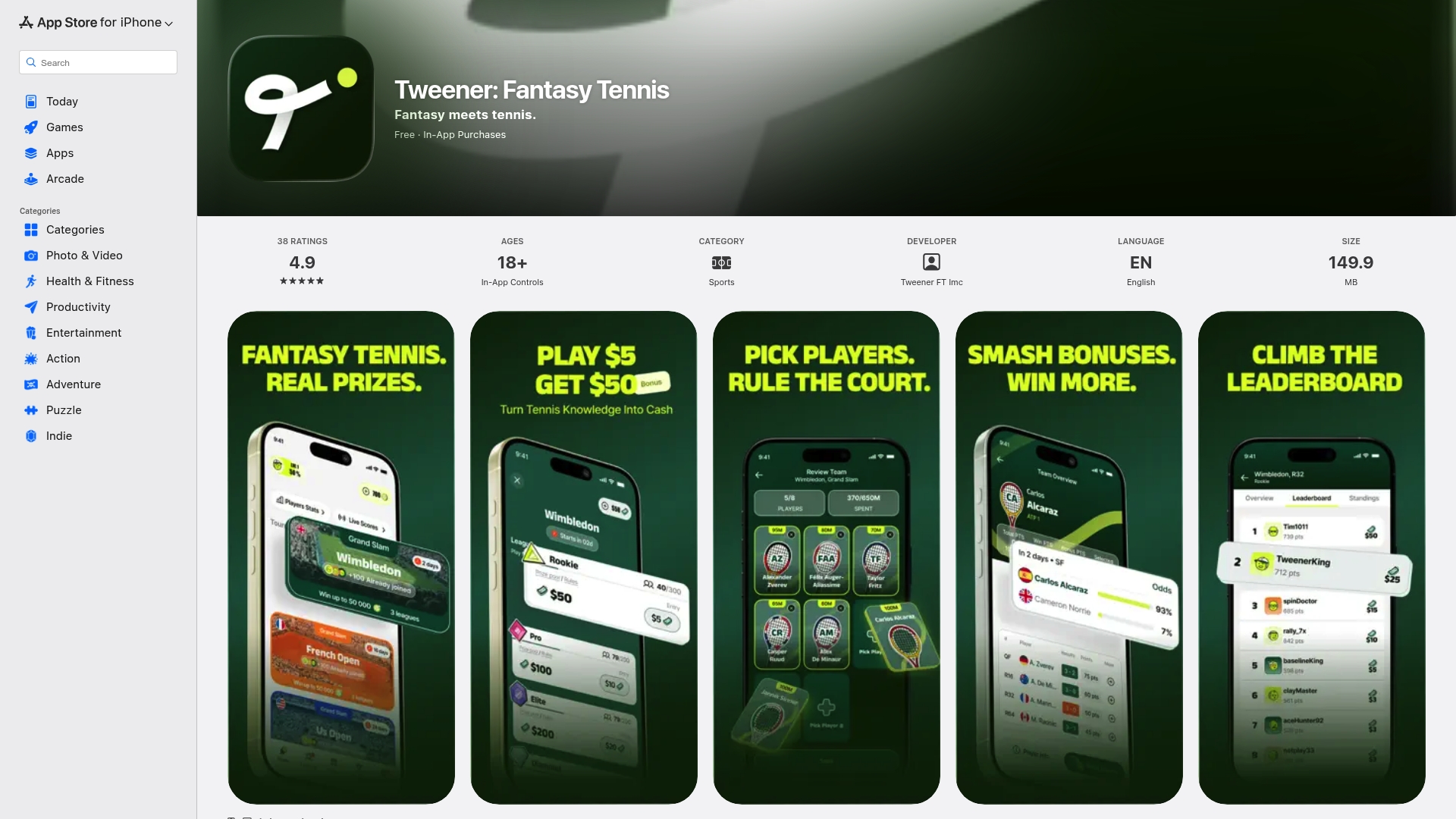
Tweener is a mobile fantasy tennis app where you build teams from real ATP and WTA players and compete based on live match results. Private leagues let you go head-to-head with up to nine friends across Grand Slams and tour events. The platform tracks player performance in real time, so you always know who is delivering value and who needs to be replaced. Whether you play for virtual coins or enter cash contests, Tweener puts skill and strategy at the center of every decision. Download the app and put your roster management knowledge to work.
FAQ
What is the waiver wire in fantasy tennis?
The waiver wire is a system that lets managers claim players who are not on any roster, processed in priority order during a set window. Not all fantasy tennis platforms use it. Some replace it with weekly switches instead.
How do waiver claim windows work?
Claim windows typically open after a weekly event ends and close before the next roster lock. Processing commonly happens on Tuesday or Thursday, depending on league settings.
What happens if a player withdraws before I can make a waiver claim?
If you have an alternate on your roster, that player scores points automatically when a starter withdraws. Without an alternate, you carry a zero for that slot until the next available claim window.
How many free switches do I get per week?
On ATP Tour Fantasy, managers receive two free weekly switches. Each additional switch beyond that limit costs credits from your budget. Waiver-based platforms handle this differently, so check your specific league rules.
Should I prioritize waiver claims or initial roster construction?
Initial roster design drives the majority of your season performance. Waivers are a reactive tool for patching gaps caused by injuries and withdrawals, not a primary acquisition strategy.