

Doubles fantasy tennis is a format where players draft real ATP or WTA doubles teams and score points based on match results, aces, breaks, and games won by the pair. The single biggest lever you control is pairing quality and surface fit, not name recognition. Draft chemistry and court speed first, star power second, and you will beat most of your league before the first serve.
TL;DR:
- Prioritize pairing chemistry and surface compatibility over star power, with 60% of your budget allocated to established duet pairs.
- Focus on doubles-specific scoring elements like break points and net play, which can significantly influence total points earned.
- Adjust your draft and lineup management based on surface, tournament type, and draw strength, as these factors strongly tilt towards certain pair types.
- Use free coin contests to test risky or unproven pairs before committing cash, and review lineups closely for health matters, weather, and late changes.
- Private leagues and surface-based insights reward a layered strategic approach that combines pairing knowledge, matchup tendencies, and risk management.
Table of Contents
- How Doubles Fantasy Formats Work (And How They Differ From Singles)
- Scoring Mechanics: What Actually Drives Doubles Points
- How to Draft a Winning Doubles Fantasy Lineup
- Managing Your Doubles Lineup Week to Week
- Surface, Tournament Type, and Draw: The Hidden Value Drivers
- Free Vs. Cash, Draft Vs. Pick'em: Matching Strategy to the Mode
- Tweener's Doubles Resources and How to Use Them
- Why Doubles Rewards a Different Kind of Fantasy Player
- Play Doubles Fantasy Tennis on Tweener
- Sources
How Doubles Fantasy Formats Work (And How They Differ From Singles)
Singles fantasy tennis rewards you for picking the right individual. Doubles flips that logic, because you are scoring a partnership, not a person, and partnerships behave differently than the sum of their parts.
Most platforms build doubles into contests one of two ways:
- Dedicated doubles slots: your roster has specific spots reserved for doubles pairs, separate from your singles picks, so you draft the team as a unit rather than two individuals.
- Combined rosters: singles and doubles players share a pool, and you assign credits or a salary cap across both disciplines.
- Pair vs. individual scoring: some formats score the team's collective stats (aces, breaks, games), while others still track each player's individual contribution within the pair and add them together.
Format variety runs deep, too. You will find draft leagues that lock rosters for a tournament, pick'em contests that ask for simple match winners, and short weekly slates built around a single event. ATP Fantasy uses a credit system for team construction with bonus scoring for tournament progress and standout events like aces and upsets, which gives you a template for how credit caps and bonus chips typically work across the category. Private leagues, where you compete against a small group of friends for an entire Grand Slam, add a social layer that public pick'em pools do not.
Scoring Mechanics: What Actually Drives Doubles Points
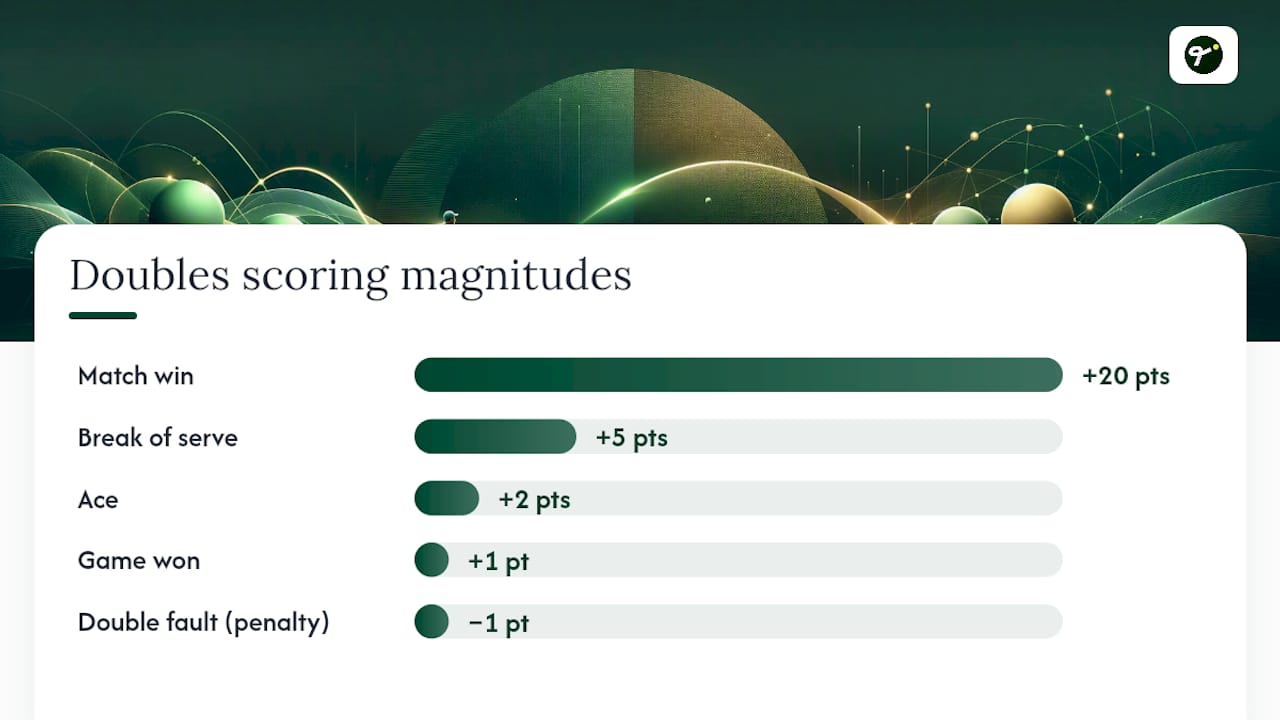
Fantasy tennis scoring rewards forward progress and penalizes mistakes. Sample scoring values commonly used across platforms look something like this:
- Match win: +20 points
- Set win: bonus points on top of the match win
- Ace: +2 points
- Break of serve: +5 points
- Game won: +1 point
- Lost set: −3 points
- Double fault: −1 point
Exact values shift by platform, so treat these as directional, not universal.
Statistic Callout: A single break of serve can be worth five times a service game won on some scoring tables, which is why return-strong pairs often outscore big servers over a full match, even when the box score looks even.
Doubles adds a wrinkle singles never has to deal with: net play. A pair with a dominant net player converts more break points into finished points, and that shows up directly in break and game columns. Penalties matter more here too. A retirement wipes out projected games and sets you were counting on, and a pair prone to double faults under pressure bleeds points in exactly the moments that decide close sets.
How to Draft a Winning Doubles Fantasy Lineup
Building a doubles roster is a budget problem before it is a talent problem. RotoWire's fantasy tennis strategy coverage recommends putting roughly 60% of your budget toward proven anchors and the remaining 40% toward value picks, and that split translates almost directly into doubles once you treat established pairs as your anchors.
- Spend 60% on anchor pairs. These are teams with a real track record together, consistent net play, and a history of converting break points.
- Reserve 40% for value plays. Look for a big-serving pair on a fast surface, or a newly formed team drawing a soft bracket.
- Define roles before you draft, not after: you want at least one consistent anchor pair, one big-serving team for ace and hold upside, and one return-focused pair that thrives on break points.
- Consider ownership. If everyone in your private league is drafting the same top seed, a slightly riskier value pair can separate you from the pack even if it does not deliver the highest raw total.
Chemistry is not a soft factor. ATP Fantasy's own scoring framework reflects a pattern seen across doubles: an established team frequently outscores two individually stronger players who were paired together for the first time, because coordination cuts unforced errors and improves clutch-point conversion.
Pro Tip: When two players are statistically similar but one pair has three tournaments together and the other was formed last week, take the established pair almost every time, even if the newer duo has slightly better individual rankings.
Managing Your Doubles Lineup Week to Week
A great draft can still lose to bad in-season management. Doubles carries extra risk because a scratch affects two players' worth of production at once, not one.
Before locking any lineup, run through a short checklist:
- Confirm both players in the pair are entered and healthy, not just one.
- Check weather delays, since rain postponements can bump matches out of your scoring window entirely.
- Watch for late draw changes, especially walkovers that reshuffle projected opponents.
- Review pre-lock verification steps within 30 minutes of lock, when scratches and pair changes are most likely to surface.
On waivers, prioritize doubles pairs with favorable draws over singles depth, since a soft bracket often matters more for a pair's fantasy ceiling than raw ranking. Check the waiver wire process for your specific platform, since substitution windows vary. Stick with an established anchor pair through a tough draw if their chemistry has carried them before. Pivot to a matchup-based value play only when the data clearly favors it, not because a name looks unfamiliar.
Surface, Tournament Type, and Draw: The Hidden Value Drivers
Surface changes what kind of doubles pair scores well, and the effect is stronger in doubles than most casual players expect because net and serve dynamics interact directly with court speed.
- Grass rewards big-serving pairs and aggressive net play, since faster courts mean more clean aces and quicker points.
- Clay favors return-strong pairs who can extend rallies and grind out break points over long games.
- Hard courts sit in between, generally rewarding versatile pairs with a mix of serve power and consistent groundstrokes.
Tournament category matters too. Grand Slam doubles matches run longer, which inflates game-based scoring categories, while shorter tour-level events compress the sample and put more weight on a single strong set. Before a grass-court week, prioritize serve-and-volley pairs; before a clay swing, shift budget toward return specialists.
Free Vs. Cash, Draft Vs. Pick'em: Matching Strategy to the Mode
Doubles fantasy shows up in a few common shapes, and the mode you choose should change how you draft. Draft leagues lock a full roster for a tournament, pick'em contests ask for simple match winners, daily formats reset every slate, and private leagues let a small group compete head to head for an entire Grand Slam.
- Cash mode rewards a conservative, high-floor approach built around anchor pairs with dependable production.
- Free mode, played with virtual coins, is the better place to experiment with contrarian value pairs, since the risk tolerance shifts when there is no cash on the line.
- Always confirm the platform's specific scoring table and roster rules before entering, since values and slot structures vary contest to contest.
Tweener's Doubles Resources and How to Use Them
Some platforms build their games around the stats that actually move doubles outcomes: pair form, head-to-head history, and surface splits, not just name recognition. Many apps allow users to set private-league rules for an entire Grand Slam, choose between free coin play and cash contests, and apply budget mechanics when building a roster.
Nathan's coverage on the Tweener blog breaks down specific surface-based picks each tournament, along with a repeatable lineup checklist and draft framework you can apply before every slate.
- Set clear private-league rules for doubles scoring before your Grand Slam group drafts.
- Run the pre-lock checklist every time, even in leagues with friends you trust to text you news.
- Compare free-mode rosters against cash-mode rosters to see how your own risk tolerance shifts.
Pro Tip: Use free-coin contests to test an unproven pair before you ever risk cash on them. It's the closest thing to a practice round the format offers.
Why Doubles Rewards a Different Kind of Fantasy Player
Doubles asks more of you than singles ever did. You are not just ranking talent, you are judging chemistry, surface fit, and how two careers intersect on a given week. That is exactly the kind of layered problem analytical fans enjoy solving, and it is why pairing insight and matchup study pay off more here than gut instinct. If you have not tried a private doubles league with friends during a Slam, you are skipping the most rewarding version of this game.
— Nathan
Play Doubles Fantasy Tennis on Tweener
This platform addresses the gap in tennis fantasy sports, where there is a lack of a DFS equivalent to major daily fantasy sports sites for other sports, aiming to treat pairing and surface data with detailed consideration.
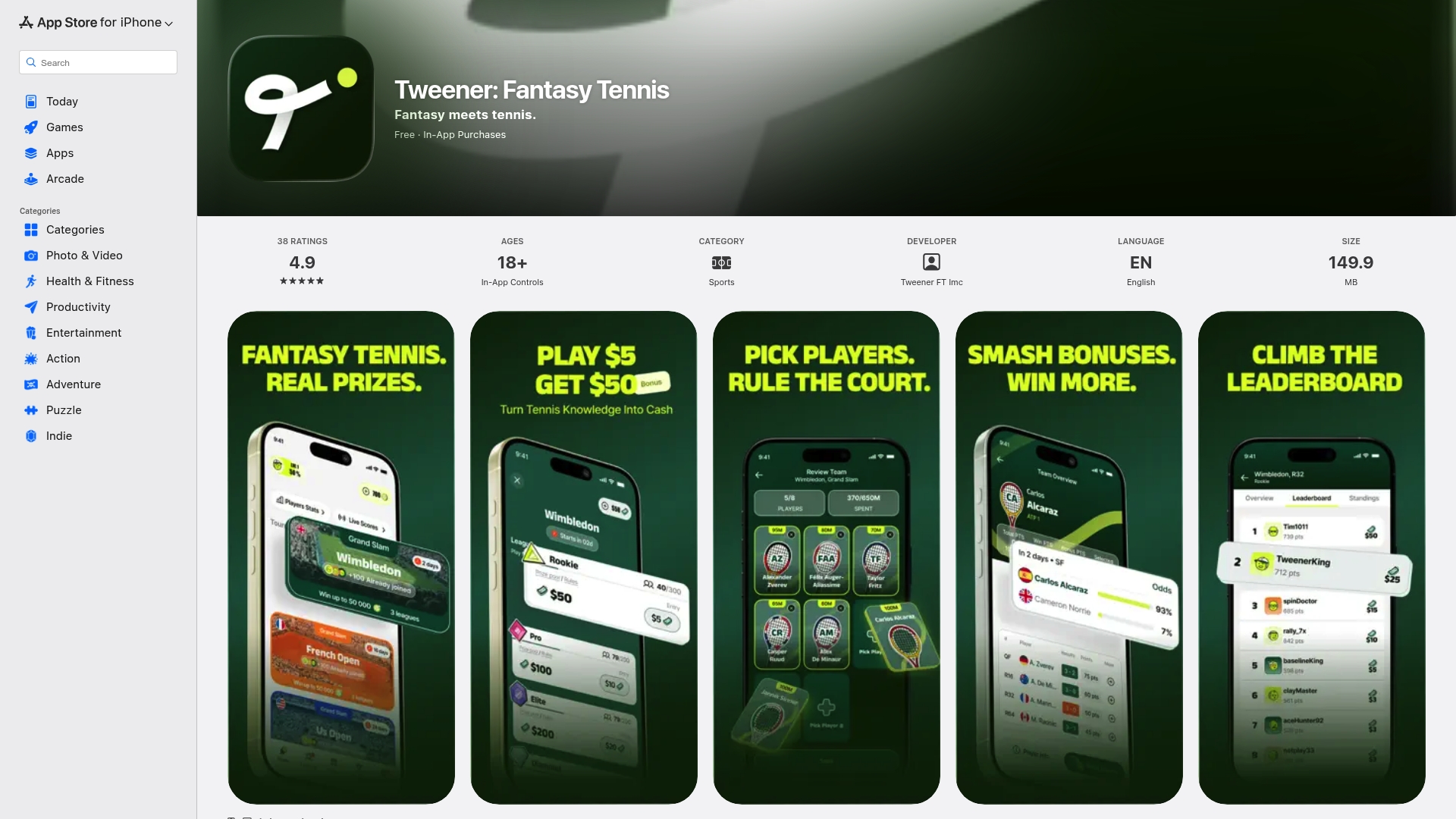
Inside the app, you can set up private leagues for up to nine friends per Grand Slam, choose free coin play or cash contests, and apply detailed scoring across aces, breaks, and games rather than a flattened win/loss format. The full scoring breakdown and roster rules live on the official game rules page, so you know exactly how your doubles picks translate into points before you draft. If you are ready to build a roster around pair chemistry and surface fit instead of just name value, download Tweener and set up your first private league before the next Slam draw drops.
Sources
- ATP Fantasy: How to play, choose your team, win points & climb leaderboards
- Fantasy Tennis Draft Strategy, Sleepers & Best Picks | RotoWire