

TL;DR:
- Weekly lineup decisions have a greater impact on fantasy sports success than draft quality alone.
- Monitoring schedules, injuries, and player roles consistently is essential for optimal lineup management.
Understanding the importance of lineups in fantasy sports separates casual players from consistent winners. Most beginners assume the draft is where leagues are won or lost. It is not. The draft gives you options. Your lineup decisions determine which options actually score you points each week. Every time you set your roster for a matchup, you are making real strategic choices that involve player projections, injury reports, schedules, and your read on the opponent. Get this right consistently, and the draft becomes almost secondary.
Table of Contents
- Key takeaways
- The difference between roster and lineup
- Schedules, injuries, and player roles
- Strategic optimization: projections, variance, and correlation
- Applying lineup strategy across formats
- My take on lineup management
- Set smarter lineups with Tweener
- FAQ
Key takeaways
| Point | Details |
|---|---|
| Lineups beat rosters | Weekly lineup decisions drive more points than draft quality alone. |
| Schedule awareness wins | Targeting players with more active dates maximizes your scoring window. |
| Injuries reshape everything | Daily monitoring of availability and role changes determines whether your lineup holds up. |
| Variance matters by format | Season-long leagues reward consistency; DFS tournaments reward ceiling plays. |
| Analytics tools give you an edge | Apps like Tweener provide real-time stats and scheduling data to sharpen every lineup call. |
The difference between roster and lineup
Your roster is the full pool of players under your control. Your lineup is the specific subset you activate to score points on a given day or week. The gap between those two things is where most fantasy managers lose ground without realizing it.
Lineup positional constraints shape player demand at every level of fantasy competition. Formats with three wide receivers and two flex spots require much deeper receiver depth than standard setups. In tennis fantasy, the number of singles slots versus doubles slots changes which player types carry the most value in your active lineup on any given tournament day.
Here is what most players get wrong: they spend hours on draft research and then set their lineups on autopilot. The significance of fantasy lineups comes not from who you own but from who you play. A player sitting on your bench while their replacement starts is a net-zero asset.
Key lineup constraints you need to understand:
- Positional requirements: Each slot accepts specific positions, and filling them with the highest-value option every week is a non-trivial decision.
- Injury eligibility lists: Learning when a player moves to an injured list and opens a flex slot is lineup management in action.
- Player status changes: Late scratches, role reductions, and load management decisions all affect who should be active on game day.
- Opponent matchups: Some lineup slots benefit from matchup-specific starters, not just weekly averages.
Pro Tip: Set a fixed time each week to review your lineup, but also check for last-minute changes within one hour of any lock time. Late-breaking news on player availability is where unprepared managers lose easy points.
Schedules, injuries, and player roles
If there is one concept that separates sharp fantasy managers from the rest, it is schedule awareness. Targeting teams with more games during sparse stretches is a defined and repeatable edge. In fantasy hockey, for example, Oliver Ekman-Larsson was rostered in nearly 70% of ESPN leagues in March 2026 precisely because of this strategy. More games means more scoring opportunities, and a player with four games in a week outscores an equivalent player with two games almost every time, regardless of per-game output.
In tennis fantasy on Tweener, this concept translates directly. A Grand Slam offers seven potential rounds. A player who advances deep into a draw accumulates points across every match. Choosing your active lineup around players who are in form and likely to play more matches is a core strategic lever. This is why tournament schedule analysis should be part of every lineup decision during a major.
Injuries change everything
Daily monitoring of injury reports is non-negotiable in any format. Shrinking rotations and increased load management in professional sports mean backup players can step into premium scoring roles with almost no warning. A manager who catches a star player's late scratch before lineup lock and pivots to their backup captures points that a passive manager leaves on the bench.
In tennis, the equivalent is retirement and withdrawal tracking. If a player pulls out of a match or retires mid-match, your lineup absorbs a zero for that slot unless you have already identified a replacement. This is not bad luck. It is a solvable problem with the right monitoring habit.
"Lineup optimization is where most weekly fantasy points are won or lost before any game action, making it the critical focus area for managers." — Fantasy Toolkit
Player roles and usage rates
Beyond availability, understand how much each player is being used. In team sports, NFL draft picks reshaping depth charts can demote veteran starters mid-season, flipping their fantasy value overnight. In tennis, a player's draw position in a bracket matters enormously. Facing easy first-round opponents lifts projected output; landing in a brutal quarter of the draw suppresses it, even for top seeds.

Strategic optimization: projections, variance, and correlation
This is where lineup decisions become genuinely interesting. Lineup optimization systematically ranks your roster slots by projected output and fills them with the highest expected value options within your constraints. Projections, injury data, and matchup analysis all feed into the decision before any game begins.
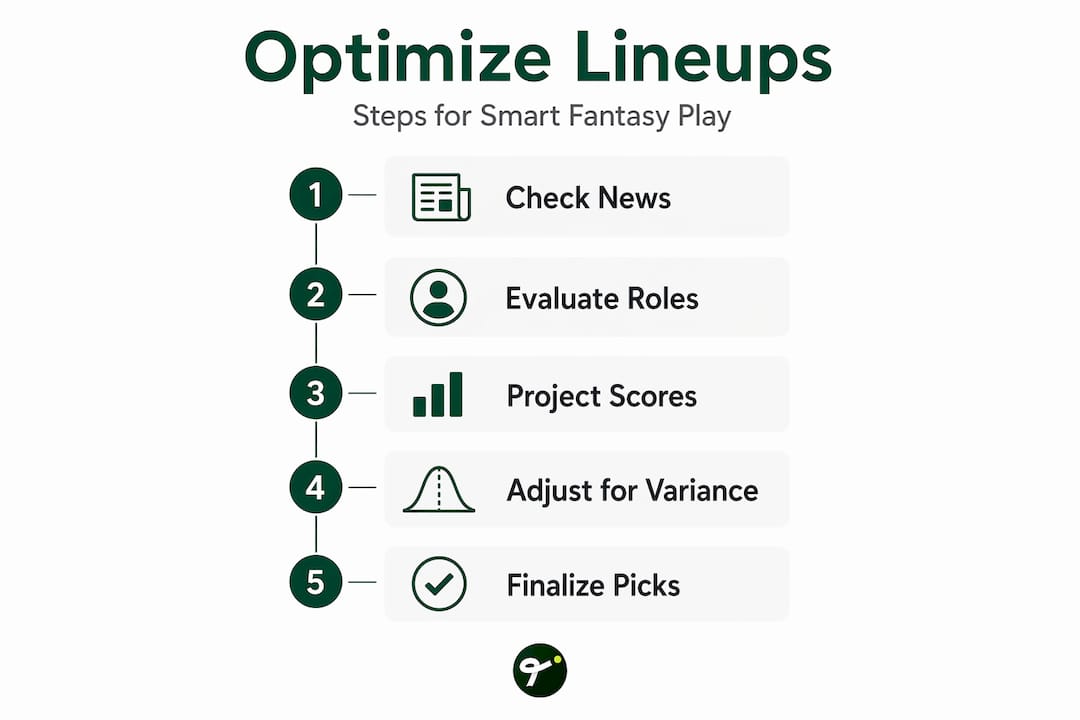
But here is what most guides skip: the highest projected lineup is not always the right lineup.
| Situation | Best lineup approach | Why |
|---|---|---|
| Season-long head-to-head | Maximize mean projected score | Consistency beats your opponent weekly |
| DFS large-field tournament | Maximize ceiling, accept variance | You need a top-1% score to win, not average |
| DFS 50/50 or double-up | Stay close to chalk projections | Finishing in the top half is the goal |
| Season-long with playoff push | Prioritize floor for safety | Avoid catastrophic weeks late in the season |
Variance and tournament context are the deciding factors. Season-long leagues reward minimizing variance for consistent weekly wins. DFS tournaments require embracing higher variance with high-ceiling plays because the payout structure demands a score that beats nearly everyone else in the pool.
Correlated stacking is the advanced version of this logic. Stacking a QB with receivers maximizes upside when that offense explodes, but it risks a catastrophic week if the game script goes wrong. In tennis fantasy, you can stack your lineup with aggressive baseliners on clay courts during the French Open when the conditions favor that style, accepting that a bad draw outcome collapses your whole score.
Pro Tip: In DFS, resist the reflex to always spend down your entire salary cap. Leaving salary unspent can be optimal when no remaining player adds meaningful expected value, and forcing in a low-upside player just to spend the cap is a documented lineup mistake.
Lineup optimizers themselves use integer linear programming to solve the constrained problem of selecting players who maximize projected points within roster and salary limitations. They are useful, but they require quality input. Misapplying projection data, such as overweighting a two-game hot streak or ignoring projection confidence intervals, produces suboptimal output regardless of how sophisticated the tool is.
Applying lineup strategy across formats
The mechanics of how to set fantasy lineups shift depending on whether you are playing season-long, DFS, or a tournament-style format like Tweener's Grand Slam leagues. Each format has its own rhythm and timing demands.
Here is a practical breakdown for each:
- Season-long leagues: Set lineups weekly, but check daily for injury news and usage changes. The best habit is a Sunday evening review combined with a Wednesday midweek check for players with split-week schedules. Prioritize starting players over bench depth; a player who starts every game and scores 70% of projection beats a boom-or-bust bench option almost every week.
- DFS daily contests: Lineup lock happens at first game start, which means your window to adjust is short. Build your lineup the morning of contest day using updated injury reports, and always check for final scratches in the thirty minutes before lock. This is where building winning tennis lineups requires the most discipline.
- Tournament formats like Grand Slams: Your lineup management extends across multiple rounds rather than a single game day. A player who wins their first match is still in play for the next round. Monitoring draw brackets, player fatigue, and surface form over the course of a tournament is the core skill in this format.
- Best-ball leagues: No active lineup decisions are required mid-season since the platform auto-selects your highest scorers. But the draft-day roster construction becomes the proxy for every lineup decision you do not get to make manually.
The universal principle across all formats: daily monitoring of news and availability is not optional. It is the difference between a manager who captures available value and one who consistently leaves points behind. Predictive analytics tools that pull real-time player data, scheduling information, and head-to-head records make this monitoring much faster and more accurate than doing it manually.
My take on lineup management
I have watched a lot of fantasy managers obsess over draft rankings and then treat lineup management as a chore. That instinct is backwards. The draft is a one-time event. Lineups are a decision you make every single week, and the compounding effect of consistently good lineup calls outweighs a strong draft position within the first few weeks of a season.
What I have learned is that pure projection-chasing is a trap. Numbers give you a starting point, not an answer. I have seen managers plug in the highest-projected lineup every week and still lose because they ignored situational context: a player dealing with a nagging injury, a tennis player who struggles on grass despite strong rankings, or a star athlete being rested going into a critical stretch.
The managers I respect most treat lineup decisions as a blend of quantitative data and situational awareness. They run the projections, check the context, and then make a call they can actually defend. They also stay flexible. The lineup you set on Monday may need to change by Thursday, and being willing to make that update is what separates disciplined managers from passive ones.
My honest advice: treat each lineup decision as a small bet with real expected value. If you can make slightly better decisions than your opponent each week, that edge compounds quickly over a full season or tournament.
— Nathan
Set smarter lineups with Tweener
If you play fantasy tennis, the lineup decisions described throughout this article are built directly into how Tweener works. The platform gives you access to real ATP and WTA player stats, draw information, and live tournament updates so your lineup calls are grounded in actual data.
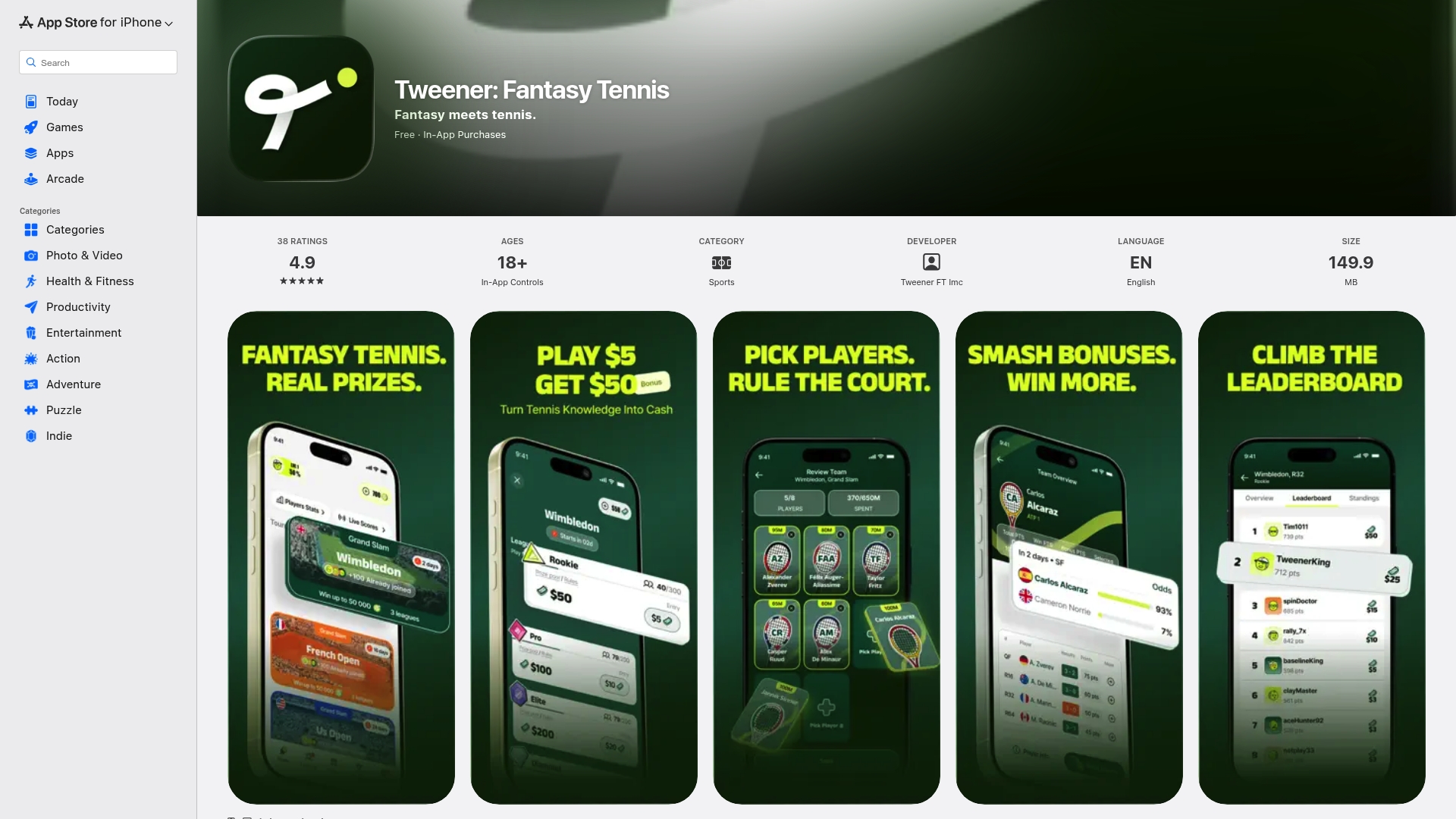
Tweener's Grand Slam private leagues let you compete with up to nine friends across the full duration of a major tournament, which means lineup rotation and draw-bracket monitoring matter every round. The free mode lets you practice your lineup strategy with virtual coins before you ever put real money on the line. When you are ready to compete for real payouts, the cash mode is there. Download the app and put your lineup strategy to work where the analysis of fantasy sports lineups actually costs or earns you something.
FAQ
Why do lineup decisions matter more than the draft?
The draft determines which players you own, but your lineup decisions determine which players score for you each week. Consistently activating the right players and benching underperformers creates more cumulative value than any single draft pick.
How often should you update your fantasy lineup?
You should review your lineup at minimum twice per week in season-long formats. Check once at the start of the scoring period for baseline decisions, then again within a day of lineup lock to catch injury news and late role changes.
What is lineup optimization in fantasy sports?
Lineup optimization is the process of systematically selecting the highest expected-value players for each active roster slot within positional and salary constraints. Tools that run this process use projection data, injury status, and matchup analysis to rank options before games begin.
Does variance strategy differ between DFS and season-long leagues?
Yes. Season-long leagues reward consistent weekly scores, so minimizing variance is the priority. DFS large-field tournaments require high-ceiling lineups because only top scores win meaningful payouts, making higher variance plays worth the risk.
How do schedules affect lineup value in fantasy tennis?
A player who advances deep into a Grand Slam draws plays more matches and accumulates more points than an equally ranked player who exits early. Lineup decisions that account for draw position, surface form, and bracket difficulty create a measurable edge across a tournament.