

A tennis snake draft is a live draft where pick order reverses every round, so the manager who picks first in round one picks last in round two. Winning one comes down to a single principle: draft for your contest's scoring system, not for ATP or WTA rank alone. Surface specialists and low-variance contributors often outscore a marquee name who's a bad fit for the format. The rules, prep, and pick-by-pick tactics below cover exactly how to do that.
TL;DR:
- Draft for your contest's scoring system, as surface specialists and low-variance players often outperform marquee names, regardless of ATP or WTA rank.
- Early rounds should focus on high-floor stars, while middle rounds require diversification across surfaces and nationalities to avoid overexposure.
- Late-round picks are best spent on players with favorable draws, doubles specialists, or cheap backups to cover potential retirements or upsets.
- Build your cheat sheet with surface-specific stats, recent form, and head-to-head records, and practice with mock drafts to improve reaction skills.
- Manage your roster actively after the draft by monitoring withdrawals, injuries, and walkovers, as trades are rare and less impactful than smart lineup adjustments.
Table of Contents
- How a Tennis Snake Draft Actually Works: Rules and Scoring
- What to Draft Early, Middle, and Late in a Tennis Snake Draft
- Building Your Cheat Sheet: Rankings, Stats, and Mock Drafts
- Managing Your Roster After the Draft
- Tweener and Nathan's Evidence-Backed Draft Rules
- Trade Strategies and Roster Moves After the Draft
- When a Snake Draft Beats the Alternatives
- Play a Real Tennis Snake Draft on Tweener
- Where to Check Live Rankings
- Sources
- FAQ
How a Tennis Snake Draft Actually Works: Rules and Scoring
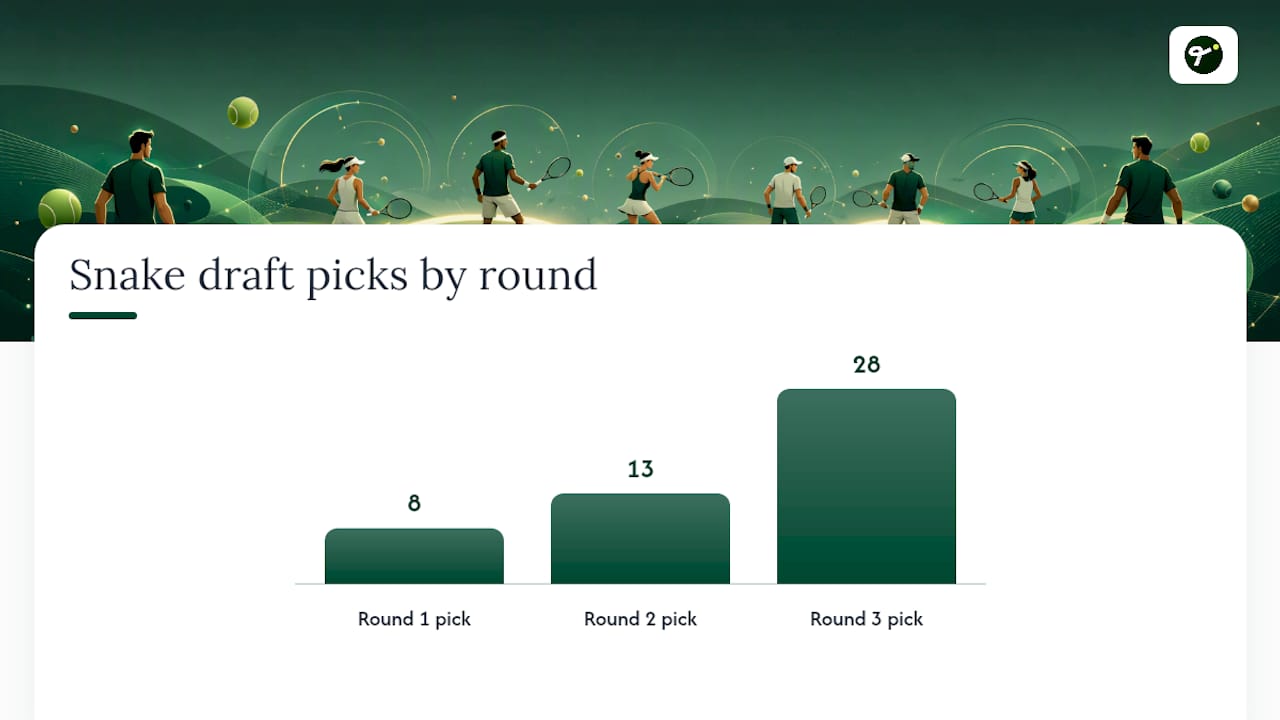
Snake order means the manager picking first in round one picks last in round two, then first again in round three. If you're drafting eighth in a ten-team league, you'll pick eighth, then thirteenth, then twenty-eighth, and so on. That reversal is designed to offset the advantage of picking first.
Most snake-draft tennis contests run on a pick clock, typically 60 to 90 seconds per selection, and if you stall out, auto-draft kicks in and grabs the highest-ranked available player from your queue. That's a problem if your queue is empty or outdated, because auto-draft doesn't care about surface or form. It just takes the next name on a generic list.
Roster requirements vary by platform, but common structures include:
- A set number of starters (often 5 to 7) plus bench spots for the tournament
- Separate ATP and WTA roster slots in combined-tour contests
- Minimum player counts to avoid "punting" an entire draft slot
- A locked roster once a match begins, with substitutions allowed only before that player's next match starts
Scoring generally rewards games won, sets won, and match wins, with bonus points for straight-set wins, upsets over higher seeds, or deep tournament runs. That structure changes player value fast. A grinder who wins ugly three-set matches can outscore a flashy player who loses in straight sets, because games and sets accumulate points even in a loss.
Edge-case rules matter more than most drafters realize. Retirements and walkovers typically freeze scoring at the point of stoppage, and some contests offer a one-time replacement pick for a player who withdraws before their first match. Postponements (rain delays, scheduling pushes) usually just shift the scoring window rather than voiding it. Check your specific contest's rulebook before draft night. A great breakdown of how points get calculated will save you from misreading your own roster's ceiling.
What to Draft Early, Middle, and Late in a Tennis Snake Draft
Snake drafts punish drafters who treat every round the same way. The value calculus shifts hard from round one to the final picks, and knowing what changes is the whole game.
- Early rounds (picks 1 through 3 per team): Take high-floor stars and event favorites, players who reliably reach the second week of a Slam or the semifinals of a 1000-level event. Unless your league's scoring heavily rewards upsets, this is not the round for a boom-or-bust gamble.
- Middle rounds (the meat of your roster): Diversify by surface and nationality. Loading up on three clay-court specialists for a hard-court tournament is a common and costly mistake, and stacking players from the same half of the draw doubles your exposure to one bad break.
- Late rounds: This is sleeper territory. Target players with a favorable draw (a soft first two rounds), doubles specialists if your scoring credits doubles points, and cheap "handcuffs" who benefit if a seed retires or gets upset early.
League size changes all of this. In a 6-team league, the talent pool is deep enough that you can afford to reach for a surface specialist in round two. In a 12-team league, the same specialist might be gone by pick 15, so your cheat sheet needs tighter tiers and faster backup plans.
Back-to-back turns (the "swing" picks at the top and bottom of a round) are where sharp drafters gain real ground. If you pick 4th and 5th in an 8-team snake draft, you effectively get two picks in a row with no one able to react in between. Use that window to pair a star with a stylistic complement, like a hard-court big server right after a clay grinder, instead of doubling down on the same profile.
Pro Tip: Build your queue in tiers, not a strict rank order. When a run starts on clay specialists ahead of the French Open, you want three interchangeable names ready, not a single locked-in pick that vanishes the moment someone else takes them.
Building Your Cheat Sheet: Rankings, Stats, and Mock Drafts
Official rankings are your starting point, not your finish line. The ATP's live rankings update in real time as tournaments progress, which makes them useful for gauging momentum, but a player's overall rank says nothing about how they perform on the surface you're drafting for. The same logic applies to the WTA's official singles rankings, which fantasy managers preparing for women's events should treat the same way.
Your cheat sheet should go beyond rank and include:
- Surface-specific win percentage over the last 12 months
- Recent form (last 10 matches, not season-long averages)
- Head-to-head record against likely early-round opponents
- Injury flags and any recent retirement history
- Draw strength if brackets are released before your draft
Build pick-priority tiers based on your draft slot, and don't skip mock drafts. Running through a mock forces you to practice reacting when a run starts on a position you didn't expect to lose, which is exactly the scenario expert draft commentary tends to flag as the biggest live-draft mistake. A good framework for converting rankings into draft priorities can shortcut a lot of this prep. During the actual draft, lean on pick queues and pre-made grab lists so a slow connection or a bathroom break doesn't cost you your top sleeper.
Managing Your Roster After the Draft
Most snake-draft tennis contests lock rosters tightly once a tournament starts, and that's where a lot of drafters get caught flat-footed. Trades are rare mid-tournament; some platforms disallow them entirely once the draw is set.
Watch for these post-draft realities:
- Withdrawals before a player's first match often trigger a one-time replacement pick, but retirements mid-match usually just freeze your points at the stoppage
- Walkovers typically award zero points to both the withdrawing player's manager and their would-be opponent's manager, depending on contest rules
- Daily injury news matters more than people expect. A player can be moved to a doubtful list hours before their match, and if your platform allows active/bench swaps, use them
- Accept your auto-drafted picks if the queue was solid; rework your bench immediately if auto-draft grabbed a name with no realistic path past round two
Tweener and Nathan's Evidence-Backed Draft Rules
Live scoring and private leagues change how you can actually practice this. Some platforms let you run mock drafts against friends and watch scoring update point by point, which turns theory into pattern recognition fast.
Draft for the scoring system in front of you, not the rank on the screen. A top-10 player who loses early in straight sets can score less than a top-40 grinder who takes a five-setter to three hours. Surface specialists in clay-heavy stretches and low-variance contributors in weekly contests are where most managers leave points on the table.
That's the core of how Nathan approaches every draft breakdown he writes for Tweener's tennis drafting guides, and it's the same logic behind WTA stat primers.
Trade Strategies and Roster Moves After the Draft
Trading in fantasy tennis snake drafts looks nothing like trading in fantasy football. Most contests run over a single tournament, sometimes just a week or two, which leaves almost no window for a multi-player negotiation to matter before the draw plays out.
Where trades exist at all, they tend to happen in longer-format or season-long tennis contests rather than single-tournament drafts. In those settings, the same principle applies as in any other fantasy sport: trade from roster depth, not need. If you drafted three clay specialists for a tournament that turns out to favor faster courts, offering one of them for a hard-court mover who fell to a rival in the middle rounds is a reasonable ask, especially if that rival overloaded on the same surface you're light on.
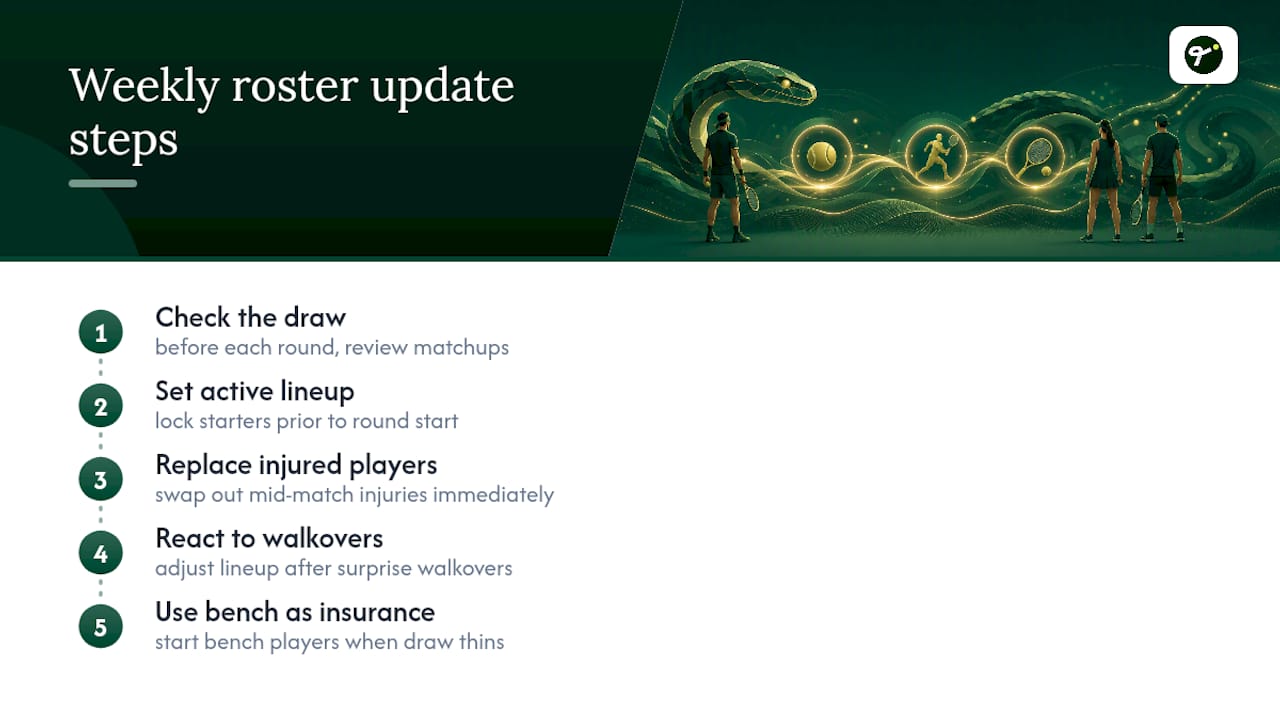
The bigger lever in most snake-draft contests isn't trading. It's daily roster management. Setting your active lineup correctly before each round, swapping out a player who picked up a mid-match injury, and reacting to a surprise walkover all matter more than any trade you'll realistically pull off. A step-by-step approach to weekly roster updates helps here, especially for readers who drafted a deep bench and now need a system for deciding who starts.
Treat your bench like insurance, not dead weight. The players you didn't start in round one of a Slam might be exactly who you need once the draw thins out in the second week.
When a Snake Draft Beats the Alternatives
Snake drafts shine in leagues of 6 to 12 managers running standard sets-and-games scoring. For a quick prediction-style contest or a massive public field, a salary-cap or pick'em format fits better. Either way, skill beats luck here, and that's the whole point.
— Nathan
Play a Real Tennis Snake Draft on Tweener
Tennis still doesn't have its own FanDuel or DraftKings, and that gap is exactly what Tweener was built to close. You can run private snake-draft leagues with up to nine friends for every Grand Slam, practice mock drafts before the real thing, and watch your roster score live, point by point, as matches unfold.
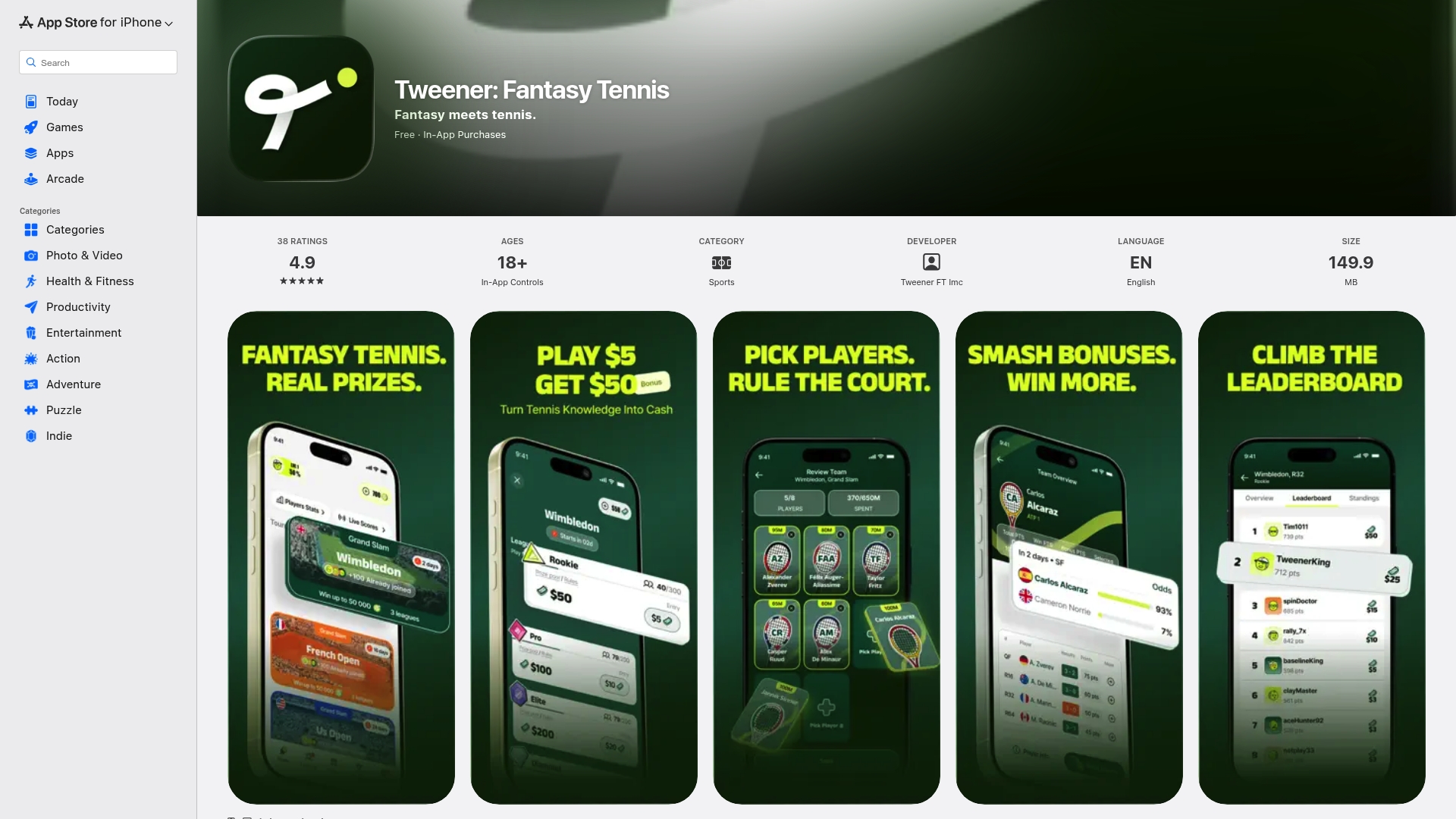
That live scoring matters more than it sounds. Instead of guessing whether your grinder's three-set win covered your star's early exit, you see it update in real time, which makes testing the strategies above far easier than running the numbers by hand after the fact. Start in free mode with virtual coins to sharpen your draft instincts risk-free, or step into a cash contest once you trust your cheat sheet. Download the Tweener app and build your first snake-draft roster before the next Slam field is set.
Where to Check Live Rankings
- ATP Live Rankings and ATP Rankings for men's baseline data
- WTA Rankings for women's events
- ESPN's ATP Rankings for a quick alternate snapshot
Sources
- ATP Live Rankings | PIF ATP Rankings (Singles) | ATP Tour
- ATP Rankings | PIF ATP Rankings (Singles) | ATP Tour
- Tennis Rankings | Official Women’s Tennis Rankings – WTA Tennis
- 2026 ATP Rankings - ESPN
FAQ
Why do they call it a snake draft?
The pick order slithers back and forth like a snake: it reverses direction at the end of every round instead of resetting to pick one, which is why it's also called a "serpentine" draft.
How does a snake draft work in fantasy tennis?
Each manager picks in order for round one, then that order flips completely for round two, and continues alternating for every round after, so the manager who picked last gets the next pick immediately.
Is a snake draft or a linear draft order better?
A snake draft is generally considered fairer because reversing the order each round balances out the advantage of picking first, while a linear draft gives the same manager the earliest pick every single round.
What are the disadvantages of a snake draft?
The biggest downside is positional bunching: managers who pick late in round one often pick early in round two, which can force reaches if a talent tier runs dry right before their turn, and a slow pick clock can trigger an auto-draft that ignores surface or form data.
Can I practice a tennis snake draft before the real thing?
Yes. Running mock drafts on a platform like Tweener lets you rehearse how you'll react to runs on specific surfaces or nationalities before you're on the clock in a real contest.