
TL;DR:
- Sports gaming modes differ by gameplay goals, involving levels of skill, strategic depth, and session length.
- Understanding these modes helps players match gameplay to their preferences and avoid burnout.
Sports gaming modes are defined by their gameplay objectives, player involvement level, and strategic depth. The difference between sports gaming modes is not just cosmetic. Each mode shapes how long you play, how much skill you need, and what kind of satisfaction you get from the experience. Modern sports games categorize gameplay into four primary patterns: Solo Career, Franchise/Manager, Online Ranked, and Party/Quick-Play. Understanding these categories is the fastest way to stop wasting time in modes that don't match your playstyle and start getting more out of every session.
What are the main differences between sports gaming modes?
The four core mode types each serve a distinct player goal. Knowing which one fits your lifestyle changes everything about how you approach a sports game.
Solo Career puts you in control of a single athlete or player. You develop stats, earn contracts, and chase personal milestones across seasons. The focus is individual progression, and sessions can run anywhere from 20 minutes to several hours depending on how deep you go.

Franchise/Manager mode shifts the lens to team ownership and front-office decisions. You draft players, manage budgets, set lineups, and simulate entire seasons. This mode rewards long-term thinking and attracts players who enjoy the strategic layer behind the sport itself.
Online Ranked is the competitive ladder. Online Ranked modes function as ranked ladders, similar to multiplayer shooter ranks, where players climb divisions by winning matches. There is no grind for currency or upgrades. Pure skill determines your position.
Party/Quick-Play is built for low-commitment sessions. You jump in, play a match or two, and leave. No season to manage, no rank to protect. This mode works best for casual play with friends or when you only have 30 minutes to spare.
- Solo Career: individual progression, medium time commitment, single-player focus
- Franchise/Manager: team strategy, high time commitment, offline depth
- Online Ranked: pure competition, variable session length, skill-based matchmaking
- Party/Quick-Play: casual fun, short sessions, low barrier to entry
Pro Tip: If you are new to a sports game, start with Party/Quick-Play to learn the controls before committing to a Franchise or Career save. Jumping into a 30-season Franchise on day one is the fastest way to burn out.
How do arcade and simulation sports modes differ?
Arcade and simulation modes represent the two opposite ends of the sports gaming spectrum. Arcade sports games prioritize fast, frantic gameplay with exaggerated physics, while simulators demand precision, official physics, and long-term mastery. That gap in design philosophy produces completely different player experiences.
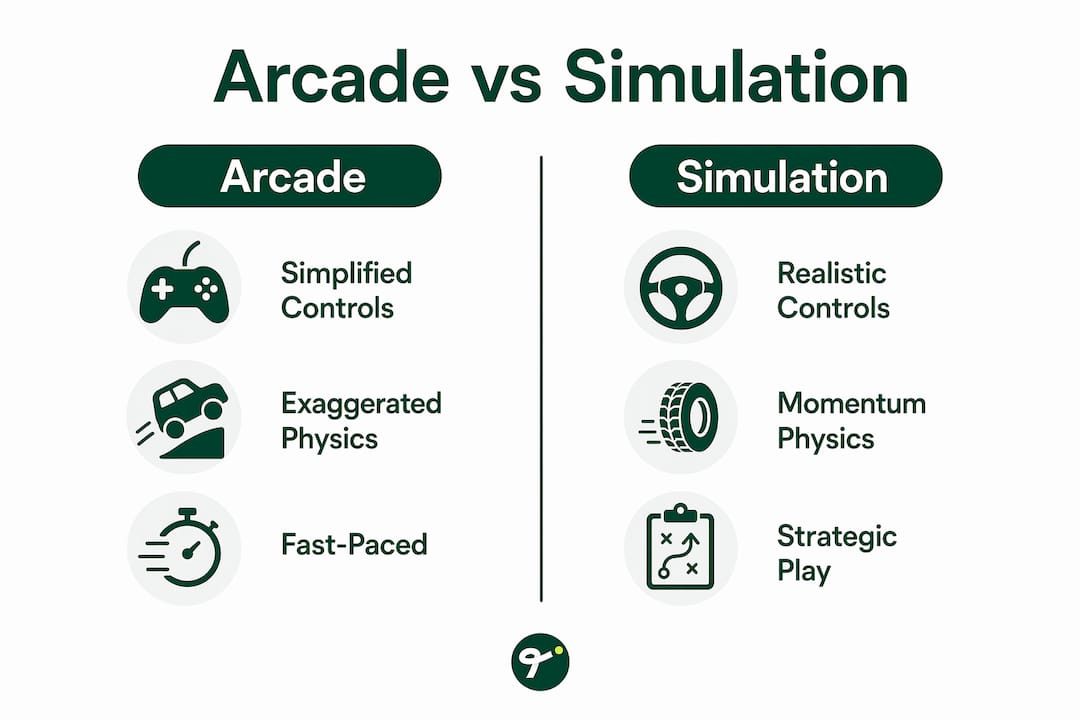
Arcade modes automate a lot of the complexity. Defensive positioning happens with minimal input. Physics bend to create exciting moments rather than realistic ones. The feedback loop is fast, which means you feel rewarded quickly even if you are not particularly skilled. Think of it as a funhouse sprint: the rules exist to maximize fun, not accuracy.
Simulation modes work the opposite way. Simulation controls feature momentum-based physics that demand precise manual defense and tactical input. You cannot button-mash your way to a win. You need to understand positioning, timing, and player attributes. The learning curve is steep, but the payoff is a game that actually mirrors the sport it represents.
The NBA 2K franchise illustrates the simulation ceiling well. NBA 2K's Pro Play system captures player-specific broadcast animation for realistic movement, setting a higher standard for sports simulation authenticity. Realism in simulation modes comes from animation fidelity and player signature behaviors, not just statistics and rules.
Arcade and simulation modes are not better or worse than each other. They are different flavors suited to different player moods and goals. A casual fan who wants to enjoy a quick tennis match without studying serve mechanics belongs in an arcade mode. A player who wants to replicate Novak Djokovic's defensive baseline game belongs in simulation.
Pro Tip: Many sports games let you mix settings. You can run simulation-level physics with arcade-style AI assistance. Experiment with hybrid settings before committing to either extreme.
What are the differences between competitive and authentic sports gaming modes?
Competitive and authentic modes are a more specific distinction that sits within the broader simulation category. Both aim for realism, but they define realism differently.
Competitive modes feature very low AI error rates and require manual defense input, emphasizing skill and precision. The AI does not bail you out. Every mistake you make shows up in the scoreline. This mode rewards players who have invested time learning the mechanics and want a fair test of ability against other humans.
Authentic modes prioritize broadcast-style flow with more AI assistance. The game looks and feels like a televised match. Transitions are smooth, player behavior mirrors real-world tendencies, and the AI fills in gaps so the experience feels complete even when your inputs are imperfect. The pace is more deliberate, and the tactical depth comes from reading the game rather than executing frame-perfect inputs.
The practical differences between these two modes include:
- AI involvement: competitive modes minimize it; authentic modes use it to maintain flow
- Control complexity: competitive demands full manual input; authentic allows partial automation
- Pace: competitive is faster and more reactive; authentic is measured and tactical
- Learning curve: competitive punishes errors immediately; authentic absorbs them more gracefully
- Best for: competitive suits ranked online play; authentic suits offline career or franchise sessions
Most sports games label these modes explicitly in their settings menus. Choosing the wrong one for your skill level is one of the most common reasons players quit a game early. A beginner who accidentally loads competitive settings will face an experience that feels broken rather than challenging.
How do Franchise, Career, and Online Ranked modes shape long-term engagement?
Long-term modes are where sports games earn their replay value. The three most significant are Franchise, Career, and Online Ranked, and each creates a different kind of commitment.
-
Franchise/Manager mode is the deepest single-player experience in most sports games. You control roster decisions, salary caps, draft picks, and coaching staff across multiple seasons. Franchise and competitive modes cater to different types of gamers with varying time availability and strategic interests. A Franchise save can run hundreds of hours if you simulate seasons and rebuild dynasties. The appeal is narrative: you are writing the history of a franchise, not just playing matches.
-
Career/Solo mode focuses on a single player's rise through the ranks. You start at the bottom, earn upgrades, and chase championships as one athlete. This mode suits players who want personal investment without the overhead of managing an entire roster. Session length is more flexible, and the story arc keeps motivation high.
-
Online Ranked functions as the esports ladder of sports gaming. There are no management decisions and no story beats. You queue up, play a match, and your rank moves up or down based on the result. The competitive fairness of this mode is its main draw. Secondary sports modes often deliver a better fun-per-hour ratio by reducing grind and monetization pressure compared to flagship modes. Ranked play strips out the grind entirely and focuses on the match itself.
-
Overlooked secondary modes deserve attention. Modes like March to October in MLB The Show compress a full season into key moments, cutting the grind while preserving the narrative. Single-player challenge modes in hockey games offer focused skill tests without the time investment of a full franchise. These modes often produce the highest enjoyment per hour because they remove friction and keep the gameplay tight.
-
Service-based vs. premium structures also shape long-term engagement. Service-based sports games focus on quick sessions and online play with reduced menus, while annual premium titles offer deep offline and social mode variety. Knowing which structure your game uses tells you immediately what kind of long-term experience to expect.
Key Takeaways
The most effective approach to sports gaming modes is matching the mode to your time availability, skill level, and engagement goal rather than defaulting to the flagship mode.
| Point | Details |
|---|---|
| Four core mode types | Solo Career, Franchise, Online Ranked, and Party/Quick-Play each serve a distinct player goal. |
| Arcade vs. simulation | Arcade modes automate complexity for fast fun; simulation modes demand manual precision and tactical input. |
| Competitive vs. authentic | Competitive minimizes AI assistance for skill-based play; authentic uses AI to create broadcast-style flow. |
| Long-term engagement | Franchise offers narrative depth; Online Ranked delivers pure skill competition with no grind. |
| Secondary modes | Overlooked modes like condensed season formats often deliver the highest enjoyment per hour. |
Why the mode you pick matters more than the game you buy
Most players spend more time arguing about which sports game is best than thinking about which mode inside that game actually fits them. That is the wrong debate. A great Franchise mode in one game will satisfy a management-focused player far more than a mediocre version of the same mode in a "better" game. The mode is the experience. The game is just the vehicle.
I have watched players buy a new sports title every year, spend 10 hours in the wrong mode, and conclude the game is bad. Nine times out of ten, they loaded into a competitive online mode without the skill base to enjoy it, or they started a 30-year Franchise when they only had 45 minutes a week to play. The mismatch kills the experience before the game gets a chance.
The modes that nobody talks about are often the best entry point. Condensed season formats, single-player challenges, and interactive sports apps that mirror these structures give you the strategic depth without the 200-hour commitment. If you are a tennis fan, the same logic applies. You do not need to simulate every point of a Grand Slam to feel the strategic weight of the sport.
My honest advice: spend 20 minutes testing at least three different modes before you commit to one. Most players never do this. The ones who do find a mode that keeps them playing for months instead of weeks. Understanding leaderboard systems and competitive structures before you dive into ranked play is equally worth the time. Mode literacy is the most underrated skill in sports gaming.
— Nathan
Tweener brings strategic sports gaming to tennis fans
Tennis has always lacked a proper fantasy sports platform built for analytical fans. Tweener fills that gap directly.
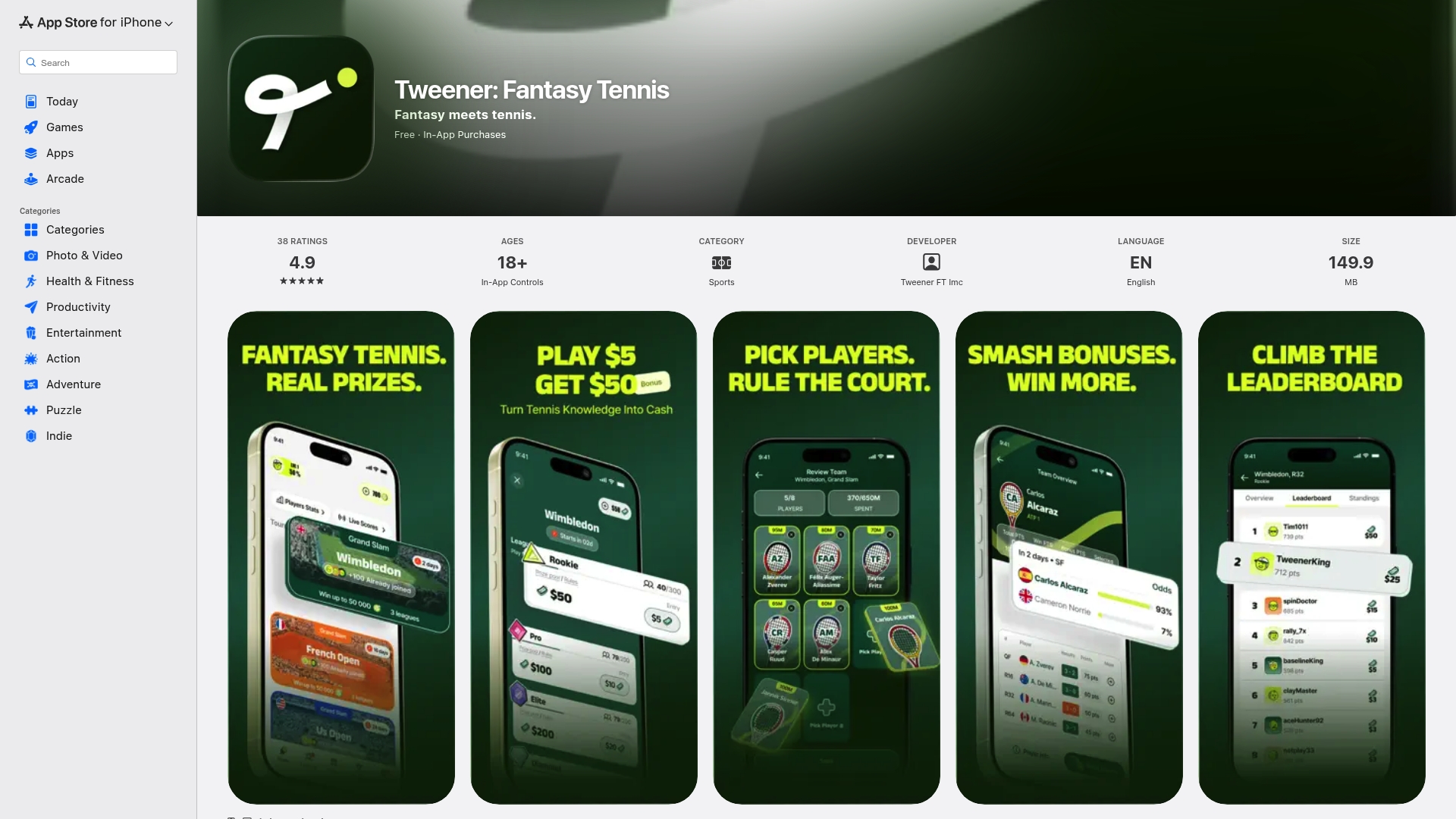
On Tweener, you build fantasy teams from real ATP and WTA players and compete in leagues tied to live tournament results. The platform mirrors the strategic depth of Franchise and Online Ranked modes: you analyze player form, surface performance, and head-to-head records to make picks that actually matter. Tweener offers a free mode using virtual coins redeemable for rewards, and a cash mode for real-money contests where legally permitted. Private leagues let you compete with up to 9 friends across Grand Slams. If you are the kind of sports fan who wants skill and strategy to determine the outcome, Tweener is built for you.
FAQ
What are the main types of sports gaming modes?
Modern sports games organize gameplay into four primary categories: Solo Career, Franchise/Manager, Online Ranked, and Party/Quick-Play. Each mode targets a different player goal and time commitment.
What is the difference between arcade and simulation sports modes?
Arcade modes use exaggerated physics and automated controls for fast, accessible play, while simulation modes demand manual precision, momentum-based physics, and tactical depth. The choice depends on whether you prioritize fun or realism.
What does competitive mode mean in sports games?
Competitive mode features very low AI assistance and requires full manual input, rewarding players with precise control skills. It functions as the most skill-dependent setting in most sports games.
How does Online Ranked mode work in sports games?
Online Ranked operates as a skill-based ladder where players climb divisions by winning matches, with no additional grinding or upgrade systems affecting outcomes. It is the closest equivalent to esports competition within a sports game.
Which sports gaming mode is best for casual players?
Party/Quick-Play and arcade-style modes are the best fit for casual players because they minimize setup time, automate complex mechanics, and deliver fast feedback. Secondary condensed modes also offer high enjoyment without a long-term commitment.