

TL;DR:
- Rivalries like Federer versus Nadal and Djokovic versus Nadal highly influence fantasy tennis strategies through surface-specific matchups and style contrasts.
- Understanding pairings' head-to-head history, surface advantages, and rivalry dynamics helps optimize lineup decisions for volatility or safety.
The list of famous tennis rivalries that matter most for fantasy tennis: Federer vs. Nadal, Nadal vs. Djokovic, Federer vs. Djokovic, Sampras vs. Agassi, Borg vs. McEnroe, Evert vs. Navratilova, Serena vs. Venus Williams, Graf vs. Seles, Henin vs. Clijsters, Murray vs. Djokovic, Alcaraz vs. Sinner. These pairings aren't just tennis history — they're the matchups where surface splits flip favorites, style clashes spike scoring variance, and a single draw can make or break your Tweener lineup.
For fantasy managers, rivalries signal volatility. A balanced H2H on a surface where both players thrive means unpredictable scoring. A lopsided H2H on a specific surface means a safer anchor pick. Knowing which is which before you lock your roster is the edge most players skip.
Table of Contents
- The Famous Tennis Rivalries That Define the Sport
- What makes a rivalry "great" and why it matters for your fantasy picks
- How to use rivalries when building your Tweener fantasy team
- How this list was compiled
- How these rivalries shaped tennis culture
- The matches that changed each rivalry's trajectory
- How playing styles create the contrasts fans remember
- How personalities and off-court narratives fuel rivalry intensity
- Key Takeaways
- The rivalries that changed how I watch tennis
- Put rivalry knowledge to work on Tweener
- Sources and further reading
The Famous Tennis Rivalries That Define the Sport
The table below maps each rivalry across the dimensions that matter most for fantasy decisions.
| Rivalry | Overall H2H | Grand Slam Finals | Primary Era | Surface Advantage | Style Contrast | Fantasy Impact |
|---|---|---|---|---|---|---|
| Federer vs. Nadal | Nadal leads | multiple Grand Slam finals | — | Clay (Nadal), Grass (Federer) | Serve-and-volley vs. topspin baseline | High volatility on grass; Nadal safer on clay |
| Nadal vs. Djokovic | Djokovic leads overall | multiple Grand Slam finals | — | Clay (Nadal), Hard (Djokovic) | Counter-puncher vs. return dominator | Surface filter is critical; clay = Nadal edge |
| Federer vs. Djokovic | Djokovic leads | Multiple GS finals | — | Grass (Federer), Hard (Djokovic) | Fluid offense vs. defensive precision | Djokovic more reliable on hard; Federer upside on grass |
| Sampras vs. Agassi | Sampras leads | Multiple GS finals | — | Grass (Sampras), Hard (mixed) | Serve-and-volley vs. return game | Hard-court meetings most balanced; upset potential high |
| Borg vs. McEnroe | Borg leads | Multiple GS finals | — | Clay (Borg), Grass (McEnroe) | Baseline grinder vs. serve-and-volley | High style clash = wide score variance |
| Evert vs. Navratilova | Navratilova leads | Multiple GS finals | — | Clay (Evert), Grass (Navratilova) | Baseline precision vs. serve-and-volley | Surface determines favorite reliably |
| Serena vs. Venus Williams | Serena leads | Multiple GS finals | — | Hard courts dominant | Power baseline vs. power baseline | Serena more consistent; Venus upside in slams |
| Graf vs. Seles | Graf leads | Multiple GS finals | — | Hard and clay | Aggressive baseline vs. two-handed power | Seles disrupted Graf's dominance; high upset value |
| Henin vs. Clijsters | Henin leads | Multiple GS finals | — | Clay (Henin), Hard (Clijsters) | One-handed backhand vs. athletic retriever | Belgian rivalry; surface split is sharp |
| Murray vs. Djokovic | Djokovic leads | Multiple GS finals | — | Hard courts | Counter-puncher vs. return dominator | Murray rarely wins slams vs. Djokovic; low upset value |
| Alcaraz vs. Sinner | Alcaraz leads | Emerging rivalry | — | Hard and clay | Explosive offense vs. relentless baseline | High volatility; both players peaking now |
Djokovic and Nadal met in Grand Slam finals across all four majors — a feat no other pair has matched in the Open Era. They have faced each other more than any other Open Era rivalry. That breadth of surface coverage is exactly why their rivalry sits at the top of any serious fantasy tennis rivalries analysis.
Pro Tip: Before locking any rivalry matchup in your Tweener lineup, filter by surface first. Djokovic leads Nadal at the Australian Open and Wimbledon, but Nadal leads comfortably at the French Open. The overall H2H tells you almost nothing without that context.

The Alcaraz vs. Sinner pairing, already dubbed "Sincaraz" by pundits, is the rivalry shaping current fantasy strategy. Both players are in their prime, the H2H is close, and their matches consistently go deep into sets — exactly the kind of scoring environment that rewards differential picks.
What makes a rivalry "great" and why it matters for your fantasy picks
Analysts define greatness by Grand Slam finals frequency and competitive balance, not raw H2H totals. A rivalry with 60 matches but only two Grand Slam finals carries less fantasy weight than one with 20 matches and nine finals.
Three criteria separate iconic rivalries from long ones: H2H balance (neither player dominates by more than 60/40), Grand Slam finals frequency, and surface concentration. The third one is underrated. When two players meet disproportionately on one surface, the perceived favorite shifts dramatically depending on the draw. Djokovic and Nadal played a record number of matches at Roland Garros relative to any other venue, which means their clay-court H2H is far more predictive than their overall record for French Open fantasy decisions.
Style contrast is the fourth factor. When a serve-and-volley player meets a defensive mover, score variance widens — more breaks, longer rallies, tighter sets. That variance is fantasy gold if you're chasing upside with a differential pick.
How to use rivalries when building your Tweener fantasy team
- Filter by surface before anything else. Pull the surface-specific H2H, not the overall record. A player trailing 29–31 overall can still be a strong pick if they lead 8–2 on the surface being played.
- Identify whether the rivalry is balanced or lopsided. Balanced rivalries (within 55/45) produce more upset potential and are better for differential picks. Lopsided ones (Murray vs. Djokovic in slams) favor the dominant player as a safe anchor.
- Adjust captain picks for Grand Slam stages. In a rivalry with multiple Grand Slam finals, both players have proven big-match performance. Don't automatically captain the H2H leader — check recent form and surface.
- Use style-clash rivalries for volatility plays. Borg vs. McEnroe-style matchups (contrasting styles, unpredictable scoring) are where upset picks pay off. Alcaraz vs. Sinner fits this profile right now.
- Treat lopsided surface rivalries as anchors. Nadal on clay against Djokovic, or Navratilova on grass against Evert — these are your reliable point-scorers when you need a floor, not a ceiling.
Here's how rivalry context changes a real pick: imagine Alcaraz and Sinner are meeting in a hard-court semifinal. The overall H2H is close, both players are in form, and the match is projected to go three sets. That's a high-variance scenario. You roster Alcaraz as your captain for upside, but you also consider Sinner as a differential in a separate lineup — because in a balanced rivalry on a neutral surface, the "wrong" pick still scores well if the match goes the distance.
Pro Tip: In historically lopsided rivalries, bank on the dominant player for consistent points. In balanced ones, split your lineups — one with the favorite, one with the underdog — to cover both outcomes without doubling down on consensus.
How this list was compiled
Every rivalry here meets at least three of five objective criteria: a minimum number of career meetings, at least one Grand Slam final, documented surface-specific H2H splits, measurable style contrast, and era-defining significance confirmed by tennis historians and analysts. Primary sources include Wikipedia's comprehensive H2H tables, ATP Tour historical records, and contemporary pundit analyses from outlets covering both the ATP and WTA tours.
Rivalries excluded: long H2H totals between players who rarely met in Grand Slam finals, or pairings where one player's dominance was so complete that no competitive balance existed. The goal was rivalries that produce genuine uncertainty — which is what fantasy managers actually need.
How these rivalries shaped tennis culture
The Federer–Nadal rivalry didn't just produce great matches. It split the tennis world into two camps for over a decade and drove a global surge in the sport's popularity. The Evert–Navratilova rivalry did the same for women's tennis in the 1970s and 1980s, redefining what elite women's tennis looked like physically and tactically. Graf vs. Seles was cut short by a shocking on-court attack in 1993, which altered both careers and left a permanent mark on the sport's history. The Borg–McEnroe dynamic brought personality conflict into the mainstream — the ice-cold Swede against the volcanic New Yorker — and made tennis appointment television in a way it hadn't been before.
Murray vs. Djokovic, though lopsided in Grand Slam results, defined British tennis's highest point in a generation and gave Wimbledon two of its most emotionally charged finals. Alcaraz vs. Sinner is already doing something similar for the next generation, with both players carrying national pride alongside genuine rivalry.
The matches that changed each rivalry's trajectory
The 2008 Wimbledon final between Federer and Nadal is the benchmark. Nearly seven hours, five sets, rain delays, and Nadal ending Federer's 40-match winning streak at the All England Club. John McEnroe called it the greatest match he'd ever seen. For fantasy purposes, it's the archetype of a high-variance rivalry match: two peak players, contrasting styles, external conditions, and a result that defied the surface narrative.
The 2012 Australian Open final between Djokovic and Nadal — nearly six hours, Djokovic winning after Nadal led in the fifth — is cited by many analysts as the greatest hard-court match ever played. The 2013 French Open semifinal between the same two players holds a similar claim on clay. Borg vs. McEnroe at Wimbledon 1980, with McEnroe saving match points in the fourth-set tiebreak before Borg won the fifth, remains one of the most replayed matches in the sport's history.
For the WTA, the Evert–Navratilova 1985 French Open final and the Henin–Clijsters 2003 French Open semifinal (where Henin's disputed hand-raise call became one of tennis's most controversial moments) both shifted the psychological dynamic of those rivalries permanently.
How playing styles create the contrasts fans remember
| Rivalry | Player A Style | Player B Style | Clash Type |
|---|---|---|---|
| Federer vs. Nadal | Fluid all-court offense | Heavy topspin baseline | Offense vs. spin defense |
| Nadal vs. Djokovic | Topspin baseline, clay king | Return dominator, defensive wall | Baseline power vs. retrieval |
| Borg vs. McEnroe | Grinding baseline | Serve-and-volley | Grinder vs. net rusher |
| Evert vs. Navratilova | Precise baseline | Aggressive serve-and-volley | Consistency vs. aggression |
| Alcaraz vs. Sinner | Explosive, varied offense | Relentless baseline depth | Creativity vs. consistency |
Style-matchup frameworks reliably predict volatility. When a serve-and-volley player meets a defensive retriever, the match structure becomes unpredictable — short points mix with marathon rallies, and neither player can fully impose their preferred rhythm. That unpredictability is exactly what makes these matchups high-variance in fantasy scoring.
How personalities and off-court narratives fuel rivalry intensity
Borg and McEnroe were opposites in every visible way — composure versus combustion — and that contrast made their matches feel like more than tennis. Federer and Nadal, by contrast, built a rivalry on mutual respect that became part of both players' public identity. Their post-match embraces and joint press conference moments were as covered as the matches themselves.
The Belgian rivalry between Henin and Clijsters carried national weight and personal friction — they were once close friends whose relationship became strained under the pressure of competing for the same titles. Graf and Seles had their rivalry defined by tragedy rather than tennis. The Williams sisters' dynamic is unique: genuine familial love coexisting with fierce competition, and the psychological complexity of playing a sibling in a Grand Slam final.
Modern rivalries like Alcaraz vs. Sinner show that personality and media narrative accelerate fan interest before long H2H histories develop. Both players are likable, both are national heroes in their countries, and their matches carry a generational-torch narrative that drives viewership and, directly, fantasy engagement.
Key Takeaways
The most reliable fantasy edge from rivalry data comes from surface-specific H2H splits, not overall records — filter there first, every time.
| Point | Details |
|---|---|
| Surface filter first | Always check surface-specific H2H before overall record; it often flips the perceived favorite. |
| Balanced rivalries for differentials | Rivalries within 55/45 H2H produce more upsets; use the underdog as a differential pick in separate lineups. |
| Grand Slam stakes signal volatility | Rivalries with multiple Grand Slam finals produce non-linear scoring; treat them as high-reward captain opportunities. |
| Style clash = wider score variance | Serve-and-volley vs. baseline matchups create unpredictable point totals; ideal for upside plays. |
| Tweener for rivalry-based strategy | Tweener's H2H and surface filters let you apply these rivalry insights directly when building fantasy lineups. |
The rivalries that changed how I watch tennis
Most fantasy guides treat H2H as a single number. The Djokovic–Nadal rivalry alone shows why that's wrong: Djokovic leads overall, but Nadal leads 8–2 at Roland Garros. Those aren't the same rivalry on different days — they're two different matchups wearing the same name. The players who win at Tweener consistently are the ones who treat surface-specific H2H as the primary filter, not an afterthought.
The other thing most guides miss: personality narratives drive fantasy engagement before the stats catch up. Alcaraz vs. Sinner has a fraction of the H2H history of Federer–Nadal, but it already generates the same pre-match energy. That energy translates to viewership, to close matches, and to fantasy volatility. Getting ahead of a rivalry before it's fully established is one of the sharpest edges available right now.
Put rivalry knowledge to work on Tweener
Knowing the matchup analysis behind each rivalry is only half the equation. Tweener is where you act on it. The app is built for exactly this kind of analytical play: surface filters, H2H context, and private Grand Slam leagues where you compete against up to nine friends per tournament. There's no equivalent in tennis fantasy — Tweener is the closest thing the sport has to a dedicated DFS platform, built for fans who actually study the game.
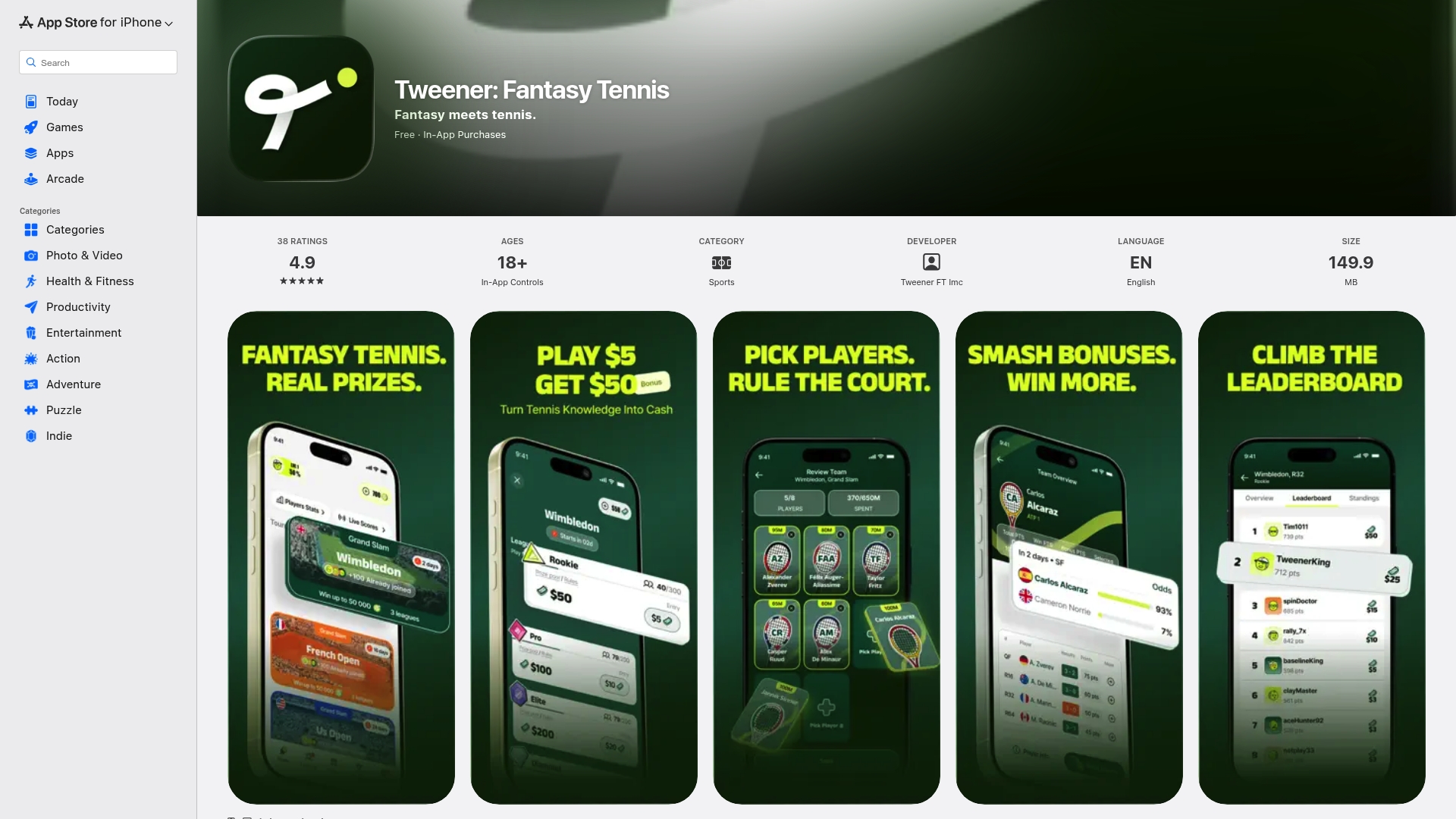
Download Tweener and put your rivalry knowledge into a real lineup. Start playing on Tweener — free mode available, cash contests where permitted.
Sources and further reading
- Djokovic–Nadal rivalry (Wikipedia) — primary source for H2H totals, Grand Slam meeting counts, and surface-specific records used throughout.
- List of tennis rivalries (Wikipedia) — comprehensive H2H tables across eras; backbone of the rivalry data table.
- 10 Greatest Rivalries in Tennis History (GiveMeSport) — analyst rankings and criteria for rivalry greatness; used in the explainer and methodology sections.
- Beyond 'Sincaraz' (Australian Open) — contemporary analysis of Alcaraz–Sinner and current-generation rivalries.
- The 2008 Wimbledon Final (Global Tennis News) — detailed retrospective on the benchmark match in the Federer–Nadal rivalry.
- Nadal outlasts Federer at Wimbledon 2008 (ESPN) — match report with streak data and contemporary reaction.
- Top 10 rivalries in tennis history (Newsday) — surface narrative analysis for Agassi–Sampras, Evert–Navratilova, and Becker–Edberg.
- Greatest tennis rivalries of all time (Tennis Now) — style-matchup framework analysis used in the how-to and style contrast sections.