

TL;DR:
- A tennis tiebreak is a points-based game used at 6-6 in a set to quickly determine the winner. It requires at least 7 points and a 2-point lead, with scores sometimes extending beyond 7. Since 2022, all Grand Slams now use a 10-point super tiebreak in the final set, unifying the format across tournaments.
A tiebreak in tennis is a special points-based game played when a set reaches 6-6, designed to decide the set winner quickly and fairly. Unlike regular games scored in 15s, 30s, and 40s, a tiebreak uses simple numerical counting. The first player or team to reach at least 7 points with a 2-point margin wins the set 7-6. This format exists because sets without a tiebreak can extend indefinitely, as seen in the infamous 2010 Wimbledon match between John Isner and Nicolas Mahut, where the final set alone lasted over 11 hours. Understanding the tiebreak is the key to reading professional match scores and appreciating the pressure players face at the most critical moments.
What is a tiebreak in tennis and how does scoring work?
The tiebreak is a compressed, high-stakes race designed to limit indefinite set length while balancing fairness and player stamina. Points are counted numerically: 1, 2, 3, and so on. There are no 15s or 40s. The first player to reach 7 points and lead by at least 2 wins the tiebreak and the set.
If the score reaches 6-6 inside the tiebreak, play continues until one player opens a 2-point gap. A tiebreak does not end exactly at 7 points but requires that 2-point margin, so final scores of 8-6, 10-8, or longer are entirely possible. The set score is then recorded as 7-6, with the loser's tiebreak points shown in parentheses.
Serve rotation in a tiebreak
The serving order follows a specific pattern. The player who serves the 13th game of the set serves the first point of the tiebreak from the deuce court. After that single point, players alternate serving in blocks of two points each, starting from the ad court side. This rotation continues throughout the tiebreak.
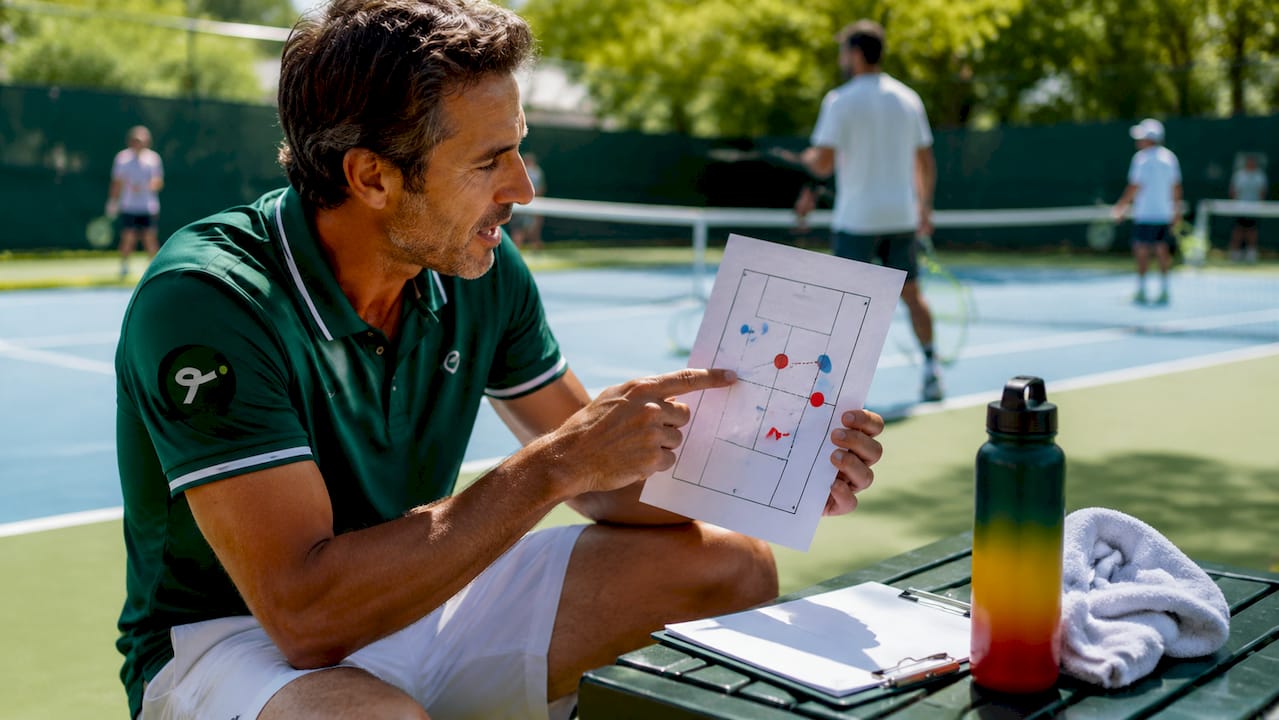
Players switch court sides every 6 points during a tiebreak. This rule accounts for environmental factors like wind, sun position, and crowd noise. Without it, one player could hold a consistent physical advantage for the entire tiebreak.
Here is a quick summary of standard tiebreak rules:
- First to 7 points with a 2-point lead wins the set 7-6
- Points are counted numerically, not in 15/30/40 format
- First server serves one point from the deuce court
- Players then alternate two serves each from the ad court
- Ends switch every 6 points
- Play continues past 7 if neither player leads by 2
Pro Tip: Track the serve count during a tiebreak. Knowing whose turn it is to serve next helps you predict when a momentum shift is most likely.
What different tiebreak formats exist across tournaments?
Tennis uses two main tiebreak formats. The standard 7-point tiebreak applies when a set reaches 6-6 in most professional matches. The 10-point match tiebreak, often called the super tiebreak, replaces a full final set in specific formats and competitions.
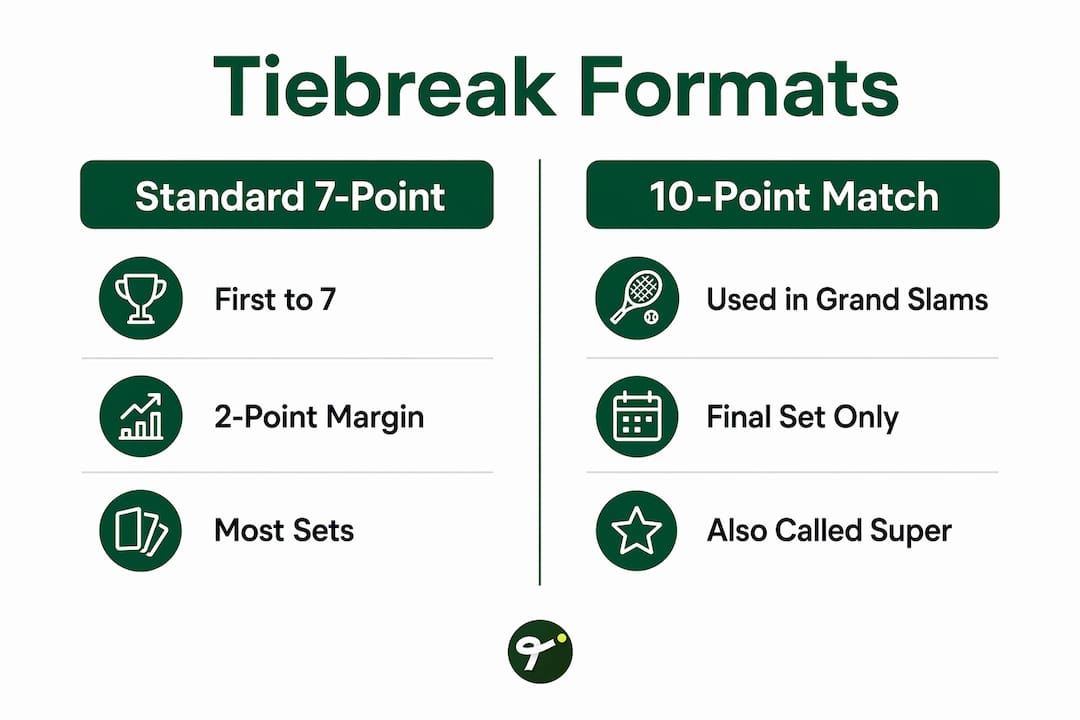
The original Grand Slam tiebreak in 1970 was a sudden-death 9-point format. That version was replaced over time by the current first-to-7 format, which gave players more margin and reduced the lottery element of a single deciding point. The 10-point super tiebreak followed as a further evolution, particularly for doubles and mixed doubles where match length is tightly managed.
The biggest recent change came in 2022. Since march 2022, all four Grand Slam tournaments standardized on a 10-point match tiebreak at 6-6 in the final set. Before that, Wimbledon used no tiebreak in the final set, the French Open used none until 2022, and the US Open had its own variation. The unification ended years of inconsistency across the sport's biggest stages.
Tiebreak formats at a glance
| Format | Points target | 2-point margin required | Where it's used |
|---|---|---|---|
| Standard tiebreak | 7 points | Yes | Sets 1–4 in Grand Slams, most ATP/WTA events |
| Super tiebreak (10-point) | 10 points | Yes | Final set at all four Grand Slams since 2022 |
| Super tiebreak (doubles) | 10 points | Yes | Doubles and mixed doubles final sets |
| Historical 9-point | 9 points | No (sudden death) | Grand Slams pre-1970s, now retired |
The super tiebreak plays out under the same serving rules as the standard version. The only differences are the higher points target and the contexts in which it appears. In doubles, where rallies are shorter and matches move faster, the 10-point format keeps the final set competitive without dragging.
- Standard 7-point tiebreak: used in sets 1 through 4 at Grand Slams
- 10-point super tiebreak: used in the final set at all four Grand Slams since 2022
- 10-point super tiebreak: used in doubles and mixed doubles final sets
- Historical 9-point sudden-death format: retired from professional play
You can find a broader breakdown of how these formats fit into the full match structure in this tennis tournament formats guide.
Why is the tiebreak mentally and strategically significant?
Tiebreaks shift mental focus dramatically, demanding intense concentration because each point heavily influences the set outcome. In a regular game, losing a point at 30-0 is recoverable. In a tiebreak at 3-4, the same error puts you one point from losing the set. The stakes compress into every single exchange.
Mental toughness and strategic serving in tiebreaks often separate the top performers from the rest during critical match moments. Players like Novak Djokovic and Roger Federer built reputations partly on their tiebreak records. Djokovic in particular is known for staying calm when the score is tight, converting pressure into points at a rate that reflects years of deliberate practice in these situations.
The physical side matters too. Tiebreaks can be physically taxing despite their shorter format, because the high concentration and multiple momentum swings demand stamina and quick recovery. A player who has just fought through a long third set carries that fatigue directly into a tiebreak where there is no room to coast.
Key strategic adjustments players make in tiebreaks:
- Serve to the opponent's weaker side more consistently
- Reduce unforced errors rather than going for outright winners
- Use the end change at 6 points to reset mentally
- Attack when serving at even scores (2-2, 4-4, 6-6) to avoid falling behind
- Stay aggressive on return games to break the server's rhythm
Pro Tip: When watching a tiebreak, pay attention to what happens immediately after the 6-point end change. Players who use that break to reset their breathing and posture tend to win the next two points at a higher rate.
Understanding the mental dimension of tiebreaks also matters for coaching decisions during matches, where a well-timed tactical adjustment can shift momentum before a tiebreak begins.
How do tiebreak scores appear in results and what are common misconceptions?
Score notation such as 7-6 (4) means the set was won 7-6 with the losing player scoring 4 points in the tiebreak. The number in parentheses always refers to the loser's tiebreak total, not the winner's. A score of 7-6 (6) signals a very close tiebreak where the winner needed at least 8 points to secure the 2-point margin.
The most common misconception is that a tiebreak always ends at exactly 7 points. It does not. If both players reach 6-6 inside the tiebreak, play continues until one player leads by 2. Scores of 8-6, 10-8, or even 13-11 are legitimate outcomes. The 7-point target is the minimum, not a hard ceiling.
A second misconception involves the serve after the tiebreak ends. The player who served the first point of the tiebreak does not serve the first game of the next set. The opponent serves that opening game. This rule maintains the standard serve rotation across the full match.
Common tiebreak score examples and what they mean:
| Score notation | What it means |
|---|---|
| 7-6 (3) | Winner won tiebreak 7-3 |
| 7-6 (6) | Winner won tiebreak 8-6 |
| 7-6 (9) | Winner won tiebreak 11-9 |
| 7-6 (0) | Winner won tiebreak 7-0 (a bagel tiebreak) |
Tournament broadcasts use the parenthetical tiebreak score shorthand to quickly communicate set intensity to viewers. A score of 7-6 (9) tells you immediately that the set went deep into the tiebreak before being decided. That single number carries a lot of information once you know how to read it.
For a full breakdown of how tiebreak scores fit into the broader scoring system, the tennis scoring guide covers every layer from points to sets to matches.
Key Takeaways
A tiebreak is a points-based mini-game played at 6-6 in a set, requiring at least 7 points and a 2-point margin to win, with all four Grand Slams now using a 10-point super tiebreak in the final set since 2022.
| Point | Details |
|---|---|
| Standard tiebreak format | First to 7 points with a 2-point margin wins the set 7-6. |
| Serve rotation rule | First server serves one point, then players alternate two serves each throughout. |
| Court side switches | Players change ends every 6 points to neutralize environmental advantages. |
| Grand Slam unification | Since 2022, all four Grand Slams use a 10-point tiebreak in the final set. |
| Score notation | The number in parentheses (e.g., 7-6 (4)) shows the losing player's tiebreak points. |
The moment everything changes
Tiebreaks are where tennis reveals itself most clearly. You can watch a player dominate for two sets and then watch that same player unravel in a 12-minute tiebreak because one double fault at 5-6 broke their concentration. I have followed professional tennis long enough to know that tiebreak records tell you more about a player's mental makeup than almost any other stat.
What strikes me most is how rarely casual fans pay attention to the serve rotation during a tiebreak. Knowing who serves next is not just a rules detail. It is a tactical map. When Djokovic is serving at 5-6 in a tiebreak, the crowd feels it. When Carlos Alcaraz is returning at the same score, the energy shifts completely. That context is invisible if you do not understand the format.
The 2022 Grand Slam unification was overdue. Wimbledon's old no-tiebreak final set rule produced drama, but it also produced matches that were physically brutal and logistically impossible for broadcasters. The 10-point super tiebreak is a better solution. It preserves tension while keeping the match within a manageable window. Fans who understand this format watch those final-set tiebreaks with a completely different level of engagement.
My honest advice: practice tiebreaks deliberately if you play the game yourself. Most club players never simulate the pressure of a 5-6 tiebreak in training. They arrive at that moment in a real match with no muscle memory for it. The players who win tiebreaks consistently are the ones who have been there hundreds of times before.
— Nathan
Tweener turns tiebreak moments into fantasy wins
Understanding tiebreaks gives you a real edge when you follow professional tennis. Tweener takes that edge further.
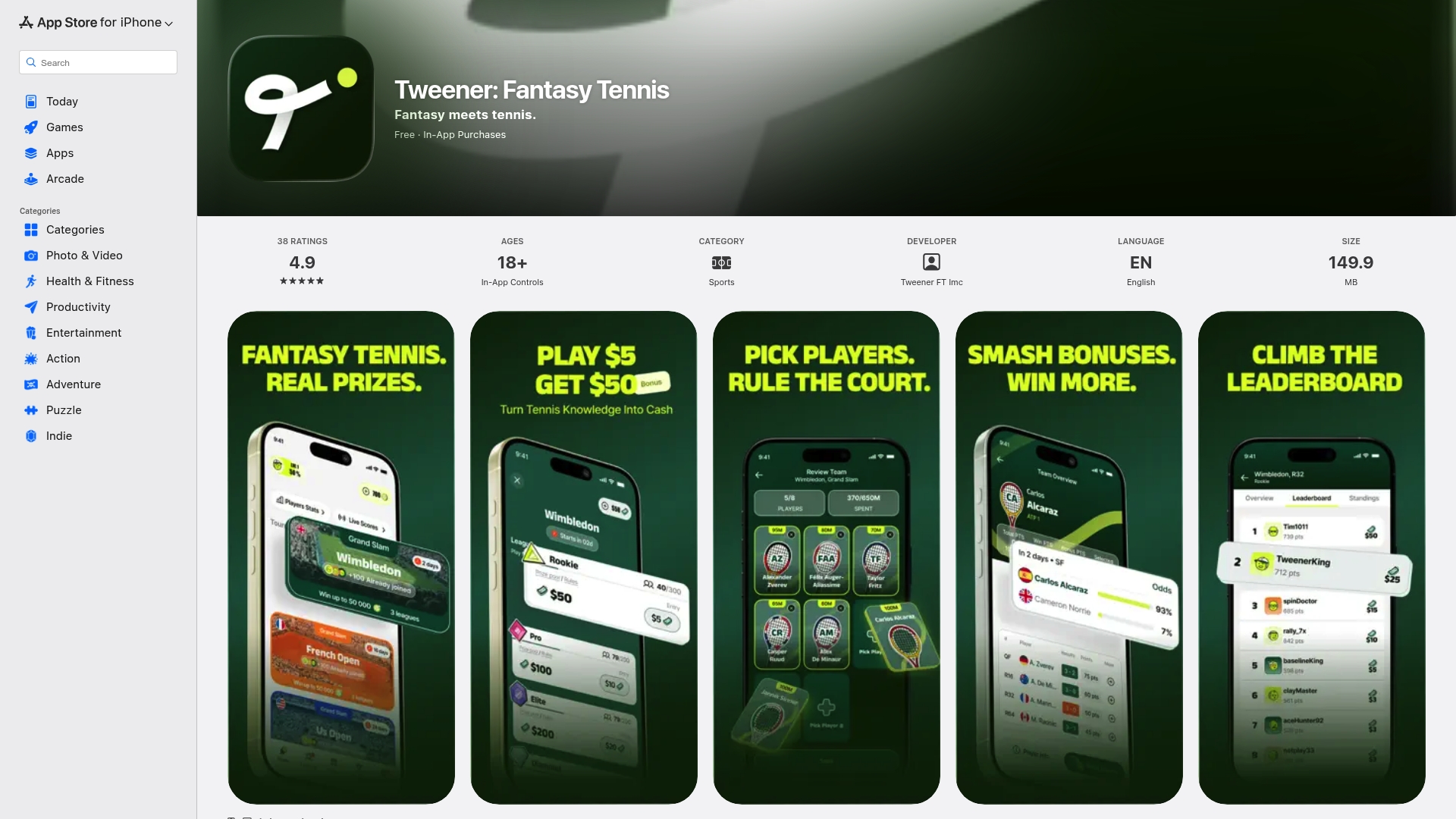
Tweener is the only high-quality fantasy tennis app built for fans who think analytically about the sport. You build teams from real ATP and WTA players, compete in private leagues with up to 9 friends during Grand Slams, and earn points based on live match results. Tiebreak performance, surface stats, and head-to-head data all feed into the strategy. It is skill-based competition, not luck. Download Tweener and put your tennis knowledge to work during the next major tournament.
FAQ
What is a tiebreak in tennis?
A tiebreak is a points-based mini-game played when a set reaches 6-6. The first player to reach at least 7 points with a 2-point lead wins the set 7-6.
How does a tiebreak work in terms of serving?
The player who serves the 13th game serves the first tiebreak point from the deuce court. Players then alternate serving in blocks of two points each for the rest of the tiebreak.
When is a 10-point super tiebreak used?
Since march 2022, all four Grand Slam tournaments use a 10-point match tiebreak at 6-6 in the final set. It is also used in doubles and mixed doubles final sets across most professional events.
Does a tiebreak always end at 7 points?
No. A tiebreak requires a 2-point margin to end, so if the score reaches 6-6 inside the tiebreak, play continues until one player leads by 2. Scores like 8-6 or 10-8 are common.
What does 7-6 (4) mean in a tennis score?
It means the set was won 7-6 in a tiebreak, and the losing player scored 4 points during that tiebreak. The number in parentheses always shows the loser's tiebreak total.