What is a streamable player in fantasy sports?
A streamable player is a low-ownership athlete you add specifically for a short window, typically one week in football or a few days in basketball, because their situation sets them up to outperform their season-long projections. The moment that window closes, they go back to the waiver wire.
Streaming itself is a roster management approach built on one idea: certain positions produce enough weekly variance that you're better off cycling through the best available option each week than locking in a mediocre starter all season. You're not looking for a keeper. You're looking for the right player for right now.
Positions and contexts where streaming shows up most often:
- Fantasy football: defense/special teams, kicker, quarterback, and tight end
- Fantasy basketball: any position, with selection driven by schedule density rather than just matchup
- The core logic: matchup quality, role stability, and game environment matter more than a player's season-long reputation
- Ownership threshold: streamers typically sit below 50% ownership in public leagues, meaning the opportunity is actually available
How streaming works in fantasy football
Fantasy football's weekly format makes it the natural home for streaming strategy. You pick up a player to start that week, ride the favorable matchup, and often drop them immediately after to make room for next week's option.
The positions that reward streaming most are the ones with the highest weekly variance:
- Defense/special teams: A unit facing a rookie quarterback or a turnover-prone offense can post elite numbers one week and disappear the next. Streaming D/ST is standard practice at every level of fantasy football.
- Kicker: Season-long kicker results are notoriously unpredictable. Streaming a kicker on a high-scoring offense against a weak defense costs nothing in draft capital and often matches what a "set" kicker produces.
- Quarterback: In single-QB leagues, a QB2 drawing a defense that allows the most passing yards in the conference becomes a viable QB1 for that week. Weekly variance at the position is high enough that even elite quarterbacks post duds in bad spots.
- Tight end: Outside the top few options, tight end production swings wildly based on coverage matchups and game script. A tight end facing a linebacker in coverage instead of a safety is a legitimate weekly add.
The evaluation process for each stream comes down to a short checklist: matchup quality, role stability (snaps, routes, designed usage), game environment (competitive game vs. blowout risk), and short-term schedule. A player with two favorable matchups in the next three weeks is worth more than a pure one-week rental.
Pro Tip: Use waiver priority and FAAB spending only when the gap between streaming options is meaningful, not marginal. Conserving waiver priority for genuine season-long breakouts while using free agency for short-term streams is how experienced managers extract maximum value from both resources.

How streaming works differently in fantasy basketball
Basketball streaming runs on a different clock. The key variable is schedule density: a player with four games in a seven-day span is genuinely more valuable than an equivalent player with three, regardless of matchup quality.
The mechanics that separate basketball streaming from football streaming:
- Bulk streaming: Adding a player specifically because they play on back-to-back nights or have three games in four days. More games means more counting stats, full stop.
- Load management: Near trade deadlines, teams rest starters, which collapses a star's games-played count for that week. A player on a team with five games in the same stretch becomes a streaming asset purely on volume.
- Daily roster decisions: Unlike football's weekly set-and-forget approach, basketball requires you to monitor the schedule almost daily. A player who looked great on monday can become irrelevant by thursday if their team hits a light stretch.
- Roster logistics: Frequent adds and drops mean you need to track lineup changes in real time, not just at the weekly deadline.
Pro Tip: Build your streaming list around the schedule release each week, not just player rankings. Identify which teams play four or five games and target their most-used role players before the rest of your league does.
Streaming vs. speculative adds: what's the actual difference?
These two tactics get conflated constantly, but they pull from different parts of your roster management budget and serve completely different purposes.
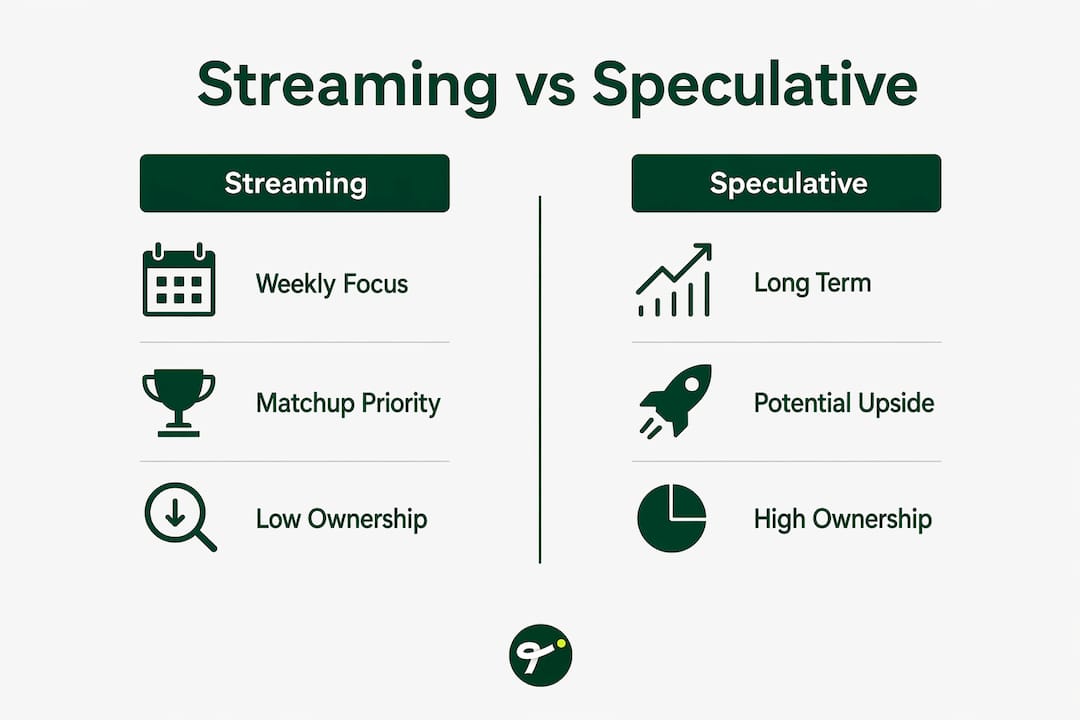
- Streamers are tactical, short-horizon plays. You add them to start immediately because their ceiling for this specific period exceeds what their season-long profile suggests. The window is defined before you add them.
- Speculative adds are longer-term investments. You're betting that a player's role will expand, usually because a starter got injured or a depth chart shifted. You're not starting them this week; you're holding them for future value.
The resource implications are real:
- Speculative adds justify burning a top waiver priority because the potential payoff extends across multiple weeks or the rest of the season.
- A streamer rarely justifies spending your top waiver claim. If the player is truly a one-week rental, a lower priority or free-agent add usually gets the job done.
The distinction also shapes bench construction. A roster built around two or three speculative holds needs fewer streaming slots. A roster with no stash-worthy prospects can afford to run a more aggressive weekly streaming approach, cycling through options without worrying about the opportunity cost of dropping a long-term asset. Understanding this tradeoff is part of what separates a skill-based fantasy approach from guesswork.
Benefits, tips, and mistakes to avoid when streaming
Streaming done well converts a replaceable roster spot into a consistent points engine without spending high draft capital. That's the core appeal. You don't need a top-five tight end if you can reliably identify the best available tight end for each specific week.
Key benefits:
- Preserves draft capital for positions where elite talent actually separates from the field
- Turns low-ownership players into weekly contributors your opponents haven't rostered
- Adapts to the season as matchups shift, injuries happen, and schedules change
What to prioritize when selecting a streamer:
- Matchup context over reputation: A defense facing an inexperienced quarterback, or a tight end drawing weak coverage, outperforms their season-long numbers more often than not.
- Role stability: Opportunity matters more than talent at the streaming level. Snaps, routes run, and designed usage tell you whether the player will actually see the ball.
- Short-term schedule: Two favorable matchups in the next three weeks beats one great matchup this week.
Common mistakes that kill streaming value:
- Excessive churn: Dropping a useful bench piece for a marginal stream creates a hidden loss. Every add has an opportunity cost.
- Chasing last week's box score: Streaming is forward-looking. The player who scored 30 points last week in a blowout may face a completely different environment this week.
- Misjudging matchup reliability: Even the softest defense holds a mediocre passer to a quiet game sometimes. Build in a floor scenario, not just a ceiling one.
- Ignoring game environment: Blowouts erase passing volume and kicking opportunities. A competitive game script supports the kind of full-game usage streamers need to pay off.
Pro Tip: Identify three to five streaming candidates each week rather than locking in on one. When your first choice gets claimed or an injury report changes the picture, you need a backup option ready. Live data tools that track usage and snap counts in real time give you a real edge here.
Key Takeaways
Streaming converts replaceable roster spots into weekly scoring assets by prioritizing matchup context, schedule density, and role stability over season-long reputation.
| Point | Details |
|---|---|
| Streamable player definition | A low-ownership player added for a short window when situational factors project them to outperform their season-long baseline. |
| Football positions to stream | Defense/special teams, kicker, quarterback, and tight end carry the highest weekly variance and the most available options. |
| Basketball streaming driver | Schedule density matters most: target players with four or more games in a seven-day stretch to maximize counting stats. |
| Streaming vs. speculative adds | Streamers are immediate-start rentals; speculative adds are longer-term holds. Each demands a different level of waiver resource. |
| Biggest streaming mistake | Excessive roster churn and chasing last week's box score both destroy the repeatable process that makes streaming work. |
If the matchup-driven, data-first thinking behind streaming appeals to you, that same analytical edge applies directly to tennis. Tweener brings the same kind of skill-based fantasy competition to ATP and WTA tournaments, where surface stats, head-to-head records, and draw analysis replace the waiver wire. Download the app and put your read of the draw to work.