
TL;DR:
- A forced error in tennis is a mistake caused directly by an opponent's shot that pressures the player into losing balance, time, or control. It is distinct from an unforced error, which occurs despite the player having adequate time and position. Understanding and analyzing forced errors helps improve player performance and enhances match analysis.
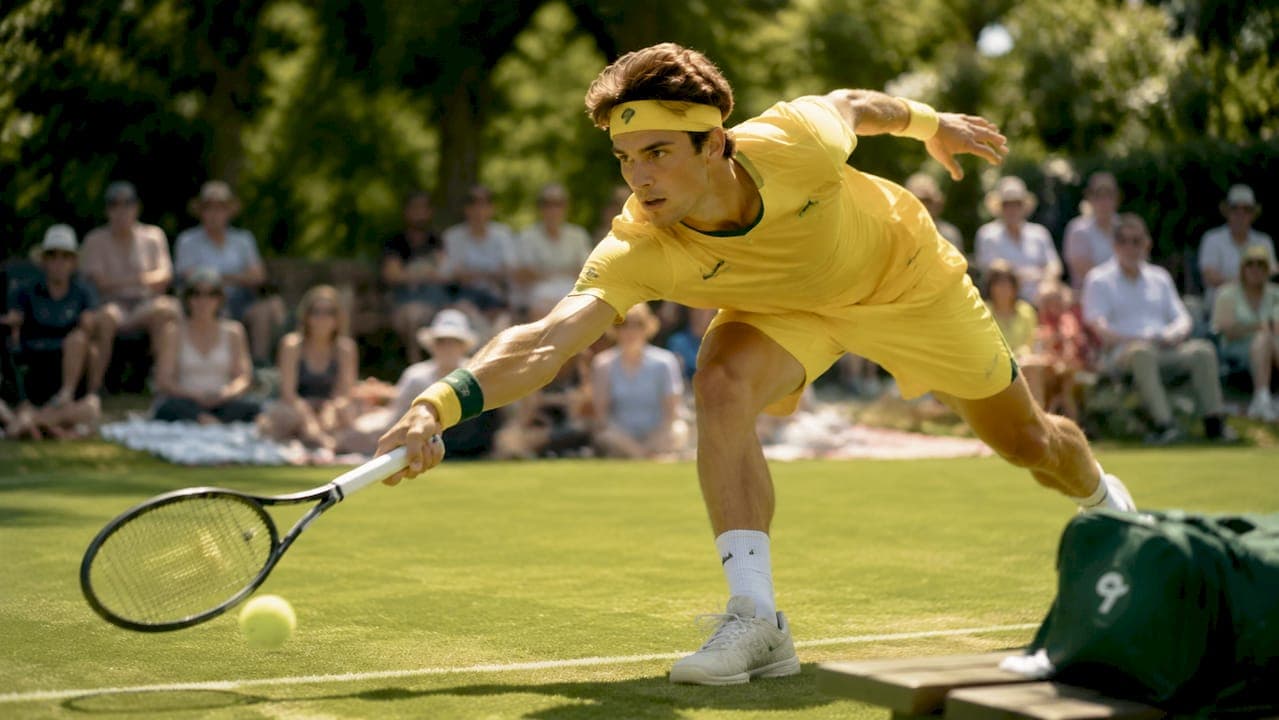
A forced error in tennis is defined as a mistake caused directly by an opponent's shot that puts the receiving player under enough pressure to lose balance, time, or control before the ball is struck. This is distinct from an unforced error, where the player has adequate time and position but still misses. Understanding forced errors matters for players trying to improve their game and for fans who want to read a match more intelligently. The concept sits at the center of modern tennis analytics, shaping how coaches, commentators, and platforms like Tweener evaluate player performance across ATP and WTA events.
What is a forced error in tennis, exactly?
A forced error is defined as any mistake caused directly by an opponent's pressure through pace, spin, depth, or angle that forces the player into a rushed or off-balance position. The key word is "caused." The opponent's shot quality is the primary reason the point is lost, not a lapse in the receiver's execution.

Professional stats tracking uses a three-outcome model for every point: forced error, unforced error, or winner. Double faults are tracked separately. This framework gives coaches and analysts a precise way to evaluate where points are being won and lost, and why.
The simplest way to think about it: a forced error is an earned point for the opponent. An unforced error is a free point handed to the opponent. That distinction changes everything about how you diagnose a player's performance after a match.
Forced error vs unforced error: what is the difference?
The line between these two tennis error types comes down to player state, not shot type. Player state means the combination of time available, body balance, and control over the swing at the moment of contact.
| Criteria | Forced Error | Unforced Error |
|---|---|---|
| Player state | Rushed, off-balance, stretched | Balanced, time to prepare |
| Primary cause | Opponent's shot quality | Player's own execution failure |
| Incoming ball | Difficult: fast, deep, angled | Manageable: pace and placement |
| Responsibility | Opponent earns the point | Player gives away the point |
| Coaching focus | Defensive resilience, footwork | Shot selection, mental discipline |
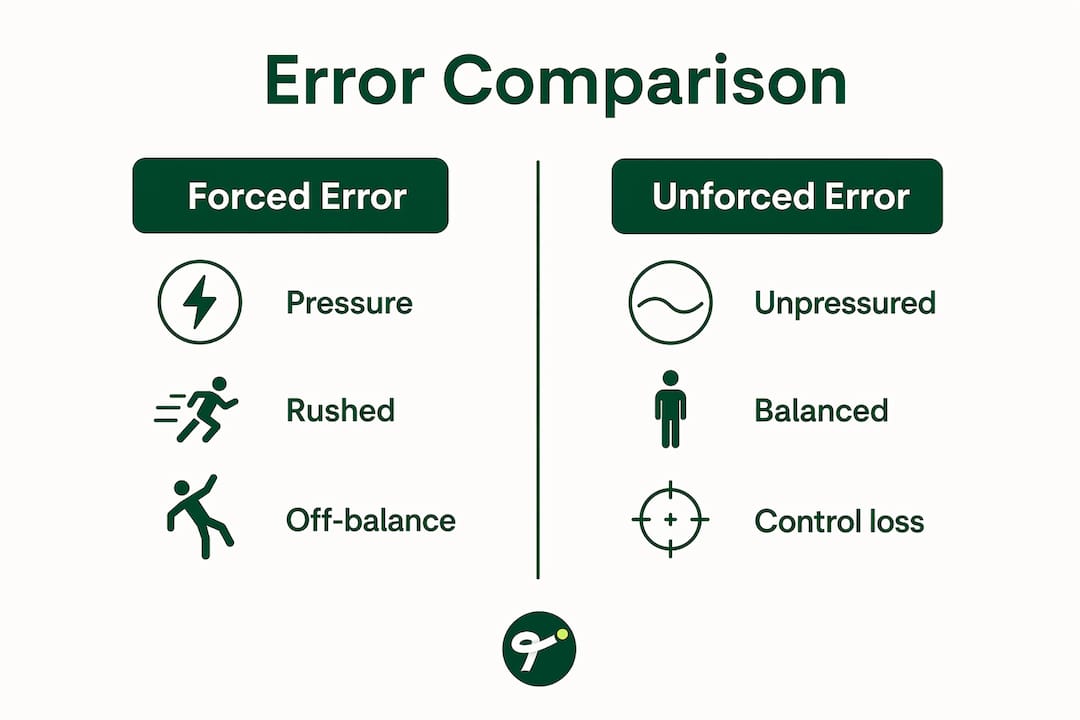
The challenge is that categorization is subjective and depends on the scorer's judgment. Two analysts watching the same point can disagree. A ball hit at 95 mph to the corner might be classified as a forced error by one scorer and an unforced error by another if the player appeared to have just enough time to reach it.
A common misconception is that any difficult shot that results in an error is automatically forced. That is not accurate. If Carlos Alcaraz hits a deep topspin forehand and his opponent has time to set up but shanks the return, that is still an unforced error. The player state, not the shot's difficulty, is the deciding factor.
Pro Tip: When watching a match, ask yourself one question before labeling an error: did the player have time and balance to execute a reasonable shot? If yes, it is unforced. If no, it is forced.
What causes forced errors during matches?
Forced errors are produced by a specific set of pressure factors that strip a player of time, space, or stability. Understanding these factors is the first step toward both avoiding them and creating them.
The primary causes include:
- Pace: A ball traveling faster than the opponent can process gives them less time to set up. Jannik Sinner's flat forehand, consistently clocked above 90 mph, regularly produces forced errors from opponents who cannot get their racket back in time.
- Spin: Heavy topspin, like the kind Rafael Nadal generates on clay, causes the ball to kick high and fast off the bounce. This forces opponents to hit from an awkward shoulder-height position with little control.
- Depth: Shots landing near the baseline push opponents behind the court, reducing their angle options and forcing defensive replies.
- Angle: Sharp crosscourt or down-the-line angles pull players wide, leaving them stretched and off-balance at contact.
- Positioning: When a player is caught out of position, even a moderate shot can produce a forced error due to difficult returns.
The "Silent Six" error framework identifies six common avoidable mistakes, several of which are directly linked to forced error conditions. These include missed returns, net errors, and unnecessary directional changes that players make when under pressure. Addressing these six patterns improves match results without requiring a player to hit more winners.
Poor footwork and slow reactions are the most common player-side contributors. When a player fails to split-step at the right moment or takes a poor first step, even a routine shot can become a forced error situation.
How do top players strategically induce forced errors?
Creating forced errors is a deliberate tactic, not a byproduct of hitting hard. Top players induce forced errors by targeting specific weaknesses, varying shot patterns, and controlling court geometry. Here is how it works at the elite level:
- Target the weaker side. Most players have a weaker backhand than forehand. Consistently attacking the backhand corner forces defensive replies and opens the court for a finishing shot.
- Vary pace and spin. Alternating between heavy topspin and flat drives disrupts an opponent's timing. Novak Djokovic does this better than almost anyone, mixing pace to keep opponents guessing on every ball.
- Hit deep to push opponents back. Deep baseline shots force opponents behind the court, reducing their options and increasing the likelihood of a weak reply.
- Use the serve plus one tactic. The "one-two punch" means using the serve to open the court, then attacking the next ball to the exposed side. This sequence is designed to produce a forced error or an outright winner on the second shot.
- Attack the net aggressively. Moving forward after a deep approach shot limits the opponent's reaction time and angles, forcing a rushed pass attempt that often ends in a forced error.
Pro Tip: When building a fantasy tennis team on Tweener, look at a player's opponent-induced error rate on second serves. Players who consistently force errors off their second delivery are controlling rallies, not just surviving them.
The goal is not to hit the ball as hard as possible. The goal is to put the opponent in a position where a clean reply is nearly impossible. That is the difference between power and strategy.
How can players reduce their own forced errors?
Reducing forced errors requires improving the defensive skills that break down under pressure. Slow reactions and poor stance are the two most consistent contributors to high forced error counts. Both are trainable.
The most effective adjustments focus on:
- Footwork and anticipation: The split-step, timed to the opponent's contact, is the single most important defensive habit. Players who split-step consistently get into position faster and face fewer forced error situations.
- Early racket preparation: Getting the racket back before the ball crosses the net gives the player more time to adjust to pace and spin. Late preparation is the most common reason a manageable ball becomes a forced error.
- Court positioning: Standing too close to the baseline against heavy hitters like Aryna Sabalenka invites forced errors. Moving back one step gives more reaction time without sacrificing court coverage significantly.
- Net clearance drills: Hitting with more net clearance, especially on defensive shots, reduces errors caused by balls struck under pressure. Coaches at the Base Play Tennis Academy recommend drills targeting net clearance and target consistency as core defensive training tools.
- Shot selection under pressure: Choosing a high-percentage shot, such as a crosscourt reply with margin, rather than going for a winner when off-balance, directly reduces forced error counts.
The psychological dimension matters too. Players who panic under pressure tend to swing harder, which reduces control and increases errors. Staying calm and choosing a safe shot when stretched is a skill that separates consistent players from streaky ones. You can track how well players handle pressure situations using a performance tracking workflow that separates error types by match context.
Experts confirm that players improve fastest by first cutting unforced errors, then building forced error resilience. Trying to fix both at once dilutes focus and slows development.
Key takeaways
A forced error is an earned point for the opponent, and reducing your own while creating your opponent's is the core of modern tennis strategy.
| Point | Details |
|---|---|
| Definition of forced error | A mistake caused by opponent pressure through pace, spin, depth, or angle that disrupts player balance or timing. |
| Player state is the key indicator | Time, balance, and control at contact determine whether an error is forced or unforced, not shot difficulty alone. |
| Top players create them deliberately | Tactics like targeting the backhand, hitting deep, and the serve plus one sequence are designed to force errors. |
| Footwork is the primary defense | Split-stepping and early racket preparation reduce forced error exposure more than any other single adjustment. |
| Analytics use a three-outcome model | Forced error, unforced error, and winner tracking gives coaches precise data to guide player development. |
Why forced errors tell you more than the scoreboard does
I have spent years watching tennis through a data lens, and forced errors remain one of the most underrated statistics in the sport. Most fans fixate on winners. Broadcasters celebrate them. But forced errors reflect superior play in a way that winners do not always capture.
A player can hit 30 winners and still lose if they are also giving away 40 unforced errors. But a player who forces 25 errors from the opponent while keeping their own unforced count in single digits is controlling the match at a structural level. That is the player I want on my fantasy team.
What I find most interesting is how forced error rates shift by surface. On clay, heavy topspin from players like Iga Swiatek generates forced errors at a rate that simply does not translate to hard courts. On grass, flat and fast serves from players like Taylor Fritz produce forced errors in the return game that disappear on slower surfaces. Surface context changes everything when you are reading these numbers.
The classification debate, forced versus unforced, will never be fully resolved. Scorers disagree, and that is fine. What matters is using the framework consistently to identify patterns. If a player's forced error count spikes in the third set, that tells you something about their fitness and footwork under fatigue. If it spikes against one specific opponent, that tells you about a tactical mismatch.
Performance analysts recommend focusing on forcing errors rather than chasing outright winners as the more reliable path to match control. I agree completely. Winners are the highlight reel. Forced errors are the strategy.
— Nathan
Track forced errors where it actually matters
Understanding forced errors changes how you watch tennis. It also changes how you pick players in fantasy tennis.
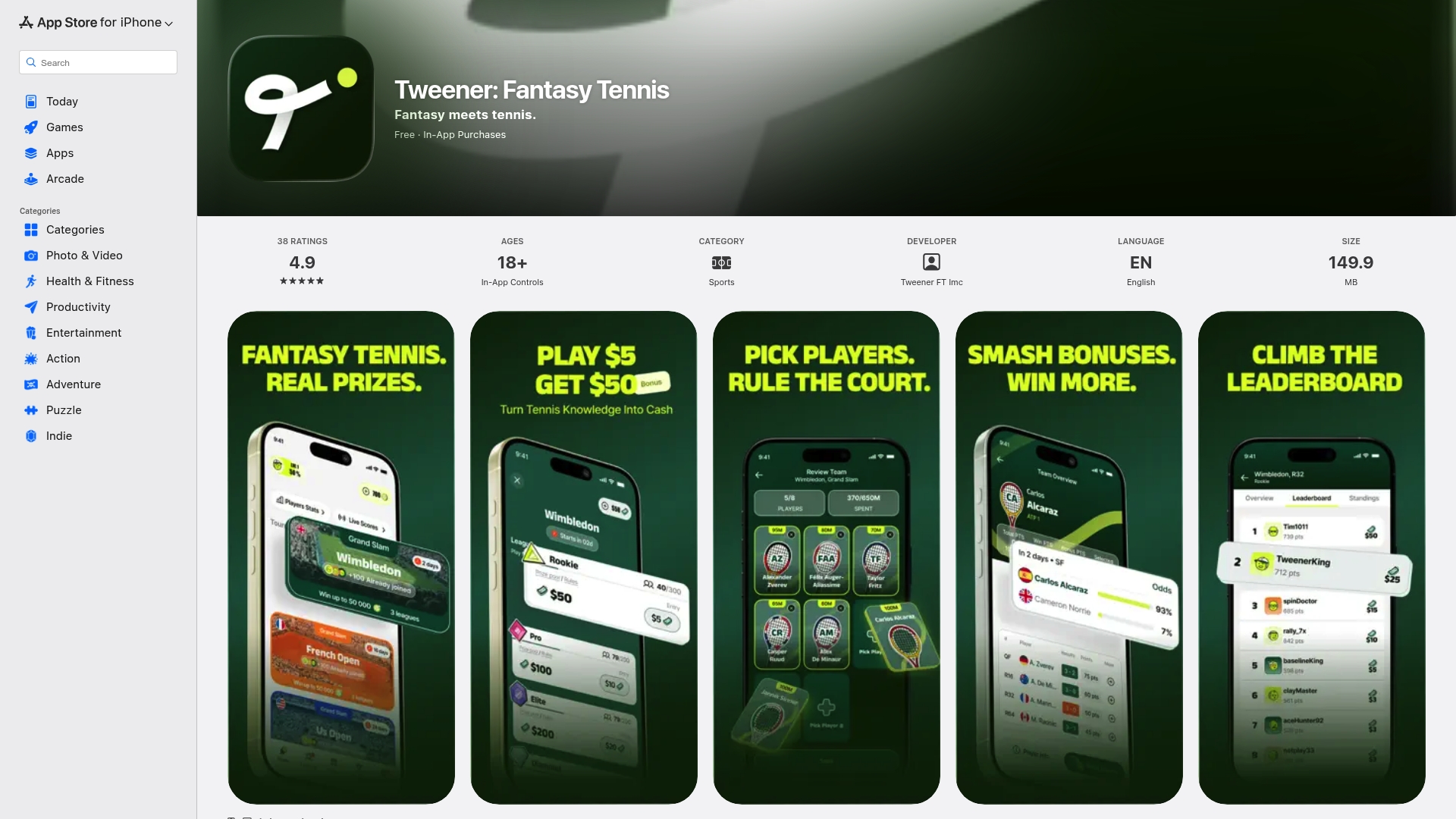
Tweener is built for fans who think this way. The platform lets you build fantasy teams from real ATP and WTA players and compete in public leagues or private leagues with up to nine friends during live Grand Slam and tour events. When you understand that a player like Sinner or Sabalenka consistently forces errors through depth and pace, you can make smarter picks based on matchup data, not just rankings. Download the Tweener app and start competing in fantasy tennis leagues where your knowledge of stats like forced errors gives you a real edge. You can also explore fantasy pick strategies to sharpen your selections before each tournament.
FAQ
What is a forced error in tennis?
A forced error is a mistake made because the opponent's shot, through pace, spin, depth, or angle, put the player in a rushed or off-balance position where a clean return was not possible. The opponent earns the point through shot quality rather than the player simply missing.
How is a forced error different from an unforced error?
A forced error occurs when the player lacks time, balance, or control due to the incoming shot. An unforced error occurs when the player has adequate time and position but still misses. Player state at the moment of contact is the defining factor.
Do forced errors count against a player in statistics?
Forced errors are recorded as points lost, but they are categorized separately from unforced errors in professional match stats. The three-outcome model used by analysts tracks forced errors, unforced errors, and winners as distinct categories to give a fuller picture of match performance.
Can you train to reduce forced errors?
Yes. Improving split-step timing, early racket preparation, and court positioning directly reduces forced error exposure. Drills targeting net clearance and defensive shot selection under pressure are the most effective training tools for this goal.
Why do forced errors matter for fantasy tennis?
Players who consistently force errors from opponents control rallies and win more points without relying on risky shots. In fantasy tennis on platforms like Tweener, picking players with high opponent-induced error rates on key surfaces gives you a data-driven edge over competitors choosing by name recognition alone.