
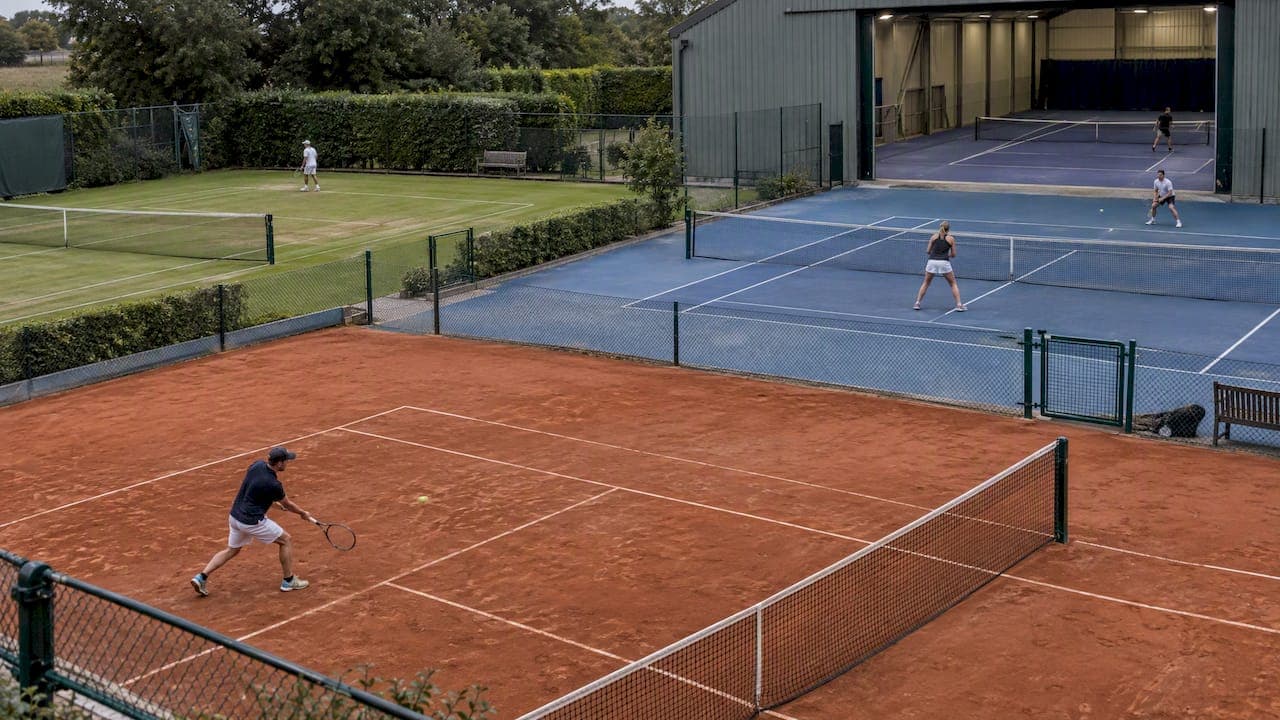
There are four standard tennis surfaces, hard, clay, grass, and carpet, and each changes ball speed, bounce, and the tactics that win matches. Hard courts offer a medium, consistent bounce. Clay slows the ball and sends it bouncing higher, favoring patient rallies. Grass produces the fastest, lowest bounce, and carpet, now rare on tour, plays fast and true indoors.
TL;DR:
- Hard courts make up the majority of match play, with a consistent, medium bounce favored by most top players and tournaments.
- Clay surfaces slow the ball, produce higher bounces, and reward patience and sliding, impacting rally length and player movement.
- Grass courts are the fastest and produce the lowest bounce, favoring serves and quick reactions, but they require extensive maintenance.
- The ITF measures court speed on a Category 1 to 5 scale, with most clay courts in the slowest categories and grass or carpet in the fastest.
- Maintenance and costs vary, with grass demanding the most upkeep, hard courts the least, and decisions often based on budget, location, and intended use.
Table of Contents
- 1. What each surface is made of and how it plays
- 2. How surface speed reshapes serve, return, and movement
- 3. How the ITF measures and ranks court speed
- 4. Maintenance, cost, and where you'll find each surface
- 5. Why surface matters more than most fantasy players realize
- 6. How each tennis surface evolved over time
- 7. Environmental and sustainability considerations by surface
- 8. Comparing the upfront cost and lifespan of each surface
- 9. Why surface variety keeps tennis worth watching closely
- 10. Put surface knowledge to work in Draft and Pick'em
- FAQ
- Sources
1. What each surface is made of and how it plays
Every surface tells you something different about how a point will unfold, and the construction behind each one explains why.
Hard courts consist of an acrylic coating laid over asphalt or concrete, and the sand mixed into that top layer is the simplest lever for adjusting speed without touching the base underneath. Hard courts are the most commonly played surface in professional tennis, making up the majority share of match minutes for top ATP players, significantly more than clay or grass, according to the Miami Open's breakdown. You see this surface at both the Australian Open and the US Open, which is part of why hard-court form carries so much weight in overall rankings.
Clay comes in two main varieties. European red clay is made of crushed brick and plays slow with a high, sometimes unpredictable bounce. American green clay, known by the trade name HarTru, uses crushed metabasalt and behaves similarly but drains faster and suits the climate found across much of the United States. Clay's defining trait is slide: players can skid into shots rather than stopping and starting, which rewards baseline patience over raw pace, according to Wikipedia's surface overview.
Grass is the fastest surface on tour, with a low, skidding bounce that rewards short points and strong serving. Natural grass also wears down across a tournament: by the second week at Wimbledon, bald patches near the baseline change how the ball bounces compared to the first round.
Carpet, a removable synthetic surface once common on the indoor winter circuit, played fast and low similar to grass but has largely disappeared from the professional tour.
- Hard courts: consistent, medium bounce, dominant on tour.
- Clay courts: slow, high bounce, rewards sliding and patience.
- Grass courts: fast, low bounce, rewards serving and quick hands.
- Carpet: fast and low, now rare at the professional level.
2. How surface speed reshapes serve, return, and movement
The surface under a player's feet changes almost every tactical decision in a point, starting with the serve.
On grass, a well-placed first serve can end the point outright because the low bounce gives returners less time to react, so servers lean on power and placement over spin. Clay flips that logic: the ball sits up higher after the bounce, giving returners more time to load their shot, which is why clay rallies tend to run longer and servers rely more on kick serves that jump awkwardly off the surface. Hard courts sit in between, supporting both flat, powerful serves and heavier spin depending on the player's style.
Return positioning follows the same pattern. Returners creep inside the baseline on grass to cut off the ball before the skid carries it away, while on clay they often stand farther back to handle the higher bounce with full swings and topspin depth. Movement adapts just as much: clay rewards the long slide into a shot, grass rewards small, quick adjustment steps because a full slide isn't possible, and hard courts call for a mix of both, which is part of why the transition between hard and clay swings costs some players a week or two of adjustment each season.
Net play follows court speed closely. Serve-and-volley tactics, once common on grass, have faded as racket and string technology let baseliners generate enough passing-shot power to punish net rushers on any surface, a shift described in BBC reporting on court speed trends. Still, grass remains the surface where attacking the net carries the least risk.
A useful way to read any given point:
- Serving: pick power and placement on fast courts, spin and variety on slow ones.
- Returning: stand closer on grass, deeper on clay.
- Movement: slide on clay, use short steps on grass.
- Net play: more viable on grass, riskier on clay.
Pro Tip: Watch a player's first-serve percentage drop on clay compared to grass. It's often a sign they're taking more risk to avoid a long rally they'd rather skip entirely.
For more on how surface-specific tactics show up in a single matchup, our breakdown of surface advantage in tennis walks through how to weigh it against head-to-head history.
3. How the ITF measures and ranks court speed
Court speed isn't just a feeling. It's measured. The ITF Court Pace Rating uses standardized test methods, known as CS 01 and CS 02, to classify courts into five categories, running from Category 1 (slowest) to Category 5 (fastest).
The ITF's Category 1-5 scale is the sport's official standard for comparing court speed, and it maps roughly to what players already feel on court: clay typically lands in Category 1 or 2, hard courts usually sit around Category 3 (though sand content can shift that number up or down), and grass or carpet surfaces generally register in Category 4 or 5, per the ITF's 2026 Rules of Tennis.

Tournaments also use this rating to pick the right ball. Faster courts typically call for a higher-bounce or heavier ball to slow play down slightly, while slower courts use a lighter ball to keep points from stalling entirely, a pairing system built into ITF guidance.
Measured pace isn't fixed, either. Weather affects bounce, humidity changes how a clay court plays over a single afternoon, and groundskeepers can adjust sand content in hard-court paint between events to nudge the rating up or down without changing the base construction at all.
4. Maintenance, cost, and where you'll find each surface
Surface choice is as much about upkeep and geography as it is about play style.
Grass demands the most work by a wide margin: daily mowing to an exact height, constant watering, and reseeding between events, which is why it's the rarest surface outside a handful of marquee tournaments. Clay needs regular rolling, watering, and brushing to keep the top layer even, though it's gentler on a budget than grass once installed. Hard courts need the least day-to-day attention, just occasional resurfacing every few years, which is a major reason they dominate public and club-level play.
- Grass: highest upkeep, rarest surface, concentrated around a few major events.
- Clay: moderate upkeep, common across Europe and Latin America.
- Hard courts: lowest upkeep, most widely available surface worldwide.
- Green clay (HarTru): the common clay variant across the United States, chosen partly for faster drainage.
If you're a club player deciding where to practice, match your surface to your upcoming tournament schedule rather than convenience. A few sessions on clay before a clay event will do more for your footwork than weeks on a hard court.
5. Why surface matters more than most fantasy players realize
Surface changes expected output as much as form or ranking does. A player who thrives on grass with a huge serve can look average on clay once rallies stretch out, and that swing should show up in how you build a Draft Mode or Pick'em Mode roster.
Three adjustments worth making: target surface specialists when a slate sits entirely on clay or grass, shift more of your budget toward proven hard-court performers during the US Open or Australian Open stretch, and use matchup and surface filters rather than relying on ranking alone. Our guides on clay-court strategy and hard-court drafting break down specific budget splits for each surface.
6. How each tennis surface evolved over time
Grass was tennis's original surface. The modern game grew out of lawn tennis in 19th-century England, played on cut grass because that's what country estates already had. Wimbledon has kept that tradition intact longer than any other major event.
Clay courts developed as a cheaper, more durable alternative in regions where grass struggled to survive heat and heavy play, which is part of why clay became the standard across continental Europe and Latin America. The French Open's red clay reflects that regional history directly.
Hard courts arrived later, developed through the 20th century as a lower-maintenance option suited to public parks and growing amateur participation. Acrylic surfacing let organizers fine-tune speed and durability in a way neither grass nor clay could match, and that flexibility is a major reason hard courts eventually became the sport's dominant surface, a shift reflected in Wikipedia's overview of surface construction.
Carpet courts emerged as an indoor solution for winter tournaments, offering fast, predictable play without the upkeep grass or clay would need indoors. As indoor hard courts improved and tour scheduling consolidated, carpet's advantages shrank, and it has largely disappeared from the professional calendar.
7. Environmental and sustainability considerations by surface
Each surface carries a different environmental footprint, mostly tied to water and chemical use.
Grass courts need the most water and the most frequent chemical treatment to control pests and disease, which is a real factor for clubs in drier climates weighing whether to maintain natural grass at all. Clay courts also need regular watering to keep the top layer workable, though generally less than grass requires, and they avoid the synthetic coatings that hard courts rely on.

Hard courts use acrylic coatings that eventually wear down and need replacement, creating material waste every several years, though their water use during normal play is minimal compared with grass or clay. Carpet surfaces, being synthetic and removable, raise their own questions around material disposal once a surface is retired, part of why they've become less common as sustainability has become a bigger factor in facility planning.
None of the four surfaces is a clear environmental winner. The trade-off is usually water and chemical use versus material waste and resurfacing cycles, and the right call often depends on local climate and water availability more than the surface itself.
8. Comparing the upfront cost and lifespan of each surface
Cost and lifespan vary enough between surfaces that they shape which one a club or facility ends up choosing.
Hard courts carry a moderate upfront construction cost and typically last several years before resurfacing is needed, making them a practical choice for high-traffic public and club facilities. Clay courts cost less to build initially but require consistent seasonal maintenance, rolling, watering, and leveling, that adds up in labor over the court's life. Grass courts are the most expensive to maintain relative to their use: the daily mowing, watering, and reseeding needed to keep a grass court playable for a full season make it the least practical choice outside dedicated tournament venues. Carpet courts had a relatively low installation cost as a removable system, but limited durability and the rise of better indoor hard courts have made them a shrinking option.
For most clubs, the decision comes down to how much ongoing labor they're willing to absorb versus how much they can spend upfront, which is why hard courts remain the default surface for everyday play almost everywhere.
9. Why surface variety keeps tennis worth watching closely
What keeps me coming back to tennis is that no single skill set wins everywhere. Surface-aware analysis rewards the fans paying attention, and it should shape your next lineup, too.
— Nathan
10. Put surface knowledge to work in Draft and Pick'em
Reading surfaces well gives you an edge most casual fans skip entirely. Draft Mode and Pick'em Mode let you build a roster around exactly that kind of analysis instead of just picking famous names.
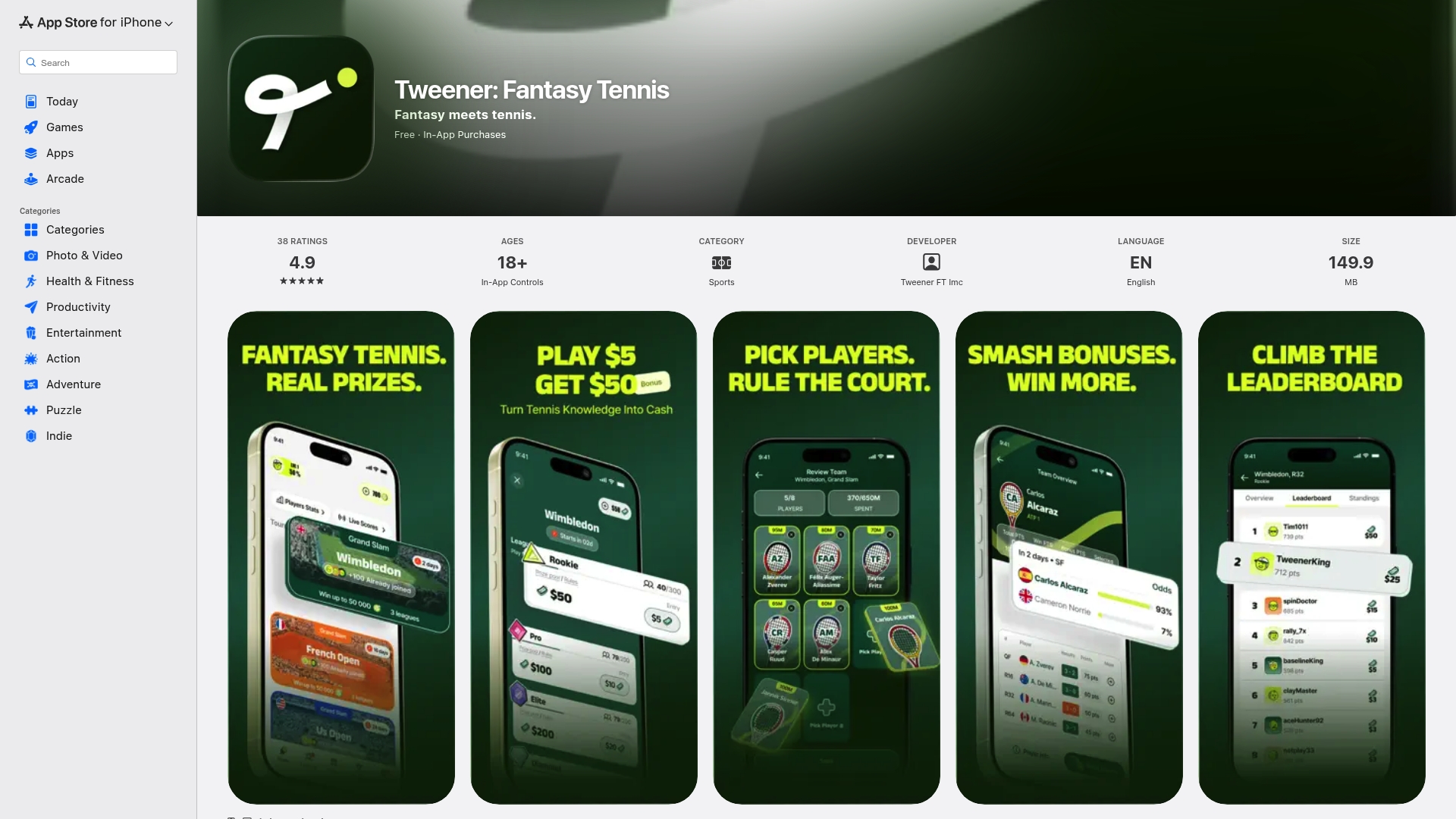
Check the game rules before your next slate, or grab the app on the App Store and build a surface-smart team for the next tournament.
FAQ
What is the hardest tennis surface to play on?
Grass is widely considered the hardest surface to master because it changes during a tournament as wear affects bounce and skid, forcing constant adjustment, according to grass court analysis. Its low, fast bounce also leaves little time to react compared with clay or hard courts.
What surface does Alcaraz play best on?
Alcaraz has shown strong results across multiple surfaces, reflecting a game built on movement and power that translates well to both clay and hard courts. Surface-by-surface title breakdowns are tracked in official ATP statistical reports.
What surface does Djokovic play best on?
Djokovic's game, built on elite return positioning and baseline consistency, has translated into results across hard, clay, and grass courts alike. Detailed surface splits appear in ATP year-end statistical reports.
Which surface do most tennis players prefer?
Preference varies by playing style, but hard courts host the most professional play overall, accounting for roughly 57.8% of top-100 ATP match minutes in a recent analysis, according to the Miami Open. Players with big serves tend to favor grass, while patient baseliners often prefer clay.
How does the ITF Court Pace Rating work?
The ITF Court Pace Rating classifies courts into five categories, from Category 1 (slowest) to Category 5 (fastest), using standardized test methods. Clay courts typically fall in Category 1 or 2, hard courts around Category 3, and grass or carpet in Category 4 or 5.