

Single-entry contests limit every participant to one roster, which removes the volume advantage that mass-entry players rely on and puts the edge back on lineup quality. These formats suit analytical tennis fans who want tournament-style upside without needing to build dozens of variations just to compete. If you understand surfaces, form, and matchup context better than the field, single-entry play is where that knowledge actually shows up on the scoreboard.
TL;DR:
- Single-entry contests limit each player to one lineup, favoring research and decision-making over bankroll volume, especially in tournament formats.
- Verify contest details such as entry limits, payout structure, and field size cap to avoid entering multi-entry pools unintentionally.
- Small or mid-size fields reduce variance and are ideal for steady bankroll growth, while larger fields are suitable for chasing bigger prizes despite higher risk.
- Building a tennis lineup involves focusing on surface and form, anchoring around one stable player, and choosing defensible pivots based on matchup and recent performance.
- Risk no more than 1 to 3 percent of your bankroll per contest, with a disciplined approach for small or mid-size pools and reserved capital for large tournaments.
Table of Contents
- What single-entry means and how to verify the contest rules
- Why play single-entry: trade-offs, payouts, and bankroll fit
- Building a tennis lineup for single-entry play
- Choosing contests and sizing your bankroll
- Your single-entry workflow: from lobby to settlement
- When single-entry tennis contests make the most sense
- Try single-entry strategy on Tweener's tennis contests
- FAQ
- Sources
What single-entry means and how to verify the contest rules
A single-entry contest allows each participant to submit exactly one lineup. If a contest page does not specifically say "multi-entry," most platforms default to treating it as single-entry and will display the per-entrant limit somewhere in the contest details, a convention confirmed in Yahoo's official daily fantasy rules. Before you lock in a roster, check a few things in the lobby so you never accidentally enter the wrong format.
- Confirm the entry label (single-entry vs multi-entry) and the maximum entries allowed per account.
- Note the entry fee, total prize pool, and how the payout table splits that pool.
- Check the entrant count and compare it to the number of paid spots.
- Look for duplicate-account language in the contest details, since platforms enforce one account per person.
These fields sit on the same contest details screen every time, so checking them becomes a five-second habit rather than a research project.
Why play single-entry: trade-offs, payouts, and bankroll fit
Single-entry contests cap how much any one player can dominate a pool through sheer lineup volume, which shifts the competitive advantage toward research and decision quality rather than bankroll size, a dynamic Stokastic's contest selection guide describes as removing the "lineup-factory" edge that mass-entry players depend on. That matters most in tournament-style contests, where a handful of sharp players submitting fifty variations can otherwise crowd out everyone else.
Payout structure changes the calculus further. A flatter payout curve, common in smaller single-entry fields, rewards consistency and a stable floor, while a top-heavy structure rewards a lineup built for ceiling, a distinction RotoWire's single-entry breakdown also notes when comparing field sizes.
- Small fields: easier to read, lower variance, good for compounding a bankroll steadily.
- Mid-size fields: a balance of manageable competition and real upside.
- Large fields: higher variance but necessary when you're deliberately chasing a big prize.
Field size is one of the biggest levers players overlook when picking contests, according to Stokastic's analysis of contest selection, which notes that single-entry removes volume advantage but the edge still scales with how many entrants you're facing.
Building a tennis lineup for single-entry play
Tennis rewards a different research process than team sports, and single-entry format makes that process count more because you only get one shot at it. Here's how to translate the signals that matter into a single roster.
- Weight surface and recent form heavily. A clay specialist grinding through a hard-court week is a different player than the same name on his preferred surface, and recent form tells you more than season-long averages.
- Treat head-to-head records as context, not a deciding factor. A 4-1 head-to-head mark from three years ago says little about two players in their current form; use it to sanity-check a read, not to make it.
- Factor in match format and expected volume. Best-of-five matches at Grand Slams produce more scoring opportunities than best-of-three events, and scoring in most tennis DFS formats tracks participation and match-level events closely, a point echoed in FantasyPros' single-entry versus multi-entry breakdown. A short slate with early-round upsets can gut a lineup built around players who are expected to go deep.
- Build around one anchor, then add one or two pivots. Pick a stable, high-floor scorer as your anchor, then use a surface specialist or favorable matchup as your pivot for differentiation.
- Manage your salary allocation to preserve correlation. Spending too much on your anchor leaves no room for a pivot whose ceiling can actually move your score.
Choose pivots that are defensible on paper, a surface edge, a return-game mismatch, a player entering the tournament red-hot, rather than picking someone simply because they're low-owned. RotoGrinders' single-entry strategy piece makes the case that a single deliberate pivot whose upside reasonably lines up with your anchor's scoring path creates real leverage, while random contrarianism just adds noise.
Pro Tip: Build your anchor first, lock the pivot last: the pivot decision is where surface and form research actually pays off.

For a deeper look at applying surface and matchup data to your rosters, our tennis DFS strategy guide and matchup analysis breakdown walk through the research process in more depth.
Choosing contests and sizing your bankroll
Filtering a lobby for single-entry pools is straightforward once you know what to look for: the entry-type label, the field-size cap, and the payout table all sit on the same contest card. The harder part is deciding how much of your bankroll a given contest deserves.
- Cap any single single-entry contest at roughly 1 to 3 percent of your total bankroll, and set a daily spending ceiling so a bad day doesn't compound into a bad week.
- Match payout shape to your goal: flatter, cash-like structures suit players trying to compound their roll steadily, while top-heavy GPP structures suit players chasing a large prize with a small stake.
- Lean toward small or mid-size single-entry fields for most of your volume, and reserve a smaller, deliberate slice of your bankroll for larger single-entry tournaments when you want lottery-style upside.
This approach mirrors the compounding logic in Stokastic's bankroll guidance: most volume in manageable, single-entry pools, with a disciplined allocation set aside for bigger swings. Our bankroll management guide breaks these percentages down by slate size if you want a more detailed framework, and our entry fee explainer covers how fees interact with prize pools.
Your single-entry workflow: from lobby to settlement
A consistent process keeps you from making avoidable mistakes under a ticking lock clock. Run through these steps every time:
- Verify contest details first. Confirm the single-entry label, entrant count, entry fee, and payout table before you touch a single player.
- Do your tennis research and set your anchor and pivots. Check surfaces, recent form, and match format, then build your one roster around a stable anchor and one or two defensible pivots.
- Run a final uniqueness and bankroll check. Make sure your lineup isn't an obvious chalk clone, confirm your stake fits your sizing rules, then submit before lock.
- Monitor scoring and know when settlement happens. Live scoring updates as matches finish, and payout timing is set by the specific contest and platform, so check those details rather than assuming a standard turnaround, as FantasyPros notes when describing a typical single-entry workflow. A tool built for tracking live standings, like the one reviewed by Fpl, can help you follow a slate in progress without refreshing a dozen tabs.
When single-entry tennis contests make the most sense
I lean toward single-entry on short slates, think a single Grand Slam day session with eight or ten matches, because match volume is limited and one bad read can wreck a multi-entry portfolio just as easily as a single roster. The format also shines when a clear surface specialist is undervalued relative to a bigger name who's actually out of form; a single, well-reasoned pivot does more work there than spreading exposure across variations.
My honest advice is to log your results against the checklist above. Track which pivots hit, which anchors underperformed, and whether your field-size choices matched your bankroll goals. Patterns show up fast once you're honest about them.
— Nathan
Try single-entry strategy on Tweener's tennis contests
We built our platform specifically for professional tennis contests that use ATP and WTA scoring rather than a generic template borrowed from other sports. That focus means surface, form, and head-to-head context actually translate into lineup decisions instead of getting lost in a multi-sport interface.
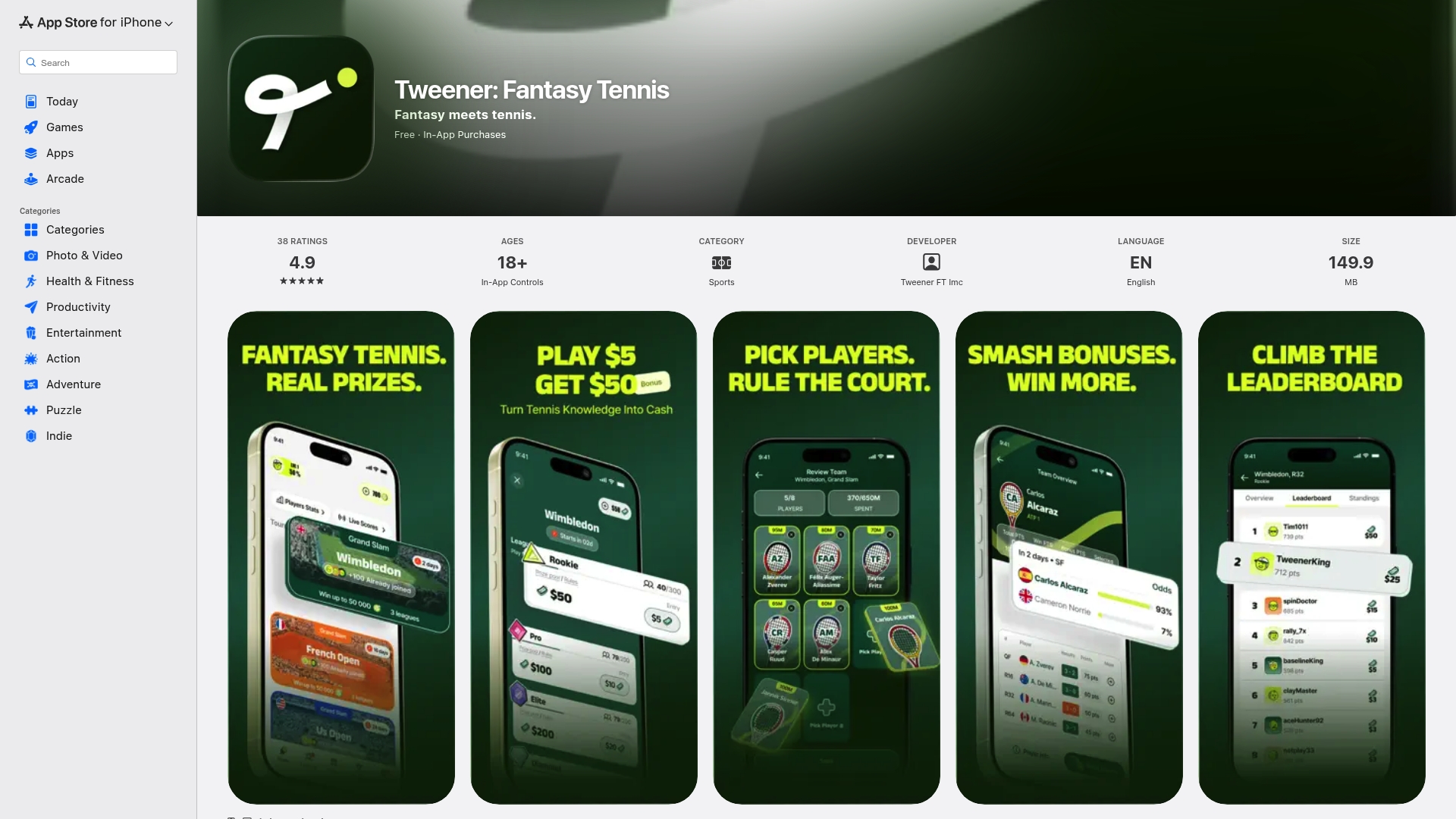
- Draft Mode and Pick'em Mode give you two ways to apply the single-entry approach covered above, each with its own lineup logic.
- Free virtual-coin play lets you test an anchor-and-pivot strategy with zero financial risk before moving to cash contests where available.
- Private leagues for up to nine friends work well for Grand Slam weeks if you want to compete on research rather than volume.
If you want to put this single-entry workflow into practice, visit Tweener to see current Draft Mode and Pick'em Mode contests, or download the app to run a free practice slate before you commit real money.
FAQ
What is a single-entry contest in fantasy tennis?
A single-entry contest allows each participant to submit exactly one lineup, unlike multi-entry pools where players can enter many variations of the same slate. This format is common in daily fantasy sports and is usually labeled directly in the contest details, as described in Yahoo's official contest rules.
How do I know if a contest is single-entry or multi-entry?
Check the contest details page in the lobby, where the entry limit per account is typically displayed alongside the entry fee and prize pool. If a contest doesn't explicitly say "multi-entry," many platforms treat it as single-entry by default, a convention noted in Yahoo's daily fantasy rules.
Is single-entry better than multi-entry for tennis DFS?
Neither format is universally better, but single-entry removes the advantage that comes from submitting many lineups, which shifts the edge toward research quality and lineup construction, as Stokastic's contest selection research explains. Players who have a strong read on surfaces, form, and matchups tend to prefer single-entry because their one lineup reflects that edge directly.
How much of my bankroll should I risk on a single-entry contest?
A common guideline is to risk roughly 1 to 3 percent of your total bankroll on any single-entry contest, with a daily cap to limit downside on a bad slate. Our bankroll management guide walks through how to apply these percentages across different slate sizes.
Can I play single-entry tennis contests on Tweener?
Yes, Tweener offers single-entry style contests through Draft Mode and Pick'em Mode, with both free virtual-coin play and cash contests where legally permitted. You can try the format risk-free first by downloading the app and entering a free practice contest.
Sources
- Official Rules for Daily Fantasy NFL Contests | Yahoo
- DFS Contest Selection: Cash Vs. GPP, Field Size & Bankroll | Stokastic
- DFS Strategy Tips & Advice: Single-Entry vs. Multi-Entry Tournaments - FantasyPros
- DFS Soccer Strategy: Single-Entry Tournaments | RotoWire
- The single-entry secret (RotoGrinders)