

The single best night session strategy in fantasy tennis is simple: prioritize consistent, night-tested grinders and returners over pure big-serve specialists. Evening play measurably erodes serve velocity and backhand consistency, so the "ace machine" who wins you points at 1:00 p.m. often bleeds value under lights. Build lineups around stamina and experience, then use the checklist and workflow below to lock your roster before first serve.
TL;DR:
- Players with strong baseline consistency and stamina tend to perform better at night, as serve velocity and shot accuracy decline under artificial lighting.
- Big servers' effectiveness diminishes in night matches due to approximately 10.5 km/h drops in serve speed and increased errors, making them less reliable fantasy picks.
- Players with a proven track record in night matches, especially those tested through multiple performances, are safer bets than untested or streaky servers.
- Lineup lock timing should be flexible until final weather, court, and start time confirmations, since late finishes can alter warmups and match conditions.
- Running a night session strategy involves adjusting projections to favor grinders and returners, monitoring recent form, and testing lineup changes in free-coin or private league formats beforehand.
Table of Contents
- Why Night Session Strategy Starts With What Changes Under Lights
- Which Player Traits Actually Predict Night Session Success?
- When Should You Lock Your Lineup for a Night Slate?
- Building a Night Session Lineup Step by Step
- Nathan's Advanced Signals for Night Sessions
- A Night I Actually Used This Playbook
- Test Your Night Session Strategy on Tweener First
- Sources
- FAQ
Why Night Session Strategy Starts With What Changes Under Lights
Night tennis is not the same sport with worse lighting. It's a different physical and visual environment, and the data backs that up. A peer-reviewed study on chronotype and time-of-day performance found backhand consistency dropped 15 to 17% in evening sessions compared to morning and afternoon testing, while maximal serve velocity fell by roughly 10.5 km/h. That's not a marginal dip. That's the difference between a first serve that paints the line and one that sits up for a return winner.
A related doctoral thesis on diurnal variation and tennis performance adds more evidence: evening matches show more unforced errors and fewer clean winners, even when you control for the player's individual chronotype. In other words, it's not just "night owls versus early risers." Nearly everyone's execution slips a little once the sun goes down.
Temperature plays its own role. Laboratory testing on ball rebound and temperature shows cooler air and higher humidity slow the ball's coefficient of restitution, which lowers bounce height and takes pace off the court. Add stadium lighting that flattens depth perception and distorts topspin visibility, and you get matches that run longer, grind harder, and punish players who rely on clean, first-strike tennis.
What this means for your scoring:
- Rally counts climb, which favors players who score on sustained points rather than one shot.
- Ace totals and free points from big serves shrink across the board.
- Unforced errors rise, hurting players whose fantasy value depends on clean, low-error tennis under normal daylight conditions.
Which Player Traits Actually Predict Night Session Success?
Not every player degrades equally once the lights come on, and spotting who holds up is the real skill in night session strategy. Some names are simply built for it.
- Favor baseline consistency over shot-making flash. Players who win points through patience and depth lose less of their game at night than players who need timing and rhythm to hit clean winners.
- Weight strong returners heavily. With serve velocity down across the board, elite returners face a softer target and tend to convert more break points than usual.
- Check second-serve hold percentage. A player who already struggles to hold on second serve in daylight is a bigger liability once serve speed drops further.
- Look at recent match duration. Players grinding through three-and-a-half-hour matches without a physical collapse are showing you exactly the stamina profile night sessions demand.
- Confirm a track record under lights. A player who has three or four solid night-match performances on record is a safer bet than one who's untested after dark.
De-prioritize one-dimensional servers and streaky, high-ace, high-double-fault types unless the matchup or the specific court clearly favors that style. A 130 mph serve stops being a fantasy weapon when it's coming in at 120 and the returner is seeing it better under artificial light.
Pro Tip: Pull up a player's last two or three night-session box scores before you draft them. A grinder who's gone the distance in prior night matches without a drop-off is telling you more than any surface stat ever will.
When Should You Lock Your Lineup for a Night Slate?
Timing decisions matter as much as player selection once you're building around a night session strategy. Late-night tennis has a habit of blowing up schedules.
Lock your lineup early only when the start time and weather are confirmed and stable. Wait as long as your entry deadline allows when the slate includes a volatile start time, a match that could run long beforehand, or a forecast that could shift temperature and humidity late in the day. Reporting on US Open night sessions documented matches pushed past 11:00 p.m. because of preceding five-setters, which disrupted warm-ups and changed how players performed once they finally took the court.
Before you lock, run through this:
- Confirmed start time, not the scheduled one.
- Updated temperature and humidity forecast for the actual match window.
- Stadium court versus outer court assignment, since lighting quality varies by venue.
- Any warmup or pre-match reports suggesting fatigue, injury, or a late scratch.
If you're playing a multi-day contest, check the substitution window and late-swap rules before the slate opens. A rule that lets you swap after a delay is worth more to your night session strategy than an extra star player locked in blind.
Building a Night Session Lineup Step by Step
Here's the actual workflow to run inside Draft Mode or Pick'em Mode once you've identified the night matches on your slate.
- Flag every night match first. Mark high-variance servers and volatile players separately from your consistent core.
- Adjust your mental point projections. Shave value off pure servers and add a premium to grinders and returners. There's no fixed formula here. It's a heuristic based on how exposed a player's game is to serve speed and shot timing.
- Build a roster that's mostly safe scorers. One or two controlled upside plays are fine. A whole roster of boom-or-bust servers is not a night session strategy, it's a coin flip.
- Run your final check before lock. Confirm warmups, delays, and official court assignments one last time.
Five things to check right before you submit:
- Start time confirmed within the last hour
- Court assignment (stadium vs. outer court) verified
- Weather forecast pulled for the actual match window, not the daytime high
- No late scratches or walkovers reported
- At least one flexible bench option if late swap is allowed
This process pairs well with the roster-construction logic in optimizing fantasy picks for consistent wins, which covers value versus volatility in more depth than a night-specific piece can.
Nathan's Advanced Signals for Night Sessions
A few heuristics I lean on that go beyond the basics: track a player's fatigue flag if they've played back-to-back late finishes, since recovery time gets compressed on night slates more than day ones. Surface filters matter too. A hard-court grinder who thrives at night on a slower court is a different bet than the same player on a fast indoor surface.
In multi-day contests, endurance valuations should shift as the tournament progresses. Late-night rounds reward players who've been managing their bodies well, not just the highest seed.
- Test night-specific adjustments in free-coin Draft Mode before risking cash entries.
- Use private leagues to compare your night session picks against friends without full public-slate variance.
- Cross-reference prediction frameworks with night-specific stats before finalizing Pick'em selections.
A Night I Actually Used This Playbook
Last year, I had a big server locked into a night slate an hour before lock. A late-finish match pushed his opponent's court time back ninety minutes, and warmup reports came in shaky. I swapped him for a grinder with three solid night-match performances on record. The grinder ground out a three-setter and covered my points; the server I dropped lost in straight sets with half his usual aces. The lesson stuck: under lights, the safe pick is often the smart pick. Test that logic yourself in a private league before you trust it with cash.
— Nathan
Test Your Night Session Strategy on Tweener First
This kind of decision-making benefits from fantasy tennis platforms that provide analytical fans real tools instead of a coin flip dressed up as a contest. You can trial every adjustment in this guide, from grinder-over-server swaps to late-lock timing, inside fantasy tennis draft or pick'em modes without risking a cent.
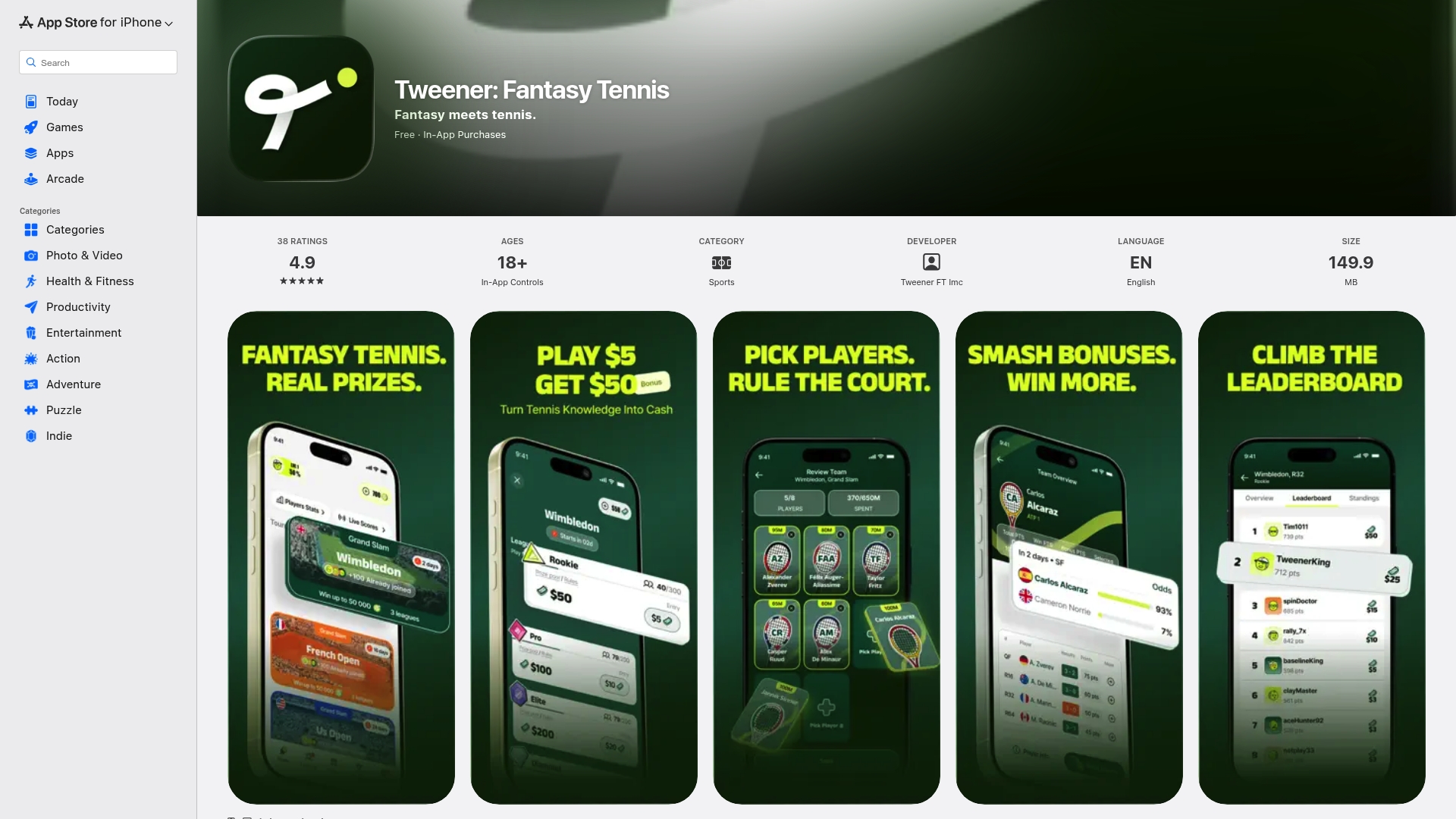
Start in free-coin play to see how your night session adjustments actually score before committing real entries. If you want a lower-stakes proving ground, consider setting up a private league with friends for the next Grand Slam night session and compare your reads directly against theirs. When you're ready to put real strategy behind real stakes, head to the Tweener app and build your first night slate, or grab the mobile app download to get started tonight.
Sources
- Does time of day and player chronotype impact tennis-specific skills and physical performance?
- Doctoral thesis on diurnal variation, sleep–wake behaviour, and tennis performance
- The variation of static and dynamic tennis ball properties with temperature
- Pegula and Alcaraz Face Late-Night Scheduling Chaos | Second Serve Aces
FAQ
Does Serve Speed Really Drop at Night?
Yes. Research on time-of-day performance found maximal serve velocity fell by about 10.5 km/h in evening matches compared to afternoon testing. That drop is exactly why pure big-serve fantasy picks lose value on night slates.
Should I Avoid Big Servers Entirely at Night?
Not entirely, but you should discount them unless the matchup or court clearly favors serve-heavy tennis. A grinder or strong returner is usually the safer building block for a night session strategy.
How Do I Know if a Player Has Night-Match Experience?
Check their recent match history for evening or night-session results, ideally two or three appearances. A player who's held up physically and technically in past night matches is a stronger signal than raw ranking or surface stats alone.
What's the Biggest Timing Mistake in Night Contests?
Locking your lineup too early when the start time isn't confirmed. Late finishes in preceding matches routinely push night sessions past 11:00 p.m., which changes warmups and court conditions before your players even step out.
Can I Test Night Session Strategy Without Risking Money?
Yes. Tweener's free-coin Draft Mode and private leagues let you trial night-specific lineup adjustments before entering any cash contest, so you can see how the grinder-over-server logic actually scores.