

The single best roster rule for indoor hard-court slates: prioritize players with high first-serve effectiveness and low double-fault rates, and lock in one or two "serve+1" ceiling picks alongside your safety plays. Indoor courts play faster and more predictably than most outdoor surfaces, which inflates the fantasy value of serving stats. Build around that, then use a fantasy tennis app's draft or pick modes to test the split before entering any cash contest.
TL;DR:
- Players with high first-serve effectiveness and low double-fault rates provide the most reliable fantasy value on indoor hard courts.
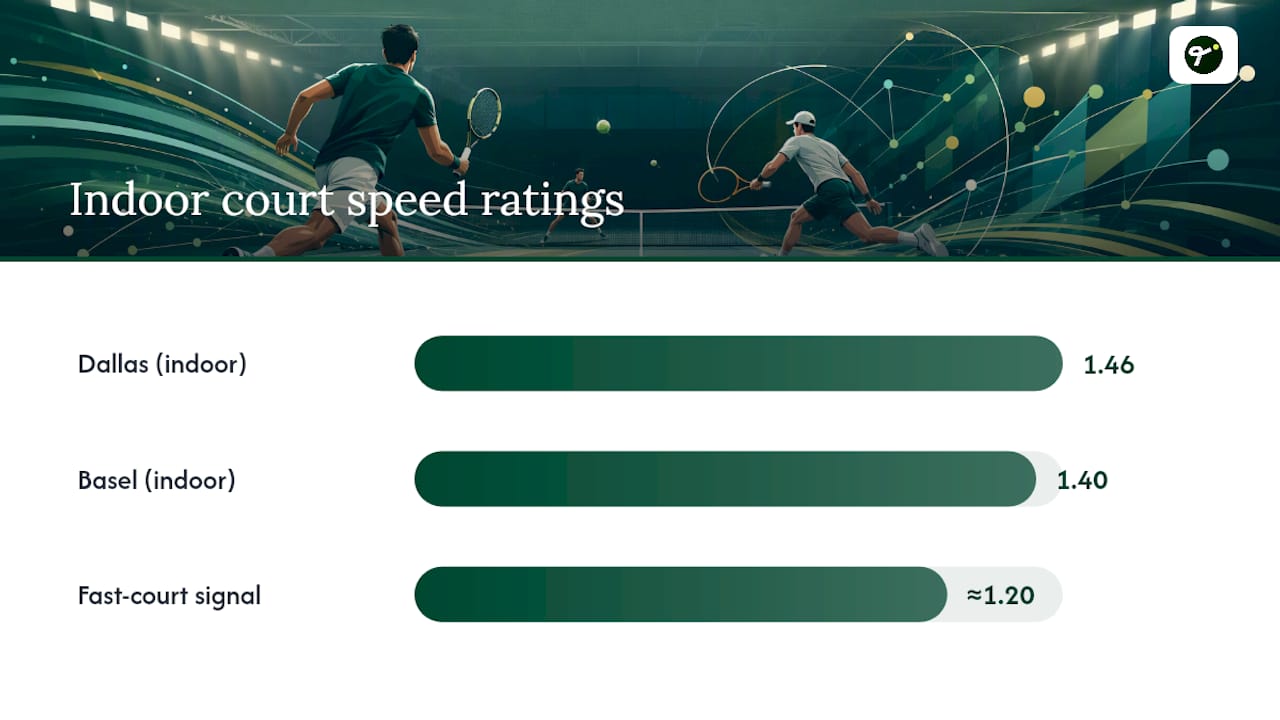
- Indoor courts often have surface speed ratings above 1.20, significantly increasing ace rates and favoring power servers.
- The best indoor archetypes are big servers, serve+1 specialists, and steady safety picks, while counterpunchers tend to underperform indoors.
- Using a 60/40 budget split favoring ceiling plays for GPPs and at least 10 matches before trusting indoor splits improves lineup accuracy.
- Testing strategies in free mode with virtual coins helps validate surface and player performance insights before risking real money.
Table of Contents
- Which Indoor Hard Court Stats Actually Move Fantasy Scoring?
- Which Player Archetypes Win (and Lose) Indoors?
- How Do You Turn Matchup Data Into a Lineup?
- Testing the 60/40 Rule on a Real Indoor Slate
- Practicing This Strategy Inside Tweener
- Sources
- FAQ
Which Indoor Hard Court Stats Actually Move Fantasy Scoring?
Not every stat on a player page deserves your attention. Indoor hard courts compress the margins between serving and scoring, so the numbers that matter are the ones tied directly to service games.
Start with court speed itself. Tennis Abstract's surface speed ratings show several indoor hard-court events running faster than the tour average, with Dallas rated at 1.46 and Basel at 1.40 in recent measurements. A rating above roughly 1.20 is your signal that ace rates and short points are about to spike, and that the players who serve well will outproduce their outdoor form.
From there, four stats do most of the work:
- Ace rate climbs indoors because there's no wind and less variance in ball bounce, rewarding pure power servers.
- First-serve points won separates players who convert their advantage from those who just get the ball in.
- Double-fault rate matters more than people think. A low DF rate is often the difference between a floor pick and a bust.
- Serve+1 efficiency, meaning how often a player wins the point using serve plus one follow-up shot, tends to be more repeatable indoors than raw ace totals, according to Tennis Abstract analyst Jeff Sackmann's breakdown of Felix Auger-Aliassime's indoor game.
Pro Tip: Don't chase last week's ace total blind. Check whether that spike came on a fast indoor court or a slower outdoor hard court first. Same surface category, very different serving math.
Court speed itself isn't static. Ball type and venue decisions can shift a tournament's speed year to year, so a rating from two seasons ago won't always hold. Weight the last 10 to 25 indoor matches heavier than a player's full-season splits, and treat anything under 10 matches as noise rather than signal.
Which Player Archetypes Win (and Lose) Indoors?
Four archetypes show up over and over on indoor hard-court slates, and each has a stat signature you can spot on a player page in about ten seconds.
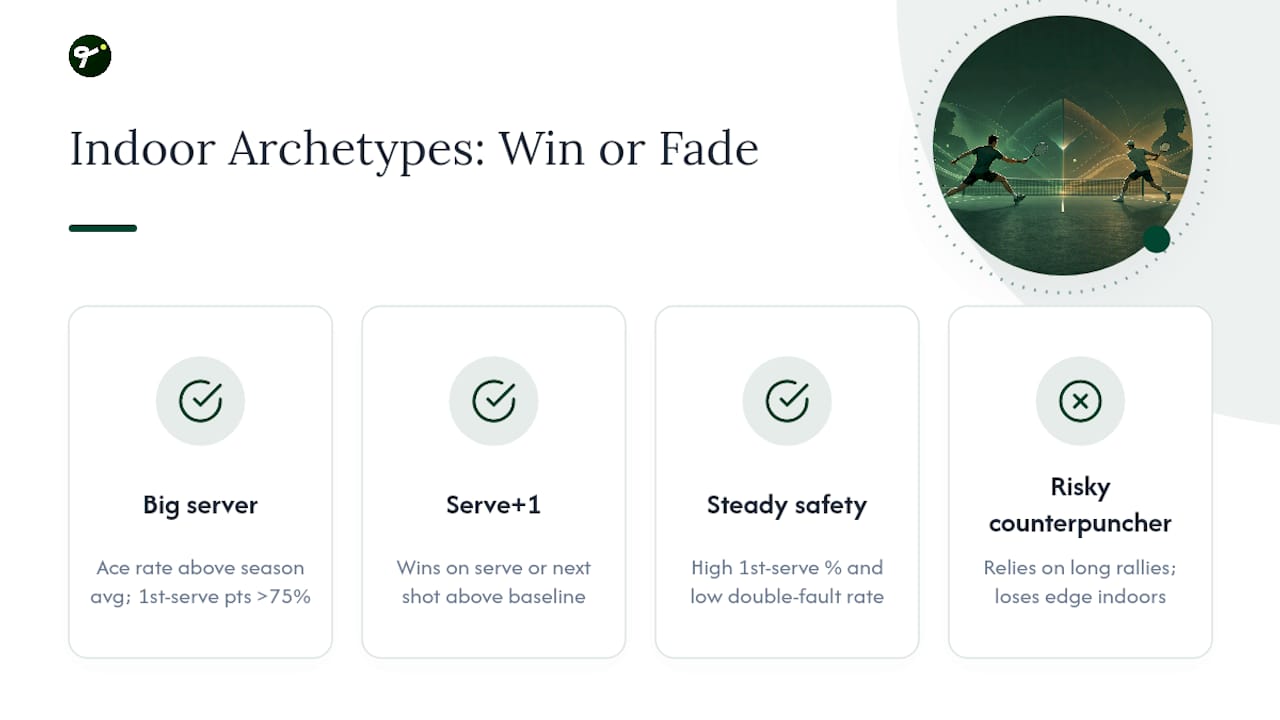
The big server is your bread-and-butter floor play. Look for ace rate well above their season average combined with first-serve points won north of 75%. These players don't need to move much to score fantasy points, and indoor conditions remove the wind and altitude variables that usually punish one-dimensional servers.
The serve+1 specialist is where ceiling lives. This is the player who wins the point on the serve or the very next shot at an above-baseline rate. A peer-reviewed study of indoor hard-court matches found winners consistently played from more offensive court positions, which lines up with why these quick-strike players outperform indoors even when their outdoor numbers look ordinary.
The steady safety pick combines high first-serve percentage with a low double-fault rate, even if the ace numbers are modest. Think of this as your cash-game anchor: unglamorous, but rarely a zero.
The risky counterpuncher is the archetype to fade. Players who rely on long rallies and defensive retrieval lose their edge indoors because the court speed and predictable bounce reward aggression, not patience. Check their indoor-specific splits before rostering, not just their overall ranking. For deeper profiles on which players consistently overperform indoors, Tweener's breakdown of indoor tennis specialists is worth a scan before you set a lineup.
How Do You Turn Matchup Data Into a Lineup?
Run through this checklist before you lock any indoor hard-court lineup:
- Check the court-speed rating for the specific event, not just "indoor hard court" as a category. A 1.15 plays very differently than a 1.45.
- Look at the opponent's return numbers. A great server against a weak returner is a much safer bet than the same server against a top-10 return game.
- Pull recent head-to-head results on indoor hard specifically. Overall H2H is close to useless if three of five meetings happened on clay.
- Note lefty/righty matchups. Lefty serves create awkward angles indoors where the ball doesn't slow down enough to neutralize them.
- Scan for injury or scheduling flags. A player who just played a three-setter the night before carries real fatigue risk in back-to-back indoor rounds.
Once the checklist clears, roster construction comes down to budget discipline. For cash games, lean conservative: roughly 70% of your budget on safety picks with proven first-serve consistency, 30% on upside. For GPP-style contests where you need to separate from the field, flip that to 60/40 toward ceiling plays, and consider rostering one lower-owned player with strong indoor splits even if their season-long profile looks average. Tweener's guide on hard-court fantasy strategy walks through this exact 60/40 framework with surface filters built in.
On sample size, don't overreact to a single strong indoor week. DFS strategy guides generally recommend at least 10 indoor matches before trusting a split, and 25 or more before treating it as stable. Below that, weight recent indoor form at roughly 60% and long-term career splits at 40% rather than betting the lineup on a hot streak that might not repeat.
- Use one contrarian pivot per lineup, not three. Overloading on low-owned players compounds variance in the wrong direction.
- Never fade a clear chalk play just to be different. Contrarian only pays off when the data supports it.
Testing the 60/40 Rule on a Real Indoor Slate
That's the 60/40 GPP split in practice: safety first, one calculated swing.
Before touching a cash contest with that build, it ran through free-mode contests first. Free mode strips out the financial pressure and lets you see whether the reasoning actually holds across a few rounds, not just one lucky slate.
The biggest risk with any surface-based system is overfitting to a small sample. A player's last three indoor matches can look decisive when they're really just three data points. Weighting recent form without ignoring the career-long split is the guardrail that keeps this approach honest.
— Nathan
Practicing This Strategy Inside Tweener
These tactics align with features commonly found in fantasy tennis apps. Surface filters let you isolate indoor hard-court events before drafting, so you're not accidentally comparing a player's clay numbers against their indoor upside. Draft modes often reward archetype-based picks since you build full rosters against real opponents, while pick'em modes are faster for testing single matchup reads, like a big server against a weak return game.
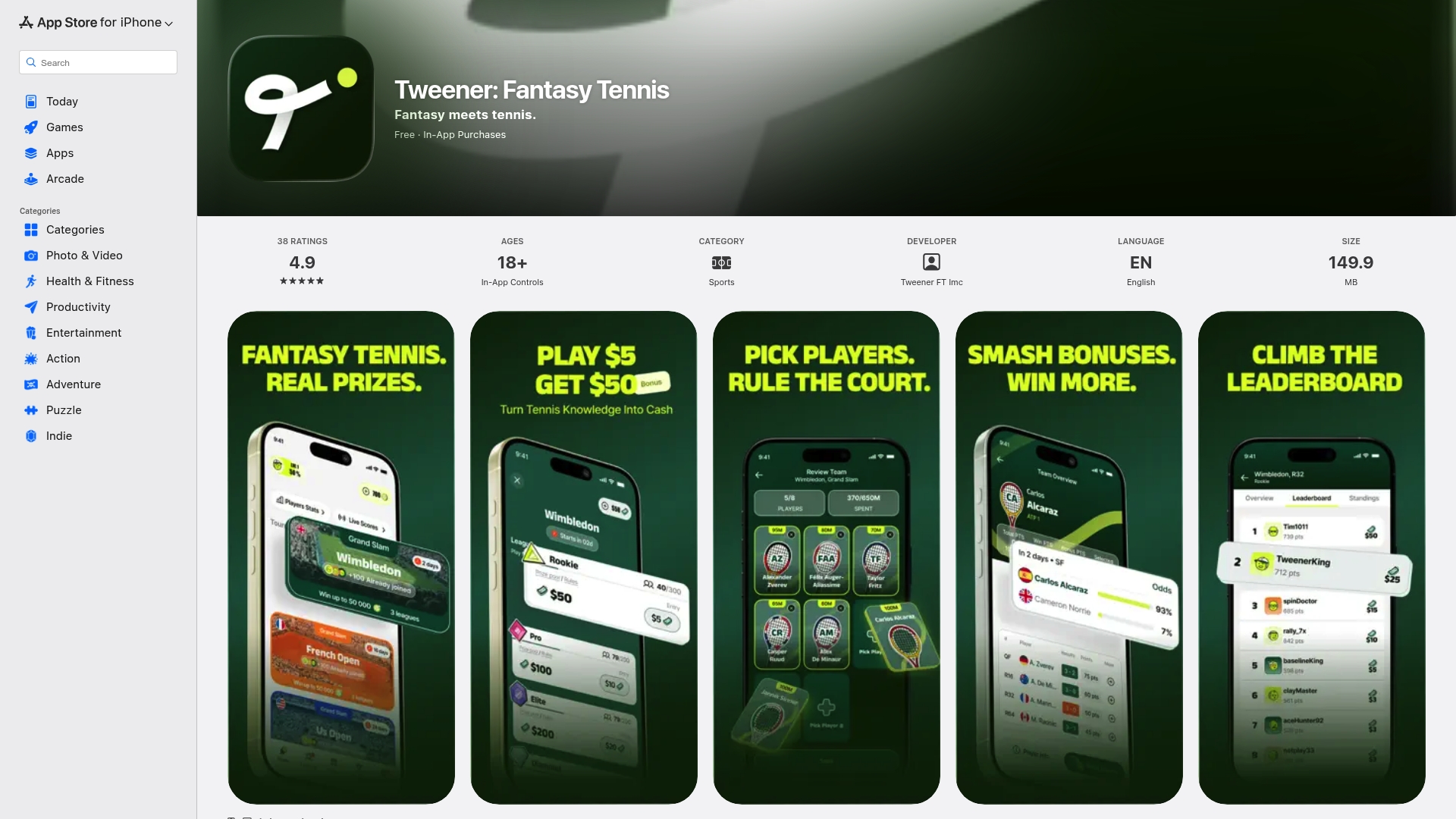
The smartest way to start is in free mode, using virtual coins to test the 60/40 budget split and surface filters on an upcoming indoor event without any money on the line. Once the approach holds up across a few slates, scale into cash contests where legally permitted and see how the same logic performs when it counts. Head to Tweener's Draft Mode and Pick'em Mode to set your first indoor lineup, or grab the app if you haven't installed it yet. For more on translating raw stats into picks, Tweener's tennis player stats guide is a solid companion read.
Sources
- Tennis Abstract: 2026 ATP Surface Speed Ratings
- Movement characteristics and playing strategy on indoor hard courts (peer-reviewed study)
- Tennis DFS Guide: How to Build Winning Daily Fantasy Tennis Lineups
FAQ
What Is the Best Stat to Check for Indoor Hard Court Picks?
Serve+1 efficiency tends to be more reliable than raw ace count, since it captures how often a player closes out the point right after the serve rather than just hitting the ball hard.
Does Court Speed Really Change Fantasy Value?
Yes. Events rated above roughly 1.20 on surface-speed indexes tend to produce more aces and shorter points, which boosts the fantasy upside of strong servers over grinders.
How Many Indoor Matches Do I Need Before Trusting a Split?
Treat anything under 10 indoor matches as noise, and wait for 25 or more before leaning heavily on that split over a player's career numbers.
Should I Play Cash Games or GPPs on Indoor Slates?
Cash games favor a 70/30 safety-to-ceiling budget split, while GPPs reward a 60/40 lean toward upside picks and one low-owned pivot.
Can I Test This Strategy Without Risking Money?
Yes. Some fantasy tennis platforms offer free mode using virtual coins so you can test surface filters and budget splits on real indoor tournaments before entering any cash contest.