
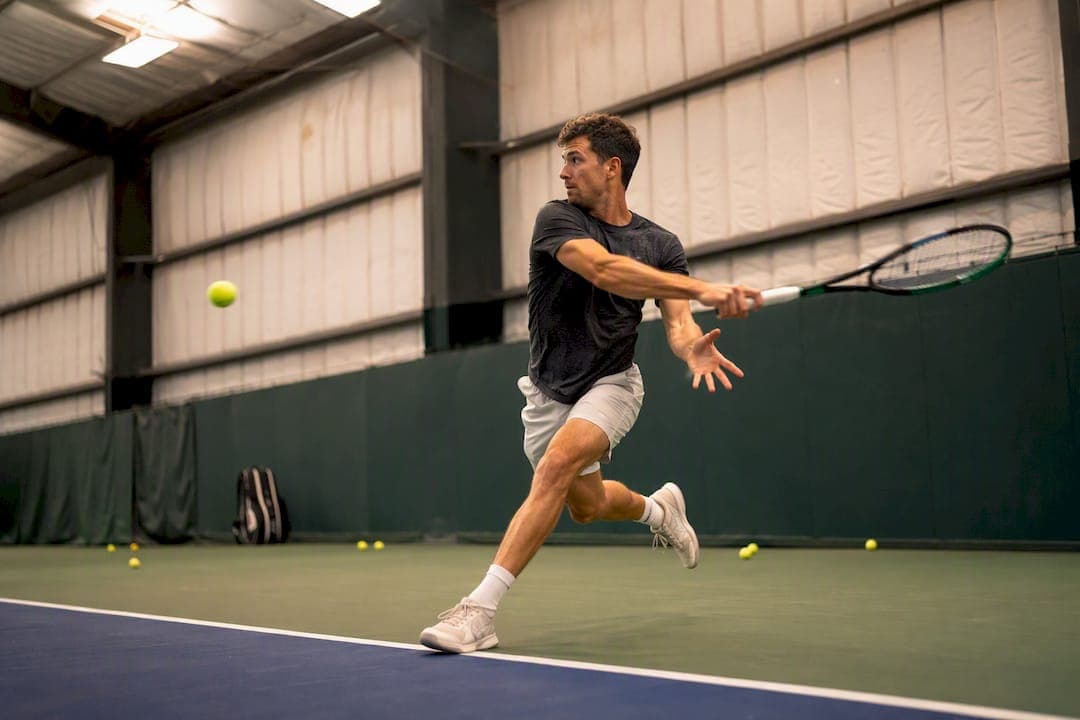
An indoor tennis specialist is a coach or facility program built to deliver consistent court access, structured lessons, and clinics designed specifically for indoor conditions. That means predictable lighting, controlled temperature, and a surface that doesn't change with the weather. This matters for anyone tired of rain-canceled lessons or games lost to wind gusts nobody can control.
Indoor specialists serve three groups well: recreational adults chasing steady improvement, juniors building tournament-ready fundamentals, and competitive players who need reliable practice conditions during off-season months. If you're searching for tennis lessons near me and keep hitting facilities that shut down every winter, an indoor-focused program solves that specific problem.
The fastest way to know if a specialist fits your goals is to book a trial lesson this week. When you call or email, ask three things:
- What surface does the indoor court use, and how does it compare to outdoor play?
- Can I meet the coach and see a sample lesson plan before committing?
- What's the cancellation and make-up policy for weather-independent bookings?
TL;DR:
- Indoor courts can cost significantly more to build than outdoor options due to roofing, HVAC, and insulation, but year-round rentals help recoup this investment.
- A trial lesson should cover court surface comparison, coach credentials, lesson plan, and cancellation policies before committing.
- Choosing a specialist involves verifying certifications, safety policies, coach-to-player ratios, and ensuring a transparent, written development plan.
- Left-handed players require roughly 25% practice reps to neutralize tactical advantages, with indoor environments enhancing the effectiveness of technical adjustments.
- Indoor training sharpens pattern recognition, making it easier to read player performance and match dynamics in ATP and WTA events without weather interference.
Table of Contents
- What Services Do Indoor Tennis Specialists Provide?
- How Much Do Indoor Courts and Coaching Cost?
- How Do You Choose the Right Indoor Tennis Specialist?
- Why Does Coaching for Left-Handed Players Matter Indoors?
- How Do You Book a Trial Lesson and What Should It Cover?
- Key Takeaways
- Sources
What Services Do Indoor Tennis Specialists Provide?
Indoor programs typically offer five lesson formats, and picking the right one shapes how fast you improve. Private lessons give one-on-one attention and cost more per hour but compress feedback loops. Semi-private sessions split that cost between two players with similar skill levels. Group clinics run four to eight players through drills focused on a single skill, like serve mechanics or approach shots. Performance teams target junior or adult competitors training for tournaments, often meeting multiple times weekly. Ball-machine sessions let players log repetition without needing a partner or coach present.
Facility features affect these formats more than most players realize. Indoor surfaces range from hard court to modified clay or cushioned synthetic, and each changes ball bounce and footwork demands. Lighting matters too: reflective ceiling liners and modern insulation systems improve lighting uniformity and reduce glare, which directly affects how well you track the ball on fast exchanges.
Statistic callout: Indoor court construction runs significantly higher than outdoor builds because roofing, HVAC, and insulation systems add real project cost — which is exactly why facilities lean on year-round rentals and programming to make the investment pay off.
Climate control isn't just about comfort. Condensation on the court surface or ceiling can create slick patches, and a facility that manages temperature and humidity well protects both your footing and the equipment. Sightlines and acoustics round out the list. Look for consistent overhead lighting and reasonable sound dampening if you're training in a multi-court facility.
How Much Do Indoor Courts and Coaching Cost?
Pricing varies by region, but a few patterns hold across most markets. Private lesson rates with an experienced coach commonly fall in a moderate hourly range, with rates rising for coaches holding advanced certifications or a strong junior-development track record. Group clinic pricing tends to run lower per person since the coach's time is shared, making clinics a smart entry point if you're testing whether group instruction suits your learning style.
Membership models and drop-in rates each have tradeoffs. A membership often locks in better hourly rates and priority court booking, but you're committing to a facility before you know if the coaching staff fits your goals. Drop-in rates cost more per session but keep you flexible while you shop around.
Watch for these common add-ons before you sign anything:
- Ball machine rental fees, often billed separately from court time
- Demo racquet rental if you're testing equipment
- Peak-hour or lighting surcharges for evening bookings
- Cancellation windows, typically requiring 24-hour notice to avoid a charge
Ask specifically what payment options a facility accepts and whether contracts auto-renew. A specialist confident in their program will show you pricing in writing without hedging.
How Do You Choose the Right Indoor Tennis Specialist?
Not every facility with a roof over its courts qualifies as a true specialist. Use this checklist when you're comparing options:
- Verify coach certifications. Look for credentials like USPTA or PTR certification, which indicate standardized training in teaching methodology.
- Ask about youth-safety policies. Any program working with juniors should have background-checked staff and clear supervision ratios.
- Check the coach-to-student ratio. A clinic advertising "small groups" should specify a number, not just a vague promise.
- Request a written lesson plan or progression outline. Specialists who track your development should be able to show you what that tracking looks like.
- Confirm a trial lesson is available. Most legitimate programs offer one, often discounted, so you can evaluate fit before committing.
- Read recent testimonials or ask for references. A facility with years of programming should have parents or adult players willing to vouch for it.
Pro Tip: Call during off-peak hours and ask to watch a lesson in progress before booking your own. How a coach handles a live group tells you more than any brochure.
Red flags worth walking away from: no written plan, pricing that changes depending on who answers the phone, or a junior program that can't describe its safety screening process. Municipal facilities, like programs run through city fitness centers, often set a useful baseline for what structured, transparent programming looks like.
Why Does Coaching for Left-Handed Players Matter Indoors?
Left-handed players create a real tactical wrinkle, but the advantage isn't fixed. Research on left-handed players tennis matchups shows the edge is frequency-dependent: the less often you face a lefty, the harder their spin and serve angles are to read. Coaches who understand this build in deliberate exposure, aiming for roughly 25% lefty practice reps when a left-handed practice partner is available. That ratio neutralizes much of the surprise factor most club players struggle with.
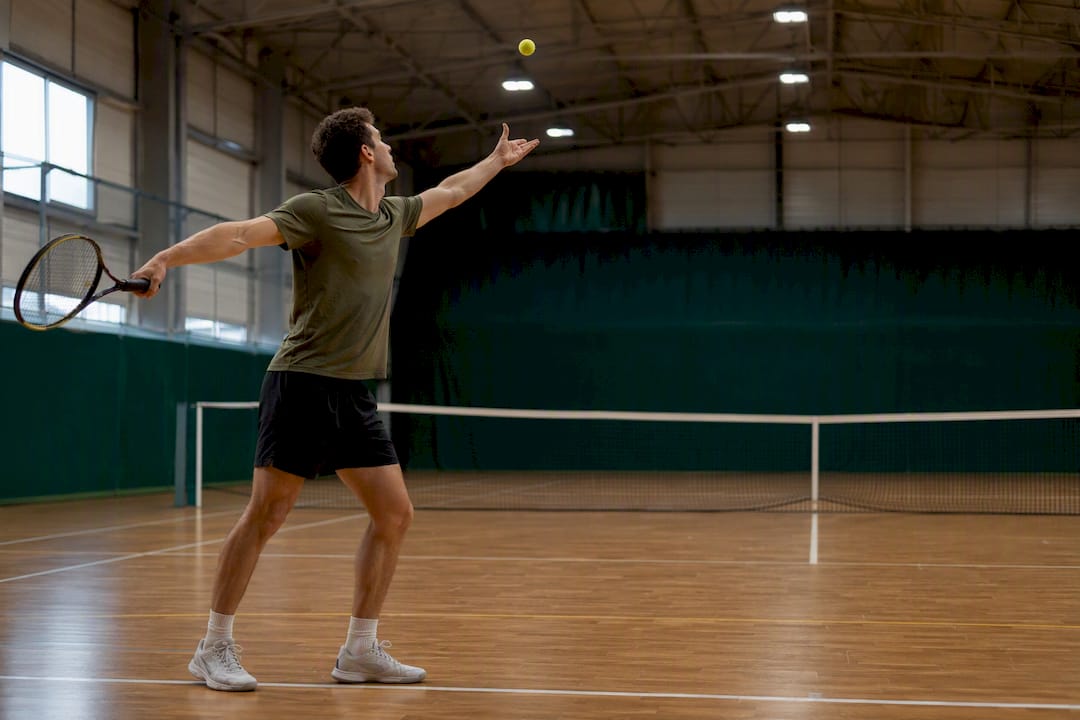
If lefties aren't around, good coaches simulate the look with grip changes and serve variations that mimic left-handed spin patterns. Indoor environments make this training more effective because there's no wind pushing the ball off its intended path, so players can isolate the actual technical adjustment instead of fighting outdoor variables at the same time.
Statistic callout: Indoor conditions produce longer, more rhythmic exchanges that reward consistency over power, which is why elite indoor specialists post noticeably strong indoor win rates compared to their outdoor form.
- Rally-extension drills that force 10+ shot exchanges before either player can attack
- Serve-and-return patterns run against a coach simulating lefty spin
- Footwork ladders adjusted for the indoor surface's bounce height
How Do You Book a Trial Lesson and What Should It Cover?
- Search local indoor tennis programs and shortlist two or three based on surface type and coach credentials.
- Request the coach's bio and certification details before scheduling anything.
- Confirm session length and surface so you know what to expect walking in, typically a 30 to 45 minute block.
- Book the trial and ask what it includes: most cover a warm-up, a basic skills assessment, and a short demo of the coach's teaching style.
- Evaluate afterward by asking what a 6 to 8 week progression plan would look like and how often you'd need to train to hit it.
A good trial ends with a specific recommendation, not a generic sales pitch for a package.
How Indoor Training Sharpens the Way You Watch Tennis
Training indoors teaches you to read patterns without weather noise clouding the signal: serve hold percentage, rally tolerance, footwork under fatigue. Those same patterns show up when you're watching ATP and WTA matches and trying to project who holds serve on a fast indoor court in November.
I've found that once you've drilled indoor rally patterns yourself, watching indoor tour events gets sharper. You start noticing which players thrive on predictable bounce and which ones lose their outdoor edge entirely. That's exactly the kind of signal worth testing in a private league before a Slam.
— Nathan
Tweener Turns Indoor Insight Into a Real Contest
If a trial lesson taught you anything about how indoor conditions change a player's rhythm, Tweener is where you put that observation to work. It's built for fans who track surface stats, head-to-head history, and form. That's not casual guesswork. It's the same analytical mindset a good indoor coach uses to build your lesson plan.
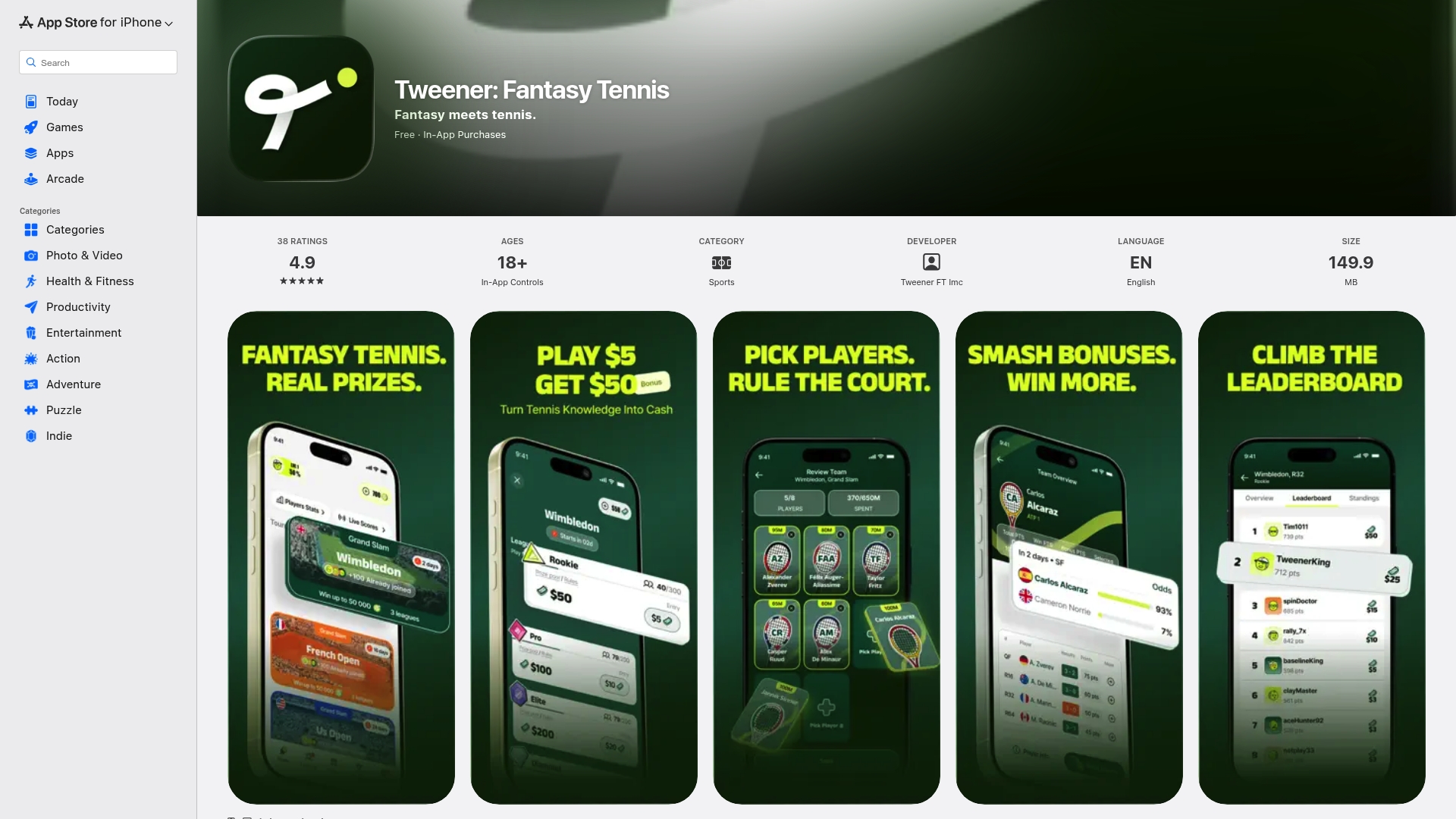
Inside the app, you draft real ATP and WTA players into a fantasy team and score points based on how they actually perform in live matches. Create a private league for up to 9 friends during the next indoor swing and test whether your read on serve holds and indoor win rates actually holds up. Play free with virtual coins, or enter a cash contest where legally permitted. Download Tweener and set up your first private league before the next indoor tournament starts.
Key Takeaways
Indoor tennis specialists combine climate-controlled courts, structured lesson formats, and credentialed coaching to deliver measurable, weather-proof improvement year-round.
| Point | Details |
|---|---|
| Book a trial first | Most specialists offer a discounted trial lesson to test coaching fit before you commit. |
| Facility specs matter | Surface type, lighting uniformity, and climate control directly affect training quality and consistency. |
| Budget for add-ons | Ball machine fees, demo racquets, and peak-hour surcharges often sit outside base lesson pricing. |
| Train lefty exposure deliberately | Aim for roughly 25% left-handed practice reps to neutralize the club-level advantage. |
| Use indoor insight strategically | Tweener lets you test indoor-driven read on serve holds and rally patterns in private fantasy leagues. |
Sources
- Left-handedness in tennis: Tactical, coaching and training considerations.
- Where does Sinner's imperious indoor performance rank in history? - ATP Tour (Infosys ATP Beyond The Numbers)
- Teachme
- Indoor Tennis Insulation
- Tennis at Williston Fitness Center | City of Minnetonka, MN