
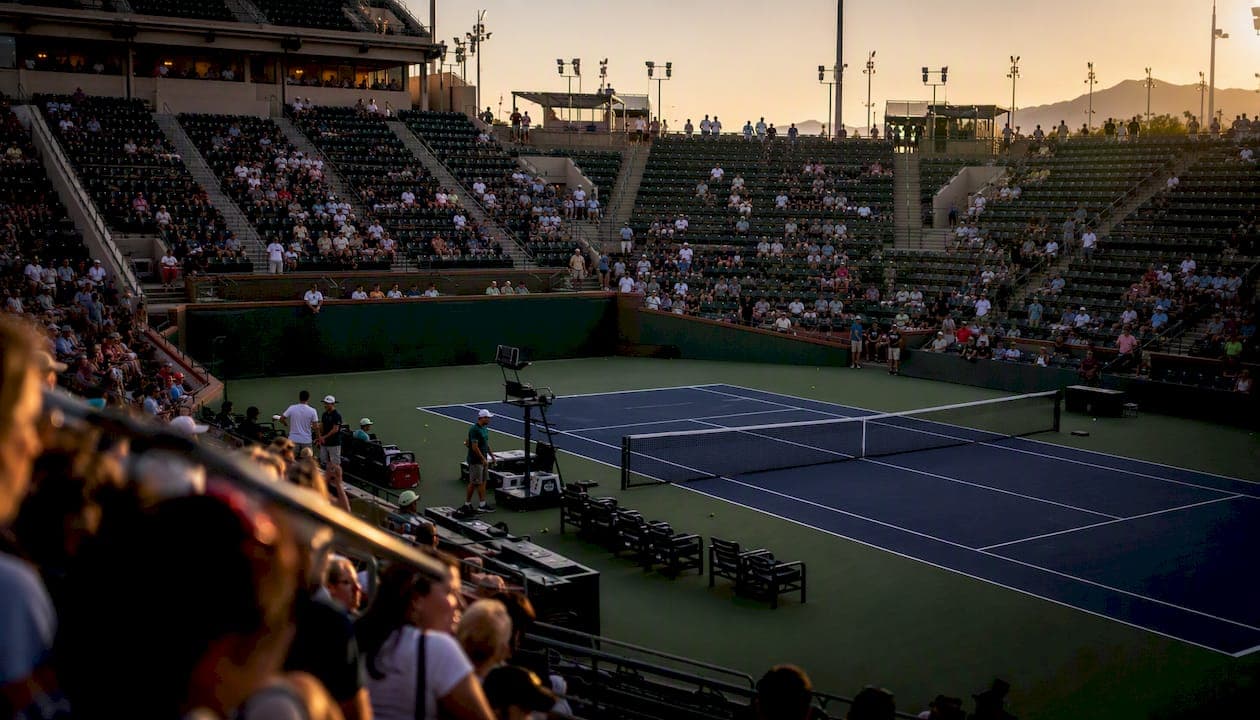
The pro tennis season has a handful of weeks that genuinely define everything else. The four Grand Slams) anchor the calendar: the Australian Open (January), Roland Garros (late May–early June), Wimbledon (late June–early July), and the US Open (late August–early September). Around those, a short list of headline weeks rounds out what fans and fantasy players should have circled:
- Australian Open — the season opener on hard courts in Melbourne; sets early-year rankings and form
- Roland Garros — two weeks of clay in Paris; the most physically demanding Slam
- Wimbledon — grass, tradition, and the sport's highest cultural moment
- US Open — hard courts in New York; the loudest, most electric crowd in tennis
- BNP Paribas Open (Indian Wells) — the "fifth Slam," full draws, desert air, March
- Miami Open — back-to-back with Indian Wells; the spring hard-court swing's second act
- Madrid Open — high-altitude clay in May; upsets are common, form signals are real
- Internazionali BNL d'Italia (Rome) — clay tune-up right before Roland Garros
- Western & Southern Open (Cincinnati) — the last major hard-court test before the US Open
- Paris Masters — indoor hard, late October; last big ranking move before the season ends
- Nitto ATP Finals and WTA Finals — season-ending championships for the top eight players
- Citi Open (Washington, D.C.) — the North American hard-court swing's opening gun
Key Takeaways
The four Grand Slams are the most important weeks in the tennis season, but a handful of Masters and WTA 1000 events, plus the season-ending championships, round out the calendar weeks that define rankings, form, and fan attention.
| Point | Details |
|---|---|
| Grand Slams anchor the season | Australian Open, Roland Garros, Wimbledon, and US Open are the four highest-stakes fortnights, each on a distinct surface. |
| Surface swings structure the year | Hard, clay, grass, and North American hard-court swings determine player prep and which weeks produce the clearest form signals. |
| Masters weeks signal real form | Indian Wells, Miami, Madrid, Rome, and Cincinnati are the most reliable lead-up indicators before each Slam. |
| Fan Week is a scouting window | Qualifying rounds before each Slam reveal in-form players who are often undervalued in fantasy drafts. |
| Tweener for big weeks | Tweener's private Grand Slam leagues and live scoring let fans compete strategically during every major fortnight. |
Table of Contents
- What are the most important weeks in the tennis season, month by month?
- Why the four Grand Slam fortnights matter more than anything else
- Other must-watch weeks beyond the Slams
- Why these weeks matter for fans and fantasy players
- Top U.S.-based weeks to mark on your calendar
- Why Tweener watches these weeks more closely than most
- Tweener turns big tournament weeks into competitive fantasy play
- Sources
What are the most important weeks in the tennis season, month by month?
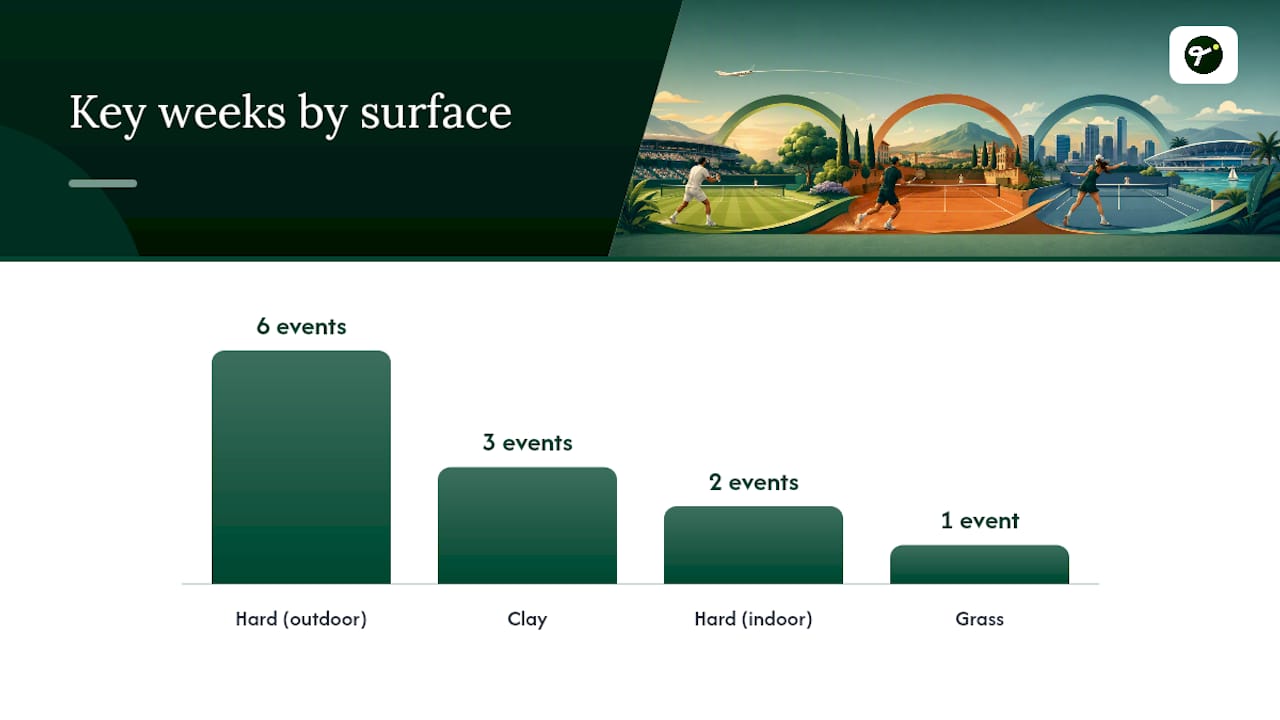
The season runs almost year-round, but its structure follows four distinct surface-based swings that shape player preparation, form, and fantasy roster decisions.
| Month | Key Week(s) | Surface |
|---|---|---|
| January | Australian Open | Hard (outdoor) |
| March | BNP Paribas Open (Indian Wells) | Hard (outdoor) |
| March–April | Miami Open | Hard (outdoor) |
| May | Madrid Open | Clay |
| May | Rome (Internazionali BNL d'Italia) | Clay |
| Late May–June | Roland Garros | Clay |
| Late June–July | Wimbledon | Grass |
| July | Citi Open (Washington, D.C.) | Hard (outdoor) |
| August | Western & Southern Open (Cincinnati) | Hard (outdoor) |
| Late Aug–Sept | US Open | Hard (outdoor) |
| October | Paris Masters | Hard (indoor) |
| November | Nitto ATP Finals / WTA Finals | Hard (indoor) |
The ESPN tennis schedule and official tour calendars are the fastest way to confirm exact dates each year, since draws and start dates shift slightly.
Best weeks to plan travel or a watch party:
- Indian Wells weekend sessions (buy early — they sell out)
- Wimbledon's second week (quarterfinals onward)
- US Open night sessions at Arthur Ashe Stadium
- Cincinnati's final weekend (compact venue, easy access from multiple Midwest cities)
Why the four Grand Slam fortnights matter more than anything else
Every Slam carries roughly twice the ranking points of a Masters event, which means two weeks at a major can reshape the entire season standings. That math alone explains why players treat them differently — and why fantasy scoring spikes during Slam fortnights.
- Australian Open: The hard-court opener rewards players who stayed sharp through the off-season. Fitness and serve dominance tend to win here; the heat in Melbourne can turn a five-set match into a war of attrition.
- Roland Garros: Clay specialists get their moment, but the 2026 season showed that upset rates can run high when conditions slow the ball down and big servers struggle. Best-of-five for men means matches can stretch past four hours.
- Wimbledon: Grass rewards serve-and-volley instincts and aggressive net play. Wimbledon's cultural weight makes it the single most intense fan week of the year — many compare it to golf's Masters. The 2026 Championships produced defining moments that will be referenced for years.
- US Open: Night sessions at Ashe are unlike anything else in tennis. The crowd is loud, the lights are bright, and upsets happen at a higher rate than at any other Slam.
Men play best-of-five at all four Slams; women play best-of-three. That difference matters for fantasy: men's matches generate more games, more aces, and more scoring events per match. Qualifying (Fan Week) runs before each Slam's main draw and is worth watching for dark-horse picks — players who win three qualifying rounds arrive in form and often push seeded opponents.
Other must-watch weeks beyond the Slams
These events don't carry Slam prestige, but they move rankings, reveal form, and give fans some of the best tennis of the year.
- BNP Paribas Open (Indian Wells, March): Full 96-player draws, top-100 fields, and a stadium that rivals any Slam venue. Players treat it as a season statement. Sell-out weekend sessions are the norm.
- Miami Open (March–April): Played on the same hard-court surface as Indian Wells, so back-to-back form is a reliable indicator. Watch for players who peak on fast outdoor hard courts.
- Madrid Open (May): High altitude makes the ball fly faster than at other clay events, which neutralizes some clay specialists and opens the door for hard-court players. Historically produces upsets.
- Rome (May): The last clay tune-up before Roland Garros. Players who go deep here typically arrive in Paris with real momentum. Night sessions at the Foro Italico are worth staying up for.
- Western & Southern Open, Cincinnati (August): The final Masters-level event before the US Open. Form here is the clearest predictor of US Open readiness. Surface-specific performance trends matter most in this window.
- Paris Masters (October): Indoor hard courts, fast conditions, and a field fighting for year-end ranking positions. Expect aggressive tennis and short matches.
- Nitto ATP Finals / WTA Finals (November): Round-robin format, top-eight players only. No ranking points pressure for players already locked into their position — which sometimes produces the most open, attacking tennis of the year.
For fantasy managers, knowing how the schedule and surface swings interact is the difference between a reactive roster and a strategic one.
Why these weeks matter for fans and fantasy players
Grand Slam weeks generate more scoring events, more volatility, and more opportunity than any other weeks on the calendar. The Australian Open has set Grand Slam attendance records, and TV viewership spikes during all four Slams — which tells you exactly where fan attention concentrates.
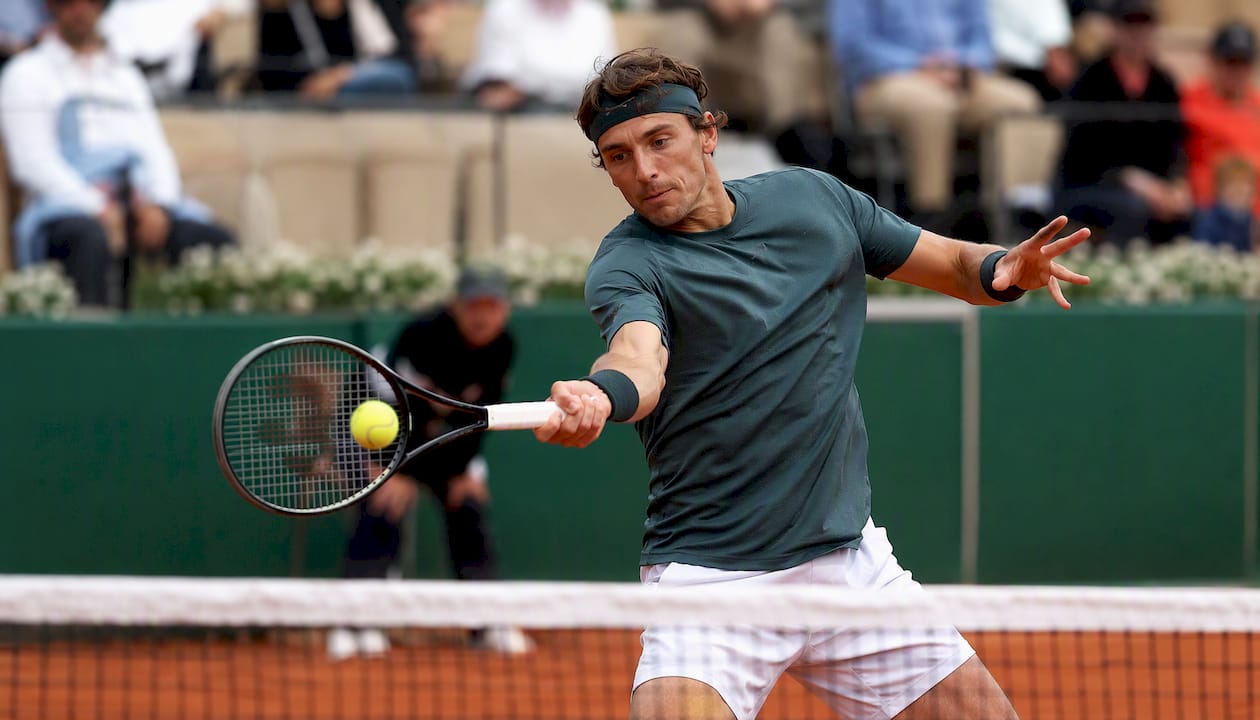
For fantasy players, the math is simple: more games per match means more points per player per day. A deep Slam run from a player you drafted early can carry a lineup throughout the duration of the tournament. The flip side is volatility — a first-round upset wipes out a top pick immediately.
Pro Tip: Use Fan Week (qualifying) at each Slam as a free scouting window. Players who win two or three qualifying rounds are in form, often undervalued in fantasy drafts, and occasionally make deep main-draw runs. The US Open's Fan Week is the most accessible for U.S. fans.
Practical actions to build around the calendar:
- Lock lineups before draw day — injury withdrawals and tough first-round matchups are revealed at the draw, not at match time
- Hold transfers through Slam fortnights — substituting mid-Slam burns flexibility; plan your roster before the first round
- Target surface specialists in transition weeks — the clay-to-grass and grass-to-hard shifts are where surface advantage creates the biggest fantasy edge
- Expect post-Slam volatility — top players frequently skip the week after a Slam to recover, opening draws and creating value for lower-ranked players
Top U.S.-based weeks to mark on your calendar
If you're a U.S. fan deciding where to spend a travel budget or a weekend, these five events are the clearest priorities.
- BNP Paribas Open, Indian Wells (March): The best tennis atmosphere in the country outside New York. Book weekend sessions three to four months out — they sell out. The desert setting makes it a full trip, not just a match.
- Miami Open (March–April): Hard Park is a world-class venue. The event runs nearly two weeks, so there are multiple chances to catch top players without paying finals-round prices.
- Western & Southern Open, Cincinnati (August): Compact venue, easy to navigate, and the field is as strong as any Masters event. A great option if US Open tickets are out of reach.
- US Open, New York (late August–September): Fan Week (qualifying) offers cheap tickets and a chance to see future stars before they break through. Main-draw night sessions at Arthur Ashe are bucket-list tennis. Book early — night session tickets for the first week move fast.
- Citi Open, Washington, D.C. (July): The North American hard-court swing starts here. Smaller venue means you're close to the action, and ticket prices are far more accessible than at the Slams.
A practical note: lead-up events like Washington and Cincinnati let you see top players in a lower-pressure setting, often at a fraction of the Slam cost. Players are loose, accessible, and genuinely competing for form heading into the US Open.
Why Tweener watches these weeks more closely than most
The tennis calendar isn't just a schedule — it's a strategic map. Every surface shift, every lead-up event, every Fan Week qualifying round is a data point. Tweener was built for fans who read it that way. Tracking which players thrive on the transition from clay to grass, or who historically overperforms at indoor Masters events, is exactly the kind of analysis that separates a lucky fantasy pick from a well-reasoned one. The weeks covered in this article are the ones where that analysis pays off most.
Tweener turns big tournament weeks into competitive fantasy play
Tweener is the fantasy tennis app built specifically for the weeks that matter. During Grand Slam fortnights, you can set up a private league with up to nine friends and compete across the full two-week draw — scoring based on real match results, with surface-aware metrics that reward the right kind of player selection. There's no equivalent in mainstream DFS; Tweener is the closest thing tennis has to a FanDuel built for the sport.
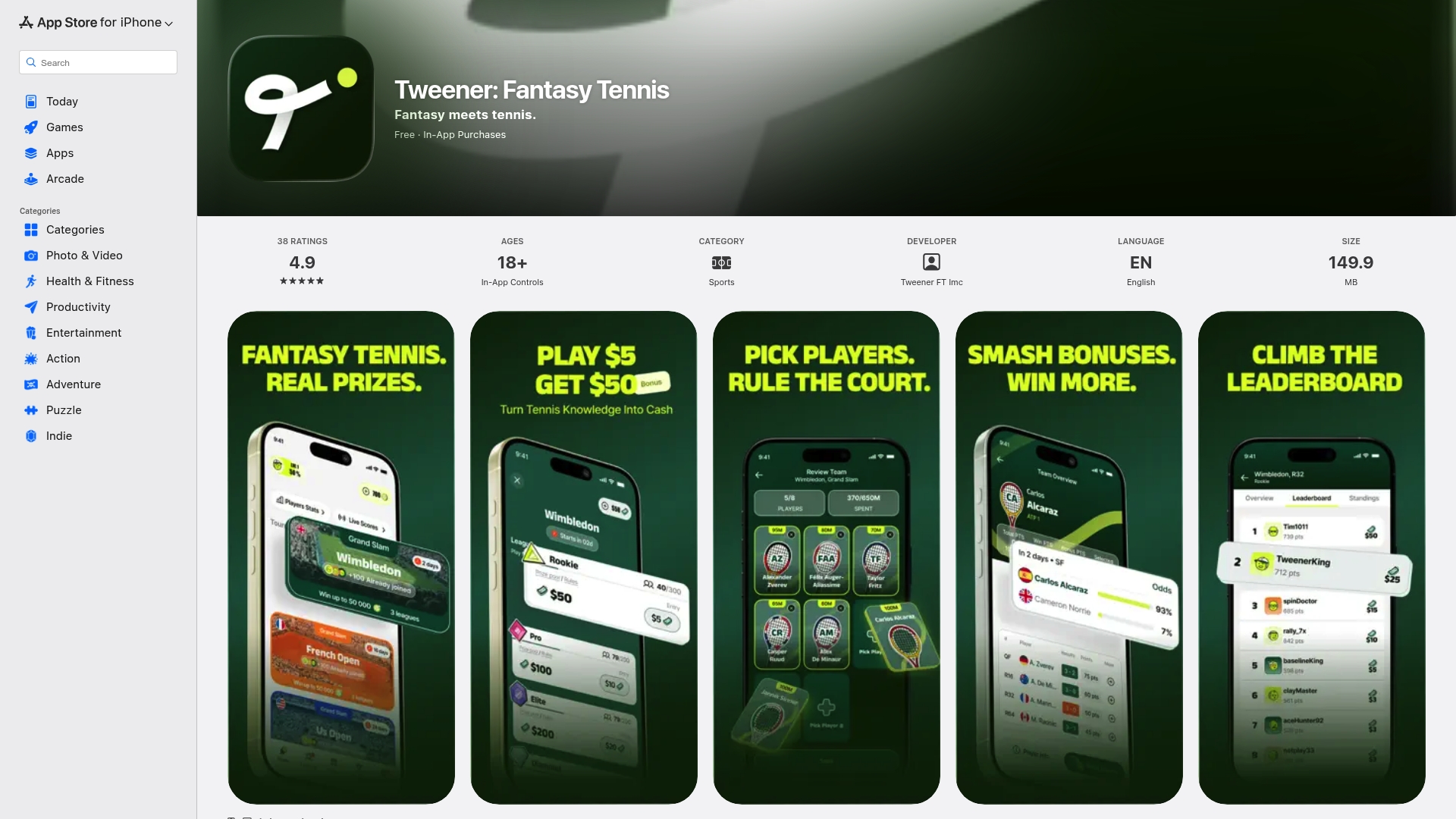
Free mode lets you compete with virtual coins and earn rewards. Cash mode is available for fans who want real-money contests during the season's biggest weeks. Download Tweener and set up your first Grand Slam league before the next major's draw is released.
Sources
- Tournaments | ATP Tour | Tennis
- LTA
- Best of Wimbledon 2026: the moments that defined the Championships — WTA Tennis