

TL;DR:
- Effective tennis news analysis involves verifying sources, using reliable data, and assessing player form through detailed metrics. Fans should cross-check headlines with official ATP, WTA, and specialist platforms while applying a five-step verification process. Tracking granular performance metrics and maintaining a disciplined workflow enhance accurate, insight-driven understanding of tournaments.
Reviewing tennis player news effectively means combining source verification, performance data, and critical reading skills to separate fact from noise. Most fans scroll headlines and accept them at face value. Analysts who actually understand player form go deeper. They cross-reference ATP and WTA official stats, use platforms like Tennis Majors and Tweener, and apply structured verification before drawing conclusions. This guide walks you through how to review tennis player news the right way, so you spend less time chasing rumors and more time making smart calls during tournaments.
What tools and data sources are essential for reviewing tennis player news?
The best tennis player news analysis starts with knowing which sources are actually reliable. Not all platforms are equal, and the gap between a credible stat database and a social media rumor account is enormous.

The ATP and WTA official websites publish match statistics, draw sheets, and player rankings updated in real time. These are your ground-truth sources. Tennis Majors provides editorial analysis backed by granular data, including rally length distribution and serve performance breakdowns. Tweener integrates live stats and player performance metrics directly into its fantasy tennis platform, giving fans a data layer that most casual news outlets skip entirely.
CAPTRACKER is a third-party tracking tool used by analysts to log match outcomes and verify performance trends over time. Meaningful performance evaluation requires 300–500 matches of recorded data to distinguish genuine skill shifts from short-run luck. That sample size requirement matters because a player winning three matches in a row tells you almost nothing about their actual trajectory.
| Source | Data Type | Reliability |
|---|---|---|
| ATP / WTA Official Sites | Rankings, match stats, draws | Very High |
| Tennis Majors | Editorial analysis, granular metrics | High |
| Tweener | Live stats, fantasy performance data | High |
| CAPTRACKER | Match tracking, historical logs | High |
| Social media insider accounts | Unverified claims, injury rumors | Low |
Pro Tip: Bookmark the ATP Stats Leaderboard and cross-check any performance claim you read in a news article against the official numbers before sharing or acting on it.
How do you verify and assess the reliability of tennis news sources?
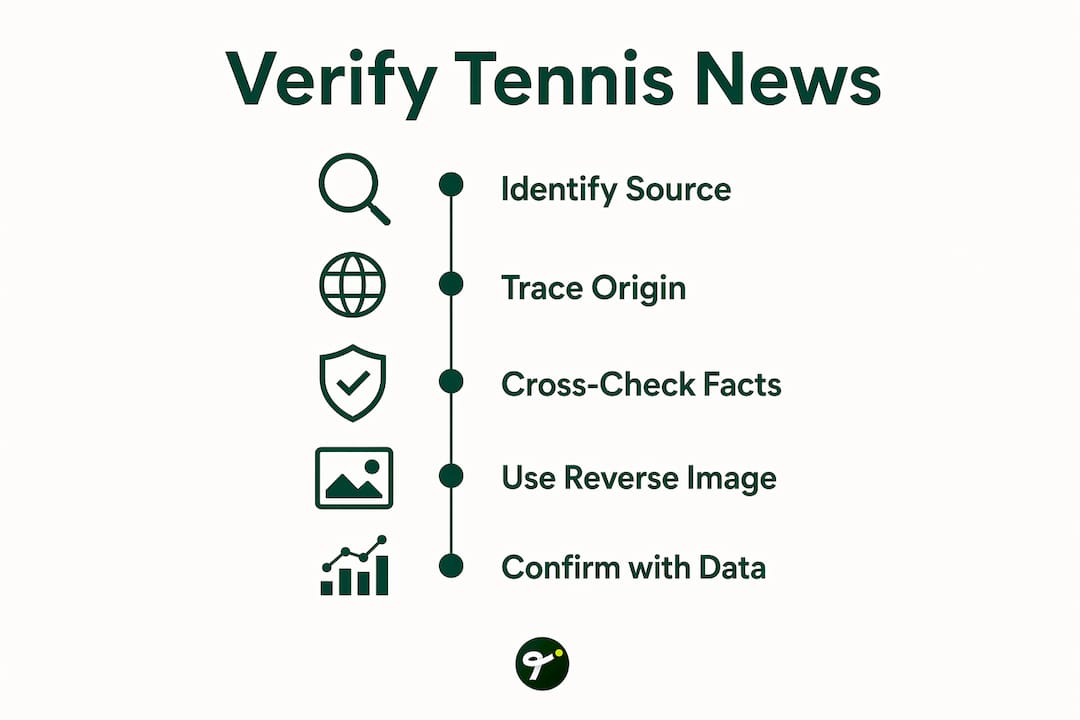
Source verification is the single most underused skill among tennis fans. A five-step framework covers the process cleanly: define the claim, trace its origin, review the evidence, check for bias, and validate citations.
Tracing origin is where most readers stop short. Many viral insider claims online are engagement-farming tactics with no verified source. The initial post often lacks context, and by the time the story spreads, the original claim has been stripped of any caveats. Searching for the earliest version of a story, checking timestamps, and looking for independent corroboration are the fastest ways to expose a fabricated report.
Red flags in tennis news are consistent. Watch for anonymous sourcing on injury updates, dramatic language with no statistical backing, and prediction services that claim exclusive access to locker-room information. Legitimate tennis prediction services charge between $25 and $75 per month. Any service charging significantly more and promising guaranteed insider injury information is almost certainly a scam. The BBB and the Tennis Integrity Agency both accept reports on fraudulent tipsters and can flag bad actors publicly.
Emotional language is another reliable signal. Stories with heavy drama framing often lack journalistic inquiry. When a headline reads like a soap opera, the business incentive behind it is usually clicks, not accuracy.
- Define the claim. Write out exactly what is being asserted before evaluating it.
- Trace the origin. Find the earliest post or report. Check the date and context.
- Review the evidence. Look for match data, official statements, or verified quotes.
- Check for bias. Identify whether the source has a financial or emotional stake in the story.
- Validate citations. Confirm that any statistics or quotes link back to a real, traceable source.
Pro Tip: Use Google's reverse image search and quote search to verify photos and quotes cited in tennis news. Verification tools like original source tracing take under two minutes and catch the majority of fabricated claims.
What are the key tennis metrics for analyzing player form?
Headlines report wins and losses. The metrics that actually reveal player form are buried in the stat sheets, and most fans never look there.
Rally length distribution is one of the most telling indicators of a player's strategic intent. When a player's average rally length drops, they are attacking earlier and taking more risk. Alexander Zverev's average rally length decreased from 5.0 to 3.9 shots within a single year. That shift is not visible in a match score. It only appears when you look at the underlying data.
The numbers behind Zverev's evolution are specific. His points decided in 0–4 shot rallies rose from 58% to 69%, and his time spent in attack climbed from 27% to 31%. Those figures signal a deliberate tactical shift, not a lucky run. Understanding our tennis player stats guide helps you interpret exactly these kinds of changes before they show up in tournament results.
The metrics worth tracking for any player include:
- 0–4 shot rally share: Reveals how often a player is finishing points early, indicating aggression or serve dominance.
- Second-serve win percentage: A drop here signals vulnerability under pressure, often before injuries or fatigue become public news.
- Break point conversion rate: Separates players who create pressure from those who actually capitalize on it.
- Time spent in attack: Measures how frequently a player dictates play rather than responding.
"Treating a tennis match's score progression as a story reveals player mental shifts and momentum that basic news misses entirely." — Global Tennis News
These subtle shifts in player intent often appear in the data weeks before they generate mainstream headlines. Fans who track them gain a genuine edge in understanding player trajectories.
How to analyze tennis player news with live updates and statistics
Real-time analysis during a tournament requires a different workflow than post-match review. The goal is to cross-check what you are reading against what the data is actually showing.
Start with a live scoring platform that displays granular stats, not just the score. ATP Live Scores and the WTA app both show first-serve percentage, break points faced, and winners-to-errors ratios in real time. When you read a news update claiming a player is "struggling," check whether their first-serve percentage has dropped or their unforced errors have spiked. Reading break points and serve percentages during a live match reveals the real story behind the score.
The most common mistake in live news review is over-relying on unverified insider tips during a tournament. Social media moves faster than journalists, but speed is not accuracy. A report that a player is injured mid-tournament should be verified against official tournament communications before you act on it. Build your tennis performance tracking workflow around verified sources first, then layer in commentary.
| Approach | Speed | Accuracy | Depth |
|---|---|---|---|
| Manual news review (social, headlines) | Fast | Low | Shallow |
| Official ATP/WTA stats only | Moderate | Very High | Moderate |
| Data-supported analysis (stats + verified news) | Moderate | High | Deep |
| Live stat platforms + cross-referenced reporting | Real-time | High | Deep |
Pro Tip: During Grand Slam tournaments, set up a split-screen workflow: live stats on one side, verified news sources on the other. This forces you to check every claim against actual match data before accepting it.
The data-supported approach takes more time upfront. It pays off because your conclusions are grounded in evidence rather than narrative. Fans who develop this habit stop being surprised by results that the data had already predicted.
Key takeaways
Effective tennis news analysis requires verified sources, granular performance metrics, and a disciplined live review workflow to produce accurate, actionable insights.
| Point | Details |
|---|---|
| Use verified data sources | ATP, WTA, Tennis Majors, and Tweener provide reliable, traceable performance data. |
| Apply a five-step verification framework | Define claims, trace origins, check evidence, assess bias, and validate citations before accepting news. |
| Track granular metrics | Rally length, second-serve percentage, and break point conversion reveal form shifts before headlines do. |
| Avoid emotional language traps | Heavy drama framing signals business-driven sensationalism, not factual reporting. |
| Cross-check live news with real-time stats | Verify injury and performance claims against official live stat platforms during tournaments. |
Why skepticism is your most valuable analytical tool
I have spent years reading tennis news across ATP and WTA tours, and the single biggest mistake I see from fans is treating urgency as a proxy for credibility. A tweet that spreads fast feels important. It usually is not.
The insider injury tip economy is particularly toxic. I have watched entire fantasy tennis strategies collapse because someone trusted an anonymous account claiming a top-10 player was withdrawing. The claim had no timestamp, no source, and no corroboration. It spread anyway because it felt exclusive. Credible analysts rely on public, verifiable track records and transparent reasoning, not secret locker-room access.
What actually changed my approach was learning to read stat sheets the way a coach does. When I saw Zverev's rally length data shift before his results caught up, I understood that the numbers were telling a story the headlines had not written yet. That is the real advantage of a data-first mindset. You stop reacting to news and start anticipating it.
My honest recommendation is to treat every tennis news claim like a hypothesis. Verify it. Check the metrics. Look for the earliest source. The fans who do this consistently are the ones who understand tournaments at a level that makes watching them genuinely more rewarding.
— Nathan
Put your tennis news analysis into practice with Tweener
Understanding how to evaluate tennis news is only half the equation. Applying that analysis in a competitive context is where it gets genuinely interesting.

Tweener is the fantasy tennis app built specifically for analytical fans. The platform integrates live match data and player performance metrics directly into its fantasy league format, so you can test your news analysis against real tournament results. You pick ATP and WTA players, compete in public or private leagues, and earn points based on actual match performance. It is the closest thing tennis has to a DraftKings-style experience, built entirely around the sport. Download Tweener and put your player analysis to work during the next tournament.
FAQ
What does reviewing tennis player news actually mean?
Reviewing tennis player news means systematically verifying sources, cross-referencing performance data, and evaluating claims against official ATP and WTA statistics before drawing conclusions about player form or fitness.
How do i spot a fake tennis insider tip?
Look for anonymous sourcing, no timestamp, and no corroboration from official channels. Legitimate prediction services charge $25–$75 per month and provide transparent reasoning, not guaranteed insider access.
Which metrics matter most for analyzing player form?
Rally length distribution, second-serve win percentage, and break point conversion rate are the most revealing. These stats signal strategic shifts before they appear in match results or mainstream news.
How many matches do i need to track before drawing conclusions?
A sample of 300–500 matches is the minimum needed to distinguish genuine performance trends from short-run variance. Smaller samples produce misleading conclusions.
What is the fastest way to verify a tennis news claim during a live tournament?
Trace the claim to its earliest post, check the timestamp, and cross-reference it against the official tournament communications or live ATP/WTA stat platforms before acting on it.