

TL;DR:
- Effective tennis fan engagement combines attending live matches, utilizing AI tools for real-time insights, and maintaining a consistent social media rhythm to deepen overall involvement. Utilizing analytics platforms and participating in fantasy leagues further enhances understanding and creates a year-round, layered connection to the sport. Fans who integrate these strategies enjoy more meaningful matches and develop a stronger, more interactive tennis experience.
Tennis fan engagement tips are practical strategies that move fans from passive viewers to active participants, using live events, AI tools, social media, and fantasy competition to deepen their connection to the sport. The best approaches combine on-site experiences at venues like Roland-Garros with digital platforms like Infosys AI tools and fantasy apps like Tweener, creating a layered fandom that rewards both casual followers and data-obsessed analysts. Whether you watch from the stands at the Australian Open or track every break point from your couch, these strategies make every match more meaningful.
1. Tennis fan engagement tips start with attending live matches
Nothing replicates the atmosphere of watching Carlos Alcaraz or Iga Swiatek play live. The sound of a 130 mph serve, the crowd tension on a third-set tiebreak, and the spontaneous energy of a stadium are impossible to reproduce on a screen. Live attendance creates emotional investment that carries over into how you follow the sport for months afterward.
The key to maximizing a live visit is planning around the full day, not just the match. Arrive early to watch practice sessions, where players are more accessible and you can observe tactical patterns coaches rarely discuss publicly. Study the draw in advance so you know which courts host the most competitive matchups across the day.
Pro Tip: At Grand Slams, outer courts during the first week offer the closest access to top-100 players. You can stand courtside at a match featuring a seeded player for free with a grounds pass, something impossible at center court.
Fan zones extend the live experience well beyond the match itself. Roland-Garros' Tribune Concorde offers more than 6,000 square meters of free space with capacity for 3,800 fans, featuring DJs, food trucks, urban tennis courts, and big screens showing live quarterfinal matches. This kind of shared viewing environment prevents the disengagement that happens during long waits between matches.
2. Explore AI-powered tools that add real-time context
AI has moved from a buzzword to a genuine fan experience tool at the sport's biggest events. Infosys deployed its "Rally" humanoid robot at the 2026 Australian Open for personalized fan interactions, alongside the "Keys to the Match" feature that delivers AI-generated insights for each player before and during matches. These tools give casual fans the kind of contextual analysis that previously required hours of research.

The Infosys and Roland-Garros partnership, extended through 2031, introduced the Rolly StatsBot, a visual Momentum tracker, and an Excitement Rating system that quantifies match tension in real time. These features transform raw data into emotional context, telling you not just the score but why a particular game matters within the match's arc.
Accessibility technology has also advanced significantly. The MatchFeel device, introduced at the Australian Open, allows blind and visually impaired fans to experience match vibrations and tactile feedback. This signals a broader shift: AI chatbots and humanoid robots succeed in fan engagement by offering guided, concrete information that lowers friction for casual fans while maintaining authenticity for hardcore followers.
Pro Tip: During live matches, use the ATP or WTA official apps alongside a stats platform like Tennis Abstract to cross-reference what the AI tools surface. The combination of curated AI insight and raw data gives you a complete tactical picture.
The benefits of interactive sports apps extend beyond the venue. Mobile features now deliver personalized content based on your favorite players, push notifications at critical match moments, and post-match breakdowns that keep engagement alive between tournaments.
3. Build a social media rhythm tied to the tennis calendar
Random posting and random consuming both kill engagement. Structured, rhythmic social media interaction during tournaments encourages repeat engagement and builds community loyalty. The same principle applies to fans: align your social activity with the tournament calendar and your engagement compounds over time.
Each platform serves a different purpose in the tennis fan ecosystem:
- Twitter/X is the live match conversation layer. Use it during matches for real-time reactions, score updates, and tactical debate with other fans.
- Instagram Stories and Reels work best for highlight reactions, player comparisons, and visual stat breakdowns posted within hours of a match ending.
- TikTok rewards creative takes: slow-motion serve analysis, "who wins this H2H" polls, and countdown content before major tournaments perform consistently well.
- Reddit communities like r/tennis offer the deepest tactical discussion, where fans debate surface statistics, coach changes, and draw analysis with genuine expertise.
Roland-Garros uses crowdsourced polls asking fans to predict tournament favorites, which function as shared conversation points that build communal narratives around each event. Participating in these polls connects you to a broader fan conversation and often surfaces perspectives you had not considered.
The timing of your engagement matters as much as the content. Posting a match reaction six hours after the final point lands in an empty room. Post within 30 minutes of a major upset or a five-set finish and you enter a live conversation with thousands of engaged fans.
4. Use analytics platforms to read the game like a coach
Tennis fans increasingly use analytics platforms to analyze serve percentages, break point conversion rates, and rally heatmaps, turning passive viewing into interactive participation. This shift is significant. When you understand that Novak Djokovic converts break points at a higher rate on clay than any other surface, you watch his return games with a completely different level of attention.
The most useful analytics tools for fans include:
- Tennis Abstract (Jeff Sackmann's database): Surface-specific win rates, H2H records, and serve statistics going back decades.
- Infosys Match Centre: Real-time momentum tracking and Excitement Ratings during Grand Slam matches.
- Stats Perform / Opta: Embedding real-time Opta data into broadcasts creates shared moments and deeper fan insight, turning routine rallies into engaging touchpoints.
- Prediction tools: Platforms that let fans simulate match outcomes using current form, surface data, and H2H records test your tactical understanding against actual results.
Pro Tip: Before any major match, pull the last 12 months of head-to-head data on the specific surface being played. Surface-adjusted H2H records predict outcomes more accurately than overall career records, and they give you a concrete basis for prediction game entries.
Analytics also change how you watch. Tracking first-serve percentage in real time during a Jannik Sinner match, for example, reveals the exact moment his game plan shifts. That kind of observation turns a two-hour match into an active analytical exercise rather than background entertainment.
5. Join or create a fantasy tennis league for competitive depth
Fantasy tennis leagues require skill and knowledge, providing a social and competitive platform that rewards fans who study the game rather than those who simply guess. This distinction matters. Unlike sports betting, where the house edge is fixed, fantasy tennis competitions reward preparation: knowing that Ben Shelton performs better on hard courts, that certain players peak at specific Grand Slams, or that a player returning from injury needs two rounds to find form.
The structure of a fantasy league also changes how you follow a tournament. Instead of watching only your favorite player, you track every match involving your roster. A second-round match between two players ranked outside the top 50 becomes genuinely interesting when one of them is on your fantasy team.
Key ways to get more from fantasy tennis competition:
- Create private leagues with friends for Grand Slams. Competing against people you know adds a social layer that public leagues cannot replicate.
- Study the draw before selecting your team. A player in an easy quarter of the draw has a higher ceiling than a higher-ranked player facing multiple top-10 opponents early.
- Track surface statistics. Clay specialists like Rafael Nadal historically outperform their ranking at Roland-Garros. Hard court speed favors big servers at the Australian Open and US Open.
- Use the free play mode to test your strategy before entering paid competitions.
Pro Tip: In fantasy tennis, depth picks matter more than top picks. Everyone selects the top three seeds. The fans who win leagues find undervalued players ranked 15 to 40 who are in strong form and have a favorable draw.
The advantages of fantasy team competitions go beyond the competitive result. They create a reason to follow every match of a tournament, not just the finals, which dramatically increases the total hours of tennis you watch and enjoy each year.
6. Collect tennis memorabilia to build a tangible connection
Physical memorabilia creates a lasting connection to the sport that digital engagement cannot replicate. Signed rackets, match-worn gear, and trading cards from events like Wimbledon or the US Open serve as permanent anchors to specific moments in tennis history. The collectible tennis card market includes authenticated signature series that document player careers across decades, making them both a fan artifact and a historical record.
Memorabilia also functions as a conversation starter within fan communities. Owning a piece of match history gives you a concrete story to share, whether it is a program from a legendary five-set final or a personalized fan shirt that signals your allegiance at live events. The physical dimension of fandom complements digital engagement rather than competing with it.
7. Participate in prediction games and tournament challenges
Prediction games are the fastest way to convert passive match watching into active participation. Most major tournaments now offer official prediction challenges where fans pick match winners, set scores, and tournament champions before and during events. Getting a prediction right on a major upset, like picking a qualifier to reach the quarterfinals, creates a personal stake in the result that no amount of passive watching can generate.
The always-on engagement loop works best when built around pre-match context, live updates at turning points, and post-match reflection powered by data. Prediction games force you to engage with all three phases. You research before the match, track your prediction live, and analyze why you were right or wrong afterward. That cycle builds genuine tennis knowledge faster than any other method.
Platforms offering prediction games range from official tournament apps to fantasy sports platforms like Tweener, which layers prediction elements into its fantasy league structure. The advantages of tennis prediction games include sharpening your tactical reading of the game, building a track record you can compare against friends, and creating a personal narrative across an entire tournament.
Key takeaways
The most effective tennis fan engagement strategy combines live attendance, AI-powered tools, social media discipline, analytics, and fantasy competition to create a layered, year-round connection to the sport.
| Point | Details |
|---|---|
| Live attendance anchors fandom | Fan zones like Roland-Garros' Tribune Concorde extend the experience beyond match time. |
| AI tools add real-time context | Infosys tools like Rally, Rolly StatsBot, and Excitement Ratings turn data into emotional insight. |
| Social media requires a calendar rhythm | Posting aligned to tournament cycles builds community loyalty and reduces engagement drop-off. |
| Analytics transform passive watching | Surface-specific stats and H2H data give fans a coach-level view of every match. |
| Fantasy tennis rewards preparation | Skill-based leagues like Tweener favor fans who study draws, form, and surface statistics. |
Why I think most fans are leaving engagement on the table
Most tennis fans I talk to watch matches the same way they did ten years ago: screen on, second screen scrolling something unrelated, vague awareness of the score. They enjoy the sport but they are not in it. That gap between watching and participating is where the best fan experiences live, and most people never cross it.
The AI tools now available at events like the Australian Open and Roland-Garros are genuinely impressive, not as novelties but as access points. The Infosys Momentum tracker and Excitement Rating system give fans the kind of real-time context that used to require a coaching background to generate yourself. These tools are free to use and most fans walk past them entirely.
Social media is the other underused lever. I have seen fans with deep tactical knowledge who never share it because they do not think their take is worth posting. It is. The tennis community on Twitter and Reddit rewards specific, data-backed observations far more than hot takes. If you know why Casper Ruud's forehand breaks down under pressure on clay, say it. Someone will engage.
Fantasy tennis is where I have seen the biggest shift in how fans experience tournaments. When you have a roster on the line, every match in the draw matters. A third-round match between two players you barely knew before the tournament becomes genuinely tense. That is not a small thing. That is the difference between watching 4 hours of tennis per Grand Slam and watching 40.
The fans who get the most out of this sport combine all of these layers. They attend when they can, use the digital tools available, stay active on social media during tournaments, and compete in fantasy leagues that keep them invested from the first qualifying round to the final. None of these require a large time commitment individually. Together, they make tennis the most engaging sport you follow.
— Nathan
Take your tennis fandom further with Tweener
If these tips have you thinking about how to get more out of every tournament, Tweener is built exactly for that.
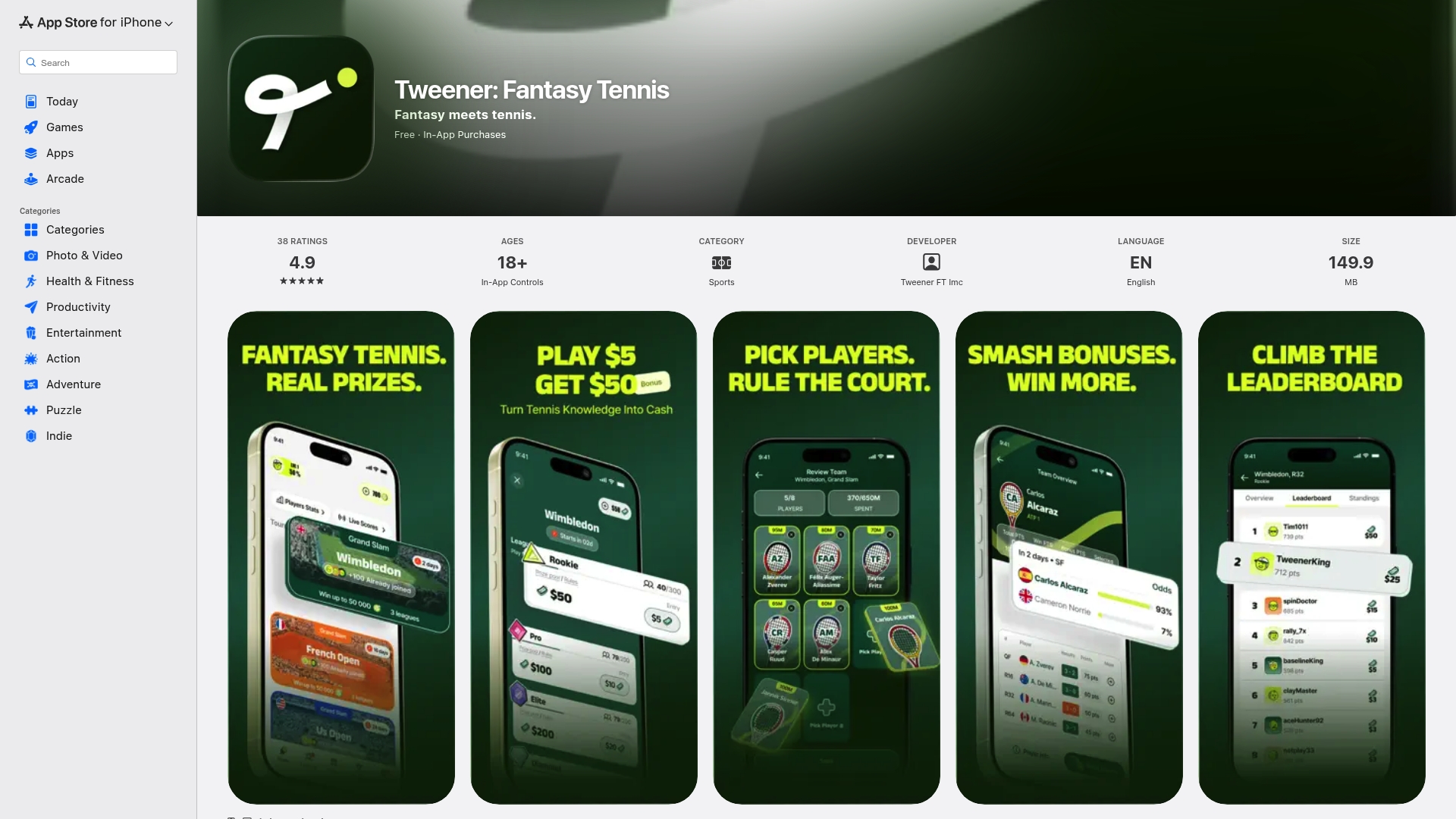
Tweener is the only high-quality daily fantasy sports game built specifically for professional tennis. You build teams from real ATP and WTA players, compete in private leagues with friends during Grand Slams, and earn points based on actual match results. The platform rewards the kind of analytical thinking this article is about: studying draws, tracking surface form, and making smarter picks than everyone else in your league. Download Tweener and turn your next Grand Slam into a competition, not just a viewing session. Free-to-play mode available with no deposit required.
FAQ
What are the best tennis fan engagement tips for beginners?
Start with live attendance at any professional event, even a smaller ATP 250 or WTA 125 tournament, to build emotional connection to the sport. From there, join a free fantasy tennis league on a platform like Tweener to add a competitive layer to your viewing.
How do AI tools improve the tennis fan experience?
AI tools like Infosys' Rally robot and Rolly StatsBot provide real-time momentum tracking, player insights, and Excitement Ratings that give fans contextual understanding of match dynamics without requiring deep prior knowledge.
What is the best social media platform for engaging tennis fans?
Twitter/X is the most active platform for live match discussion, while Reddit communities like r/tennis offer the deepest tactical analysis. Using both in tandem during tournaments maximizes your exposure to different fan perspectives.
How does fantasy tennis differ from sports betting?
Fantasy tennis is skill-based competition where your results depend on player selection, draw analysis, and surface knowledge. Sports betting is luck-weighted with a fixed house edge, while fantasy leagues reward preparation and tennis expertise directly.
How can analytics improve how I watch tennis matches?
Tracking serve percentages, break point conversion rates, and surface-specific H2H records in real time turns passive viewing into active analysis. Platforms like Tennis Abstract and the Infosys Match Centre provide this data free during major tournaments.