

TL;DR:
- Sports analytics uses data and technology to enhance performance and inform game strategies. It has transformed athletic training, tactical decision-making, and fan engagement by emphasizing evidence-based actions. However, success still depends on human trust, interpretation, and the ability to balance data with unpredictable, spectacular plays.
Sports analytics is the systematic use of data and technology to improve competitive outcomes by informing coaching, training, and game strategy decisions. The question of how sports analytics changed competition is no longer academic. Professional leagues, national governing bodies, and elite coaches now treat data as a core competitive asset. High-frequency tracking systems, AI-driven predictive models, and empirical frameworks like expected goals (xG) and expected assists (xA) have shifted the basis of competitive advantage from intuition alone to evidence-backed decision-making. The teams that win today are often the ones that collect better data and interpret it faster.
How sports analytics changed competition at the performance level
The most direct impact of data analytics in athletics is on athlete performance measurement and injury prevention. Professional sports teams use high-frequency tracking data from wearable sensors and optical cameras to tailor training loads to each athlete's physical state. Real-time monitoring of speed, movement patterns, and fatigue indicators lets coaching staffs adjust practice intensity before an athlete reaches a breaking point.

The practical benefits are significant. Coaches no longer rely solely on feel or subjective observation to decide when a player needs rest. Wearable sensors generate objective data on heart rate variability, acceleration load, and recovery metrics. That data feeds directly into workload management decisions, reducing the risk of soft-tissue injuries that sideline athletes for weeks.
Optical tracking systems add another layer. Cameras installed in stadiums and training facilities capture every movement across the field or court, producing positional data at rates that no human observer could replicate. This feeds into tennis performance tracking workflows and similar systems across sports, giving analysts a complete picture of how athletes move under competitive pressure.
Key benefits of wearable and optical tracking in professional sports:
- Personalized workload management: Training loads adjust to individual recovery rates, not a one-size schedule.
- Injury risk flagging: Algorithms detect fatigue signatures before they become injuries.
- Movement pattern analysis: Coaches identify mechanical inefficiencies that affect performance over a long season.
- Recovery monitoring: Sleep, hydration, and readiness scores inform game-day lineup decisions.
Pro Tip: If you coach at any level, even basic GPS tracking data from a consumer wearable gives you a meaningful edge over pure observation. Start with one metric, such as total distance covered per session, and build from there.
In what ways have analytics reshaped tactical decision-making during games?
The analytics influence on sports tactics is clearest in how teams now approach risk. NFL teams increasingly go for it on 4th-and-short, and soccer clubs have adjusted shot selection using AI-based expected points and goals models. Empirical modeling has made aggressive, high-percentage decisions the rational choice rather than the bold one.
The shift happened in stages:
- Expected value modeling: Coaches learned that punting on 4th-and-1 from the opponent's 40-yard line is statistically worse than going for it. The math changed the call.
- Shot quality over shot volume: Soccer teams now prioritize shots inside the box with high xG values over speculative long-range attempts.
- AI-driven scenario testing: Generative AI tools like OpenAI's Codex enable analysts to query massive optical tracking datasets in near real-time, replacing hours of manual video review.
- In-game adjustments: Leading AI sports companies film thousands of hours of live sports weekly and use cloud computing to deliver real-time tactical insights during matches.
The table below shows how key tactical decisions have shifted with analytics adoption:
| Decision area | Pre-analytics approach | Analytics-driven approach |
|---|---|---|
| 4th-down NFL calls | Punt in most situations | Go for it based on field position and down distance models |
| Soccer shot selection | Volume-based, any range | Prioritize high-xG chances inside the box |
| Lineup construction | Experience and gut feel | Agent-based AI simulations of player combinations |
| In-game substitutions | Fatigue observation | Real-time sensor and tracking data thresholds |
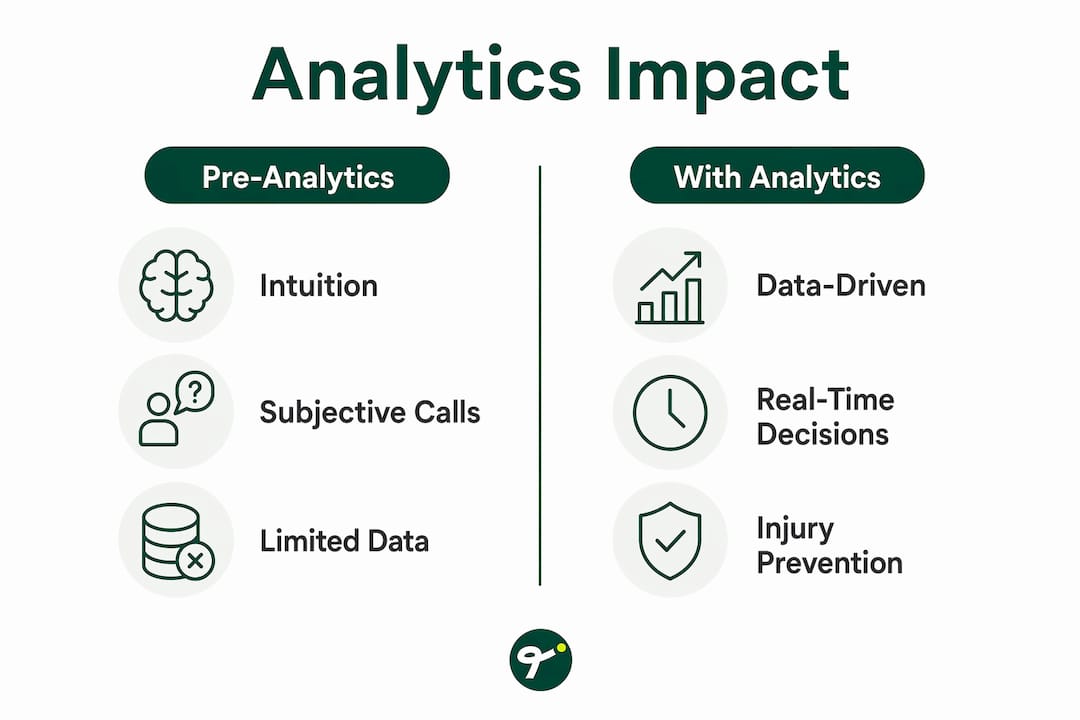
The speed of analysis has changed as much as the analysis itself. Agentic AI-driven querying shifts analytics from interesting statistics to decision-ready intelligence that coaches can act on during a match, not just after it.
What human factors impact the effective adoption of sports analytics?
The main barrier to maximizing sports analytics value is not data access. The real challenge is translating insights into trusted decisions within teams. Analysts can produce excellent models, but if coaches do not trust the output, the data sits unused.
Real Betis, the Spanish soccer club, offers a well-documented case. Their analytics staff integrated synchronized video with statistical data so coaches could see the exact play that generated a metric. That combination built trust. A coach who sees the clip alongside the number understands why the model says what it says.
Critical human factors that determine analytics success:
- Analyst-coach communication: Data must be presented in the language coaches use, not in statistical jargon.
- Video and data integration: Backing up metrics with video is the fastest way to build buy-in from skeptical coaching staff.
- Organizational vision: Teams must define their identity and strategic goals before deploying AI tools. Technology cannot determine organizational direction.
- Avoiding data overload: Presenting 40 metrics confuses decisions. Presenting three relevant ones sharpens them.
Pro Tip: When presenting analytics to a coaching staff for the first time, lead with a finding that confirms something they already believe. It builds credibility before you challenge their assumptions.
How have analytics changed competitive dynamics and fan experience?
Data-driven strategies have produced a measurable side effect: tactical homogenization. When every team runs the same expected value calculations, they tend to arrive at the same conclusions. AI and analytics drive efficiency, but sports leagues risk losing variety and unpredictability if all teams adopt the same data-optimized tactics.
The evidence shows up in shot charts. In soccer, fewer outside-the-box shots are taken because data confirms their low expected goal value. The spectacular 35-yard strike is becoming rarer. Fans who love those moments notice the absence.
Efficient models may discourage high-risk plays that fans find thrilling. The tension between optimization and entertainment is real, and leagues that ignore it risk trading excitement for efficiency.
The fan experience question matters commercially. Broadcast rights, ticket sales, and merchandise revenue all depend on fans finding the sport compelling. A game optimized purely for winning probability is not automatically optimized for entertainment. Live data integration in fan-facing products like fantasy sports platforms partially addresses this by giving fans a personal stake in outcomes, which sustains engagement even when the tactical product becomes predictable.
The competition analytics changes that benefit teams in the short term can reduce the long-term appeal of the sport. Governing bodies in the NFL, NBA, and European soccer are actively studying rule changes to reintroduce unpredictability without abandoning the analytical tools that protect athlete welfare.
Practical applications: How coaches and athletes can use analytics now
The evolution of sports analysis has reached a point where practical tools are accessible beyond elite professional clubs. Coaches and athletes at every level can apply the same frameworks that drive decisions in the Premier League or the ATP Tour.
Core applications worth implementing:
- xG, xA, and PPDA in scouting: Advanced metrics like expected goals, expected assists, and passes per defensive action give context that raw stats miss. A team that concedes few goals but has a high xG-against is living dangerously.
- Integrated video and sensor platforms: Advanced teams combine video, sensor, and event data for comprehensive tactical analysis. Even basic video tagging software paired with GPS data improves scouting accuracy.
- AI scenario testing for roster decisions: Agent-based AI models simulate player combinations to maximize efficiency metrics. This applies directly to fantasy sports roster construction as well as real team selection.
- Predictive analytics for matchup preparation: Predictive analytics in fantasy sports and real competition both rely on the same principle: identifying patterns in opponent behavior before the game starts.
Pro Tip: Build your analytics workflow around one decision you make repeatedly, such as opponent scouting or lineup selection. Solve that one decision well with data before expanding to others. Depth beats breadth in early analytics adoption.
The proprietary data combined with skilled interpretation is the strongest competitive moat in sports analytics. Collecting data is now cheap. Interpreting it correctly and acting on it faster than your opponent is where the edge lives.
Key Takeaways
Sports analytics creates competitive advantage when data collection, skilled interpretation, and trusted communication between analysts and coaches all work together.
| Point | Details |
|---|---|
| Real-time tracking reduces injuries | Wearable sensors and optical cameras allow workload adjustments before athletes reach injury thresholds. |
| Empirical models changed tactics | Expected goals and expected points models made aggressive, high-percentage decisions the rational standard. |
| Human trust determines adoption | Data only creates advantage when coaches trust and act on it; video integration accelerates that trust. |
| Homogenization is a real risk | Widespread analytics adoption pushes teams toward identical tactics, reducing unpredictability and fan excitement. |
| Interpretation beats data volume | A high volume of proprietary data paired with skilled human analysis is the strongest competitive moat. |
The part analytics still cannot solve
I have spent years watching teams invest heavily in data infrastructure and still lose to opponents with smaller budgets and sharper instincts. The pattern is consistent. The gap between collecting data and acting on it correctly is where most organizations fail.
The maturation of sports analytics has moved from raw statistics to decision-ready intelligence. That is genuine progress. But the teams I find most interesting are the ones that use data to sharpen human judgment rather than replace it. Real Betis did not win because they had more data than their rivals. They won more decisions because their analysts and coaches built a shared language around what the data meant.
The AI acceleration is real and it is accelerating faster than most coaching staffs can absorb. Generative AI tools now query optical tracking datasets in minutes that once took days. That speed creates pressure to act on insights before fully understanding them. My honest concern is that organizations will mistake speed for accuracy and deploy AI outputs without the contextual knowledge to know when the model is wrong.
The unpredictability question also deserves more attention than it gets. The best moments in sport, the ones fans remember for decades, are often the statistically irrational ones. A 30-meter screamer. A 4th-and-15 conversion. Analytics did not predict those plays. It probably argued against them. The coaches and athletes who understand data deeply enough to know when to ignore it are the ones who create those moments. That skill is not in any model yet.
— Nathan
Tweener puts analytics to work in tennis competition
Tennis is one of the most data-rich sports on the planet, with ATP and WTA stats covering surface performance, head-to-head records, and serve patterns across thousands of matches. Most fans watch that data go unused.
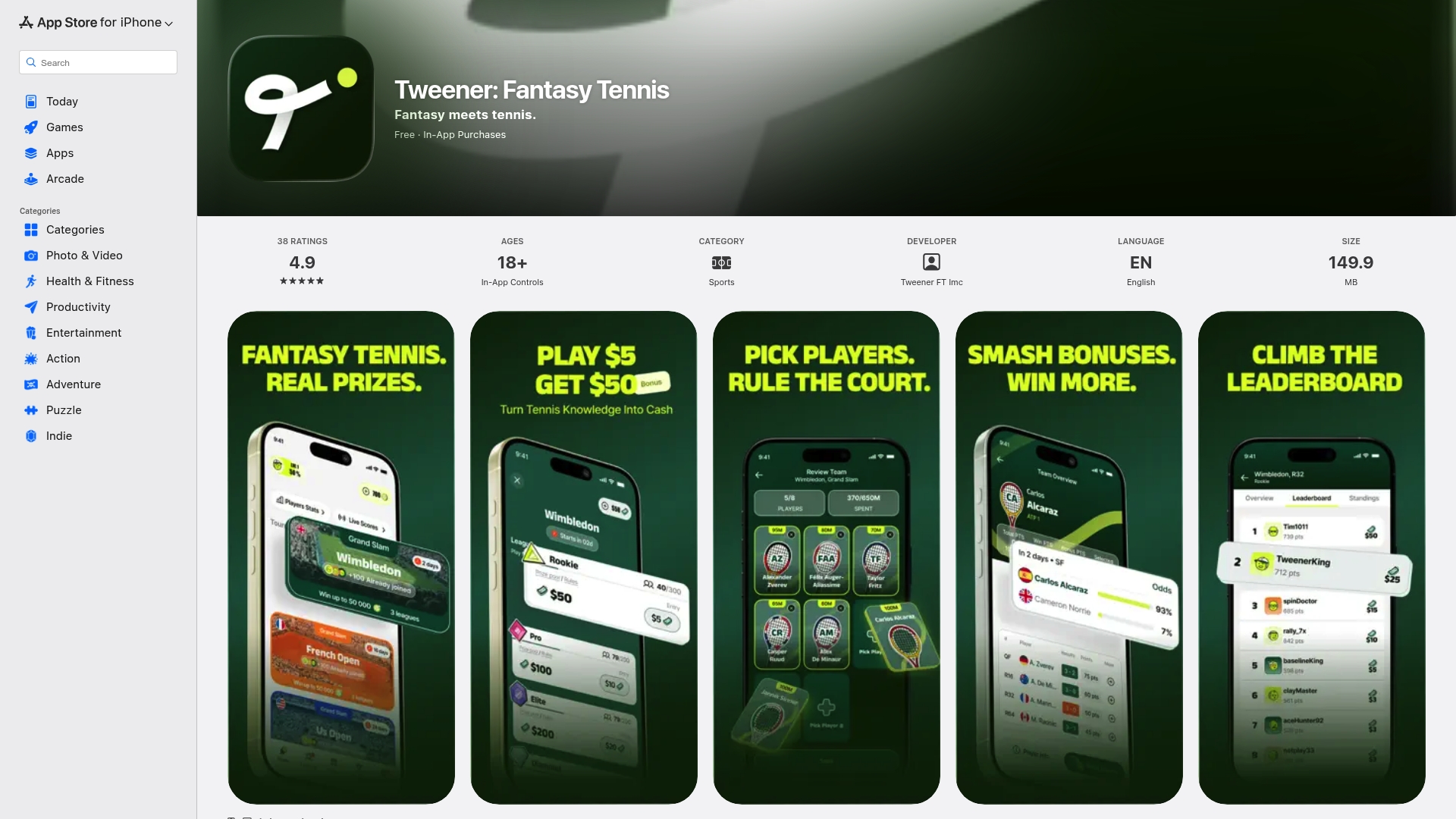
Tweener is the fantasy tennis platform built for fans who think analytically. You pick real ATP and WTA players, build a team around their form and matchup data, and compete in public or private leagues during live tournaments. The free mode lets you compete for rewards using virtual coins. The cash mode offers real-money contests where legally permitted. If you want to compete on Tweener using the same data-driven thinking this article covers, the platform gives you the tools and the competition to make it count.
FAQ
What is sports analytics?
Sports analytics is the systematic collection and interpretation of performance data to improve competitive decisions in coaching, training, and game strategy. It covers everything from wearable sensor data to AI-driven tactical models.
How does data analytics improve athlete performance?
Real-time tracking of speed, fatigue, and movement patterns allows coaches to adjust training loads to individual athletes, reducing injury risk and improving competitive readiness.
What metrics do coaches use most in sports analytics?
Expected goals (xG), expected assists (xA), and passes per defensive action (PPDA) are among the most widely used advanced metrics for tactical planning and opponent scouting.
Does analytics make sports less exciting?
Analytics-driven efficiency has reduced high-risk plays like long-range shots in soccer, which some fans find less entertaining. Leagues are studying rule changes to reintroduce unpredictability without removing the athlete welfare benefits of data monitoring.
How can I apply sports analytics thinking to tennis?
Studying surface performance, head-to-head records, and recent form gives you a data-driven edge in predicting match outcomes. Platforms like Tweener are built around exactly this kind of analytical tennis strategy.