

Best-of-five matches favor the stronger player and shrink the odds of an upset; best-of-three matches do the opposite, injecting enough randomness that a hot server or a bad line call can flip the result. For fantasy tennis, that single structural fact should change how you draft, who you bench, and when you pull the trigger on an in-play swap.
TL;DR:
- Longer matches in best-of-five formats increase the advantage for stronger players by about 1.8 to 5.3 percentage points, especially for top favorites.
- Upset rates are roughly 20% in fastest formats, 13% in best-of-three, and below 10% in best-of-five, with shorter formats allowing more surprises.
- Players with tactical depth and stamina benefit more in best-of-five, while big servers and high-variance players excel in best-of-three, especially on fast courts.
- Draft strategies should favor high-floor favorites in best-of-five and riskier ceiling plays in best-of-three, adjusting exposure based on match format.
- Surface speed influences upset likelihood: fast courts increase volatility for best-of-three, while slow courts favor endurance and tactical depth in best-of-five matches.
Table of Contents
- Five Sets vs Three Sets: The Stats That Actually Matter
- How Set-Win Probability Turns Into Match-Win Probability
- Who Wins More in Bo3 vs Bo5: Player Profiles That Matter
- Fantasy Strategy: Drafting Differently for Bo3 and Bo5
- Testing Format-Aware Tactics in Live Contests
- Put Format-Aware Strategy to Work on Tweener
- Sources
- FAQ
Five Sets vs Three Sets: The Stats That Actually Matter
The numbers back up the intuition. A peer-reviewed duration model puts average best-of-three matches at roughly 90 minutes, against about 120 minutes for best-of-five. That extra 30 minutes isn't just runtime. It's more data points for the better player to assert an edge, and fewer chances for a single bad service game to decide everything.
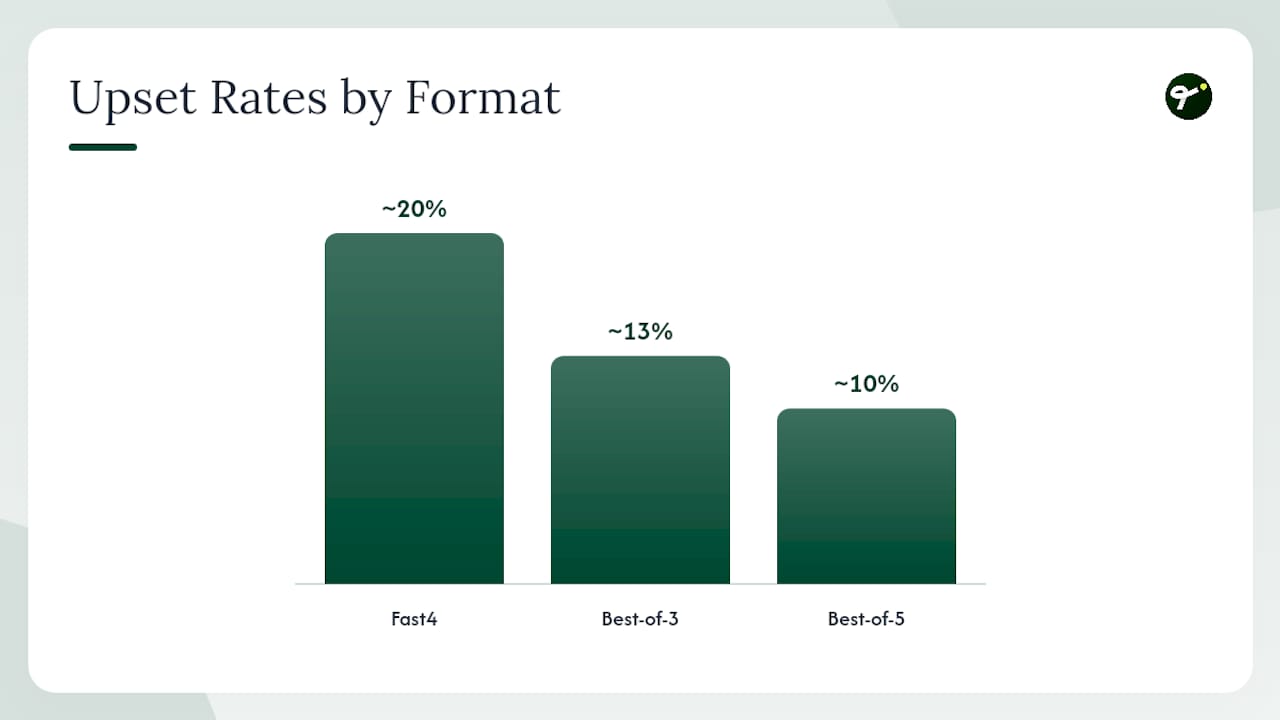
Upset rates track the same pattern. Modeling and tour data cited by The Conversation show roughly a 20% upset rate for the ultra-short Fast4 format, around 13% in best-of-three, and closer to 10% in best-of-five. A Clemson University thesis analyzing binomial distributions across tour matches from 2001 to 2008 confirms the same direction once you control for ranking and surface: shorter formats produce more surprises.
Here's how set-win probability (p) turns into match-win probability, based on modeling from Bet Angel:
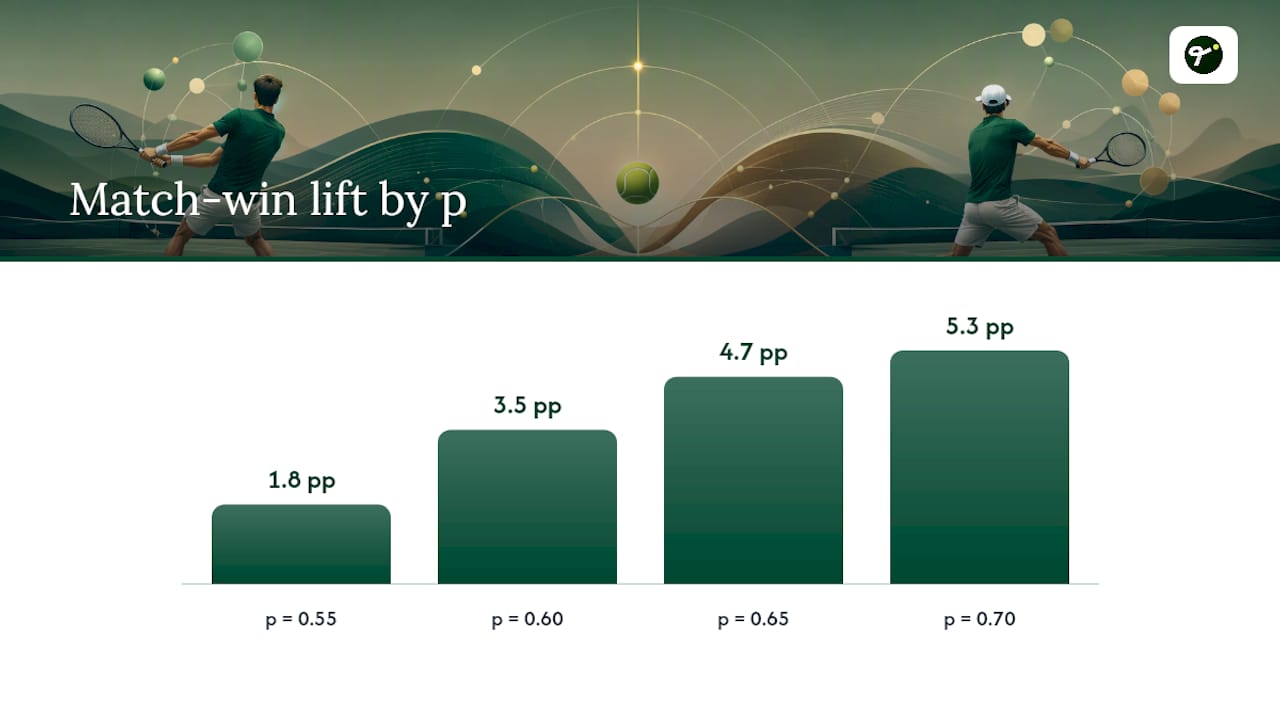
| Set-win probability (p) | Bo5 match-win lift over Bo3 |
|---|---|
| 0.55 | +1.8 percentage points |
| 0.60 | +3.5 percentage points |
| 0.65 | +4.7 percentage points |
| 0.70 | +5.3 percentage points |
The bigger the favorite, the more best-of-five rewards them. That's the whole ballgame for lineup construction, and it only gets sharper the further a player's true skill sits above their opponent's.
How Set-Win Probability Turns Into Match-Win Probability
Think of each set as a trial. Flip a slightly weighted coin once, and the underdog has a real shot at winning that single flip. Flip it three or five times and require a majority, and the weighted side pulls away. That's the entire mechanism behind why format changes outcomes: more sets means more chances for the true talent gap to show up in the score, and fewer chances for one lucky stretch to carry an entire match.
The math backs this intuition. Analytic formulas validated against US Open and Wimbledon data show match-win probability compounding from point and game win rates, which is why small edges in serve percentage snowball over a longer match.
Applying the p→match table from the previous section:
- At p = 0.55 (a mild favorite), best-of-five adds only 1.8 percentage points of extra security. Barely worth adjusting your lineup around.
- At p = 0.60, the lift jumps to 3.5 points. Now you're starting to see a real gap.
- At p = 0.65, it's 4.7 points. This is where "clear favorite" becomes "should basically never lose in Bo5."
- At p = 0.70, the lift hits 5.3 points, the largest gap in the range.
Statistic Callout: A favorite with a 0.70 set-win probability picks up a noticeable boost to their match-win odds simply by playing best-of-five instead of best-of-three, according to Bet Angel's modeling.
These numbers assume points and sets behave independently, an "iid" assumption that holds up reasonably well in aggregate but breaks down in specific matches. Momentum swings, fatigue in the fourth or fifth set, and injuries all shift the real probability mid-match in ways no static model captures. Treat the table as a baseline, not gospel, and adjust when you see a player physically fading or an opponent finding a rhythm the model couldn't have priced in.
Who Wins More in Bo3 vs Bo5: Player Profiles That Matter
Match format rewards different skill sets, and scouting for one without the other is how fantasy rosters quietly bleed points.
Best-of-three favors:
- Big servers who can steal a set on a hot streak without needing to sustain it
- Aggressive returners who close matches fast before fatigue or nerves creep in
- Younger, high-variance players who haven't built five-set experience but can win on pure ceiling
Best-of-five favors:
- Players with deep tactical range who can adjust game plans across sets
- Proven five-set records, especially at majors where the format actually applies
- Strong recovery profiles, since a grueling four-hour quarterfinal often precedes another long match days later
Surface matters here too. Fast courts (grass, some hard courts) compress rallies and boost variance, which amplifies the Bo3 upset effect even further. Slow courts (clay, most Grand Slam hard courts) stretch points out and let stamina and tactical depth take over, which is exactly why best-of-five at the majors so often rewards the deeper, more complete player.
Pro Tip: Check a player's recent match minutes before locking your lineup. A player who just logged a four-hour, five-set battle carries real fatigue risk into their next match, even against a weaker opponent. Tiebreak win rate and break-save percentage are two of the most underused scouting numbers for exactly this reason.
Fantasy Strategy: Drafting Differently for Bo3 and Bo5
Format should change your draft board before it changes your in-play reactions. Here's how to sequence it:
- Set your baseline by tournament type. Grand Slams run best-of-five for men (best-of-three for women across tours), so treat those draws as favorite-friendly. ATP and WTA tour events outside the majors are best-of-three across the board, meaning volatility is baked in from round one.
- Overweight favorites in Bo5, overweight ceiling plays in Bo3. A top-five seed with a 0.65 set-win probability at a major is close to a lock by tennis standards. That same seed at a regular tour stop is far more exposed, and rostering a high-upside underdog becomes a smarter bet for differentiation.
- Build lineups around anchors and differentiators. Anchors are your safe, high-floor picks, best deployed against Bo5 favorites with strong five-set records. Differentiators are your volatility bets, best deployed in Bo3 draws where a break of serve can swing an entire set.
- Set exposure limits by format. Don't roster the same "big favorite" profile across every slot in a Bo3-heavy tournament. Spread risk since even a 0.70 favorite in Bo3 doesn't carry anywhere near the same insulation they'd get in Bo5.
- React to first-set losses differently. In Bo5, a favorite dropping the first set is often just noise. Analysis from Tennisnerd notes markets often overreact to that shock, creating value on the favorite to recover. In Bo3, the same first-set loss is a real signal. There's no third act to fix a wobble, so hedge or pivot faster.
Metric checklist before you finalize any pick: recent match minutes, five-set win/loss record, tiebreak win rate, and break-save percentage. These four numbers explain more roster-level variance than ranking alone, particularly once you get past the top ten seeds.
For deeper lineup mechanics, our guide on building anchors and attackers breaks down exposure ratios in more detail, and our piece on format-aware prediction strategies walks through additional scouting angles.
Testing Format-Aware Tactics in Live Contests
Format awareness sounds obvious in theory. It gets tested for real inside live contests, where a wrong read on a Bo3 volatility spike costs you a league standing in real time. Format-specific tactics shape how Draft Mode and Pick'em Mode get built, from scoring weights to how player pools get presented for Grand Slam draws versus regular tour events.
Draft Mode rewards the anchor-and-differentiator framework directly, since you're locked into a roster for the tournament's duration. Pick'em Mode moves faster, which suits the round-by-round volatility swings that define best-of-three tour events. Neither mode punishes you for adjusting strategy by format. That flexibility is the point.
— Nathan
Put Format-Aware Strategy to Work on Tweener
Most fantasy platforms treat every tennis match the same, whether it's a five-set Grand Slam quarterfinal or a quick best-of-three on the tour's second tier. Contest structures in Draft Mode and Pick'em Mode account for how format shifts variance, which means the stamina reads and ceiling plays covered above actually translate into scoring decisions instead of getting flattened into one generic ranking system.
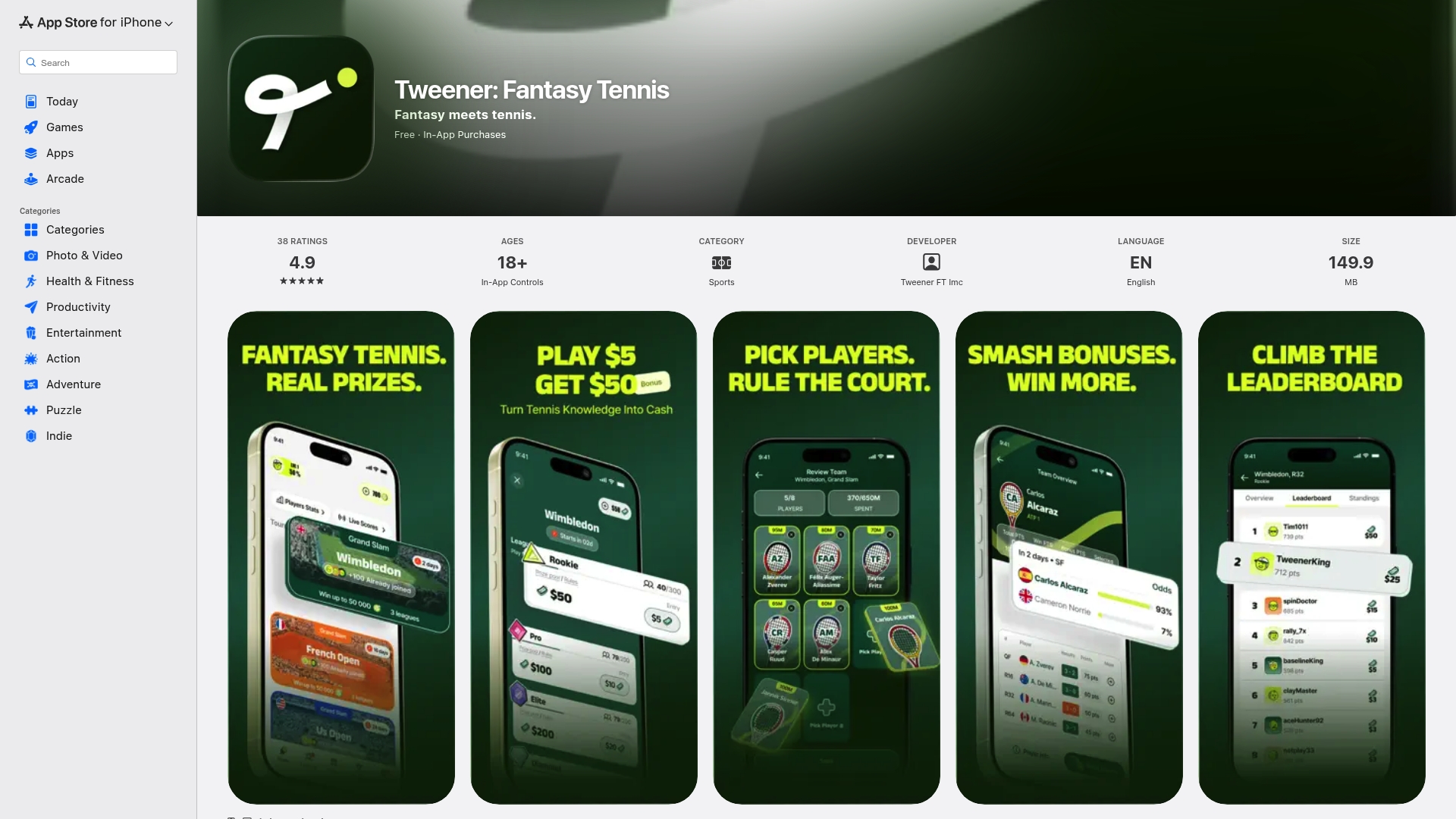
If you want to see the anchor-and-differentiator framework in action, start with a free contest and get a feel for how scoring responds to a five-set grind versus a fast best-of-three upset. Check the game rules to see exactly how points get calculated by format before you commit to a paid entry, and when you're ready, head to Tweener to build your first format-aware lineup for the next Grand Slam.
Sources
- Estimating the duration of professional tennis matches for varying formats
- Shorter or longer tennis matches: what’s the right balance?
- Best-of-Three vs Best-of-Five Tennis Matches: Which Format Carries More Variance?
- Thesis analyzing tournament outcomes by set format (2001–2008 and related analyses)
FAQ
Is Best-of-Five Really Less Random Than Best-of-Three?
Yes. More sets act like more trials in a probability experiment, which lets a true skill gap show up more reliably and reduces the chance a single hot stretch decides the match. Modeling shows upset frequency drops from roughly 13% in Bo3 to about 10% in Bo5.
Which Grand Slams Play Best-of-Five?
All four majors use best-of-five for the men's singles draw, while the women's tour plays best-of-three across every event, including majors. That split matters for lineup construction since it changes volatility expectations by gender draw within the same tournament.
Should I Draft Differently for a Best-of-Three Tour Event?
Yes. Best-of-three tour events carry more inherent volatility, so ceiling plays and high-variance underdogs are more viable than they'd be at a major. Tweener's Draft Mode and Pick'em Mode both let you adjust exposure by tournament format rather than treating every draw the same way.
What's a Good First-Set-Loss Rule for Favorites?
In best-of-five, a favorite dropping the first set is often just noise, and markets tend to overreact to that early shock according to analysis from Tennisnerd.net. In best-of-three, the same first-set loss is a stronger signal since there's less match left to recover.
Does Court Surface Change the Bo3 vs Bo5 Effect?
Yes. Faster courts compress rallies and raise variance, which amplifies the upset risk already built into best-of-three. Slower courts stretch points out and reward stamina and tactical adjustment, which is part of why best-of-five at clay-court majors tends to favor the deeper, more complete player.