

TL;DR:
- Understanding live updates in fantasy tennis involves analyzing layered streams of real-time injury, performance, and momentum data that inform strategic decisions. Managers who utilize verified, timely updates and surface-aware insights can better anticipate match developments and optimize their lineups. Patience and filtering alerts are essential, as the most impactful information often arrives with a slight delay, preventing reactive errors and improving overall performance.
Most fantasy players think live updates mean one thing: watching a score ticker refresh. That assumption costs them every week. Understanding live updates in fantasy is actually about reading a layered stream of information, from real-time injury flags to in-match momentum shifts, that tells you what is happening before the final numbers land. In tennis fantasy specifically, where a player withdrawal or a sudden loss of serve can reshape an entire bracket, this distinction is not academic. It is the difference between a reactive manager and a decisive one.
Table of Contents
- Key takeaways
- Understanding live updates in fantasy sports and tennis
- How live updates shape your in-competition decisions
- Comparing update speeds and what they mean for you
- Applying live updates to your fantasy tennis strategy in 2026
- What live updates cannot tell you
- My take on live updates and where most managers go wrong
- Play smarter fantasy tennis with Tweener
- FAQ
Key takeaways
| Point | Details |
|---|---|
| Live updates go beyond scores | Updates include injury alerts, lineup changes, and in-match performance signals that drive smarter decisions. |
| Verification delays are by design | Platforms hold injury alerts for 3-5 minutes to confirm accuracy before pushing them to managers. |
| Update speed depends on format | DFS players need sub-minute data; season-long leagues can tolerate longer delays without losing a competitive edge. |
| Tennis stats are scoring levers | Aces and double faults directly affect fantasy points, making live serve tracking a real strategic tool. |
| Patience beats constant refreshing | Successful managers use verified updates as predictive signals, not panic triggers, to make proactive moves. |
Understanding live updates in fantasy sports and tennis
Live updates are not a single feed. They are a pipeline of distinct data types, each with its own cadence, source, and strategic weight. Before you can use them well, you need to know what you are actually receiving.
At the broadest level, there are three categories of update speed. True real-time updates, delivered in under a minute, cover live scoring changes and lineup locks. Near-real-time updates, arriving within one to five minutes, handle waiver alerts, injury flags, and start or sit recommendations. Batch updates, which may refresh every few hours, serve long-term projections and historical valuations. DFS demands sub-minute updates; season-long formats can absorb longer delays without meaningful strategic loss.
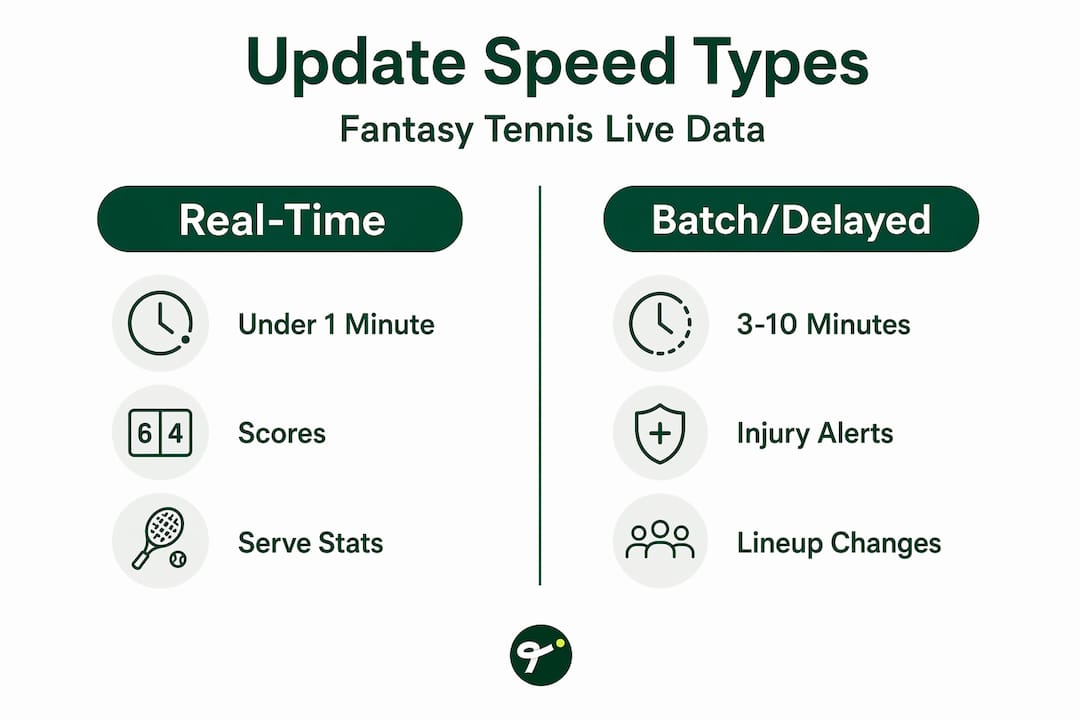
The data pipeline behind these updates is more complex than most managers realize. Raw stats from officiating sources get ingested by data providers, processed through normalization layers that reconcile inconsistencies across multiple feeds, and then delivered to fantasy platforms in a standardized format. Normalization layers are what make scores from ATP officiating and third-party tracking consistent with what you see on your app. Without them, you would get conflicting numbers from the same match.
Here is a breakdown of the main update categories and how they behave in practice:
| Update type | Typical latency | Primary use case |
|---|---|---|
| Live scores and points | Under 60 seconds | Real-time scoring, DFS lineup decisions |
| Injury and withdrawal alerts | 3-5 minutes (verified) | Last-minute roster changes |
| Player availability and lineup | 30-90 minutes pre-match | Pre-tournament drafting and substitutions |
| Performance stats (aces, breaks) | 1-3 minutes | In-match player valuation adjustments |
| Batch projections | Every 2-6 hours | Long-term team building and trade evaluation |
Pro Tip: Set your alert preferences to filter by update type rather than receiving every push notification. Status alerts on player withdrawals require immediate action. Performance alerts on aces or break points are informational. Treating them the same way creates noise that slows your response to the alerts that actually matter.
How live updates shape your in-competition decisions
The real power of fantasy sports live tracking is not what it tells you about right now. It is what it signals about what comes next. Live updates provide game script intelligence, letting managers anticipate performance shifts before they show up in final stats.

In tennis, this concept plays out in very specific ways. When Jannik Sinner drops the first set on a fast indoor court, his serve data in the second set becomes a leading indicator. If his first-serve percentage climbs and ace count rises, that is a momentum signal worth noting before the scoreboard reflects it. Contrast that with a clay-court match where Carlos Alcaraz loses serve twice in the first set on a slow surface. His break point conversion rate and rally length numbers tell you more about whether he is genuinely struggling than the set score alone.
Here is how real-time updates in fantasy translate into specific decision categories:
- Withdrawal and retirement alerts trigger the most urgent action. A player who retires mid-match scores zero for the rest of that contest. Knowing within minutes, rather than at the end of the round, lets you react while substitution windows are still open.
- Live serve statistics directly affect scoring in ATP fantasy formats, where each ace earns points and each double fault costs them. Watching these tick in real time tells you whether a player is serving dominantly or struggling before the set ends.
- Momentum shifts visible in game-by-game data can signal injury or fatigue before any official status update arrives. A drop in first-serve speed combined with declining winner count often precedes a medical timeout.
- Opponent difficulty signals from live stats help you evaluate whether a strong performance is against a weakened opponent or a genuinely elite one, changing how you weight that player's upcoming matches.
Alert fatigue is the hidden cost of subscribing to every notification your platform offers. The useful alerts are the ones that affect decisions you can still make. Alerts that arrive too early have no actionable context. Alerts that arrive after lineup locks are worthless. Prioritize alerts tied to your actual roster and upcoming deadlines.
Comparing update speeds and what they mean for you
Not every refresh rate delivers equal value. The cadence that matters depends entirely on what format you are playing and what decisions are still in front of you.
Sub-minute updates are the backbone of daily fantasy tennis. When you are competing in a single-tournament contest, every point scored in real time affects your standing. Fantasy platforms process in-game stats within 30-90 seconds, which means the gap between a player winning a game and your live score reflecting it is less than two minutes in most cases. For DFS on Tweener, that cadence is what makes live scoring in fantasy games feel genuinely interactive rather than just a delayed results feed.
Near-real-time updates, those arriving in the one-to-five-minute window, are where injury verification happens. Platforms hold injury alerts for 3-5 minutes before pushing them to managers. This is not a lag. It is a deliberate accuracy buffer. Acting on an unverified withdrawal rumor is one of the fastest ways to make a roster move you immediately regret.
Batch updates present a different strategic layer. They are best used for evaluating trades, building tournament lineups in advance, and tracking player form across a multi-week stretch. Batch updates suffice for long-term valuations when you are not making same-day decisions.
The most common mistake fantasy managers make is treating speed as a proxy for value. A sub-minute injury alert on a player you do not own tells you nothing useful. A verified, 3-minute-delayed withdrawal alert on your top pick changes everything. Know which updates belong to your roster before you react to any of them.
The practical risk of chasing too-frequent updates is decision fatigue. Managers who refresh their app every 30 seconds during a match rarely outperform those who check at structured intervals, because they are processing noise as if it were signal.
Applying live updates to your fantasy tennis strategy in 2026
Knowing what live updates are is one thing. Knowing how to use live updates in fantasy tennis to build a better team is another. These are the methods that actually move the needle.
-
Prioritize surface-aware player selection before tournaments start. Big servers on fast courts generate more aces, which translates directly to fantasy points at +2 per ace in ATP Fantasy scoring. Selecting players whose games match the surface before a tournament means live updates confirm your read rather than forcing you to rebuild your team reactively.
-
Monitor early-match serve data as a health and form proxy. If a player you hold is posting unusually low first-serve percentages in the first two games, that is worth flagging before any official status update arrives. Cross-reference it with their recent match history for that surface.
-
Set custom alerts for your roster only. Most fantasy apps allow you to filter notifications by owned players. Use that feature. It cuts alert volume significantly while keeping the updates that actually affect your lineup front and center.
-
Use live performance data to evaluate trade targets mid-tournament. A player posting strong break point conversion rates in Round 1, even against a lower-ranked opponent, is demonstrating match sharpness. That is a real signal for who will perform deep into a draw.
-
Diversify across multiple tournament swings. Concentrating players at single events increases risk dramatically. A surprise withdrawal from one of your picks at a single event crushes your entire week. Diversified rosters across different tournaments absorb that shock far better.
-
Act on verified withdrawal alerts immediately when substitution windows are open. Late scratches verified within 30-90 minutes before a match are time-sensitive. Know your platform's substitution rules before the tournament starts so you are not scrambling to find them when the alert lands.
Pro Tip: Track aces and double fault counts live for your top scorers. Since ATP Fantasy scores +2 per ace and -2 per double fault, a player who is either dominating or struggling on serve can swing your point total by 10 to 20 points in a single match. That is a material edge worth monitoring in real time.
What live updates cannot tell you
Live updates are powerful, and they have real limits. Understanding those limits is part of using them well.
The data you receive tells you what is happening in a match. It does not tell you why, or whether that trend will continue. A player dropping in serve speed mid-match might be injured, or they might be tactically managing their energy. Live data cannot make that distinction for you.
Here are the gaps that matter most for fantasy tennis managers:
- No ownership-based pricing adjustment in real time. Unlike some broader DFS platforms, ATP Fantasy does not yet dynamically reprice players based on ownership concentration. You cannot see how many competitors are holding the same player you are, which limits one layer of strategic differentiation.
- Sentiment and insider information lag behind official updates. Social media may surface a withdrawal before official channels confirm it, but acting on unverified reports carries real risk. The 3-5 minute verification buffer exists for exactly this reason.
- Performance context requires qualitative analysis. A player winning 80% of first-serve points sounds excellent until you learn their opponent is playing through a wrist injury. Raw live stats do not carry that context automatically.
- Decision fatigue from alert overload is a real performance drag. Managers who subscribe to every available notification tend to make worse decisions than those who filter ruthlessly.
The strongest supplement to fantasy sports live tracking is qualitative analysis: match scouting, expert commentary, player fitness reports, and historical surface data. Live updates sharpen your real-time read. Everything else sharpens your pre-match preparation.
My take on live updates and where most managers go wrong
I have watched a lot of fantasy tennis managers over the years, and the pattern I see most often is not that people ignore live updates. It is that they treat every update with the same urgency, which is just as damaging.
Here is what I have learned: the managers who consistently outperform are not the ones refreshing their apps the most. They are the ones who have already done the surface analysis, built a diversified roster, and set filters so that the only alerts reaching them are the ones tied to their actual lineup. When a verified withdrawal comes in, they are ready to act because they have already identified their backup options.
The contrarian truth about real-time updates in fantasy is that patience is a skill. Verification delays look like friction. They are actually protection. I have seen managers torch a strong week by reacting to an unverified rumor about a player retirement, making a substitution they did not need to make, and then watching that player finish the match fine. The platform's 3-5 minute buffer exists to stop exactly that mistake.
What I find most underused is early match momentum data. The first two service games of a tennis match tell you an enormous amount about a player's physical state and mental sharpness that day. Most fantasy managers wait for the set score to move before they pay attention. That is a full set's worth of information left on the table.
Tweener is built for the kind of analysis I am describing. The depth of stats, the surface data, the live scoring integration. These are not just features. They are the tools that let you treat fantasy tennis as a skill game rather than a guessing game.
— Nathan
Play smarter fantasy tennis with Tweener
If you have been building your fantasy tennis team on instinct and a score refresh, you are competing against managers who are doing considerably more. Tweener is built specifically for the analytical tennis fan, combining live tournament data with surface stats, head-to-head records, and real-time scoring that actually informs your decisions.
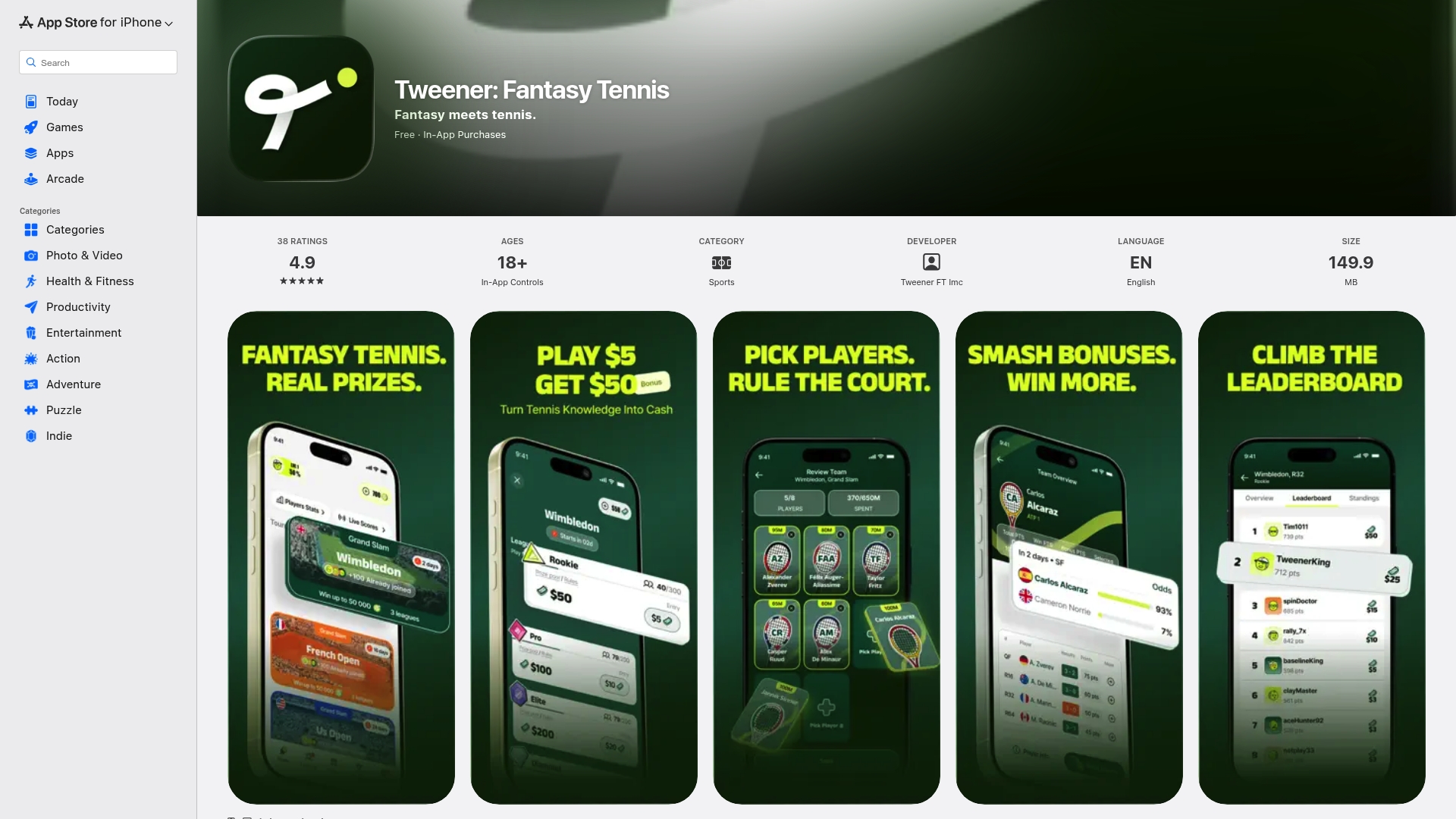
Whether you are competing in a private Grand Slam league with friends or entering a public DFS contest for real prizes, Tweener gives you the data layer that separates guesswork from strategy. The platform tracks every ace, every break point, and every match result as it happens. That is the information foundation that makes understanding live updates in fantasy more than theory. Download Tweener and start your next tournament with the full picture, not just the final score.
FAQ
What are live updates in fantasy sports?
Live updates in fantasy sports are real-time or near-real-time data feeds covering in-match statistics, injury alerts, lineup changes, and scoring events. They range from sub-minute score refreshes to 3-5 minute verified injury notifications, depending on the data type.
How do live updates affect fantasy tennis decisions?
Live updates let you respond to player withdrawals, track in-match serve statistics that affect fantasy scoring directly, and read momentum shifts before final results are posted. Successful managers use them as predictive signals rather than waiting for final scores.
Why do injury alerts take a few minutes to arrive?
Injury alerts carry a 3-5 minute verification delay by design. Platforms confirm reports against official sources before pushing notifications to prevent false alerts that could trigger unnecessary roster moves.
Do I need real-time updates for season-long fantasy leagues?
Not always. Batch updates are sufficient for long-term valuations and trade analysis in season-long formats. Sub-minute real-time data matters most in daily fantasy contests where every point scored changes your live standings.
How does Tweener use live updates for fantasy tennis?
Tweener integrates live ATP and WTA match data, including aces, double faults, break points, and match results, into real-time fantasy scoring. This gives managers in public and private leagues the same live information feed to make informed team decisions throughout each tournament.