

TL;DR:
- Beginner fantasy leagues are designed to teach core skills like roster construction and strategic decision-making in low-stakes environments. Formats like best-ball eliminate weekly decisions, allowing players to focus on drafting and pattern recognition, which accelerates learning. Engaging in these leagues builds foundational competence that translates into long-term success, especially in sports like tennis where draw and surface considerations are crucial.
Most people assume beginner fantasy leagues are just watered-down versions of the real thing. A place to park newcomers until they figure out the rules. That misconception costs new players months of frustration. The role of beginner leagues in fantasy sports is far more significant than most realize. They are not a consolation prize. They are a deliberate learning structure that builds the exact skills you need to compete at any level. If you are new to fantasy sports and wondering whether a beginner league is worth your time, the answer is yes, and this article explains exactly why.
Table of Contents
- Key takeaways
- The role of beginner leagues in fantasy sports
- How beginner leagues build real skills
- Strategic lessons and pitfalls to avoid
- How to join beginner leagues and get started
- My take on why beginners skip this step and pay for it later
- Start your fantasy tennis journey with Tweener
- FAQ
Key takeaways
| Point | Details |
|---|---|
| Beginner leagues reduce complexity | Formats like best-ball remove weekly decisions so you can focus on drafting and strategy. |
| Skill loops accelerate learning | Repeated draft decisions and structured competition build pattern recognition faster than passive watching. |
| Roster depth wins more than stars | Covering bye weeks and injuries through balanced depth is the first real strategic lesson. |
| Joining is easier than you think | Public leagues on dedicated platforms let you start within minutes, no prior experience needed. |
| Tweener applies these principles to tennis | Beginner-friendly fantasy tennis leagues let you learn the sport's fantasy layer without being overwhelmed. |
The role of beginner leagues in fantasy sports
Beginner leagues are not simply casual leagues with lower stakes. They are deliberately designed formats that strip away complexity until the core skill, building a competitive roster through smart selection, is all that remains.
The clearest example of this design philosophy is the best-ball format. As FantasyPros explains, best-ball is essentially a draft and forget format. There are no waivers, no trades, and no weekly lineup decisions. The system automatically selects your highest-scoring players each week. Your only job is nailing the draft.
That design choice is not lazy. It is intentional. By removing in-season management, the format forces you to think about roster construction in full before the season begins. Platforms like Underdog and DraftKings offer best-ball with deep rosters built specifically to introduce new players without the cognitive load of weekly decisions.
Here is what a typical beginner fantasy league includes:
- Best-ball scoring: Your top performers each week count automatically, no manual lineup setting required
- No waiver wire: You cannot add or drop players mid-season, which eliminates one of the most confusing aspects of traditional leagues
- Deep rosters: You draft more players than you need, which gives you built-in insurance against injuries
- Tournament format: Some versions run for a single tournament or event, not an entire season, which lowers the time commitment further
Pro Tip: If you are choosing your first fantasy league, prioritize best-ball formats over traditional season-long leagues. You will learn roster strategy without spending hours every week managing lineups.
For tennis specifically, the same logic applies. A beginner fantasy tennis league lets you pick ATP or WTA players based on tournament draw, surface performance, and current form without needing to micromanage every match day. The draft becomes the game, and that is exactly where beginners should be spending their mental energy.
How beginner leagues build real skills
Here is the thing most new players miss. Fantasy sports are not won by the person who watches the most games. They are won by the person who makes better decisions under uncertainty, repeatedly. That is a learnable skill, and beginner leagues are where you learn it.
Research published in Discover Psychology found that fantasy-sports-linked programs with structured decision loops produced higher engagement and skill acquisition compared to unstructured alternatives. The structured format is the point. You are not just picking players. You are building a mental model of performance, probability, and value.
"Linking fantasy sports mechanics to learning loops can deeply enhance player competence and retention." — Discover Psychology
Beginner leagues create what you might call a low-stakes repetition environment. You make a decision about a player, you observe the outcome over several weeks, and you update your thinking. Over one season of best-ball, you might make 15 to 20 meaningful draft picks. Over multiple beginner leagues, those picks accumulate into a real base of pattern recognition.
The gamification elements built into these formats also matter more than they get credit for. Leaderboards, scoring updates, and head-to-head matchups turn abstract sports knowledge into concrete feedback. You no longer just "watch tennis." You track Jannik Sinner's win rate on hard courts because it directly affects your score. That behavioral shift is the foundation of every serious fantasy player's education.

Beginner leagues also protect your motivation. Jumping straight into a high-stakes traditional league as a first-time player is a fast way to get overwhelmed and quit. When the format matches your current knowledge level, you stay engaged long enough to actually improve. You can also explore in-app rewards systems on platforms that gamify your progress, which keeps learning from feeling like homework.
Strategic lessons and pitfalls to avoid
Once you understand what beginner leagues are and why they work, the next step is playing them better than everyone else who thinks they are just for fun. Here are the key strategic lessons that separate players who learn from beginner leagues and those who coast through them.
1. Build depth at every position
The most common mistake in best-ball beginner leagues is loading up on one or two elite players and ignoring depth. According to 4for4, you should avoid leaving positions thin at quarterback, tight end, or running back because bye weeks and injuries will expose that weakness with no way to recover.
2. Draft for upside, not just safety
Stable, predictable players feel comforting on draft day. But in tournament-style beginner leagues, safety does not win. The 4for4 strategy guide recommends prioritizing a balanced distribution of upside rather than over-indexing on proven stars. A breakout player at a reasonable draft position beats a dependable veteran every time in a points-based tournament.
3. Think about stacking
Stacking means drafting multiple players from the same team or, in tennis terms, picking players who are likely to play deep into the same tournament. When correlated outcomes are in play, stacking can maximize upside potential by letting you benefit from a shared hot streak.
4. Do not treat a beginner league like a traditional season-long league
The rules are different. The strategy is different. Treating best-ball like a traditional lineup league will cause you to draft for consistency when you should be drafting for ceiling. Those are opposite goals.
5. Set a draft budget for risky picks
Reserve two or three late-round picks for high-upside players nobody else is targeting. These are your lottery tickets. In a format where you cannot adjust mid-season, lottery tickets at the bottom of your roster cost almost nothing and occasionally win you the whole tournament.
Pro Tip: Before your draft, rank players not just by projected points but by their ceiling in a best-week scenario. In best-ball, the player who can score 50 points in one week is worth more than the player who averages 25 points every week.
For fantasy tennis specifically, this thinking translates directly. You want players like Carlos Alcaraz or Iga Swiatek at the top of your roster for guaranteed depth, but you also want mid-ranked players from the draw who might catch a favorable bracket and go on a deep run. That is where your score separates from everyone else's. Check out how predictive analytics can sharpen these decisions even before you consider yourself an advanced player.
How to join beginner leagues and get started
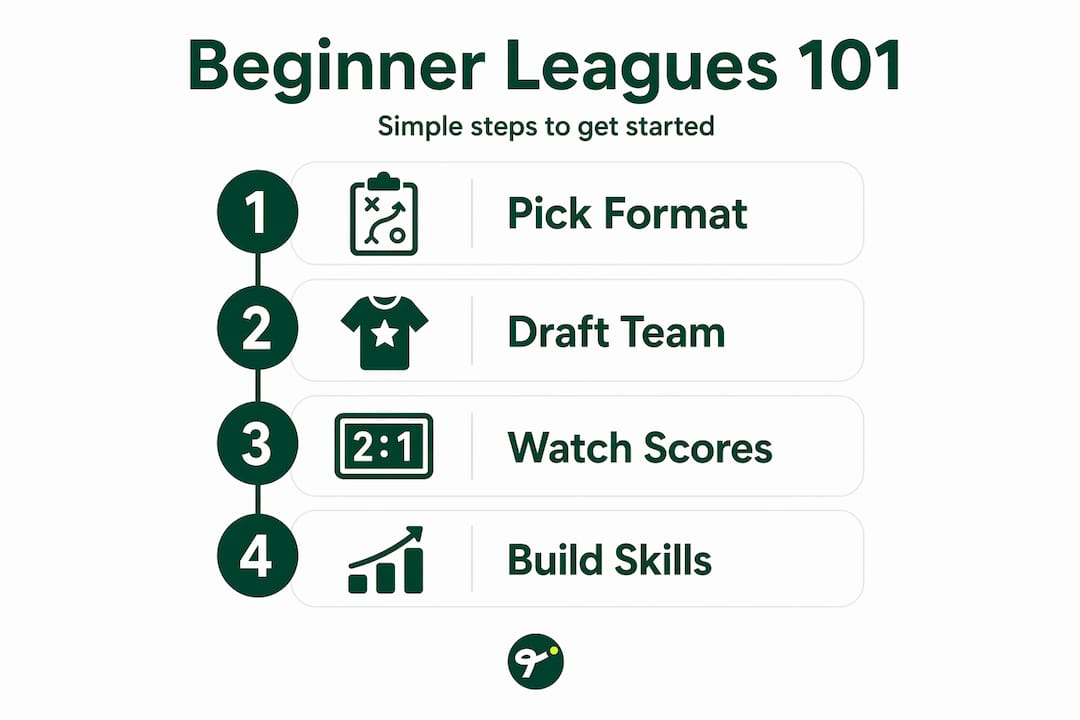
Finding your first beginner fantasy league is easier than most people expect. The friction is almost entirely psychological. Here is what the process actually looks like:
- Choose a format first. Best-ball for a full season, or a tournament-length contest if you want faster feedback. For tennis fans, a single Grand Slam like Wimbledon or the US Open is a perfect starting window.
- Pick a platform that offers beginner public leagues. Look for platforms that explicitly label beginner or rookie leagues and that do not require prior experience to enter. Tweener, for example, lets you join fantasy tennis leagues through a public mode with virtual coins so there is zero financial risk while you learn.
- Set a clear learning goal, not a winning goal. Your first beginner league should teach you something specific. Maybe it is how to value players by surface. Maybe it is how to structure roster depth. Pick one focus and evaluate yourself on that, not your final ranking.
- Join multiple beginner leagues simultaneously. The more draft decisions you make, the faster you improve. Running two or three beginner leagues at once is one of the most efficient ways to accelerate your learning curve.
- Review your results after each tournament or season. Which picks hit? Which ones busted? What would you have done differently with the information you had at the time? That review habit is what separates players who grow from players who just repeat the same mistakes.
The importance of beginner leagues extends beyond any single season. They are your training ground for every more complex format you will ever play.
My take on why beginners skip this step and pay for it later
I have watched dozens of new fantasy players make the same mistake. They see beginner leagues and think "that is not for me, I will figure it out in a real league." And then they spend an entire season confused, finishing last, and walking away from the hobby entirely.
The players who stick around and get genuinely good at fantasy sports almost always spent time in simpler formats first. Not because they lacked confidence. Because they understood that learning under pressure, when real stakes are involved before you understand the rules, is the least efficient way to build skill.
What I have learned from watching both types of players is this: the skills you develop in a beginner league, reading upside, building depth, thinking about correlated outcomes, are not beginner skills. They are the exact same skills experts use. The league just removes everything else so you can focus on learning them cleanly.
There is also something deeper here. Beginner leagues give you your first win. Your first week you top the leaderboard. Your first correct call on an underdog. Those moments build genuine belief that you can compete, and that belief is what keeps you playing long enough to actually get good.
Skipping beginner leagues to look serious is like skipping warm-ups because you want to look ready. You just increase your injury rate. Embrace the format. It will make you better faster than anything else.
— Nathan
Start your fantasy tennis journey with Tweener
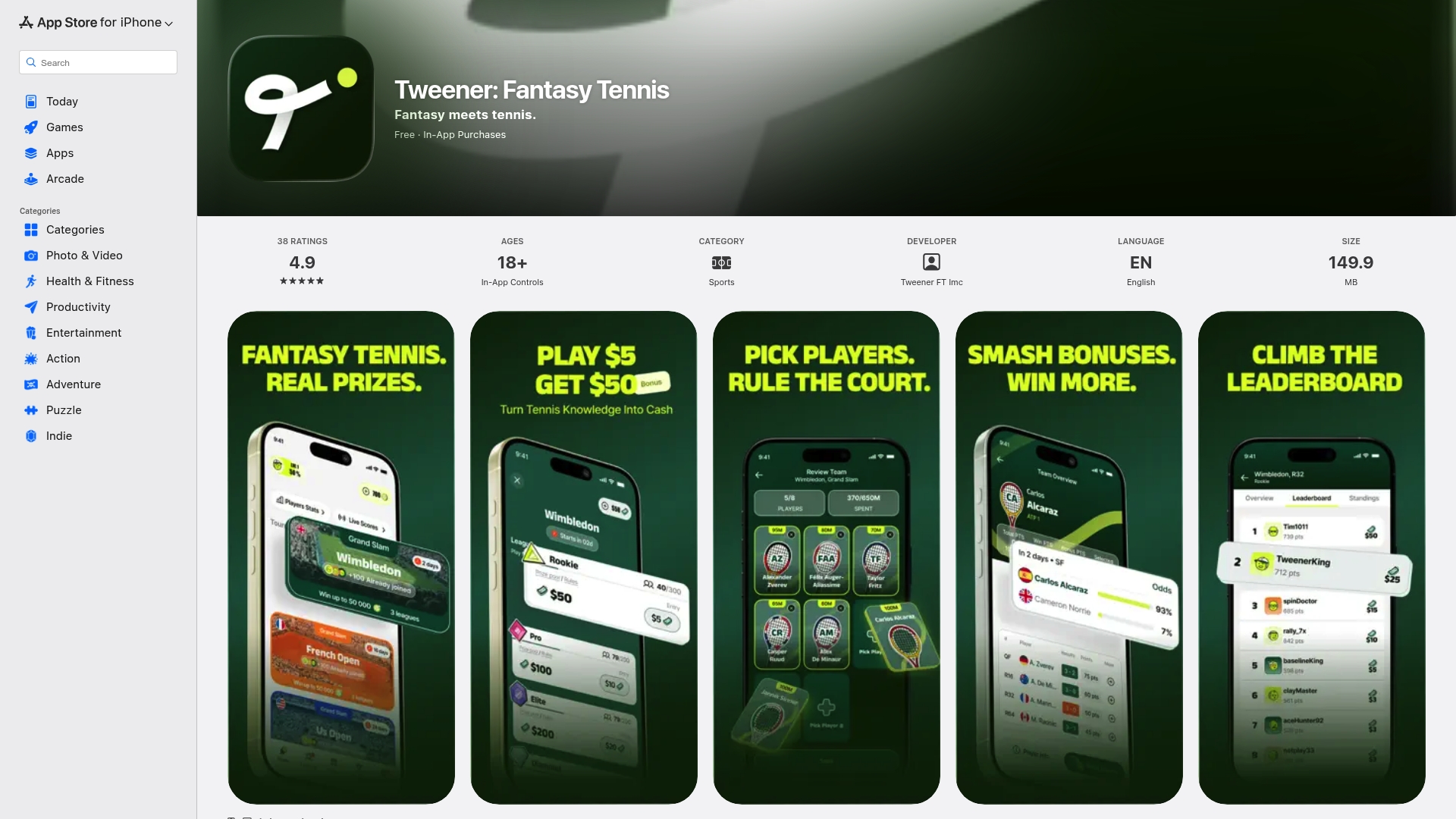
If the idea of beginner-friendly fantasy leagues appeals to you, Tweener was built exactly for this. Tweener is a mobile fantasy tennis app where you draft real ATP and WTA players and compete in leagues tied to live tournaments. The free mode lets you play with virtual coins, which means you can learn the game, practice your drafting instincts, and build your strategic skills with zero financial pressure. When you are ready to compete for real-money payouts, the cash mode is there.
Tweener applies the same principles that make beginner leagues effective: short contest windows, clear scoring, and genuine strategic depth without being overwhelming. Download Tweener and join a public league before the next major tournament. Or head to Tweener's platform to explore what fantasy tennis looks like when it is built for fans who actually want to compete.
FAQ
What is the role of beginner leagues in fantasy sports?
Beginner leagues provide a structured, lower-complexity environment where new players can learn roster construction, draft strategy, and scoring systems without the overwhelming demands of traditional formats.
What makes best-ball a good format for beginners?
Best-ball removes weekly lineup decisions entirely. The system auto-selects your best scorers each week, so you can focus entirely on drafting and learning how to evaluate player value.
How do I join beginner fantasy leagues?
Look for platforms that offer public rookie or beginner leagues, especially those with free-to-play modes. Tweener, for example, lets you enter fantasy tennis leagues using virtual coins so you can practice without any financial commitment.
Why do beginner leagues improve long-term fantasy performance?
Research shows that structured decision loops in fantasy sports increase skill acquisition and engagement. Making repeated draft decisions in low-stakes environments builds the pattern recognition you need to compete at higher levels.
Can beginner fantasy leagues apply to tennis?
Absolutely. Fantasy tennis beginner leagues let you practice picking players based on draw difficulty, surface type, and form during a single tournament. Grand Slam events like Wimbledon or Roland Garros are ideal starting points because the draw is large and the tournament runs long enough to generate meaningful learning.