
A delayed game keeps your roster spot locked until the original scheduled start time, but a game officially marked postponed (PPD) usually frees that player for a swap if no stats were recorded yet. Suspended games get weirder: any stats already logged apply as corrections, and if the game resumes within about a week, all of it typically counts for the day it started. The move that matters most is checking status before your lock deadline hits.
TL;DR:
- Postponed games usually allow roster swaps if no stats are recorded before the schedule change, while delayed games keep players locked at the original start time regardless of progress.
- Resumed games within about a week count all stats from the initial start, but updates often arrive in batch rather than real-time, so managers should wait for post-game corrections.
- Rain increases scoring opportunities for hitters and decreases strikeouts, as pitchers lose command in wet conditions, making stacking bats a safer strategy than relying on starter performance.
- Managers must track weather forecasts and probable pitchers before lock, and promptly swap players from postponed games to avoid losing time-sensitive opportunities.
- Building league rules that clarify postponement policies and incorporating extra bench spots helps prevent disputes and makes handling rain delays easier for everyone.
Table of Contents
- What Delayed, Postponed, Suspended, and Cancelled Games Mean for Your Scoring
- Timing Rules Every Manager Needs to Track
- How Rain Actually Changes the Game (and Why Pitchers Suffer)
- Your Rain Delay Action Checklist
- What I've Learned Covering Weather-Wrecked Slates
- Want an Edge That Doesn't Depend on the Weather Radar?
- Sources
- FAQ
What Delayed, Postponed, Suspended, and Cancelled Games Mean for Your Scoring
Fantasy baseball treats four game statuses very differently, and mixing them up costs managers real points every season.
- Delayed: The game hasn't started or is paused mid-play, but it's still expected to finish. Your player stays locked in that roster slot from the scheduled first pitch, whether or not a single pitch has actually been thrown.
- Postponed (PPD): The league has officially called it and rescheduled to another date, often as part of a doubleheader. This is the status that matters most for lineup flexibility.
- Suspended: The game started, recorded some stats, then got paused, and will resume later, sometimes the next day, sometimes not until the two teams' next series.
- Cancelled: No makeup game is planned. Whatever stats existed at the stoppage typically stand as final.
For a PPD game, most major platforms unlock the affected players so you can swap them out, provided no stats were recorded before the postponement. That behavior is spelled out directly in Yahoo's own rainout and suspension rules, and fantasy managers on Reddit have documented the same pattern across seasons, noting they could edit players in postponed games once the league flipped the status.
Doubleheaders complicate things further. A rained-out game often gets rescheduled as game two of a straight doubleheader, sometimes days later against a different opponent entirely. That means the "make-up" stats might land in a scoring period you never planned for, which is exactly why checking your league's probable-pitcher list the morning of matters more than most managers realize.
Timing Rules Every Manager Needs to Track
The single rule that trips up more fantasy managers than any other: rosters lock at the scheduled start time, not at the actual first pitch. A 7:05 PM game delayed to 9:40 PM still locked your lineup at 7:05. You can't touch that spot no matter how obvious the rain looked on the radar an hour earlier.
Three timing rules govern almost every weather-affected decision you'll make:
- Scheduled-start locking. Daily fantasy and DFS-style formats enforce this strictly, and it's the entire reason late-swap strategy exists in MLB DFS: the edge comes from escaping a soon-to-be-postponed slate before the lock hits, not after.
- Season-long vs. daily swap rules. Season-long leagues often give you more room to correct a bad lineup the next day, while single-day DFS contests are final at lock with no do-overs.
- Suspended and resumed attribution. When a suspended game resumes within roughly seven days, most platforms count the entire game, including the resumed innings, toward the original scoring period, according to ESPN's fan support guidance.
Stat correction reality check: Resumed-game stats rarely post the instant the final out happens. They frequently arrive as batch corrections, and weather-affected scoring notes from RotoWire confirm managers should expect updates overnight or during the next day's processing window rather than in real time. If your Monday matchup looks lopsided on Sunday night, wait before you panic. It may not be final yet.
How Rain Actually Changes the Game (and Why Pitchers Suffer)
Rain doesn't just delay baseball. It changes how the game plays once it resumes, and the numbers back that up clearly.
- Games with precipitation see more runs scored than clear-weather games.
- Walks increase notably in the same conditions.
- Strikeouts decrease significantly, according to RotoGrinders' analysis of rain's effect on player performance.
That combination, more walks, fewer strikeouts, more runs, points to pitchers losing command in damp conditions while hitters see more hittable pitches. It also explains what analysts call the pitcher trap: starters pulled after a long rain delay almost never come back sharp, and managers who leave a locked-in starter sitting through a two-hour delay often watch his ceiling evaporate before he throws another pitch.
- Starters removed after a delay typically get replaced by middle relievers who are easier for hitters to solve.
- Hitters facing a tired bullpen after a delay often outperform their normal projections.
- The safer weather-threat play, when you have the option, leans toward stacking bats over banking on a starter surviving a rain-soaked afternoon.
Pro Tip: If a start looks likely to run into rain, check whether your league allows a pitcher swap before scheduled lock. Once locked, that starter's fate is out of your hands.
Your Rain Delay Action Checklist
Weather threats aren't emergencies if you handle them in the right order. Here's the sequence that actually works.
Before lock:
- Check the hourly forecast for every game with a player in your active lineup, not just your studs.
- Confirm starting lineups and probable pitchers roughly 90 minutes before first pitch. Confirmed scratches change your math fast.
- Set a bench alternate for any player in a high rain-risk game so you can swap without scrambling.
If a game is postponed (PPD) before its start: Move fast. Most platforms unlock those roster spots the moment the status flips, so swap into an active game immediately rather than waiting to see if the postponement reverses.
If the delay happens after lock: You're stuck with that player in that slot. Your only real lever is information: watch beat writers for word on whether the starter gets pulled once play resumes, since that directly affects whether he's even in line for a win or enough innings to matter.
If a game is suspended and later resumed: Track carefully where the stats land. If the resumption falls within about seven days, expect the full game, original innings plus resumed innings, to count for the day it began. Expect posting delays too; don't trust an early scoreboard read as final.
Commissioners can head off a lot of these headaches with clear settings. Adding extra bench alternates, defining a firm PPD policy in the league constitution, and setting expectations for how suspended games get scored all reduce the disputes that flood league message boards every rainy week. Community threads on Ottoneu's forums show managers requesting exactly these fixes, which tells you the pain point is real and worth addressing before the first storm of the season hits your matchup.
Pro Tip: Build a standing rule into your league settings now, before a rainout costs someone a championship week. Retroactive fixes always spark more arguments than preventive ones.
What I've Learned Covering Weather-Wrecked Slates
Delays are far more common than full postponements, and delays reward patience more than panic.
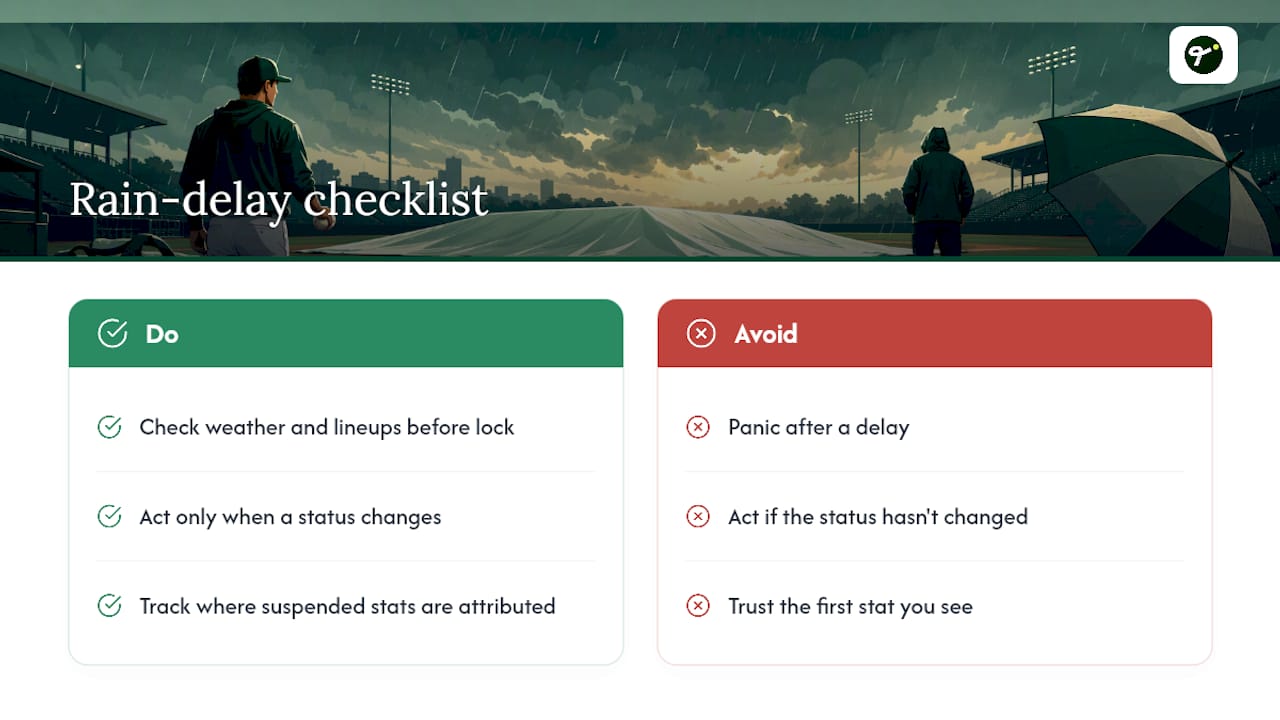
My three-rule checklist stays simple: check weather and lineups before lock, act only when a status actually changes, and track where suspended-game stats get attributed instead of trusting the first number you see. For deeper mechanics on live scoring and how correction windows work across formats, the Tweener blog's breakdown of withdrawal and correction timing and the official platform help pages cover the edge cases this guide doesn't have room for.
— Nathan
Want an Edge That Doesn't Depend on the Weather Radar?
Baseball fantasy is stuck untangling PPD windows and stat-correction lag every time a front rolls through. Tennis doesn't have that problem, and it also doesn't have a real DFS-style game built for fans who actually study the sport, until Tweener. There are fantasy tennis apps where you draft real ATP and WTA players and score points based on their on-court performance, without bullpen concerns or long suspended-game windows to track.
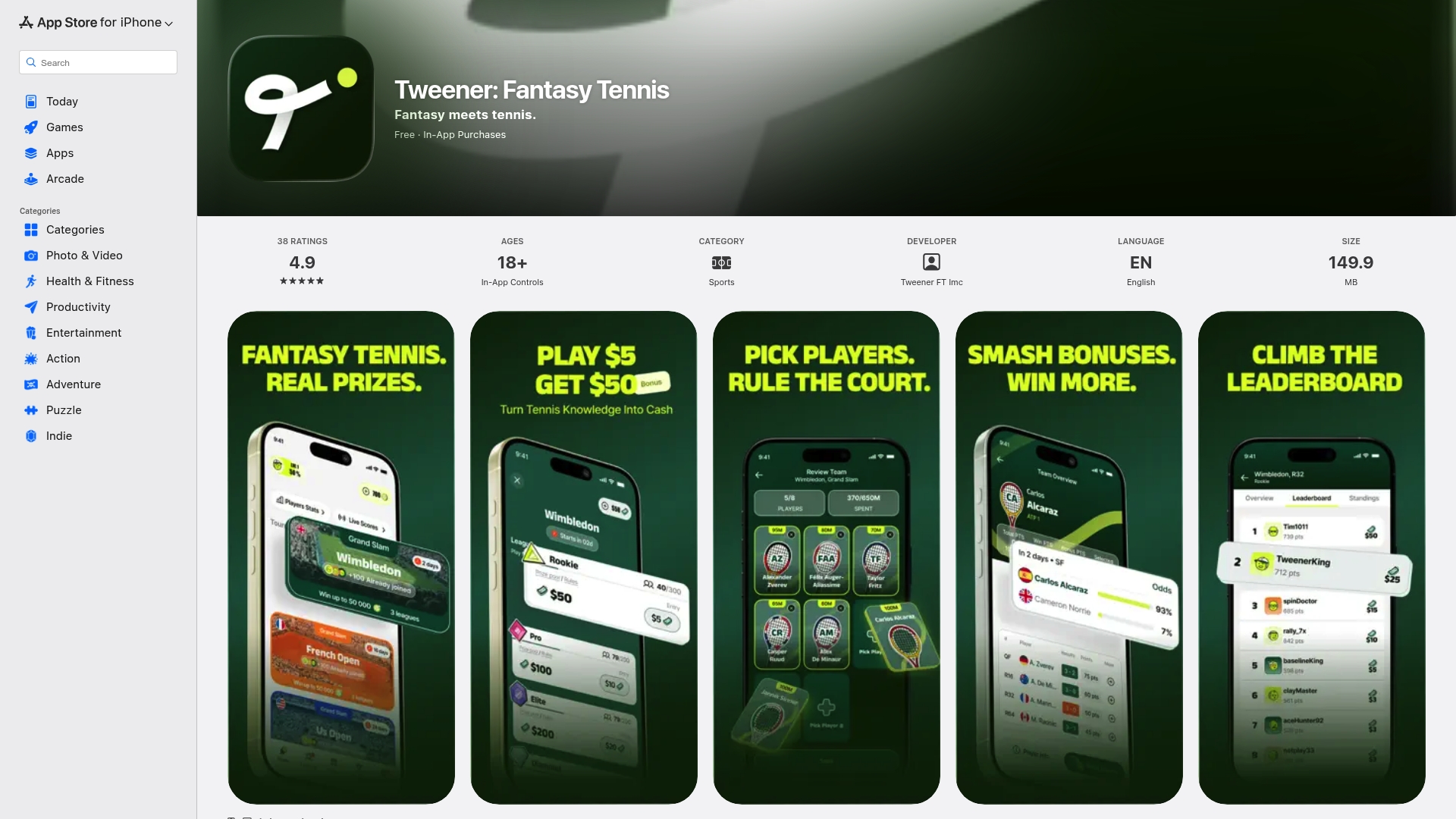
If you're the kind of manager who checks probable pitchers and rain radars because you want an actual analytical edge, tennis rewards that instinct even better. Head-to-head history, surface splits, and current form move the needle on every match, and Tweener's Draft Mode and Pick'em Mode let you build a squad around exactly that kind of research instead of hoping a delay doesn't wreck your week. Private leagues let you go head-to-head with up to nine friends across a Grand Slam, and the scoring and resumption rules are laid out plainly on the Tweener game rules page so you're never guessing how a match affects your points. Grab the app and set your first lineup before the next Slam gets underway.
Sources
- About rainouts, doubleheaders, and cancelled or suspended games in Fantasy Baseball | Yahoo Help
- What happens if a professional game is suspended then resumed at a later date? – ESPN Fan Support
- The Effect of Rain on Player Performance | RotoGrinders
FAQ
Does a Rain Delay Void a Bet or Fantasy Result?
No. A rain delay alone doesn't void anything in fantasy scoring; your roster stays locked from the scheduled start, and stats count once the game resumes or finishes. A full postponement (PPD) is the status that actually frees up your roster spot, not a delay.
How Many Innings Count as a Full Game During a Rain Delay?
That threshold is set by MLB rules on official games, not by fantasy platforms directly, but once a game is called official, whatever stats were recorded up to that point generally stand for scoring purposes.
What Happens if a Game Ends Due to a Rain Delay?
If the game is called and won't resume, it's typically ruled cancelled and any stats logged before the stoppage usually stand as final. If it's suspended instead, expect resumption within about a week to have its stats counted toward the original scoring period, per ESPN's suspended-game rules.
Is Half an Inch of Rain Enough to Cancel a Baseball Game?
There's no fixed rainfall threshold in official rules; the call comes down to field conditions, grounds crew judgment, and forecast timing, not a specific inch measurement. That's part of why delays are far more common than outright postponements.
Does Tweener Have Anything Like This for Tennis?
Tennis doesn't deal with rain-delay stat corrections the way baseball does, but rain and roof closures do affect matches, and Tweener's scoring rules for suspensions and resumptions are documented on the Tweener game rules page.