

A live scoring delay means the numbers on your screen lag behind what's actually happening on court or field, usually because of a breakdown somewhere between the official scorer and your device. The right first move is simple: check an official status page or league feed before you touch your lineup or your bet, since most delays resolve within minutes and premature changes based on stale data can cost you more than waiting ever would.
TL;DR:
- Most live scoring delays are caused by breakdowns at the official input, venue connectivity issues, or data provider overloads, not a failure of the sport itself.
- App polling frequency and traffic throttling by data providers play significant roles in how often scores appear outdated or lag behind real-time events.
- During delays, platforms typically display provisional scores, hold final results, and update them once official corrections are made, which can take from minutes to hours.
- Confirming the official score from the league's feed or tournament source before acting helps avoid making decisions on stale data, especially during high-traffic matches.
- Troubleshooting includes refreshing sources, switching devices or connections, and providing detailed support information to resolve persistent scoring discrepancies.
Table of Contents
- What Causes Live Scoring Delays?
- How Platforms Handle Late Stat Changes and Scoring Holds
- Step-by-Step Troubleshooting for Fantasy Players and Bettors
- How Long Do Stat Corrections Actually Take?
- How Tweener Approaches Live Scoring Reliability in Tennis
- What Fantasy Players Get Wrong About Scoring Delays
- Try a Fantasy Tennis App Built Around Real Tournament Data
- Where to Check Official Scoring Status
- Sources
What Causes Live Scoring Delays?
Every live score travels through a five-stage chain before it reaches your phone: official input at the venue, stadium connectivity, a third-party data provider's processing, the platform's backend integration, and finally your own device and connection. A breakdown at any single stage produces the lag you're seeing, and identifying which link failed is half the battle.
The most common failure points look like this:
- Human entry lag — the on-site scorer or chair umpire logging the point manually, which takes seconds but adds up during fast rallies.
- Venue connectivity problems — spotty Wi-Fi or cellular service inside stadiums, especially at outdoor tournaments with thousands of connected devices competing for bandwidth.
- Data provider overload — the middleman service that aggregates official feeds and distributes them to apps can bottleneck during high-traffic matches.
- Scraping-driven throttling — unauthorized bots hammering a provider's servers for data, forcing them to slow down or block traffic to protect infrastructure.
- App polling frequency — how often your specific app checks for updates, which varies by platform and can make one app look "behind" another using the same underlying feed.
That last cause matters more than most fans realize. Data-scraping and traffic spikes have forced live-scoring providers to prioritize infrastructure stability over feature rollouts, which is exactly what happened during a 2023 stretch of World Snooker Tour events, when scraping issues led to delayed feature releases and scoring instability that had nothing to do with the sport itself. The five-stage supply chain explains why the same delay can show up on one app and not another: if the delay only affects your app, it's client-side. If it shows up on the official tournament feed too, the problem is upstream and no amount of refreshing will fix it faster.
How Platforms Handle Late Stat Changes and Scoring Holds
Fantasy and betting platforms don't just sit and wait when data goes shaky. Most freeze or flag contests the moment they detect unreliable input, then hold final scoring until an official correction comes through from the league or tournament body.
Typical operational behavior follows a pattern:
- Provisional values post first, clearly marked as unconfirmed, so users see something rather than a blank screen.
- Corrections apply after the game or match ends, once the official record is reconciled against the live feed.
- Manual review windows kick in for disputed calls, replay challenges, or scorer errors that need human eyes before anything locks in.
Some systems build status reporting directly into the scorer's toolkit. Certain live-scoring platforms let designated scorers flag a game as delayed, postponed, or forfeited through in-app controls, and that status then propagates out to every connected app in near real time. That's the signal worth watching for: a platform's support knowledge base, a status page update, or an official social post confirming what's actually happening on the ground. Rumors on forums are not that signal.
Step-by-Step Troubleshooting for Fantasy Players and Bettors
When your live scores freeze mid-match, working through a fixed sequence beats panicking and switching five things at once.
- Check the official league or tournament feed first. The ATP, WTA, or relevant league's own scoreboard is the ground truth. If it matches what you're seeing, the delay isn't a bug, it's just a slow point.
- Check the platform's status page or official social account. Most apps post outage acknowledgments within minutes of a widespread issue.
- Open an alternate scoring source. A second app, a browser tab, or even a lightweight tool like KeepTheScore can confirm whether the data itself is delayed or just your connection to it.
- Do not touch your lineup or stake until you've confirmed the real score. Acting on stale data is how fantasy players bench a player mid-hot-streak or bettors hedge against a lead that already flipped.
If the problem persists, try device-level fixes before assuming it's a provider outage: force-close and reopen the app, clear its cache, switch from Wi-Fi to cellular (or vice versa), or load the mobile web version instead of the native app. These are the same basic recovery steps troubleshooting guides for live disc golf scoring recommend, and they apply just as well to tennis, football, or basketball.
If you end up contacting support, include your contest ID, the exact timestamp you noticed the lag, and a screenshot. That trio turns a vague complaint into something a support team can actually investigate in one pass.
Pro Tip: During marquee matches with heavy traffic, like a Grand Slam final, cross-reference two independent sources before making any decision. If both agree, act. If they disagree, wait ninety seconds and check again.
How Long Do Stat Corrections Actually Take?
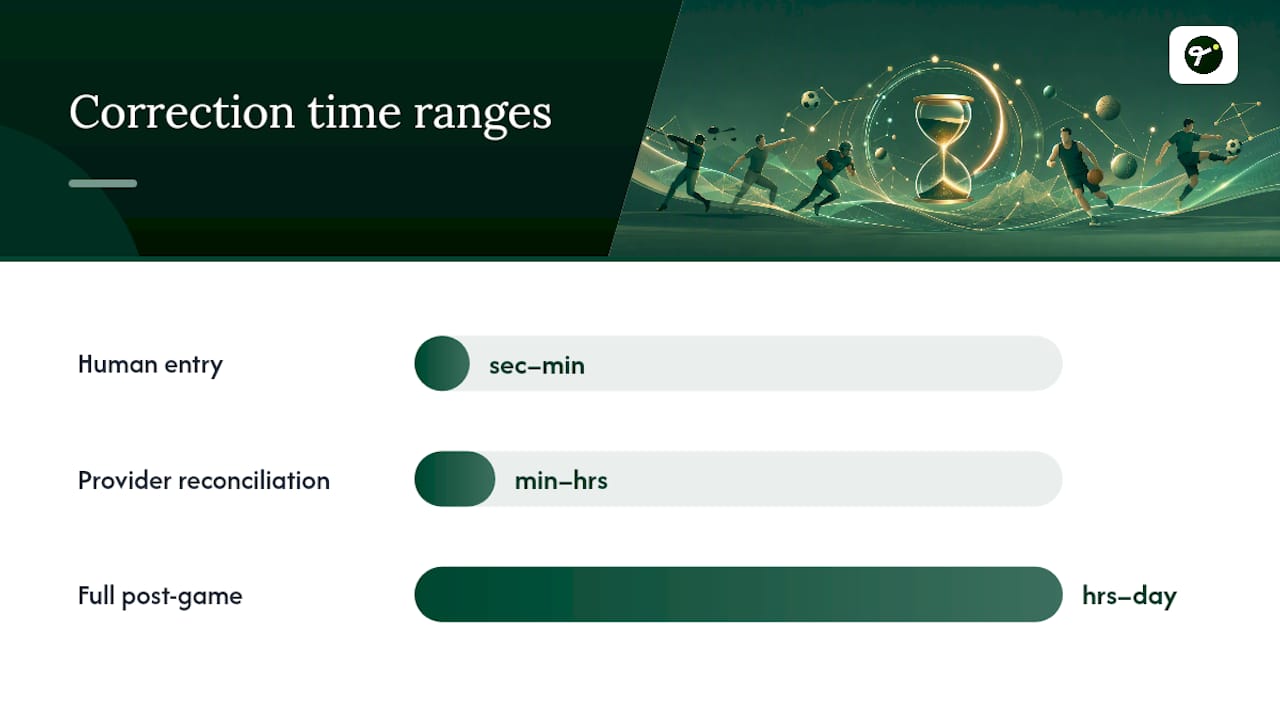
Correction speed depends entirely on what broke. Human entry mistakes tend to fix themselves in seconds to minutes, since a scorer just re-enters the right number. Provider-level reconciliation, where a data company cross-checks its feed against the official source, usually takes minutes to a few hours. Full post-game or post-match statistical corrections, the kind that adjust historical records, can take hours or even a full day to finalize.
Sport-specific timing matters here:
- Tennis relies on point-by-point and set-level confirmations, so a disputed call at deuce can hold up scoring for that single game without affecting the rest of the match.
- Football often involves official replay reviews, which pause scoring updates for exactly as long as the review takes.
- Basketball and hockey see faster human-entry challenges since the pace of scoring means errors get caught almost immediately by fans watching the broadcast.
For contest results, treat anything before an official league correction notice as provisional. Delays in tennis live-score feeds often trace back to chair-umpire input and tournament-specific reporting workflows, which is why patience during a tight third set beats an early reaction to a number that might still move.
How Tweener Approaches Live Scoring Reliability in Tennis
Tennis scoring has a quirk most other sports don't: a single disputed point at 6-6 in a tiebreak can matter more than an entire earlier set. Tweener builds around that reality by tying contest scoring to confirmed tournament data rather than racing to display the fastest possible number.
During an ATP or WTA match where a point looks delayed, the practical move is the same one covered above: check the tournament's official feed for that specific match before assuming your fantasy lineup needs a change. Tweener's own breakdown of how live scoring works in fantasy tennis covers how points translate into fantasy scoring in more depth, and the data collection process behind fantasy tennis stats explains where those numbers originate before they ever reach your team.
What Fantasy Players Get Wrong About Scoring Delays
Most advice on this topic treats every delay as an emergency. It isn't. The research is clear that the overwhelming majority of live scoring lag traces back to ordinary friction, a slow scorer, a crowded stadium network, a provider throttling scraped traffic, not some systemic failure you need to route around with a workaround.
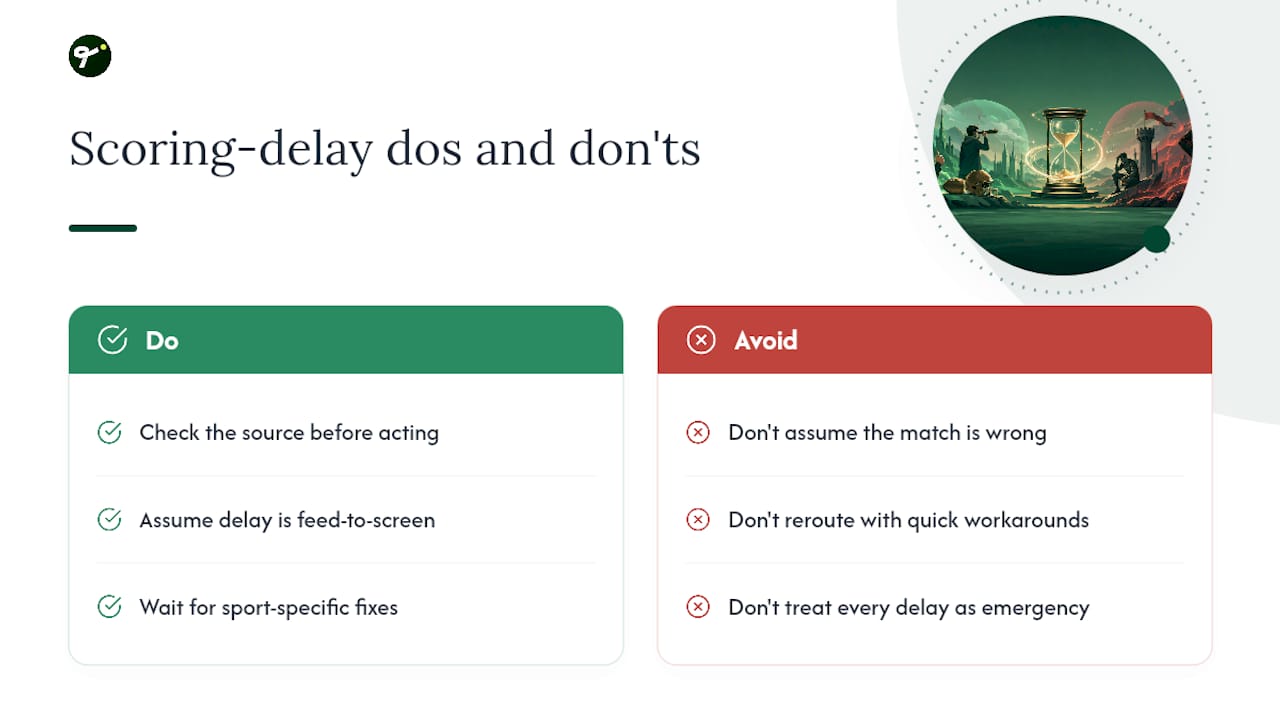
The bigger mistake fantasy players and bettors make is treating their own app's lag as proof the underlying data is wrong. It usually isn't. The delay sits between the official feed and your screen, not inside the match itself. That distinction should change your behavior: check the source before you touch your team or your stake, every time, no exceptions.
Where conventional advice falls short is in ignoring sport-specific nuance. A basketball fan can usually trust a fast correction because the pace of play makes errors obvious within seconds. A tennis fan watching a tiebreak needs to know that a single point can sit in review longer than an entire game in another sport, and that patience there is a strategic asset, not wasted time.
— Nathan
Try a Fantasy Tennis App Built Around Real Tournament Data
Tennis still doesn't have a true Fanduel or DraftKings equivalent, and that gap shows up hardest during live delays, when generic multi-sport apps treat a tiebreak the same way they'd treat a football down. Some fantasy tennis apps build contests around ATP and WTA scoring integrations specifically, so the workflow behind a delayed point matches how tennis actually gets scored, not a generic sports template stretched to fit the sport.
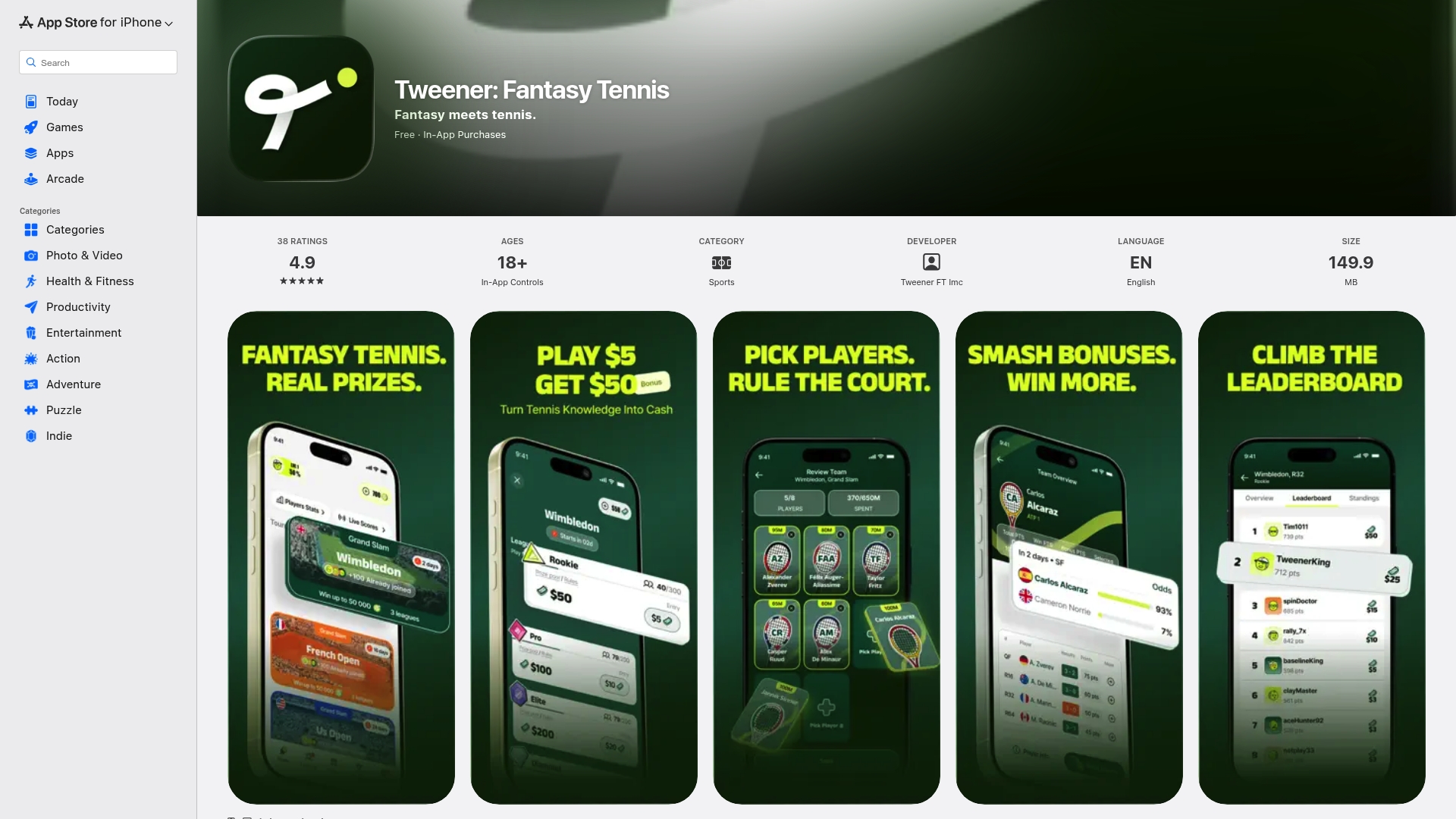
A tennis-first approach matters most during Grand Slams, when fans can run private leagues with friends and watch a single contested point ripple through everyone's lineup at once. Analytical fans can get H2H records, surface splits, and form data to build a real edge instead of guessing, and the fantasy game often runs on skill rather than the luck-driven mechanics of traditional betting. Download Tweener and set up your first private league before the next Slam starts.
Where to Check Official Scoring Status
Start with the tournament's own official feed and social accounts for ground-truth confirmation. Cross-check the platform's status page or verified support account for outage acknowledgments, and lean on a secondary tool such as BetsyScore's breakdown of how live scores work if you want a deeper look at the technical pipeline behind the numbers on your screen.
Sources
- WST provides update on live snooker scoring issues | SnookerHQ
- Why Do Live Score Updates Sometimes Get Delayed? | EatHealthy365
- Live Scoring Game Status – MaxPreps Support