
TL;DR:
- Effective tennis scouting involves assessing technical, physical, and mental attributes beyond tournament wins to predict long-term success.
- Structured observations at high-density junior events, combined with efficiency metrics like Points per Event and trend analysis, improve talent identification accuracy.
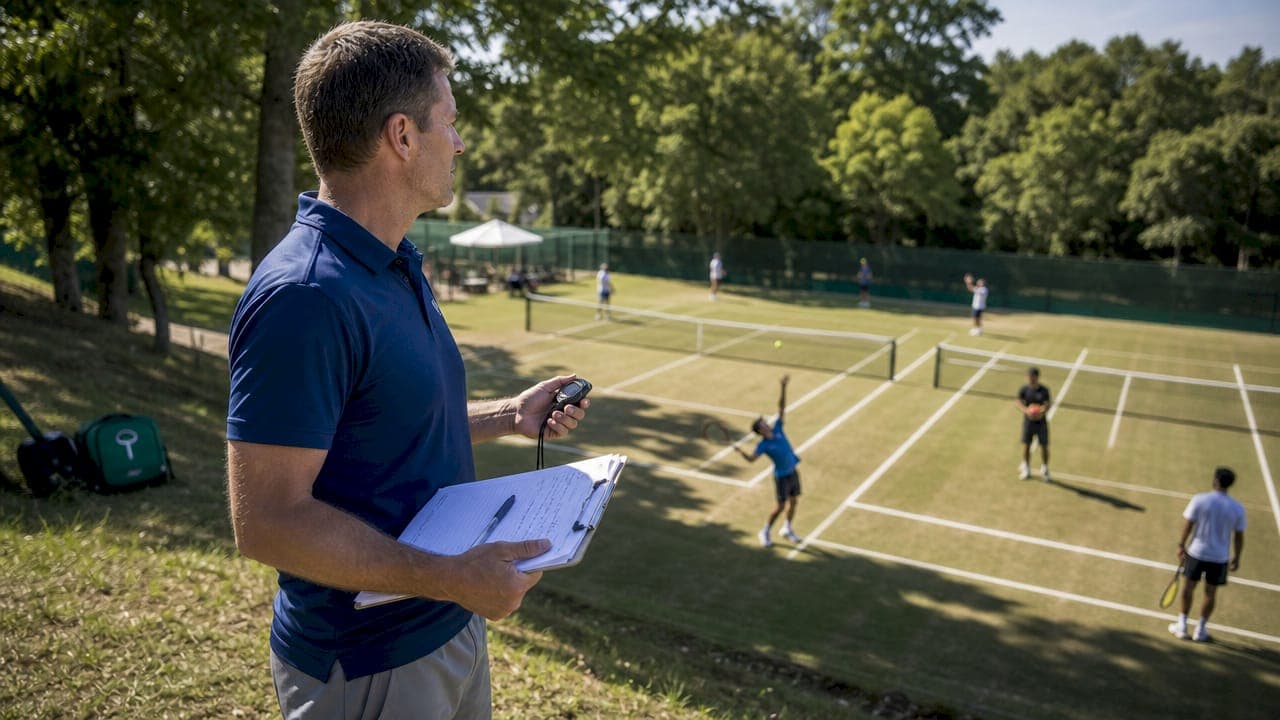
Scouting emerging tennis talent is defined as the systematic identification of junior players with scalable technical, physical, and mental attributes that predict long-term professional success. The most effective scouts look far beyond tournament wins. They evaluate how a player competes under pressure, how efficiently they accumulate ranking points, and whether their mechanics can hold up at the next level. This guide gives you a structured framework for identifying young tennis players with genuine upside, covering the attributes that matter most, the events worth attending, the metrics that separate real potential from inflated results, and the developmental traps that derail even experienced scouts.
How to scout emerging tennis talent: the key attributes that matter
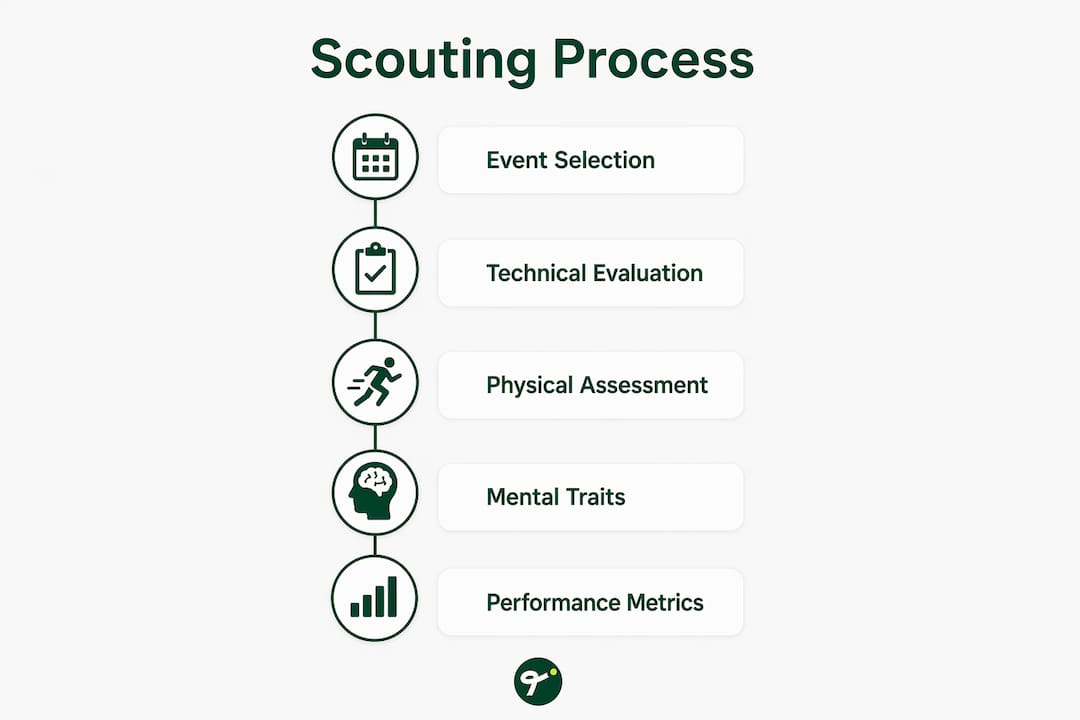
Talent evaluation in tennis begins with a multidimensional lens. Quality and process reveal far more about a player's ceiling than a scoreline alone. A scout who only watches wins misses the players who are quietly building the skills that will matter at 22.
Technical skills: what to measure on court
Ball speed and accuracy under variable tactical conditions significantly predict future elite performance. Future top players maintain higher accuracy than their competitive peers when the game situation changes, not just when they are hitting freely in warm-ups. Serve mechanics deserve particular attention. Sound serve biomechanics may generate less pace at age 14 than a physically mature peer, but they signal better long-term prospects and lower injury risk. Watch for scalable technique, not just current output.
Key technical indicators to track during observation:
- First-serve percentage under match pressure, not just practice conditions
- Groundstroke accuracy when forced wide or pulled out of position
- Serve motion efficiency and shoulder rotation mechanics
- Volley and net approach decision-making in transition situations
Physical and mental traits that predict upside
Athletic coordination, lateral quickness, and change-of-direction speed are more predictive than raw strength at junior level, because strength is trainable but coordination windows close earlier. Mental traits are equally critical. Mindset and pressure response can surpass pure mechanical skill in long-term potential evaluation. Watch how a player responds after losing a break of serve, after a bad line call, or after dropping the first set. Resilience under adversity is a scouting signal, not a soft metric.

Game intelligence rounds out the picture. Does the player adjust tactics mid-match? Do they recognize when an opponent is struggling physically and press the advantage? Decision-making under complexity is a repeatable indicator of ceiling.
Pro Tip: Watch the player's body language between points, not just during rallies. How they walk to the baseline after losing a point tells you more about competitive character than any single winner.
How can scouting at junior tournaments be structured for maximum insight?
Structured scouting at junior events requires deliberate event selection, disciplined observation protocols, and a system for converting raw notes into usable data. Attending the right tournaments matters as much as what you observe when you get there.
Choosing the right events
High-visibility junior events like the Eddie Herr International and the Orange Bowl in Florida concentrate a high density of scouts and a wide range of talent levels in one location. These events are worth prioritizing because they surface underrepresented regional talent competing at genuine international level. International scouting efficiency improves significantly by targeting these high-density observer events rather than spreading travel across smaller regional tournaments where the competitive baseline is harder to calibrate.
A structured approach to each scouting trip:
- Pre-select 8 to 12 players to observe based on current ranking, recent results, and coach referrals before you arrive.
- Build an observation checklist covering technical, physical, mental, and tactical categories so your notes are comparable across players.
- Watch at least three matches per player across different opponents and match situations before drawing conclusions.
- Record specific moments: how the player responded to a break-point situation, a momentum shift, or a physical challenge like heat or a long third set.
- Cross-reference your qualitative notes against available match statistics from the tournament draw sheet or any available tracking data.
| Observation method | Strengths | Limitations |
|---|---|---|
| Live match observation | Captures behavior, body language, and pressure response in real time | Subject to observer bias and limited sample size |
| Biomechanical video analysis | Reveals serve mechanics, stroke efficiency, and injury risk indicators | Requires equipment and technical expertise to interpret |
| Tournament statistics | Provides objective first-serve %, break-point conversion, and point distribution data | May not reflect match context or opponent quality |
| Coach and academy interviews | Adds developmental history and training context | Can be biased toward players the academy has invested in |
Pro Tip: Biomechanical analysis tools like Dartfish or Hudl Technique let you review serve mechanics frame by frame after the event. Even a basic slow-motion phone recording of a serve motion gives you data you cannot capture with the naked eye at courtside.
What performance metrics best separate genuine potential from inflated results?
ITF junior rankings are influenced by participation frequency and tournament access, which means ranking position alone creates a distorted picture of underlying player quality. A player from a well-funded program who enters 20 events per year will accumulate Total Ranking Points (TRP) that a talented player from a lower-access background cannot match, regardless of ability. This is the central problem with using raw rankings as a scouting shortcut.
Efficiency metrics that reveal true quality
Points per Event (PPE) is the metric that corrects for this distortion. Efficiency-based indicators that relate performance output to match exposure help distinguish true talent from participation-driven advantages. A player ranked 80th in the ITF junior standings with a high PPE is often a stronger prospect than a player ranked 30th who achieves that ranking through volume alone.
Specific metrics worth tracking for each player you evaluate:
- PPE (Points per Event): Total ranking points divided by events entered. Higher values indicate more efficient point accumulation.
- First-serve percentage under pressure: Tracked in tiebreaks and third sets, where mechanical breakdown reveals technique limits.
- Breakpoint conversion rate: Both saving and converting break points. This metric captures competitive clutch performance better than any other single stat.
- Win rate against higher-ranked opponents: Upsets against better-ranked players signal competitive ceiling more reliably than wins against lower-ranked peers.
Tracking performance trends over 12 to 18 months predicts future success far better than single-event results. A player whose PPE is rising across three consecutive tournament cycles is a stronger prospect than one who peaked at a single prestigious event.
Pro Tip: Build a simple spreadsheet tracking PPE, first-serve percentage in deciding sets, and breakpoint conversion for every player on your watchlist. After six months, the trend lines tell you more than any single match observation.
How does a phase-aware approach improve talent identification?
Phase-aware assessment improves the predictive validity of talent identification by applying age-appropriate evaluation criteria rather than a single universal checklist. What matters at U12 is not what matters at U18, and scouts who apply the same rubric across all ages systematically misread developmental signals.
Adapting your criteria by development stage
At the U12 to U14 stage, the scouting focus belongs on technical fundamentals and athletic coordination. Ranking and results carry almost no predictive weight at this age. The questions to ask are: Does this player move efficiently? Are their groundstroke mechanics scalable? Do they show curiosity and competitive engagement, or are they just physically dominant over younger peers?
At the U16 to U18 stage, the evaluation shifts. Physical and mental traits become more predictive because the technical window is largely set. Key drivers for progression vary by development stage, and scouts who identify those stage-specific drivers make better long-term predictions. At U16 to U18, the relevant questions become: Can this player compete physically against peers who have gone through early physical maturation? Do they adapt tactically when a game plan stops working? How do they handle the pressure of a ranking-point match versus a practice set?
A phase-aware framework prevents two common errors. First, it stops scouts from overrating physically mature early developers who will be overtaken once their peers catch up physically. Second, it prevents underrating late bloomers who show clean mechanics and strong mental traits but have not yet filled out physically. Repeated match situations with decision-making complexity offer superior data for evaluating technical and tactical potential than isolated moments, which is why multi-match observation across a full tournament draw is non-negotiable.
What common scouting pitfalls should you avoid?
The most damaging errors in talent evaluation in tennis share a common thread: they prioritize visible, easy-to-measure outputs over the harder-to-observe indicators that actually predict long-term success.
Pitfalls that consistently distort scouting judgments:
- Overweighting tournament wins without ranking context. A U16 title at a low-draw regional event tells you almost nothing about professional ceiling.
- Ignoring biomechanical red flags. A player generating big pace through compensatory mechanics is an injury risk, not a prospect.
- Discounting mental and resilience factors. Scouts who focus exclusively on technical and physical traits miss the competitive character dimension that separates good juniors from professional players.
- Dismissing late developers. Physical maturation timelines vary by up to three years in adolescence. A 15-year-old who looks slight may be the strongest prospect in the draw at 19.
- Failing to account for access inequity. A player from a lower-resource background competing at international level with limited event access and a rising PPE is often a stronger prospect than their ranking suggests.
"Tournament titles are helpful but insufficient; actual playing level and continuous growth capacity best predict eventual elite success." — Natalia Mordasova, talent identification expert
Key takeaways
Effective tennis scouting requires efficiency-based metrics, phase-aware evaluation criteria, and structured multi-match observation to identify genuine long-term potential beyond visible tournament results.
| Point | Details |
|---|---|
| Prioritize efficiency over raw ranking | Use Points per Event (PPE) to identify players who perform above their access level. |
| Observe pressure responses directly | Watch breakpoint situations and third sets to evaluate mental traits that predict professional success. |
| Apply phase-aware criteria | Evaluate U12 to U14 players on fundamentals and coordination; shift to physical and mental traits at U16 to U18. |
| Attend high-density scouting events | Eddie Herr and Orange Bowl concentrate talent and scouts, maximizing discovery per trip. |
| Track trends, not single events | A rising PPE over 12 to 18 months outperforms any single tournament result as a predictive signal. |
What I've learned from watching scouts get it wrong
I've spent years watching how scouts approach junior tennis, and the pattern that frustrates me most is the reflexive focus on the scoreboard. A scout who flies to a Grade A junior event, watches the final, and leaves with a shortlist built entirely from the draw results has wasted most of their trip. The player who lost in the quarterfinals after leading two sets to one, then saved four match points before going down, often has more professional upside than the player who won the title in straight sets against a depleted draw.
The data backs this up. Tracking first-serve percentage under pressure and breakpoint conversion rates predicts future success more reliably than raw wins. But the deeper truth is that the best scouts I've observed combine that data discipline with something harder to teach: the ability to read competitive character in real time. They are watching the player's face after a double fault in a tiebreak, not just the next point.
The other underrated skill is knowing which events to skip. International scouting is expensive and exhausting. Targeting high-density events like Eddie Herr and the Orange Bowl, where you can observe 15 prospects in three days, beats spreading across six smaller regional tournaments where the competitive baseline is inconsistent. Efficiency in your own scouting workflow mirrors the efficiency metrics you should be applying to the players you evaluate.
If you want to build a genuinely predictive scouting system, start with a performance tracking workflow that captures trend data across multiple events. Single-match impressions are a starting point, not a conclusion.
— Nathan
Track the players you scout with Tweener
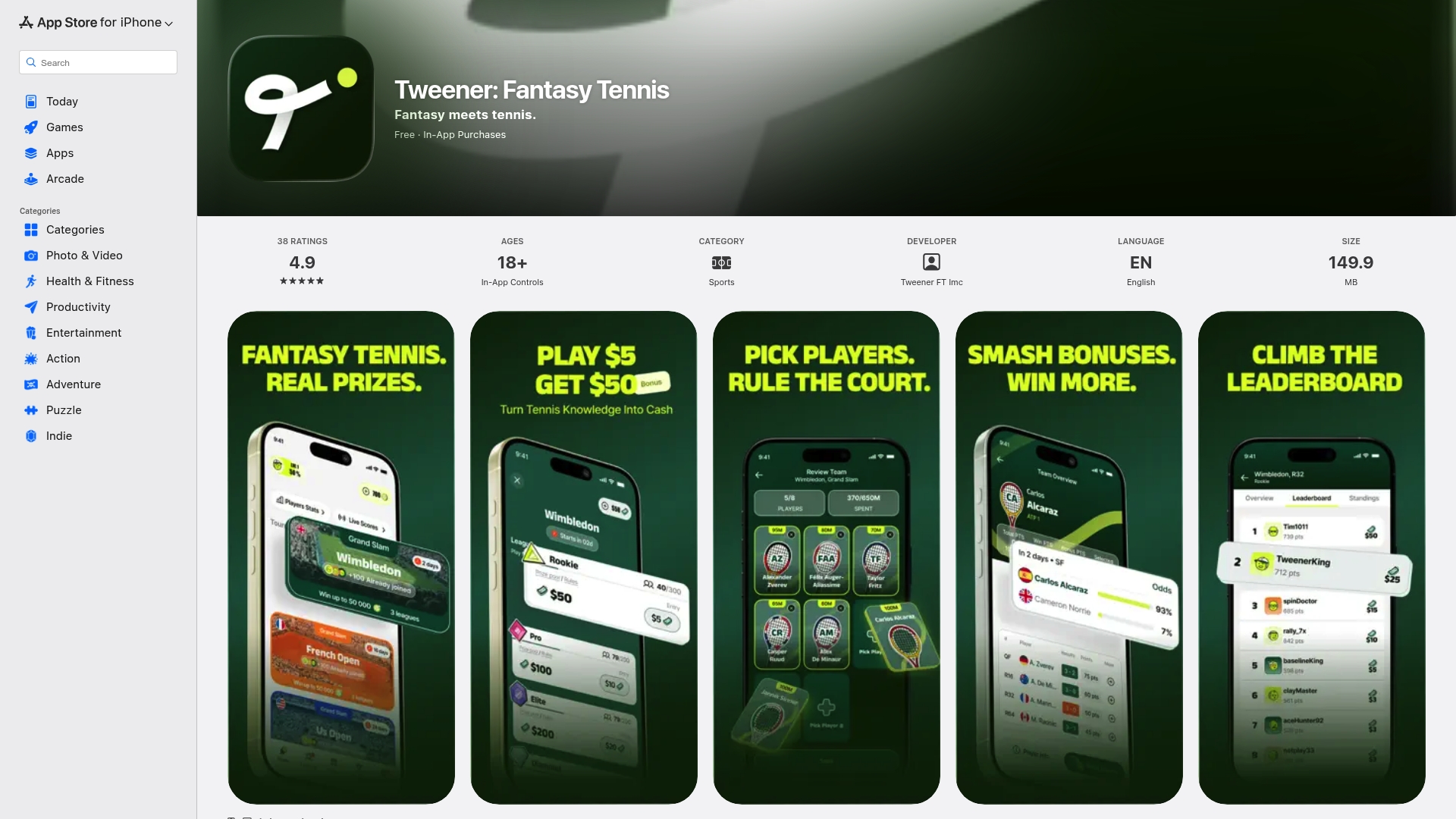
Tweener is built for the kind of analytical tennis fan who thinks in stats, surfaces, and head-to-head records. If you are scouting junior players and want a platform that sharpens your eye for performance trends at the professional level, Tweener gives you a practical way to track how ATP and WTA players perform across tournaments, surfaces, and pressure situations. Understanding how today's professionals perform under match pressure is directly relevant to evaluating whether a junior player's game translates upward. Download the Tweener app and start building your analytical edge, or explore the full platform at Tweener.
FAQ
What is the best age to discover tennis players?
The best age to begin serious talent evaluation is between 12 and 14, when technical fundamentals are visible but physical maturation has not yet distorted competitive results. Scouts should apply phase-aware criteria at each stage rather than a single universal standard.
How do you assess junior tennis players beyond their ranking?
Use Points per Event (PPE) as an efficiency metric alongside direct observation of first-serve percentage under pressure and breakpoint conversion rates. These indicators reveal competitive quality independent of how many tournaments a player has entered.
What scouting techniques for tennis work best at junior events?
Structured observation checklists covering technical, physical, mental, and tactical categories, combined with multi-match observation across at least three matches per player, produce the most reliable assessments. Biomechanical video review of serve mechanics adds a layer of injury-risk analysis that live observation alone cannot provide.
How do you avoid ranking inflation when evaluating junior players?
ITF junior rankings reflect participation frequency as much as ability. Divide total ranking points by events entered to calculate PPE, and weight players with rising PPE trends over players with high TRP built through volume.
Which junior tournaments are most valuable for scouting?
The Eddie Herr International and the Orange Bowl are the highest-value events for scouts because they concentrate international talent and a dense scouting network in one location, making it possible to observe a wide range of players and calibrate assessments against a consistent competitive baseline.