

Head to head, or H2H, is the win-loss record between two specific players across every match they've officially played against each other. That's the whole definition. The verdict on how to use it is the part most fans get wrong: H2H is a useful snapshot, never a forecast, and it means almost nothing without context on surface, recency, and sample size.
The ATP head-to-head pages and the WTA's equivalent tool are the canonical sources. Everything else, including the WTA's own head-to-head comparison feature, builds on those official records. If you want to turn that raw record into something you can actually act on for a preview, a bet, or a fantasy lineup, that's where a tool like Tweener earns its place.
- H2H = total wins and losses between two named players, full career
- It does not account for surface, form, or how long ago those matches happened
- ATP and WTA official pages are where the record actually lives
- Context tools (surface filters, pressure stats) turn the raw number into something useful
Table of Contents
- What a head to head tennis meaning breakdown actually shows you
- Why a raw head to head tennis record can mislead you
- How to use head to head tennis stats before a pick or a preview
- Two head to head tennis records that reward a second look
- Tweener's approach to head to head tennis stats for fantasy players
- Sources
What a head to head tennis meaning breakdown actually shows you
Pull up any official H2H page and you'll see more than a single score. The top line gives you the tally, something like 4-2, meaning one player has won four of their six meetings. That's the number most fans stop at, and it's the least useful part of the page.
Below the tally, you'll usually find a full breakdown. Here's what to check, in order:
- The match list — every meeting, with date, tournament, and round
- Surface filter — how the record splits across hard, clay, and grass
- Event level — Grand Slam meetings versus ATP 250s or lower-tier WTA events
- Scoreline — how close the actual sets were, not just who won
- Match notes — retirements, walkovers, or injury-affected results that inflate a raw count
Surface matters more than most fans assume. A 6-1 head-to-head lead built entirely on hard courts tells you nothing about how that matchup plays out on clay. The ATP's own head-to-head tool filters by exactly this, and TennisBoard's explainer on how H2H gets used in previews and betting makes the same point: the top-line number is a starting point, not a conclusion.
Pro Tip: Before you trust any H2H record, check the "surface" and "event" filters first. A career series built on smaller tournaments five years ago tells you far less than three recent meetings at majors.
Why a raw head to head tennis record can mislead you
Every long rivalry has a "bogey player" hiding in it. A guy who's ranked 15 spots lower but somehow wins the head-to-head anyway, because his flat, early-ball hitting style scrambles the other player's timing. Lefty serves out wide, heavy topspin into a two-hander, a returner who stands two feets inside the baseline. Style beats ranking more often than casual fans expect, and H2H is really just a record of how two styles collided, not a measure of who's better.
Three things distort raw H2H the most:
- Sample size. A 2-1 record from three matches means almost nothing statistically. A 12-3 record over a decade means something.
- Recency. Meetings from someone's teenage years or an early-career slump don't reflect either player today.
- Surface concentration. A dominant overall record can hide a losing record on the one surface that matters for the match you're actually previewing.
A rule of thumb worth adopting: weight anything in the last 12 to 24 months heavily, and treat older matches as background noise unless the surface and event level still line up. Practitioners who study these patterns closely tend to agree that pressure-point performance and recency-weighted metrics predict outcomes more reliably than a lifetime H2H count ever will, precisely because style matchups and small samples distort the raw number in ways that don't repeat.
That's also why surface splits deserve their own look every time. A player can hold a commanding overall head-to-head lead and still lose the surface that actually decides the tournament you're watching.
How to use head to head tennis stats before a pick or a preview
Treat H2H as one input among several, not the deciding factor. Here's the checklist worth running before you set a fantasy lineup or read a match preview:
- Surface — does the record hold up on the surface being played this week?
- Event level — is this a Grand Slam series or a mix of smaller tournaments?
- Recency — how many of these meetings happened in the last two years?
- Scoreline pattern — were the wins close three-setters or straight-set blowouts?
- Pressure stats — how does each player perform on break points and in deciding sets?
For fantasy purposes, rank players using recency and surface fit first, treat lifetime H2H as a tiebreaker, and let pressure-point data settle close calls. A player with a losing head-to-head but a strong recent-form and pressure profile is often the sharper roster pick, not the safer one.
H2H should move your decision when the sample is large, recent, and surface-matched, as explained in this head-to-head definition. It should get ignored, or at least heavily discounted, when it's old, thin, or built on a different surface than the one in front of you. The same logic applies whether you're setting a lineup or reading betting odds: a market price already reflects public H2H narratives, so the real edge comes from spotting where that narrative and the deeper stats disagree.
Pro Tip: When two players are dead even on paper, pressure-point stats break the tie better than one more look at the head-to-head tally.
Two head to head tennis records that reward a second look
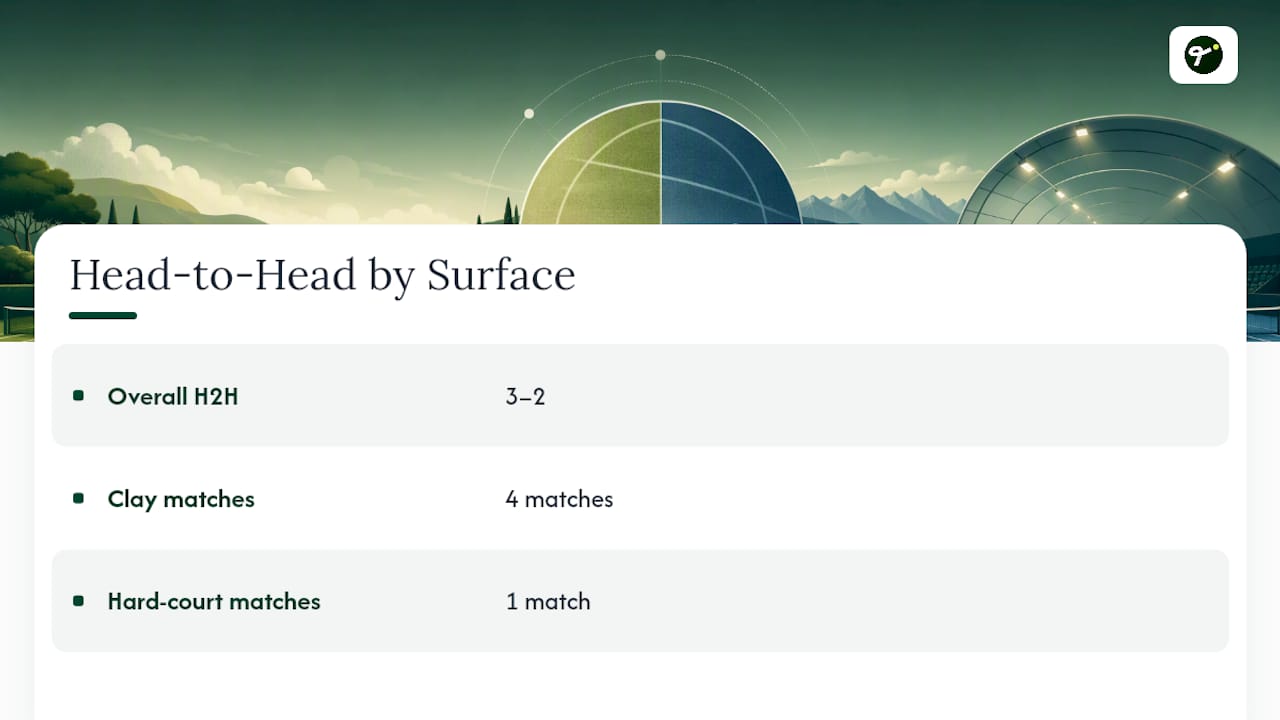
A 3-2 head-to-head sounds close. It rarely is, once you check the surface. If four of those five meetings happened on clay and the fifth was a hard-court blowout, that record tells you almost nothing about a hard-court matchup coming up this week. The lesson: always check whether the "close" number is actually close, or just clustered on one surface that isn't in play.
The reverse pattern shows up constantly too. A player can hold a commanding overall H2H lead against a specific opponent, built mostly on clay and grass results, while losing every meeting they've had on hard courts. Fans previewing a hard-court event off that lopsided overall record end up backing the wrong side. The Ultimate Tennis Statistics database is a good place to isolate that kind of surface split yourself before trusting any headline number, and the biggest rivalries in the sport tend to have exactly this kind of hidden split buried in them.
Once you spot the corrected reading, the fix for a fantasy pick is simple: downgrade the "overall leader" and upgrade the surface specialist, even if the raw tally still favors the other name.
Tweener's approach to head to head tennis stats for fantasy players
Official ATP and WTA head-to-head pages give you the record. They weren't built to help you draft a fantasy roster in five minutes before a contest closes. Tweener closes that gap with tools built specifically for that workflow:
- Surface filters that isolate exactly the split you need for this week's tournament
- Pressure-point metrics layered on top of the raw win-loss count
- Recent-form weighting so a match from three years ago doesn't count the same as one from last month
Nathan's guide on how to research tennis matchups walks through the exact process: check the official H2H, filter by surface and event level, verify scorelines and dates, then layer in pressure stats before setting a recency weight. Run that sequence before your next lineup lock.
What a head to head tennis meaning actually adds to fantasy strategy
Head-to-head numbers get treated like gospel more often than they deserve, mostly because they're the easiest stat to find and the hardest to properly weight. A lopsided record on the wrong surface has cost more fantasy contests than a bad injury update ever has. Tweener exists because tennis fans who actually understand stats deserve a fantasy game that rewards that knowledge instead of ignoring it.
— Nathan
Put head to head tennis data to work in a live contest
Tweener is the fantasy tennis platform built for fans who want their stats knowledge to actually count for something, not just fill a preview article.
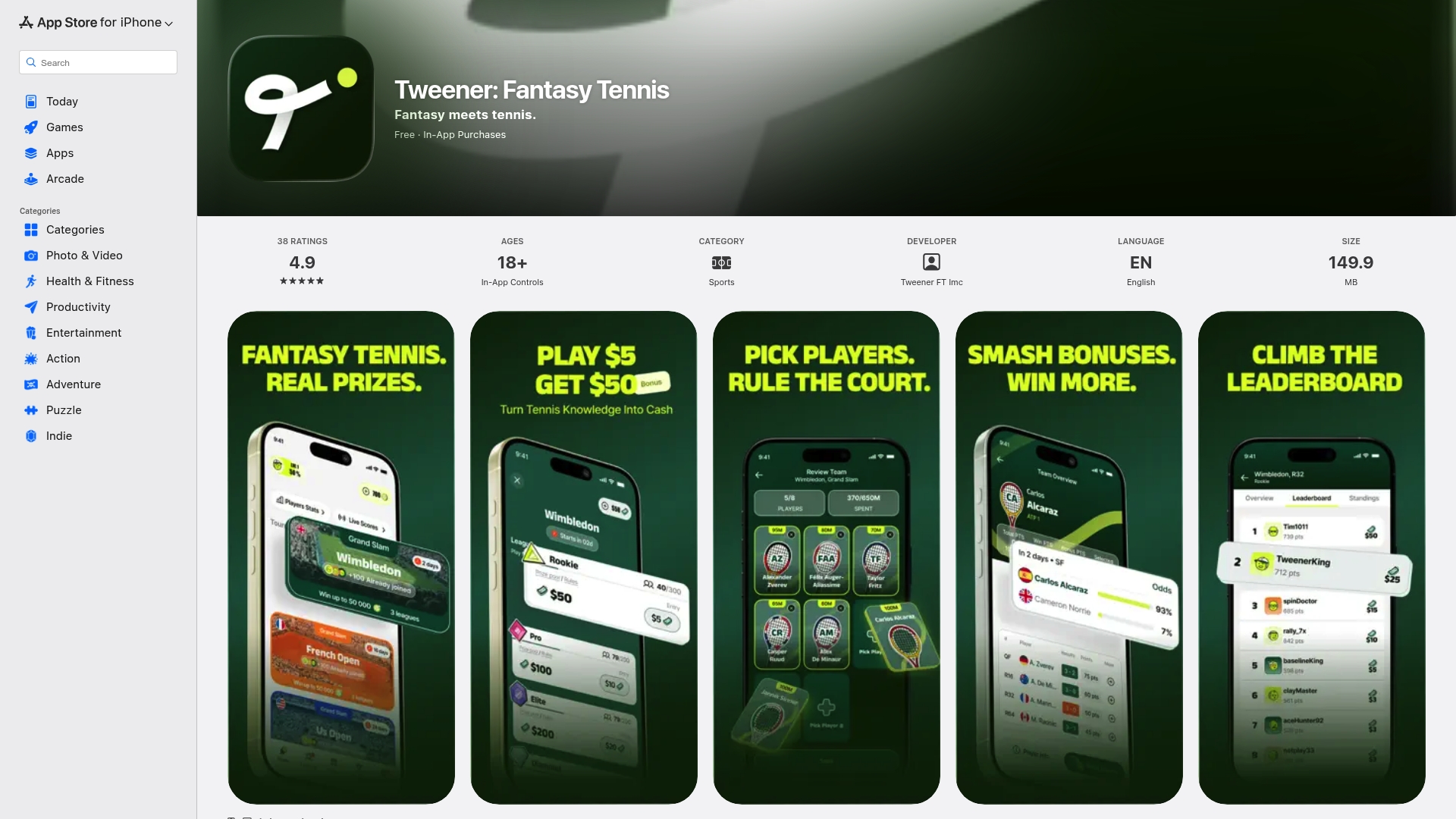
Draft real ATP and WTA players, weigh surface splits and pressure stats the way this article just walked through, and put that analysis against real opponents in public leagues or private leagues with up to nine friends during Grand Slam season. Free mode runs on virtual coins you can redeem for rewards, and cash mode lets you compete for real payouts where it's legally available. Download the Tweener app and build your first roster before the next tournament draw, or check the Tweener homepage to see how the scoring works before you commit a lineup.
Key Takeaways
Head-to-head records tell you who has won more often between two players, but surface, recency, and sample size decide whether that history means anything for the match ahead.
| Point | Details |
|---|---|
| H2H is a raw tally | It counts wins and losses only; it ignores surface, form, and how recent the matches were. |
| Surface splits change everything | Filter every record by surface before trusting it for this week's matchup. |
| Recency beats career totals | Weight meetings from the last 12 to 24 months far more than older results. |
| Pressure stats settle close calls | Break-point and deciding-set performance predicts outcomes better than lifetime H2H counts. |
| Tweener adds the missing context | Surface filters, pressure metrics, and recent-form weighting turn raw H2H into a usable fantasy edge. |
Where to verify a head to head tennis record
- Official ATP head-to-head pages and the WTA head-to-head tool
- Ultimate Tennis Statistics for historical splits and deeper comparisons
- WTN's head-to-head feature for a detailed player-comparison view
Sources
- Head 2 Head | ATP Tour | Tennis
- Tennis Head to Head: H2H Tennis Predictions and Bets
- Ultimate Tennis Statistics