

TL;DR:
- Successful tennis leagues focus on competitive fairness, community engagement, and clear development pathways. They build loyalty through social rewards, low barriers, and scalable formats, ensuring long-term participation and sustainability.
Successful tennis leagues are defined by three measurable pillars: competitive integrity, community engagement, and clear player development pathways. The best examples of successful tennis leagues span every level of the sport, from professional startup circuits backed by $10M+ in funding to junior programs running 14-week home-and-away seasons with 80 players across 18 teams. Organizations like ALTA, with 70,000+ members in Atlanta, and the USTA, which connects local leagues to national playoff structures, prove that no single model owns the formula. What they share is deliberate design: formats that reward skill, cultures that reward loyalty, and systems that keep players coming back season after season.
1. What are examples of successful tennis leagues at the professional level?

Professional tennis leagues succeed when they combine financial backing with format innovation. Intennse is the clearest current example. The league entered its second season in 2026 with 10 teams in Atlanta, supported by more than $10M in funding and targeting $2–3M in revenue. Players can earn up to $70K per season. That pay scale attracts serious talent and signals to sponsors that the league is built to last.
What separates Intennse from earlier failed professional tennis experiments is its format thinking. The league uses a running clock and cumulative scoring rather than traditional set-based play. Those changes compress match time and make the product more watchable for casual fans. Celebrity investors add media credibility, which drives the kind of brand partnerships that sustain a league beyond its first few seasons.
The "season zero" model is the smartest thing Intennse did. Running a low-pressure inaugural season allowed the league to test fan engagement, refine scoring, and identify operational gaps before full commercialization. Most failed leagues skip that step and pay for it.
Key elements driving Intennse's growth:
- Running clock and cumulative scoring to shorten and sharpen match presentation
- $10M+ funding base with a clear revenue target for investor confidence
- Celebrity team owners who attract sponsors and media attention
- Phased expansion plan starting from a single city before going national
- "Season zero" testing to validate format before scaling
Pro Tip: If you are building a professional tennis league, treat your first season as a paid experiment. Measure fan retention and sponsor interest before you commit to expansion costs.
2. How ALTA built a 70,000-member community league
ALTA is the largest local tennis league in the United States, and its success comes down to culture as much as competition. ALTA's 70,000+ members pay $30 in annual dues plus team fees, which keeps the financial barrier low while funding a well-organized operation. The league runs tiered skill levels so players compete against opponents of similar ability, and strict lineup rules prevent sandbagging, which is the practice of deliberately playing below your true level to win easier matches.
The "Bag Tag" system is ALTA's most distinctive feature. These social reward badges create decades of player loyalty in Atlanta tennis communities. Players earn and display tags as markers of competitive achievement, and the culture around them is often more motivating than the matches themselves. That insight matters for any organizer: the social layer of a league can outlast the competitive one.
ALTA also emphasizes doubles play chemistry and year-round team preparation. Teams that train together between seasons perform better and stay together longer. The city finals format gives every division something meaningful to chase, which sustains motivation from the first match to the last.
What makes ALTA's structure replicable:
- Tiered skill divisions with enforced lineup policies to protect competitive fairness
- Low annual membership fee that removes financial friction for new players
- Social reward systems like the Bag Tag that build identity beyond match results
- Year-round team culture that encourages preparation and doubles chemistry
- City finals giving every division a meaningful end-of-season target
Pro Tip: Build a social reward system into your league from day one. Badges, rankings, and public recognition cost almost nothing to implement and dramatically improve retention.
3. Accessible singles leagues that create competitive pathways
The Champaign Singles League is a textbook example of how to grow participation through accessibility. Registration costs $29 for a summer season running from june through august, and no USTA membership is required to join. That second point matters more than the price. Requiring USTA membership before someone can play in a local league adds a bureaucratic step that kills casual interest.
The league runs multiple skill divisions, and top performers advance to USTA district playoffs. That pathway gives competitive players a reason to take the league seriously, while flexible scheduling keeps busy adults from dropping out mid-season. The combination of low cost, no membership barrier, and a real competitive ceiling is exactly what best local tennis leagues need to grow year over year.
Key features of the Champaign Singles League model:
- $29 registration fee, one of the lowest in adult competitive tennis
- No USTA membership required, removing the most common sign-up barrier
- Multiple skill divisions matched to player ability
- Flexible scheduling to accommodate working adults
- Direct pathway to USTA district playoffs for top finishers
4. Junior league success: the Junior South West Summer League model
The Junior South West Summer League wrapped its inaugural season with results that any youth program would want. 80 players across 18 teams completed a 14-week home-and-away season using multiple ball formats suited to different age and development stages. That structure matters because junior players at different levels need different equipment to develop proper technique.
Coach involvement was central to the league's success. Coaches did not just show up on match day. They built supportive environments where sportsmanship and improvement were measured alongside wins and losses. Club and family support reinforced those values off the court. The result was a league where players improved, stayed enthusiastic, and returned for the next season.
| Feature | Detail |
|---|---|
| Total players | 80 |
| Teams | 18 |
| Season length | 14 weeks |
| Format | Home-and-away with multiple ball types |
| Focus | Sportsmanship, improvement, club engagement |
The multiple ball format is worth highlighting for any organizer running a junior program. Red, orange, and green ball progressions allow younger or less experienced players to develop rally consistency before moving to full yellow ball play. Leagues that skip this step see higher dropout rates among beginners.
Pro Tip: For junior leagues, measure success by player retention and improvement, not just match results. A player who improves two levels in a season is a bigger win than a team that wins the title.
5. How Tennis Austin built a community hub model
Tennis Austin demonstrates what happens when a community tennis organization acts as a hub rather than just a league administrator. The organization reaches 7,500+ players annually by combining leagues, tournaments, and educational nonprofit partnerships under one umbrella. That scale is not accidental. It comes from treating every program as a feeder into the next one.
The hub model works because players who start in beginner clinics become league participants, and league participants become tournament competitors. Each layer of the organization supports the others. Nonprofit partnerships add funding and credibility, which allows Tennis Austin to offer programs at price points that pure commercial operators cannot match. For organizers thinking about how to start a tennis league with long-term staying power, the hub model is the most sustainable structure available.
6. What features do all successful tennis leagues share?
The most effective tennis leagues share five operational features regardless of their size or format. Competitive format variety keeps players engaged. Community building through social rewards and flexible scheduling drives retention. Financial sustainability through sponsorships, tiered fees, or nonprofit partnerships keeps the lights on. Fair player matching through skill divisions and enforced lineup rules protects competitive integrity. And clear advancement pathways give ambitious players a reason to stay.
| Feature | Why it matters |
|---|---|
| Skill-based divisions | Prevents mismatches and protects competitive fairness |
| Social reward systems | Builds loyalty beyond match results |
| Flexible scheduling | Retains working adults who would otherwise drop out |
| Transparent lineup rules | Stops sandbagging and maintains trust |
| Advancement pathways | Gives competitive players a long-term reason to participate |
Franchise-based professional leagues add celebrity team owners and corporate sponsors to this list. India's Tennis Premier League, where Rohan Bopanna has emphasized the importance of brand support, shows that professional league sustainability depends on marketing infrastructure as much as tennis quality. Community leagues replace that with culture and social systems. The mechanism differs, but the goal is identical: keep players invested beyond the scoreline.
Removing logistical friction through flexible scheduling and automated skill-level matching is the single most underrated factor in adult league retention. Leagues that make it easy to sign up, schedule matches, and find opponents at the right level grow faster than leagues with superior formats but poor logistics.
Key Takeaways
The most successful tennis leagues combine competitive fairness, social culture, and accessible entry points to sustain participation across every level of the sport.
| Point | Details |
|---|---|
| Format innovation drives pro leagues | Running clocks, cumulative scoring, and "season zero" testing separate growing leagues from stagnant ones. |
| Social rewards outperform trophies | Systems like ALTA's Bag Tag build decades of loyalty that match results alone cannot create. |
| Low barriers grow participation | Removing USTA membership requirements and keeping fees under $30 dramatically increases sign-up rates. |
| Junior leagues need ball progressions | Multiple ball formats matched to age and ability reduce dropout and accelerate development. |
| Hub models sustain communities | Organizations that combine leagues, clinics, and nonprofit partnerships reach more players and last longer. |
What I've learned watching leagues succeed and fail
The leagues that last are not always the ones with the best tennis. They are the ones with the best culture. I have watched well-funded professional circuits collapse because they treated players as content rather than competitors. I have also watched community leagues with modest budgets outlast them by a decade because they built something players actually cared about belonging to.
The hardest lesson for new organizers is transparency. Players will accept a loss. They will not accept a system they do not trust. Enforced lineup rules, published skill ratings, and clear advancement criteria are not bureaucratic overhead. They are the foundation of a league that players recommend to their friends.
Technology is the piece most organizers underestimate. Automated scheduling, digital skill-level matching, and real-time standings do not just save administrative time. They signal to players that the league is professionally run, which raises their expectations of their own participation. If you are thinking about setting up a custom tennis league, start with the infrastructure before you worry about the format.
The final thing I would tell any organizer: do not try to be everything in year one. Intennse ran a "season zero." ALTA spent years refining its Bag Tag culture. Tennis Austin built its hub model incrementally. The leagues that try to launch at full scale almost always collapse under their own weight. Start small, measure what matters, and build the culture before you build the calendar.
— Nathan
Tweener brings the league experience to professional tennis
Tennis fans who love the competitive structure of leagues now have a way to apply that same thinking to ATP and WTA tournaments. Tweener is a fantasy tennis app that lets you build teams from real professional players and compete in leagues based on live match results. You can join public leagues or create private ones with up to nine friends for Grand Slam events, turning every Djokovic match or Swiatek run into a strategic decision with real stakes.
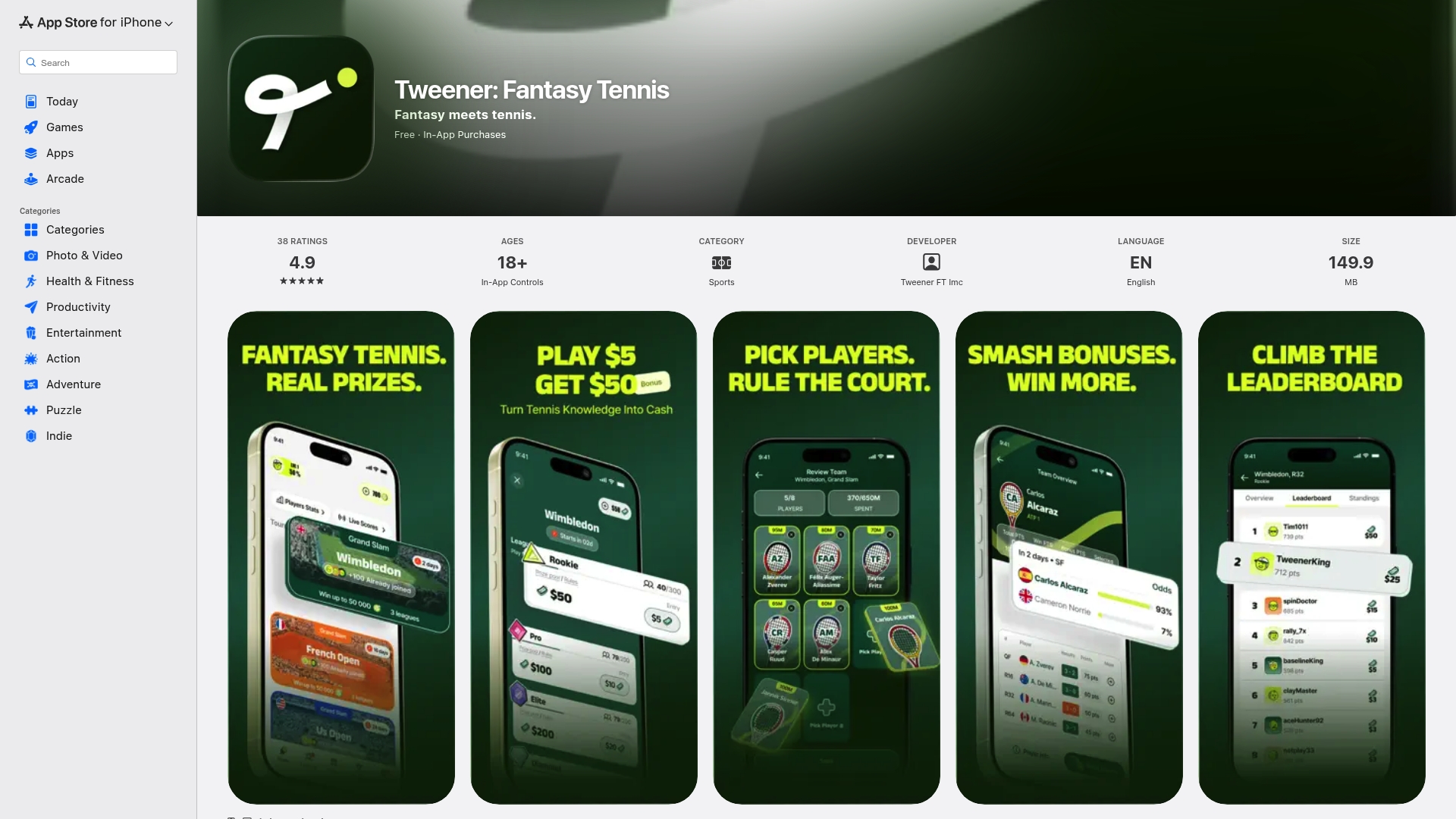
The platform runs two modes. Free play uses virtual coins redeemable for gift cards. Cash mode lets you enter paid contests for real-money payouts where permitted. It is skill-based competition built around tennis league prizes and strategy, not luck. If you follow the ATP or WTA closely enough to have opinions about player form, surface performance, and head-to-head records, Tweener is built for you.
FAQ
What makes a tennis league successful?
Successful tennis leagues combine competitive fairness through skill divisions, social culture through reward systems, and accessible entry points through low fees and flexible scheduling. Leagues that enforce transparent lineup rules and offer advancement pathways retain players longest.
How do I start a tennis league with strong retention?
Start with a clear skill-division structure, a low registration fee, and a social reward system. Remove logistical barriers like mandatory memberships, and use automated scheduling to reduce administrative friction from the first season.
What is the "season zero" model for new tennis leagues?
The "season zero" concept is a low-pressure inaugural season that allows new leagues to test formats, measure fan engagement, and fix operational problems before full commercialization. Intennse used this approach before scaling to 10 teams in 2026.
How large can a local community tennis league grow?
ALTA in Atlanta has grown to more than 70,000 members, making it the largest local tennis league in the United States. That scale was built over decades through tiered skill divisions, low annual fees, and a strong social culture.
Do junior tennis leagues need special formats?
Junior leagues benefit significantly from multiple ball formats matched to player age and development stage. Red, orange, and green ball progressions reduce dropout among beginners and accelerate skill development before players move to full yellow ball competition.