
TL;DR:
- Effective tennis league prizes motivate players by blending tradition, recognition, and community spirit. Incorporating engraved trophies, medals, apparel, and cash rewards ensures broad engagement and sustained participation. A balanced prize program fosters a positive culture and encourages ongoing involvement in the league.
Picking the right prizes for a tennis league sounds simple until you actually try to do it. You want something that excites competitive players, rewards consistent participation, and builds the kind of culture that keeps people coming back next season. The best examples of tennis league prizes span everything from engraved trophies and branded gear to cash series and community spirit awards. This guide breaks down real prize ideas across every category, with practical guidance on cost, motivation, and what actually works in local leagues.
Table of Contents
- Key takeaways
- Examples of tennis league prizes worth stealing
- 1. Custom engraved trophies
- 2. Medals for runners-up and category winners
- 3. Tennis apparel and branded kit
- 4. Tennis equipment prizes
- 5. Cash prizes and prize money pools
- 6. Prize money series across multiple tournaments
- 7. Branded merchandise from sponsors
- 8. Player of the season recognition
- 9. Spirit and sportsmanship awards
- 10. Most improved player awards
- 11. Funny and novelty awards
- Prize type comparison at a glance
- My take on prize design for tennis leagues
- Take your tennis competition further with Tweener
- FAQ
Key takeaways
| Point | Details |
|---|---|
| Tiered prizes boost engagement | Offering awards for multiple categories gives more players a reason to compete through the final week. |
| Points-based trophies build tradition | Engraving names annually on a dedicated trophy creates lasting motivation beyond single-match results. |
| Cash series reward consistency | Prize money distributed across a season encourages sustained attendance and effort, not just one hot weekend. |
| Spirit awards improve retention | Community and sportsmanship prizes make leagues healthier and reduce player drop-off between seasons. |
| Mix prize types for best results | Combining tangible goods, monetary rewards, and recognition awards serves the widest range of player motivations. |
Examples of tennis league prizes worth stealing
The prize structure of a tennis league does more than reward the winner. It shapes who shows up, how hard they compete, and whether they sign up again next year. A well-designed prize list addresses players at every level of the skill ladder, from the first-time participant nervous about losing early to the veteran grinding for top honors. Before you commit a budget, it helps to understand the full menu of options available to you.
1. Custom engraved trophies
Few prizes carry the same staying power as a physical trophy with your name on it. The Claire Anderson Trophy at St Ann's Tennis, for example, is engraved annually with male and female winners going back to 2022. It rewards contribution beyond pure wins, making it something players talk about and aspire to across multiple seasons.
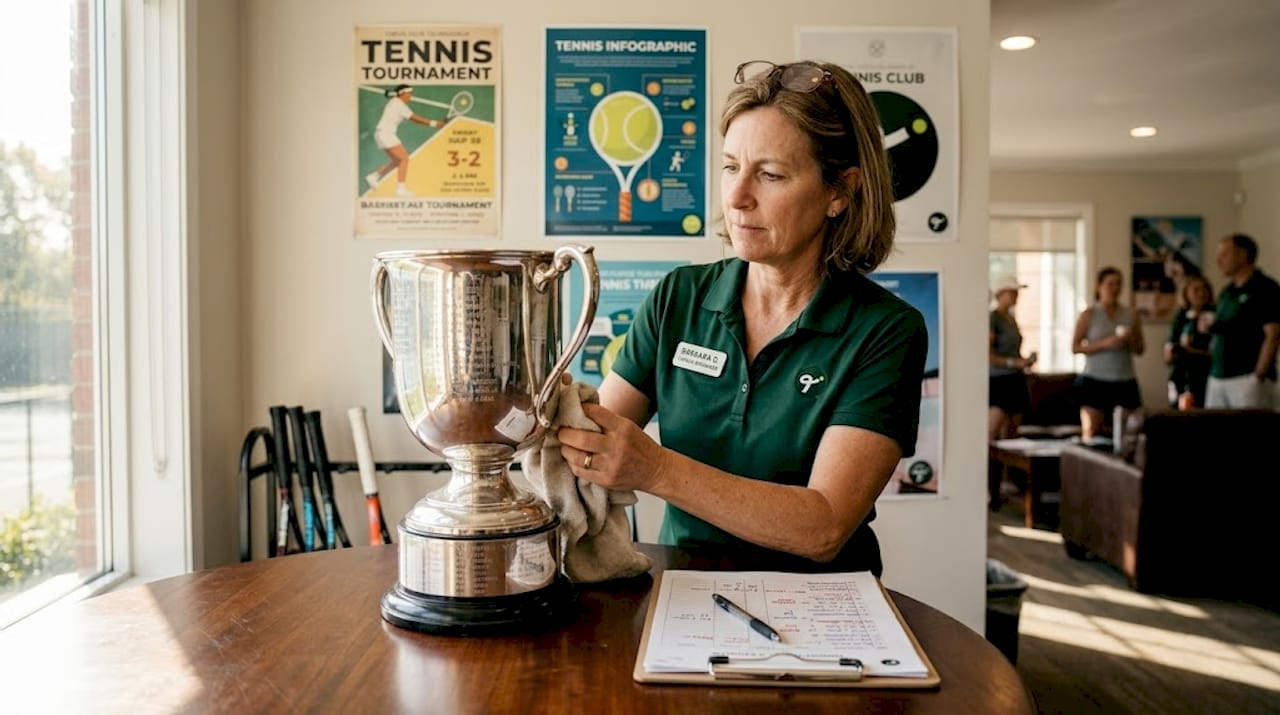
Engraved trophies work best when they accumulate history. A trophy that lists every winner since the league started carries weight that a brand-new plaque never will. Order one quality piece at the start and keep adding names each year rather than buying fresh hardware every season.
Pro Tip: Have the trophy physically present at the end-of-season event so players can hold it before it goes on display. That moment of contact cements its value in everyone's memory.
2. Medals for runners-up and category winners
Medals are the most scalable prize in any league organizer's toolkit. They cost relatively little per unit, scale easily to cover runners-up, semi-finalists, and special categories, and every recipient actually keeps them. Unlike certificates, medals get displayed.
Structure your medal tiers clearly: gold for the champion, silver for runner-up, and bronze for a third-place or consolation final winner. You can also issue separate medals for doubles champions, mixed doubles finalists, and any age-group or skill-division winners. Tiered prizes create multiple moments of recognition across a season, which keeps more players invested deep into the competition.
3. Tennis apparel and branded kit
A league winner's t-shirt feels far more personal than a generic gift card. Real examples from community leagues show that winners receive branded league t-shirts along with drawstring bags, creating a visible reward that also promotes the league when worn. Runners-up and season contributors receive medals or smaller items.
Consider these apparel prize ideas:
- Custom league polo shirts for singles and doubles champions
- Branded warm-up jackets for division winners
- Player of the season award including a full kit set
- Compression sleeves, caps, or visors for third-place finishers
Apparel has a secondary marketing value. Every time a winner wears that shirt to another club or a recreational match, your league gets passive visibility. That is a return most trophies cannot offer.
4. Tennis equipment prizes
Rackets, strings, bags, and grip tape sit at the intersection of useful and aspirational. The ACE Tennis Club Open awards cash alongside YONEX rackets and medals, varying by category and division. This model works well because equipment prizes speak directly to what players actually care about: performing better on the court.
Even if your league budget cannot stretch to full rackets, smaller equipment prizes land well. Replacement strings from a premium brand, a high-quality overgrip set, or a padded racket bag for the runner-up all feel relevant and thoughtful. Players use these items every week, so the prize stays top of mind long after the season ends.
Pro Tip: Partner with a local sporting goods store for equipment prizes. Many shops will discount or donate prizes in exchange for a logo on your league communications and event banner.
5. Cash prizes and prize money pools
Money is direct. Players know exactly what they are competing for, and it scales neatly to the stakes your league wants to set. At the professional level, scale puts everything in perspective. The 2026 Rome Masters singles champion earns over €1 million. Local leagues obviously operate in a very different range, but the motivational logic is the same.
A common structure for adult amateur leagues is a modest prize pool funded by entry fees. A portion goes to the singles champion, a smaller portion to the runner-up, and the remainder covers doubles or consolation prizes. Keep the math transparent. Players are more likely to pay entry fees when they understand exactly where the money goes and what they can win.
Check out this guide to cash contest rewards for more on how monetary incentives structure competitive engagement.
6. Prize money series across multiple tournaments
Single-event cash prizes reward one weekend of good form. A series model rewards the player who shows up, competes hard, and earns points across an entire season. The USTA Missouri Valley adult program awards $1,500 per person to series winners who accumulate the most points across seven district-level tournaments. That model virtually eliminates drop-off between events because every match matters for the standing.
Prize series models reward consistency over single bursts of performance, making your league stronger from round one through the finals. If running a full series feels complex to manage, even a two or three-event mini-series with a small points bonus for the overall winner achieves a similar effect.
7. Branded merchandise from sponsors
Sponsorship turns prizes into a funding opportunity instead of a cost center. Approach local tennis brands, sports nutrition companies, or athletic apparel labels with a simple offer: your logo on league communications in exchange for merchandise prizes. The ACE Tennis Club Open's use of YONEX products alongside cash illustrates how branded gear raises the perceived value of a prize package without necessarily increasing your out-of-pocket spend.
Think beyond racket brands too. Sports drinks, sunscreen, athletic socks, and fitness trackers all make viable prizes when sourced through a brand partnership. The key is relevance. A tennis player has no use for a coffee shop gift card as a league prize, but a 3-month string service plan from a local pro shop? That gets talked about.
8. Player of the season recognition
A dedicated "player of the season" award that goes beyond wins and losses is one of the most underused prize types in local leagues. At St Ann's Tennis, points are awarded for matches played and contributions made, not just victories. The player who shows up consistently, helps organize events, or mentors newer members earns recognition alongside the champion.
The prize itself does not need to be expensive. A keyring, a small plaque, or even a custom pin badge paired with a genuine announcement at the season-end gathering carries weight. What matters is that the criteria are published in advance so players know what behaviors are being rewarded all year.
9. Spirit and sportsmanship awards
Community is what keeps recreational leagues alive between Grand Slam seasons. USTA SoCal assigns a "Spirit Award" in its adult leagues based on fan and peer votes collected through social media. The winner is chosen by the people they play alongside, which gives the award a meaning that no judges' panel can replicate.
A sportsmanship or spirit award costs almost nothing to implement and pays dividends in league culture. Announce the award category at the start of the season, collect votes digitally in the final week, and present the prize at your end-of-season event. Pair it with a modest physical item, a small trophy, a custom water bottle, or a season pass for the following year, and you have created a prize that genuinely reflects your league's values.
Pro Tip: Post the spirit award winner on your league's social media page with a short write-up about why they won. That story will mean more to most players than a photo of the championship trophy.
10. Most improved player awards
Beginner and intermediate players often have no realistic path to the championship trophy. A dedicated "most improved" award gives those players a meaningful target and a reason to commit to the whole season rather than dropping out after a few early losses. Recognizing measurable progress, tracked through win rates, match scores, or coach assessments, makes the league feel inclusive at every skill level.
Pair this with a thoughtful prize: a lesson package with a local coach, a new set of strings, or even a framed certificate with a personalized note from the league organizer. The cost is low. The motivation it creates is not.
11. Funny and novelty awards
Not every prize needs gravitas. Leagues with a social culture often include a few tongue-in-cheek awards at end-of-season gatherings. "Most double faults in a season," "best post-match excuse," or "loudest grunter" categories get people laughing, ease the pressure off competitive results, and make the event memorable for everyone. Pair these with small novelty gifts, a funny mug, a custom tennis ball with the award title on it, and the room energy at your prize ceremony will shift entirely.
Prize type comparison at a glance
| Prize type | Typical cost range | Motivational impact | Best for |
|---|---|---|---|
| Engraved trophies | $30–$150 per item | High. Lasting tradition | League champions and season long awards |
| Medals | $5–$20 per item | Medium. Scalable recognition | Runners-up, divisions, age groups |
| Apparel and kit | $25–$80 per item | High. Worn publicly | Champions and standout contributors |
| Equipment prizes | $30–$200 per item | High. Directly useful | Division winners, player of the season |
| Cash prizes | Variable, entry-fee funded | Very high. Universal appeal | Adult competitive leagues with paid entry |
| Branded merchandise | Low if sponsored | Medium to high | All categories when sponsorship is available |
| Spirit and culture awards | Under $20 | High for community health | Any league prioritizing retention |
A strong prize program mixes at least three of these categories. Champions get the high-value tangible prize. Runners-up and division winners receive medals or apparel. Everyone else has a shot at a spirit or improvement award. That spread means no player finishes a season with nothing to show for their effort.
My take on prize design for tennis leagues
I've run and participated in enough adult tennis leagues to know that the prizes players remember are rarely the most expensive ones. What sticks is the trophy with names going back a decade, the spirit award you didn't expect to win, or the branded racket bag that reminds you of the season every time you pick it up.
What I've found is that organizers often over-invest in one giant prize for the champion and under-invest everywhere else. That structure rewards one person and leaves the other 30 participants with nothing. The leagues with the best retention, the ones that fill up fast every new season, spread recognition across multiple players and reward behaviors beyond raw winning.
My strong recommendation is to start with an engraved trophy for the main title because tradition cannot be faked or rushed. Add a points-based award that tracks appearances and contributions, not just wins, because that structure motivates your most engaged players even when they are losing. Then budget something small for a spirit or community award voted on by peers. That combination, tangible tradition plus performance recognition plus community culture, produces a fantasy tennis prize structure that works at almost any budget level and for almost any group of players.
— Nathan
Take your tennis competition further with Tweener
If running a prize-based tennis league has you thinking about how to keep players engaged between match days, Tweener is worth exploring. Tweener is a fantasy tennis app where you compete using real ATP and WTA player results during live tournaments. You can create private leagues with friends, compete for virtual coins redeemable for gift cards, or enter cash contests where real-money payouts are available.
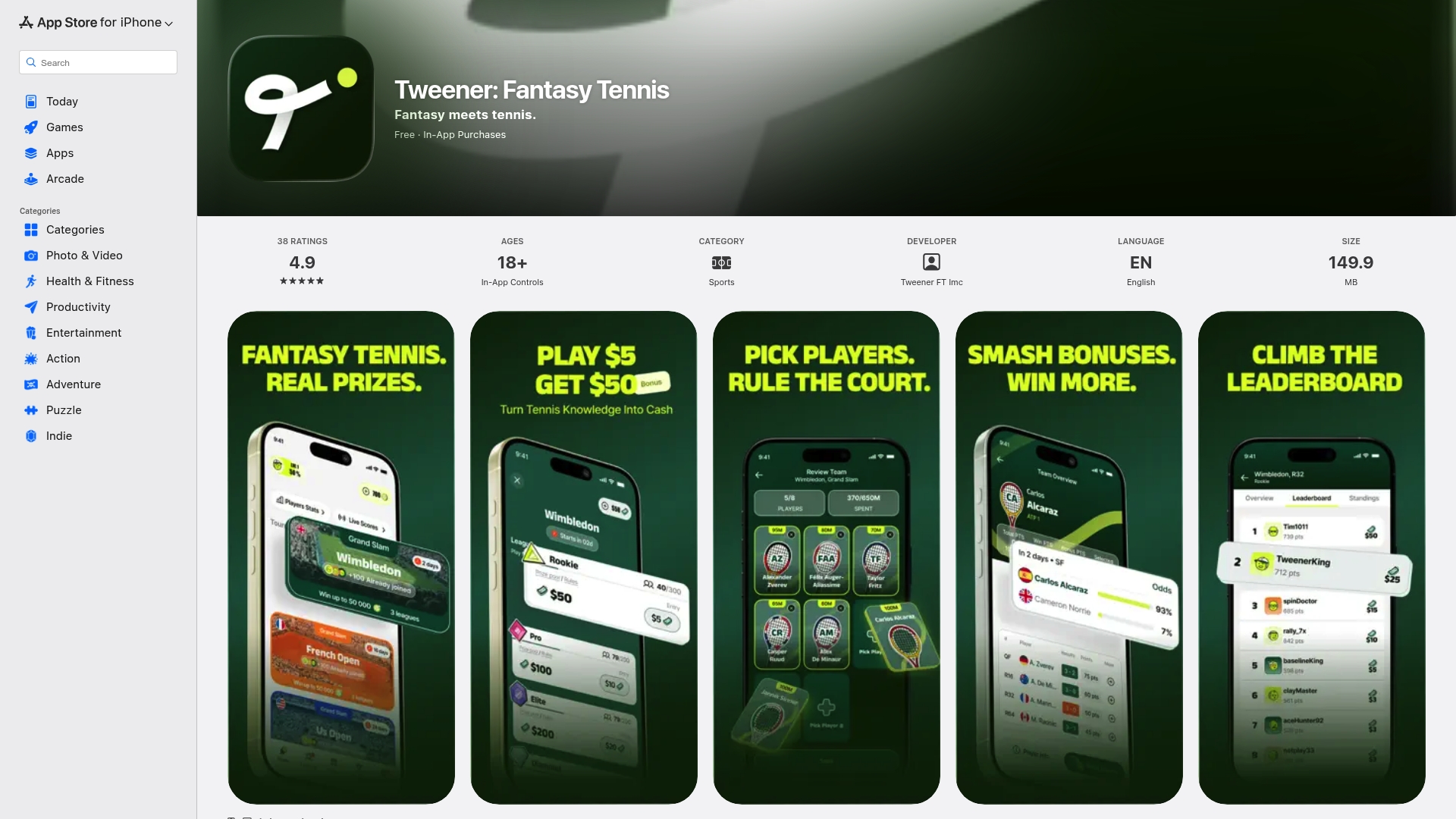
It brings the same spirit of competition and reward that makes a well-designed prize league addictive, and it runs alongside your regular match play rather than replacing it. Whether you want to learn more about fantasy sports rewards or how prize structures shape strategy, Tweener's blog covers it in depth. Download the app at tweener.io and give your tennis season a competitive layer it has been missing.
FAQ
What are the most common tennis league prizes?
The most common types of tennis league awards include engraved trophies for champions, medals for runners-up, branded apparel, and equipment prizes like rackets or bags. Many leagues also include special recognition awards such as player of the season or most improved.
How much should prizes for local tennis leagues cost?
Prizes for local tennis leagues typically range from $5 for participation medals to $150 or more for engraved trophies. Most organizers fund prize pools through entry fees and supplement with sponsor merchandise to keep individual costs low.
What are good creative prize ideas for tennis leagues?
Spirit awards voted on by peers, most improved player recognition, novelty awards for funny in-season moments, and points-based season trophies all go beyond standard winners and losers and build a stronger league culture.
How do prize money series work in tennis leagues?
A prize money series rewards the player who accumulates the most points across multiple tournaments during a season rather than winning a single event. The USTA Missouri Valley model, for example, awards $1,500 to the series leader across seven district tournaments.
Should tennis league prizes be physical or monetary?
The best approach combines both. Physical prizes like trophies and apparel create lasting emotional value, while monetary rewards or gift cards appeal to players motivated by direct financial incentives. Mixing the two serves the widest range of participant motivations.