

TL;DR:
- The play-in format requires lower-seeded teams to win preliminary games to qualify for the main playoff bracket. It favors higher seeds by giving them multiple chances to advance and encourages competitiveness among bubble teams. The NBA adopted it permanently in 2021 to boost late-season engagement and reduce tanking.
A play-in format is a tournament structure where teams compete in preliminary games to earn the final spots in a main playoff bracket. Rather than granting automatic entry based on seeding alone, the format forces teams on the bubble to win their way in. The NBA's play-in tournament is the most visible current example, with teams seeded 7th through 10th battling for the 7th and 8th playoff seeds in each conference. This structure raises the stakes of late-season games, rewards competitive effort, and gives fans more meaningful matchups before the main event even begins.

What is a play-in format and how does it work in the NBA?
The play-in format is defined as a pre-playoff competition where a set of lower-seeded teams play a short series of elimination or double-chance games to fill the final spots in a bracket. The NBA version is the clearest model in professional sports today.
In the 2026 NBA Play-In Tournament, teams seeded 7th through 10th in each conference compete for the 7th and 8th playoff seeds. The structure gives higher seeds a meaningful advantage without handing them a free pass.
The game sequence
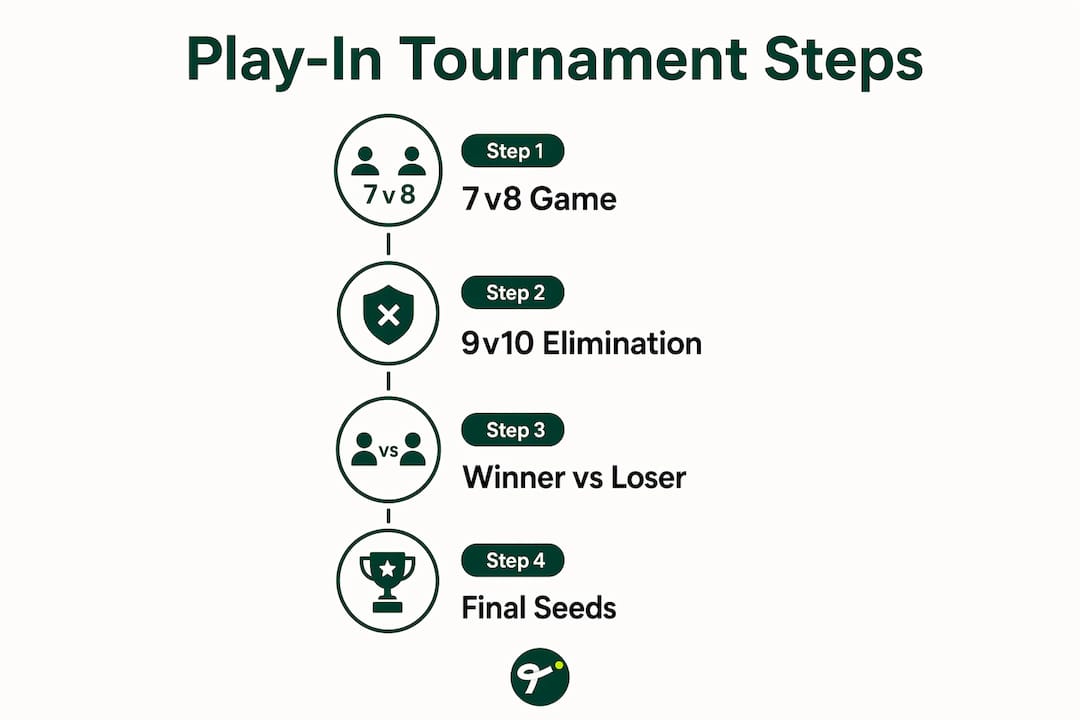
The format runs in three stages per conference:
- Game 1: The 7th seed hosts the 8th seed. The winner earns the 7th playoff spot automatically.
- Game 2: The 9th seed hosts the 10th seed. The loser is eliminated from the playoffs entirely.
- Game 3: The loser of Game 1 hosts the winner of Game 2. The winner of this game takes the 8th playoff seed.
This means the 7th and 8th seeds each get two chances to advance. The 9th and 10th seeds must win back-to-back elimination games to reach the playoffs. That asymmetry is intentional. It rewards teams that performed better during the regular season.
Schedule and broadcast
The 2026 NBA Play-In Tournament spans four days, running from april 14 through april 17. Six games take place across both conferences before the full playoff bracket locks in. Games air on major networks including TNT and ESPN, giving the event prime-time visibility.
| Seed matchup | Stakes | Advantage |
|---|---|---|
| 7 vs. 8 | Winner gets 7th seed | Both teams get a second chance |
| 9 vs. 10 | Loser is eliminated | Winner gets one more game |
| Loser of 7/8 vs. Winner of 9/10 | Winner gets 8th seed | None. Single elimination |
Pro Tip: If your favorite team finishes 7th or 8th, they control their own destiny. One win and they're in. That's a real advantage over the 9th and 10th seeds, who need two straight wins just to survive.
What strategic advantages and challenges does the play-in format create?
The play-in format changes how teams approach the final weeks of the regular season. Finishing 7th instead of 9th is no longer just a matter of pride. It is the difference between one must-win game and two consecutive elimination games.
Higher seeds carry a structural edge. The 7th and 8th seeds only need to win one game to advance, which means they can absorb a loss and still compete. That cushion allows coaches to manage rotations and rest key players more carefully heading into the play-in.
Lower seeds face a completely different reality. The psychological pressure on 9th and 10th seeds is significant. Every game in the play-in period is a must-win, and there is no margin for a bad night from a star player. Teams in these spots tend to play with higher intensity but also higher risk, which produces some of the most watchable basketball of the year.
The format also reshapes regular-season strategy in specific ways:
- Avoiding the 9-10 zone: Teams near the bubble push hard to finish 7th or 8th, knowing the double-chance buffer is worth fighting for.
- Targeting the 7th seed: Finishing 7th means hosting Game 1 and Game 3 if needed, adding a home-court factor.
- Managing player health: Teams with a secure 7th or 8th seed may rest players in the final regular-season games, knowing they have a safety net.
- Scouting play-in opponents: Coaches treat the play-in like a mini-playoff series. Film work and game-planning intensify in the final two weeks of the regular season.
Pro Tip: Fantasy sports fans should pay close attention to which seed their players' teams land on. A player on a 9th-seed team faces must-win pressure immediately, which can mean higher usage rates and more statistical output in a single high-stakes game.
Why do leagues use play-in formats?
The play-in format solves a real problem in professional sports: late-season irrelevance. Without it, teams that fall out of clear playoff contention by march have little reason to compete hard in april. The play-in changes that math entirely.
NBA Commissioner Adam Silver championed the play-in format specifically to drive engagement and reduce tanking. Tanking is the practice of losing intentionally late in the season to secure a better draft pick. When more teams have a realistic shot at the playoffs, the incentive to lose disappears.
"The play-in format keeps more teams competitive deep into the season, which means more meaningful games, higher attendance, and better television ratings. It is not just a structural fix. It is a business decision that also happens to be good for the sport."
The benefits extend beyond the NBA. Play-in formats appear in volleyball, collegiate basketball, and other sports, often adapted to local tournament needs. The core logic is the same across all of them: make teams earn their spot through competition, not just by showing up with a good enough record.
Key benefits the format delivers:
- Reduces tanking: Teams near the bubble compete to win, not to lose.
- Increases late-season viewership: More teams in contention means more fans watching in april.
- Eliminates unearned byes: Every playoff spot requires winning a game, not just finishing in a certain position.
- Creates appointment television: High-stakes single-elimination games draw casual fans who might skip a regular-season matchup.
- Rewards regular-season performance: The seeding advantage for 7th and 8th seeds gives real meaning to finishing higher in the standings.
The NBA Play-In became a permanent fixture in 2021 after strong fan and league feedback. That permanence signals that the format works. Leagues do not keep structures that hurt ratings or competitive quality.
How does the play-in format compare to other tournament structures?
The play-in format sits between a straight qualifying round and a full double-elimination bracket. Understanding where it fits helps clarify why leagues choose it over other options.
In a traditional playoff format, the top eight teams in each conference advance automatically based on their regular-season record. There are no preliminary games. A team that finishes 8th gets the same entry as a team that finishes 1st, just with a worse seed and a harder first-round matchup. That system is simple, but it creates a hard cutoff that leaves bubble teams with nothing to play for once they fall out of the top eight.
A full double-elimination bracket, used in baseball's minor leagues and many amateur tournaments, gives every team two losses before elimination. This is the most forgiving structure, but it requires significantly more games and time. Professional leagues with long regular seasons cannot absorb that kind of schedule expansion.
The play-in format avoids byes and ensures all playoff slots are earned through direct competition. It is especially useful when the total number of qualifying teams is not a clean power of two, since it fills bracket slots without forcing artificial byes or uneven draws.
| Format type | Byes allowed | Teams with second chances | Late-season stakes |
|---|---|---|---|
| Traditional top-8 | Yes | None | Low for bubble teams |
| Full double-elimination | No | All teams | High throughout |
| Play-in format | No | Higher seeds only | High for seeds 7–10 |
| Single knockout | No | None | Extreme, every game |
The play-in sits in the middle of this spectrum. It is more forgiving than a single knockout round but more demanding than automatic qualification. That balance is why leagues like the NBA have adopted it and kept it.
Understanding how tournaments are seeded helps put the play-in structure in context, especially when comparing it to formats where seeding alone determines bracket placement.
Key Takeaways
The play-in format is the most effective structure for keeping bubble teams competitive, eliminating unearned byes, and generating high-stakes games that traditional playoff seeding cannot produce.
| Point | Details |
|---|---|
| Core definition | A play-in format requires teams to win preliminary games to earn the final playoff spots. |
| NBA structure | Seeds 7–10 compete across three games per conference for the 7th and 8th playoff seeds. |
| Seeding advantage | The 7th and 8th seeds get two chances to advance; the 9th and 10th seeds face back-to-back elimination. |
| Anti-tanking effect | More teams stay competitive late in the season, reducing the incentive to lose for draft positioning. |
| Broader adoption | Volleyball, collegiate basketball, and other sports use play-in structures adapted to their own formats. |
The play-in format is better than most fans realize
I have watched a lot of sports formats come and go, and the play-in is one of the few structural changes in recent memory that actually delivered on its promise. When the NBA introduced it permanently in 2021, the criticism was loud. Established teams complained that a 7th-seed team with a strong record could lose to a 10th-seed team that barely qualified. That criticism is fair on its face. But it misses the bigger picture.
The play-in does not punish good teams. It rewards competitive effort across a longer stretch of the season. A team that finishes 7th still has two chances to advance. A team that finishes 10th has to run a gauntlet. That asymmetry is the whole point. The format creates a gradient of difficulty that mirrors how well teams actually performed.
What I find most interesting is how the format changes the viewing experience. Games in april that would have been meaningless under the old system are now must-watch television. Coaches are making real tactical decisions. Stars are playing hard. That is good for sports, full stop.
The one area where I think the format still has room to grow is in how other leagues adapt it. Tennis, for example, does not use a play-in structure in its Grand Slam draws, but the concept of preliminary qualifying rounds serves a similar function. Understanding tournament format structures across sports makes you a sharper fan and a better fantasy player. The play-in format is not going away. If anything, more leagues will adopt versions of it in the next decade.
— Nathan
Tweener brings tournament format knowledge to life
Understanding play-in formats and tournament structures is not just academic. It changes how you watch sports and how you compete in fantasy leagues.
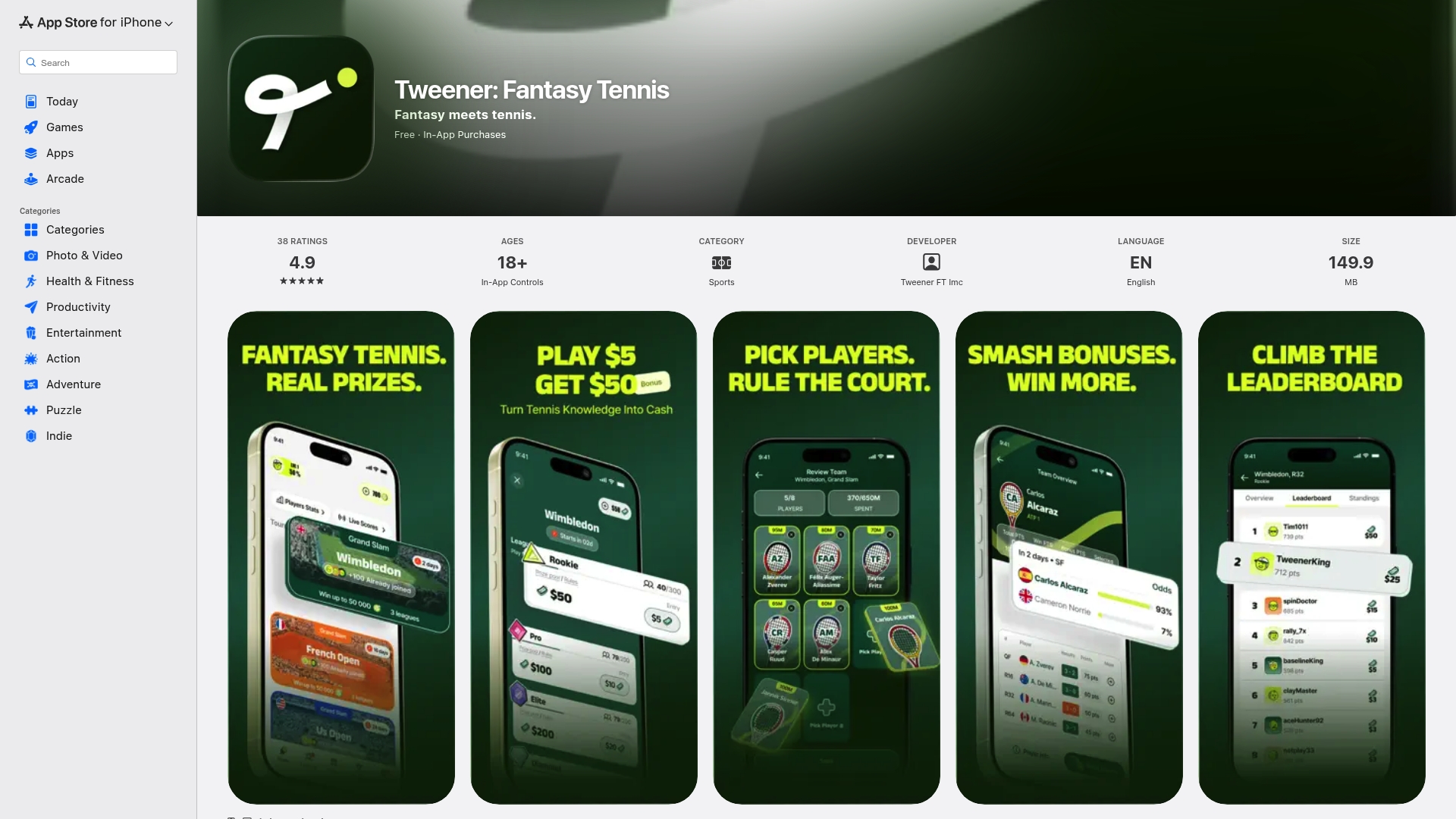
Tweener is the fantasy tennis app built for fans who think analytically about competition. You build teams from real ATP and WTA players, earn points based on live match results, and compete in public or private leagues throughout real tournaments. The same strategic thinking that helps you understand why a 9th-seed team plays differently than a 7th-seed team applies directly to fantasy tennis strategy on Tweener. Whether you play for virtual coins or real-money prizes, the format knowledge you bring to the table is a genuine edge. Download Tweener and put that edge to work.
FAQ
What is a play-in format in simple terms?
A play-in format is a short series of preliminary games where lower-seeded teams compete to earn the final spots in a main playoff bracket. Teams must win their way in rather than qualifying automatically by record.
How does the NBA play-in tournament work?
Teams seeded 7th through 10th in each conference play three games to determine the 7th and 8th playoff seeds. The 7th and 8th seeds each get two chances to advance, while the 9th and 10th seeds face immediate elimination if they lose.
Why did the NBA adopt the play-in format permanently?
The NBA made the play-in a permanent fixture in 2021 after it proved effective at increasing late-season competition and reducing tanking. More teams staying in contention longer drives higher attendance and television ratings.
Do other sports use play-in formats?
Yes. Volleyball, collegiate basketball, and several other sports use play-in or play-in-style structures to decide final tournament participants and maintain competitive balance across their brackets.
What is the difference between a play-in game and a regular playoff game?
A play-in game is a preliminary contest that determines who enters the main playoff bracket. A regular playoff game is played between teams that have already qualified, competing for advancement within the bracket itself.