

TL;DR:
- In-app purchases drive game revenue by monetizing engaged players through digital goods like currency, skins, and passes. A small percentage of high-spenders generate the majority of income, emphasizing the importance of retention and trust. Platform policies in 2026 impact pricing transparency, fairness, and how developers structure purchase options to sustain engagement.
In-app purchases (IAPs) are defined as digital goods and services bought within a mobile game, and their role in gaming is to convert player engagement into sustainable revenue without charging upfront. Free-to-play titles on the Apple App Store and Google Play depend on IAPs as their primary income source, selling everything from virtual currency and cosmetic skins to battle passes and power-ups. Understanding how this monetization model works matters whether you are a casual player spending a few dollars or a competitive gamer trying to decide what is actually worth buying. The economics are more concentrated, and the platform policies more influential, than most players realize.
How do in-app purchases generate revenue in gaming?
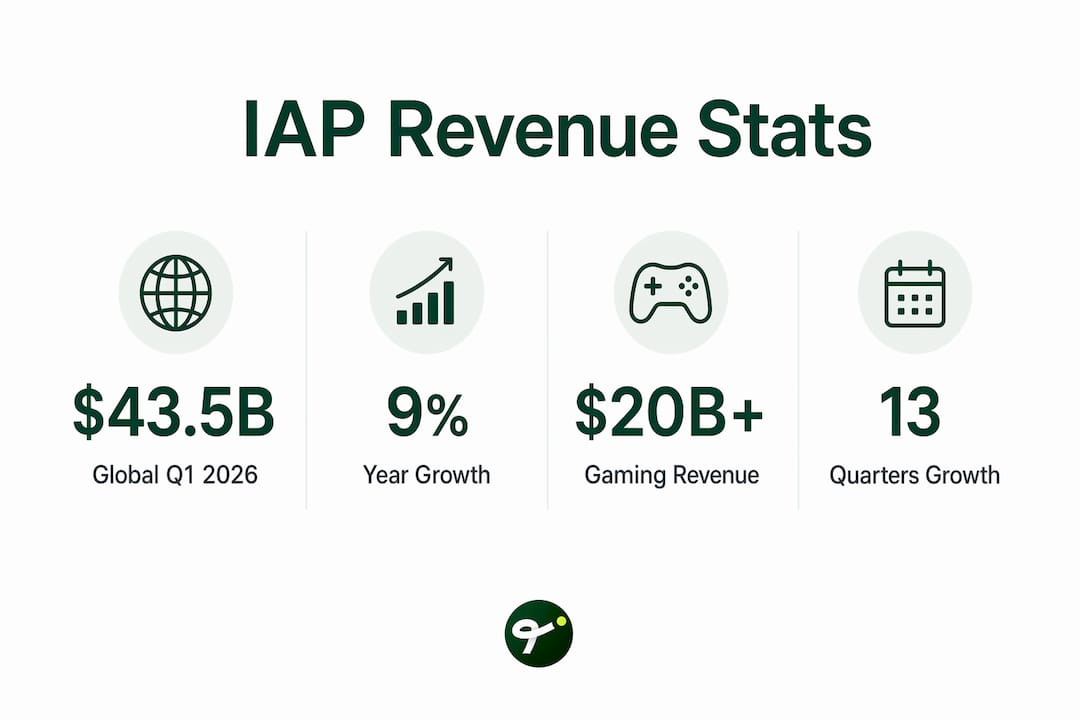
Global IAP revenue reached $43.5 billion in Q1 2026, marking 13 consecutive quarters of growth at 9% year over year. That number tells you this is not a niche revenue stream. It is the financial backbone of the modern mobile gaming industry.
Gaming IAP revenue holds steady at $20 to $21 billion per quarter, while non-gaming apps are now growing faster. That shift signals that the model pioneered by mobile games has spread across the entire app economy, from streaming services to fitness platforms.
The most striking data point in gaming monetization is the spending concentration. Just 10% of purchasers generate 90% of total IAP revenue. That means the vast majority of players spend nothing or very little, while a small group of high-engagement users carries the entire revenue model. For developers, this makes identifying and retaining that top tier far more important than converting casual browsers.
Free-to-play games expand the acquisition funnel dramatically by removing the upfront price barrier. More players enter, more players engage, and a percentage of those convert to paying users over time. Emerging markets in Southeast Asia, Latin America, and Africa are accelerating this funnel further, bringing millions of new mobile gamers into ecosystems where IAPs are the default purchase model.
"The free-to-play model doesn't just lower the barrier to entry. It reframes the entire value exchange: players pay for ongoing value, not a one-time product."
| Metric | Figure |
|---|---|
| Global IAP revenue, Q1 2026 | $43.5 billion |
| Year-over-year growth | 9% |
| Gaming IAP revenue per quarter | $20 to $21 billion |
| Share of revenue from top 10% of buyers | 90% |
What are the types of in-app purchases in games?
IAPs fall into three core categories, and knowing the difference helps you spend smarter.
Consumables are items used once and gone. Virtual currency, extra lives, and temporary power-ups all fit here. They are designed to be repurchased repeatedly, which is why they dominate IAP catalogs in games like Clash of Clans or Candy Crush.
Non-consumables are permanent unlocks. Level packs, character skins, and ad removal upgrades are classic examples. You buy them once and keep them indefinitely. Apple's App Review Guidelines require these to be restorable across devices, which shapes how developers build their purchase architecture.
Subscriptions and battle passes sit in a hybrid category. A battle pass like those in Fortnite or Call of Duty Mobile offers a timed content track for a flat monthly or seasonal fee. Subscriptions provide ongoing access to premium features or content libraries.
Apple mandates that IAP be used for all in-app content unlocks and that every item be complete, functional, and visible to App Review. Missing or hidden IAPs delay approval. Loot boxes, which deliver randomized rewards, must disclose their odds. This disclosure requirement is one of the most player-protective policies in the current app store ecosystem.
Google Play's 2026 fee structure is more tiered. Service fees range from 5% to 25% depending on purchase type, install origin, and program participation, with an additional 5% billing fee when Google Play Billing is used. Developers can now use external billing with link-outs, which opens new pricing flexibility but adds complexity to purchase flow design.
Pro Tip: When you see a "starter pack" appear within your first few minutes of a new game, that is deliberate design. Developers stage their lowest-priced offers early in the retention funnel to lower the psychological barrier to a first purchase. You are not getting a special deal. You are being introduced to the purchase habit.
| IAP Type | Examples | Repurchase? |
|---|---|---|
| Consumable | Currency, lives, power-ups | Yes, repeatedly |
| Non-consumable | Skins, level packs, ad removal | No, permanent |
| Subscription / battle pass | Season passes, premium tiers | Yes, recurring |
How do in-app purchases affect player behavior?
The most important behavioral mechanic in IAP design is the feedback loop Stripe describes as "buy more because you stay longer." The longer a player stays in a game, the more attached they become to their progress, their character, and their standing in the community. That attachment increases willingness to spend. Developers who understand this design for depth first and monetization second.

Time to first purchase is a critical metric. Getting a player to make even a small initial transaction, sometimes as low as $0.99, dramatically increases the probability of future spending. Designing staged purchase options early in the retention funnel creates more monetization opportunities as engagement deepens. The first purchase is not about the revenue. It is about crossing a psychological threshold.
Player segmentation drives the most sophisticated monetization strategies. Developers split their user base into non-spenders, low spenders, mid-tier spenders, and "whales," the high-value cohort that generates disproportionate revenue. Personalized offers, limited-time bundles, and VIP programs are all aimed at identifying and retaining that top segment.
UX details matter more than most players realize. Refund clarity, currency labeling, and disclosure timing disproportionately affect top-spending player retention. When a player feels confused or deceived by a purchase flow, the damage to trust is permanent. That is why the best-monetized games invest heavily in purchase transparency, not just purchase volume.
Pro Tip: If a game uses a virtual currency layer (buying "gems" to then spend on items), pause before purchasing. The currency conversion obscures the real-dollar cost of each item. Calculate the actual price in your local currency before committing.
The in-app rewards structure in well-designed games reinforces engagement without requiring every player to spend. Earning currency through gameplay, completing daily challenges, and redeeming rewards for real-world value keeps non-spenders engaged while creating a natural path toward paid participation.
What do 2026 app store policy changes mean for players?
Platform policy changes in 2026 are reshaping how developers price and present IAPs, and the effects reach players directly.
Google Play's new tiered fee structure gives developers more flexibility to experiment with pricing. When fees drop from 30% to as low as 5% for certain purchase types, developers can pass savings to players through lower prices or more generous bundles. Platform fee changes are already leading to more experimentation with pricing and billing, which means you may start seeing more varied offer structures in Android games.
The ability to use external billing with link-outs on Google Play is significant. Developers can now direct players to a web-based purchase flow, potentially at a lower price than the in-app option. This creates a two-tier pricing reality where informed players who follow external links may pay less for the same content.
Apple's stance remains stricter. IAP items must be complete and visible to reviewers, and the mandatory use of Apple's billing system keeps pricing more uniform across iOS titles. The odds disclosure requirement for loot boxes is a meaningful consumer protection, giving players the information they need to evaluate whether a randomized purchase is worth the cost.
Key implications for players in 2026:
- Android users may find better prices through developer web stores linked from within games
- Loot box odds must now be disclosed on Apple platforms, making randomized purchases more transparent
- Battle passes and subscriptions are growing as developers favor predictable recurring revenue over one-time purchases
- Starter packs and first-purchase discounts are deliberately placed early in the player journey
Understanding entry fees and purchase structures in competitive gaming apps helps you evaluate whether a paid entry point delivers genuine value or simply gates content you could access through sustained free play.
How do in-app purchases shape the overall gaming experience?
The effects of in-game purchases on player experience are genuinely mixed, and the data reflects that tension. 71% of surveyed gamers say microtransactions affect their enjoyment somewhat negatively, yet the same players spend an average of £105.27 per year on in-game extras. Players dislike the system in principle but participate in it in practice. That gap between stated preference and actual behavior defines the modern IAP economy.
The pay-to-win debate is the sharpest fault line in this space. When IAPs provide competitive advantages, such as stronger gear, faster progression, or exclusive abilities, they undermine the fairness that makes competition meaningful. The most respected mobile games, and the ones with the longest player retention, keep IAPs cosmetic or convenience-based rather than power-based.
Recurrent revenue from IAPs enables something genuinely valuable: ongoing content development. Games like Genshin Impact and PUBG Mobile fund continuous updates, new characters, seasonal events, and live service features entirely through IAP revenue. Without that income stream, post-launch support would be financially unsustainable for most studios.
The future of IAP-driven gaming economies points toward four trends:
- Personalized offers based on individual play patterns and spending history
- Subscription models replacing one-time purchase catalogs for premium content
- Greater pricing transparency driven by platform disclosure requirements
- Hybrid monetization combining ads, subscriptions, and IAPs to serve different player segments
The benefits of interactive sports apps illustrate how skill-based platforms can use IAPs to enhance competition without compromising fairness, a model that pure entertainment games are increasingly trying to replicate.
Key takeaways
In-app purchases in gaming work because they convert ongoing player engagement into revenue through targeted digital goods, with 10% of buyers generating 90% of total spend.
| Point | Details |
|---|---|
| Revenue concentration | 10% of purchasers drive 90% of IAP revenue, making high-value player retention the top priority. |
| Market scale | Global IAP revenue hit $43.5B in Q1 2026, confirming this as the dominant mobile gaming revenue model. |
| Platform policy impact | Apple mandates IAP use and odds disclosure; Google Play's tiered fees now range from 5% to 25%. |
| Player behavior loop | Early purchase triggers and staged offers increase lifetime spend more than adding more items. |
| Pay-to-win risk | IAPs tied to competitive advantage reduce player satisfaction and long-term retention. |
Why the best IAP models are built on trust, not pressure
The conventional wisdom on in-app purchases frames them as a tension between developer profit and player experience. After years of watching this space, I think that framing is wrong. The best IAP systems are not adversarial. They are well-designed value exchanges.
What I have observed is that games with the longest player lifespans treat their purchase flows the same way good restaurants treat their menus: clear, honest, and designed to make you feel good about what you chose. The games that squeeze players with artificial friction, obscure currency conversions, and countdown timers on every offer tend to burn through their user base fast. The short-term revenue spike is real. The long-term retention damage is also real.
The 2026 platform changes are genuinely interesting to me because they create more room for developers to experiment. When Google Play allows external billing link-outs, developers who use that flexibility to offer players a better deal will build more trust than those who use it purely to cut platform fees and pocket the difference.
For you as a player, the most useful mental model is simple: if a purchase makes the game more fun without making it unfair, it is probably worth considering. If it feels like the game is broken without it, the design is the problem, not your willpower.
Tweener's approach to this is worth noting. The platform earns points through skill and strategy, not through spending advantages. That is the model the broader industry should be studying.
— Nathan
Play fantasy tennis with Tweener
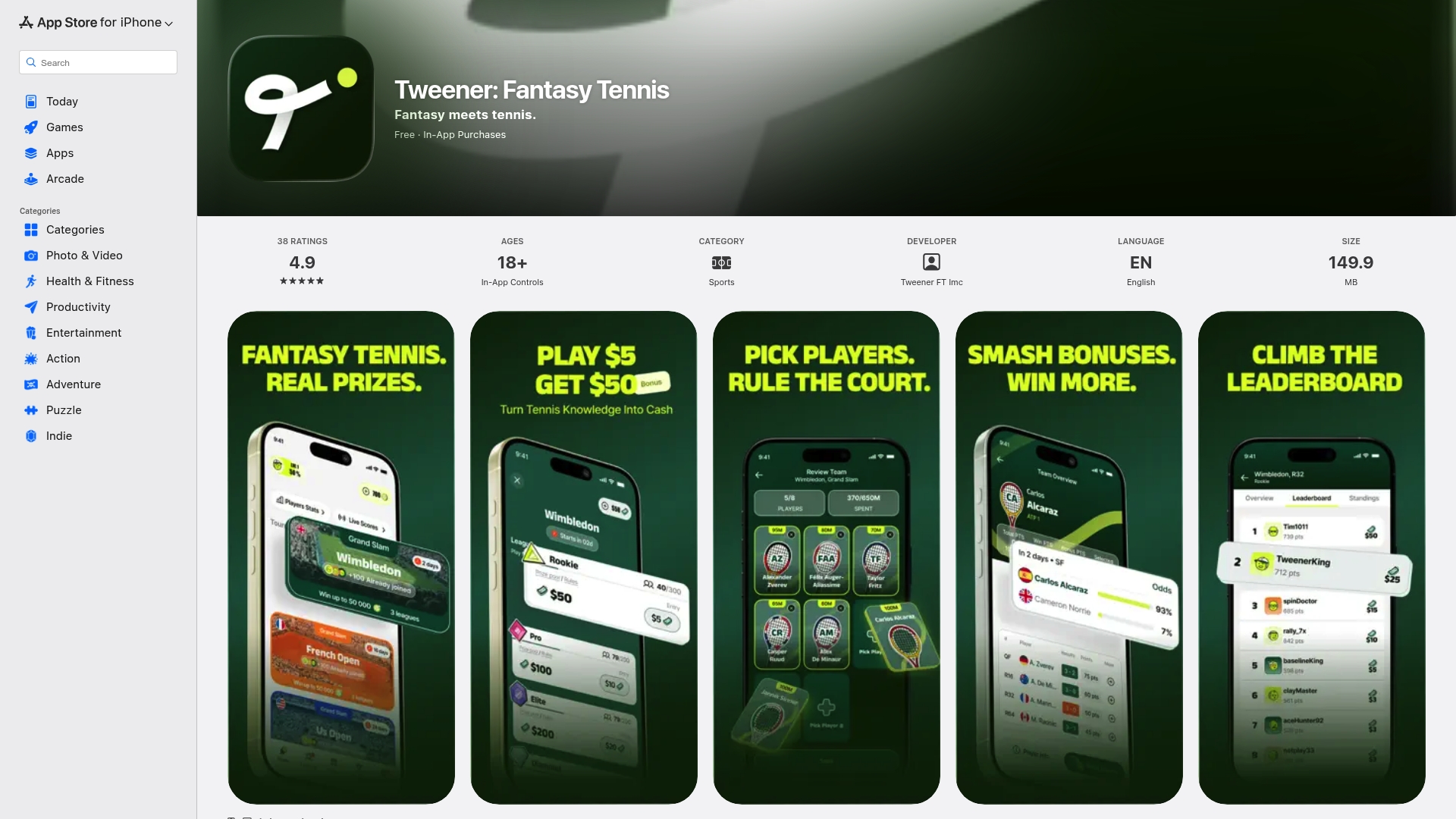
Tweener applies the best of what IAP design has learned: a free play mode where you earn virtual coins through gameplay and redeem them for real rewards, and a cash mode where skill determines your payout. There is no pay-to-win mechanic. Your ATP and WTA player picks, your knowledge of surface stats, and your read on tournament form are what win contests. If you want a mobile gaming experience where your spending decisions are transparent and your competitive edge comes from strategy, try Tweener and see how fantasy tennis changes the way you watch the sport.
FAQ
What is the role of in-app purchases in gaming?
In-app purchases convert player engagement into revenue by selling digital goods like currency, cosmetics, and battle passes inside free-to-play games. They are the primary monetization model for mobile gaming, generating $20 to $21 billion per quarter globally.
How do in-app purchases work on iOS and Android?
On iOS, Apple requires all content unlocks to use its in-app purchase system, with mandatory odds disclosure for loot boxes. On Android, Google Play's 2026 fee structure allows external billing link-outs, giving developers more pricing flexibility.
Do in-app purchases affect gameplay fairness?
IAPs tied to competitive advantages, such as stronger gear or faster progression, reduce fairness and player satisfaction. The most successful long-term games restrict IAPs to cosmetics or convenience items that do not affect competitive outcomes.
Why do a small number of players spend so much?
Just 10% of purchasers generate 90% of total IAP revenue, driven by high engagement, emotional investment in progression, and personalized offers targeting that cohort. Developers design retention funnels specifically to identify and serve these high-value players.
Are in-app purchases worth it for players?
A purchase is worth it when it adds genuine enjoyment without creating an unfair advantage or obscuring its real cost. Starter packs and currency bundles are designed to lower psychological barriers to spending, so calculating the actual dollar value before buying is always the smarter move.