

TL;DR:
- Mobile game tournaments feature structured formats like single-elimination, double-elimination, or hybrid group stages. Success depends on understanding rules, pre-match check-ins, and strategic preparation. Most players overlook rule details, risking disqualification and missed opportunities.
Mobile game tournaments are structured competitive events where players or teams compete under defined rules, formats, and scoring systems to advance through matches and win prizes. They are distinct from casual leaderboards or giveaways. Games like PUBG Mobile, Clash Royale by Supercell, and Mobile Legends: Bang Bang run official competitions with brackets, match schedules, and eligibility requirements. Understanding how tournaments work in mobile games gives you a real edge before you register for your first event.
What are the common tournament formats in mobile games?
Tournament formats balance three competing priorities: fairness, total match count, and viewer excitement. The format an organizer picks shapes every aspect of the competition, from how many games you play to how quickly one bad result ends your run.

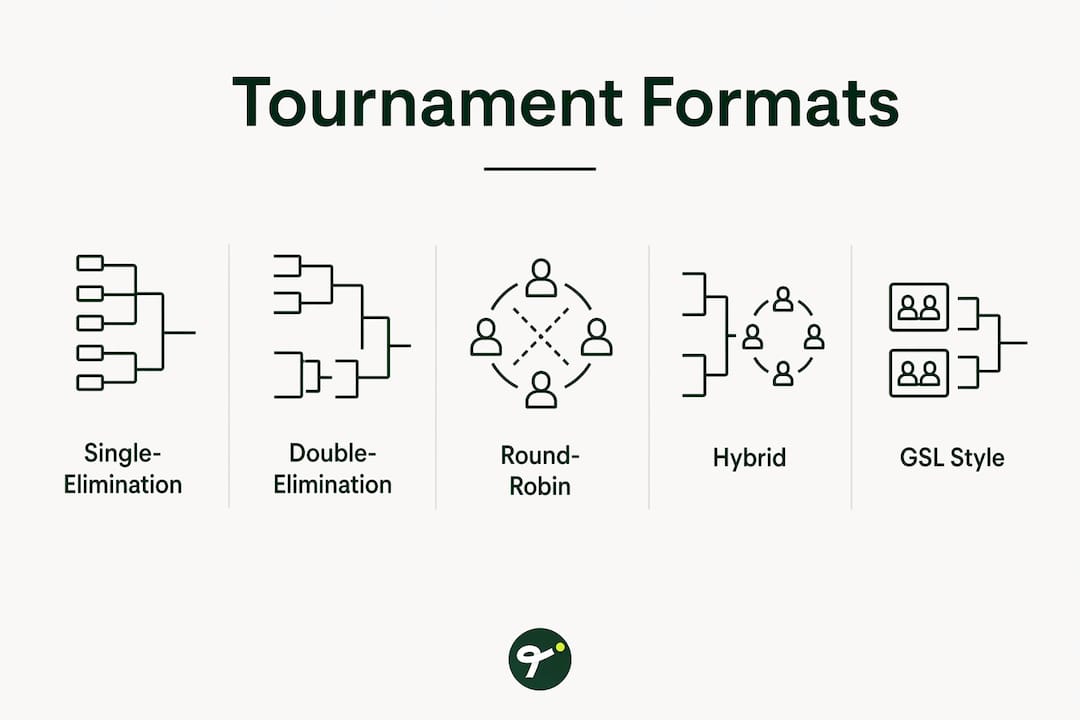
Single-elimination
Single-elimination is the most common format in mobile esports. You lose once, you go home. This format works well for large player pools and tight schedules because it cuts the field in half each round. Clash Royale's in-game ladder events and many community tournaments use this structure. The tradeoff is that one off-game or technical issue ends your tournament.
Double-elimination
Double-elimination adds a losers' bracket. A player who loses in the main bracket drops to a second bracket and still has a path to the finals. This format is more forgiving and rewards consistent play over a single hot streak. It requires roughly twice the match slots of single-elimination, so organizers use it when scheduling allows.
Round-robin and group stages
Round-robin formats have every player or team face every other competitor in the group. The GSL format, named after the Global StarCraft II League, splits players into small groups where two advance and two are eliminated. The Swiss system is a variant where players are paired each round based on their current record, avoiding rematches. These formats give players more games and reduce the luck factor of a single bracket draw.
Hybrid formats
Hybrid structures combine group stages with knockout playoffs. Players earn their playoff seeding through group performance, then compete in a single or double-elimination bracket. The MLBB Championship at Abu Dhabi 2025 used a group stage with best-of-three matches before advancing teams to a knockout phase. Early match results in hybrid formats heavily influence advancement probability, which makes consistency across the full event more valuable than one standout performance.
| Format | Matches per player | Second chance? | Best for |
|---|---|---|---|
| Single-elimination | 1 until loss | No | Large fields, fast events |
| Double-elimination | 2+ until two losses | Yes | Mid-size competitive events |
| Round-robin/GSL | Multiple | Partial | Group fairness, more play |
| Hybrid group + playoff | Multiple | Partial | Major championships |
Pro Tip: Before you register, check whether the event uses best-of-one or best-of-three matches. Best-of-three formats reward preparation and adaptability far more than single-game formats.
What are the rules for registration and match day in mobile tournaments?
Registration for mobile tournaments varies by event tier. Official publisher events like PUBG Mobile's competitive circuit require in-game account linking to verify rank and region. This affects seeding and prevents players from entering brackets above their actual skill level. Third-party community events often have simpler entry requirements, sometimes just a username and a Discord handle.
Match day operations are where many new players get caught out. The rules below reflect standard practice across organized mobile esports events:
- Check-in window: Most events require players to check in 20 minutes before their scheduled match. Missing this window can result in an immediate walkover loss.
- Grace period: A 15-minute grace period is common after the scheduled start time. After that, the absent player or team forfeits.
- Device and settings check: Players must complete login, audio checks, and in-game settings before the match clock starts. Gear issues after the match begins do not pause play.
- Substitution rules: Team events typically lock lineups before each match. Substitutions may be allowed between games in a series but not mid-game.
- Coach communication: In drafting-based games, coaches can often communicate during the pick/ban phase but not during live gameplay. The MLBB Championship at Abu Dhabi 2025 enforced this rule strictly.
- Conduct standards: Unsportsmanlike behavior, including chat abuse or intentional disconnects, results in penalties ranging from match loss to disqualification.
Reading event-specific rules before competing is non-negotiable. Assumptions about format and regulations frequently differ from the actual rulebook, and ignorance of the rules is never accepted as an excuse by tournament admins.
Pro Tip: Screenshot the tournament schedule and check-in link the night before. On match day, log into the game and complete a test match at least 30 minutes early to catch any update or connection issues.
How do prize pools and entry fees work in mobile tournaments?
Prize structures in mobile gaming competitions range from in-game currency rewards to five-figure cash payouts. The structure depends on whether the event is publisher-run, third-party, or community-organized.
EA SPORTS FC Mobile's League Tournaments award in-game coins as prizes in 24-hour events between leagues. These events have no entry fee and serve as engagement tools within the game. The prize is functional rather than financial, giving players resources to build stronger squads.
Cash tournaments follow a tiered qualification model. Atay Games' 2026 Spring Cash Splash illustrates how this works at scale:
- Daily qualifiers: Entry fee of $0.49 minimum. Prizes distributed daily to top finishers.
- Weekend challenges: Entry fee of $1.49 minimum. Higher prize pools with more competitive fields.
- Finals: Entry fee of $4.99, or free entry with a qualifying ticket earned from earlier rounds. The total prize pool across the event reached $50,000.
This ladder structure serves two purposes. It gives casual players a low-cost entry point and creates a natural progression path for serious competitors. The tiered entry model also lets organizers manage prize pool sustainability across multiple event days.
| Event tier | Typical entry fee | Prize type | Payout timing |
|---|---|---|---|
| In-game league event | Free | Virtual currency | Immediate post-event |
| Daily qualifier | $0.49+ | Cash or credits | Daily |
| Weekend challenge | $1.49+ | Cash | Weekly |
| Finals | $4.99 or ticket | Cash | Post-finals |
Publisher-run tournaments tend to offer larger prize pools and stricter eligibility. Community events trade prize size for accessibility, often running on platforms like Battlefy or Challonge with open registration.
What strategic factors shape your performance in mobile tournaments?
Tournament strategy goes beyond individual skill. The format, rules, and match structure all create conditions that reward specific types of preparation.
In drafting-based games like Mobile Legends: Bang Bang, the pick/ban phase is as important as the match itself. Teams must ban opponents' strongest heroes and draft compositions that counter the expected lineup. The MLBB Championship at Abu Dhabi 2025 used 5v5 matches with fixed lineups and a structured pick/ban system. Teams that prepared multiple viable compositions outperformed those relying on a single strategy.
Key strategic factors that affect competitive outcomes include:
- Lineup flexibility: Teams locked into one composition are vulnerable once opponents identify and counter it. Preparing three or more viable drafts is standard at the professional level.
- Format-specific pacing: In single-elimination, aggressive early play is often rewarded because there is no recovery from a loss. In round-robin formats, consistent performance across all matches matters more than any single result.
- Communication windows: Knowing exactly when coaches can and cannot speak during a match lets teams maximize the information they receive during legal windows.
- Tournament mode settings: Many official events use custom in-game settings that differ from ranked play. Reviewing these settings before the event prevents surprises on match day.
- Early-round seeding: In hybrid formats, finishing first in your group often means a weaker first-round playoff opponent. Early match results carry compounding value in these structures.
The players who consistently advance in mobile tournaments treat rule review as part of their preparation, not an afterthought. Understanding tournament-specific rules before competing is the single most underrated competitive advantage available to new players.
Key Takeaways
Mobile game tournaments reward players who understand the format, follow operational rules, and prepare strategically before match day.
| Point | Details |
|---|---|
| Format determines your path | Single-elimination ends on one loss; hybrid formats reward consistency across multiple matches. |
| Check-in rules are strict | Missing a 20-minute pre-match check-in window can result in an immediate forfeit. |
| Entry fees follow a ladder | Cash tournaments use tiered entry from $0.49 qualifiers up to $4.99 finals with ticket options. |
| Drafting is a strategic phase | In games like MLBB, the pick/ban phase shapes the entire match before a single move is made. |
| Read the rulebook first | Event-specific rules vary widely; assumptions about format and eligibility frequently cause avoidable disqualifications. |
The part most players skip that costs them the most
Most players who enter their first mobile tournament spend hours practicing mechanics and almost no time reading the rulebook. I have watched skilled players get eliminated not by better opponents but by a missed check-in or a substitution they did not know was locked. The rules are not bureaucratic noise. They are part of the competition.
The other thing I would push back on is the assumption that single-elimination is the fairest format. It is actually the least forgiving. One bad connection, one off-game, and your tournament is over. If you are new to organized competition, look for events using double-elimination or group stages. You will get more matches, more feedback, and a much better read on where your actual skill level sits.
Mobile esports has matured fast. The MLBB Championship at Abu Dhabi 2025 running structured pick/ban phases and coach communication rules is evidence that these competitions now operate at a level of complexity that rewards preparation as much as raw talent. The gap between a player who reads the rules and one who does not is larger than most people realize. Treat every tournament entry as a research project first and a competition second.
— Nathan
Tweener brings tournament-style competition to tennis fans
Tennis fans who love the competitive structure of mobile gaming will find a natural home in Tweener. The platform runs fantasy tennis leagues built around real ATP and WTA tournaments, where you draft actual players and earn points based on live match results.
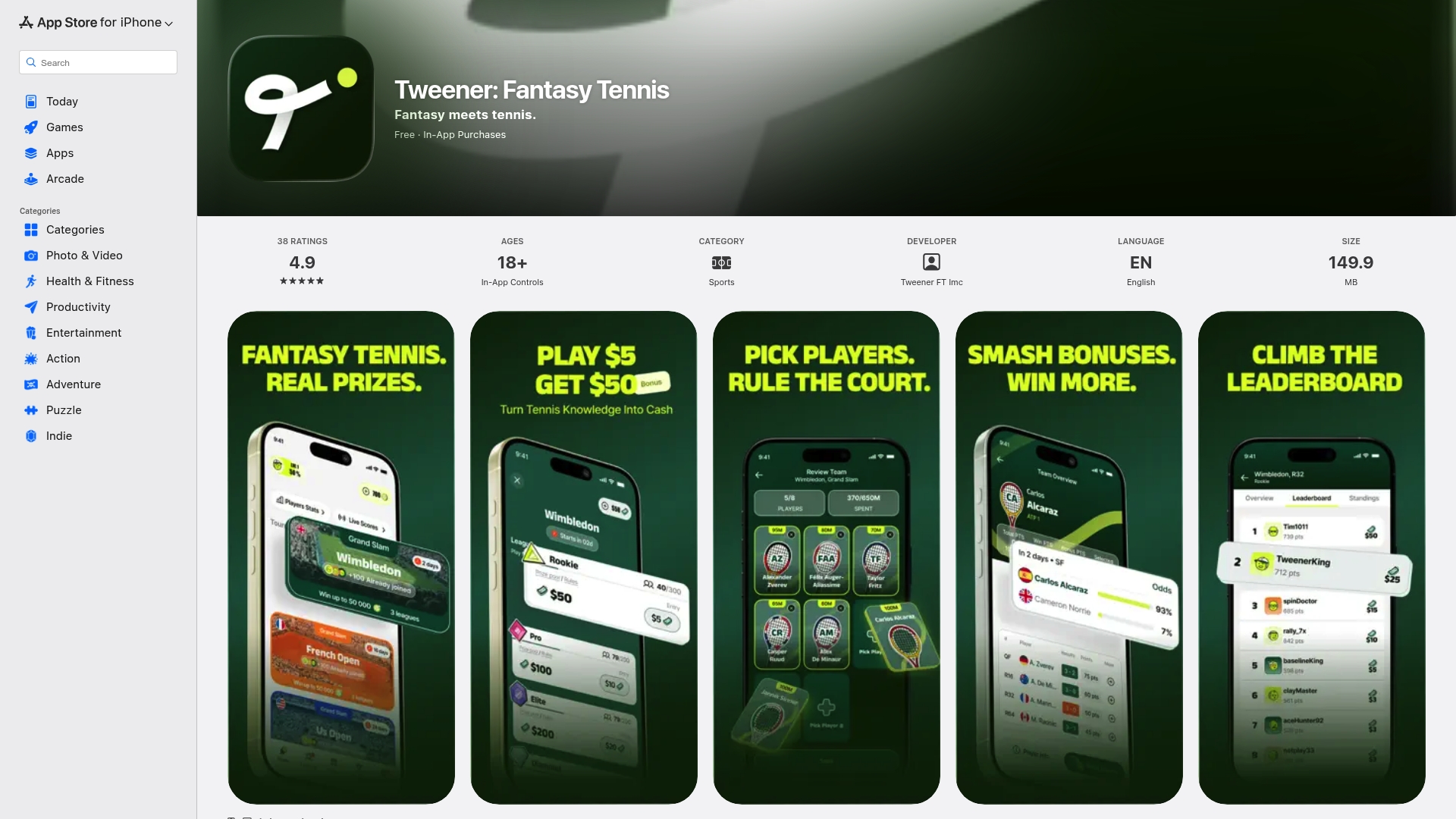
Tweener supports both free play with virtual coins and cash contests where legally permitted, mirroring the tiered entry structures common in mobile esports. You can join public leagues or build private leagues with up to nine friends for Grand Slam events. The lineup management tools reward the same kind of strategic thinking that separates good tournament players from great ones. If you follow tennis and want a competition that runs on skill rather than luck, Tweener is the place to start.
FAQ
What is the most common tournament format in mobile games?
Single-elimination is the most widely used format in mobile esports because it handles large player pools quickly. Double-elimination and hybrid group-stage formats are common in higher-level competitions where fairness and match volume matter more.
How do I join a mobile game tournament?
Registration typically requires an in-game account link for rank and region verification in official events, or just a username for community tournaments. Check the event page for eligibility requirements and registration deadlines before the event opens.
What happens if I miss my match check-in?
Most tournaments require check-in 20 minutes before the scheduled match, with a 15-minute grace period after the start time. Missing both windows results in a walkover loss awarded to your opponent.
How are prizes distributed in mobile game tournaments?
Prize distribution depends on the event structure. In-game events award virtual currency immediately after the event. Cash tournaments like Atay Games' Spring Cash Splash distribute prizes daily for qualifiers and cumulatively for finals, with payouts tied to finishing position.
Do tournament rules differ between games?
Yes, significantly. Rules vary widely across games and organizers, covering eligibility, substitution policies, communication rules, and conduct standards. Always read the specific rulebook for each event you enter.