
Choosing a fantasy tennis app that mixes authentic ATP and WTA player drafts, live scoring, and community features is complicated by the fact that most platforms fall either into rigid pay-to-play models or lack the depth serious tennis fans expect. Many existing options skip free play modes, restrict real cash contests to a handful of states, or limit league management tools so fans cannot enjoy both strategy and flexible competition. This side-by-side comparison highlights league formats, entry options, and stat depth across top alternatives so you can pick a fantasy tennis platform that fits your preferred play style and location.
Table of Contents
- Tweener
- Game Set Match
- MatchTime
- Ultimate Tennis Flex Leagues
- Rival Tennis Ladder
- Matchcourt
- Comparative Analysis
Tweener
At a Glance
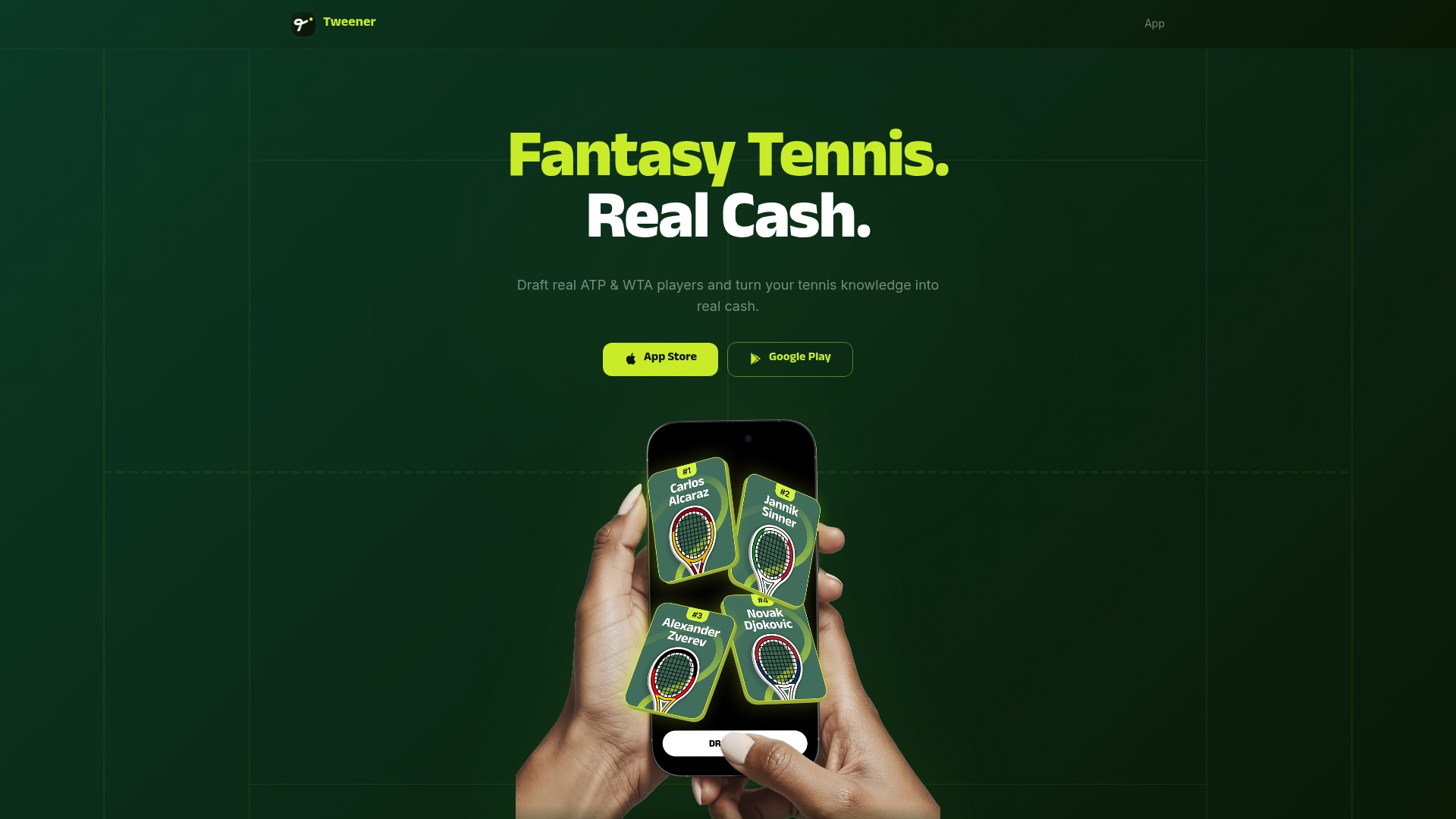
Cash leagues run in 19 US states, and new players can claim a double deposit bonus up to $100 in bonus cash that is playable in-game. Tweener blends free play with virtual coins and a cash mode that accepts deposits where legally permitted.
Core Features
-
Draft Mode where you build a 6–8 player roster from real ATP and WTA players for tournament-style scoring.
-
Pick'em Mode for quick head-to-head match predictions without a full roster draft.
-
Public leagues and the option to create private leagues with friends for Grand Slams or regular events.
-
Free play economy using virtual coins that can be earned and redeemed for rewards such as gift cards.
-
Secure payment processing and a cash mode that lets eligible players enter paid contests in select states.
Key Differentiator
Tweener positions its product around drafting real ATP and WTA players into contests that the vendor emphasizes are skill-based rather than gambling. That focus shapes scoring, contest formats, and the emphasis on surface and head-to-head stats rather than chance.
Pros
-
Real cash prizes available through paid contests let knowledgeable fans monetize match previews and lineup strategy.
-
Two distinct play styles cater to both deep managers and fans who prefer quick picks, which keeps engagement high during long tournaments.
-
Top events such as Wimbledon and the French Open are covered, so your rosters matter across the season rather than just for isolated tournaments.
-
The vendor reports a large user base with frequent competitions, which makes lobby fill times fast and keeps entry fees competitive.
-
Promotional deposit bonuses and a free coin economy lower the barrier for new players to try contests before risking cash.
Cons
- Access is limited: cash leagues are available only in 19 US states, so the cash play experience is unavailable to many interested fans.
Who It's For
Tennis fans and fantasy players located in states where cash leagues are allowed who already understand ATP and WTA form, surfaces, and match flow. Good for fans who enjoy roster construction, want private leagues for Grand Slams, or prefer strategy over pure chance.
Unique Value Proposition
The combination of a free virtual-coin mode plus a separate cash mode with secure payments and a deposit-match bonus changes how you can enter contests. You can learn lineups and scoring with play coins, then shift bankroll to paid contests without relearning formats or payment flows.
Real World Use Case
You live in California, join a private Wimbledon league with eight friends, draft six players each in Draft Mode, and use in-app analytics to weight clay versus grass performance. You test lineups with virtual coins, then enter one paid contest for the final weekend.
Website: https://tweener.io
Game Set Match
At a Glance
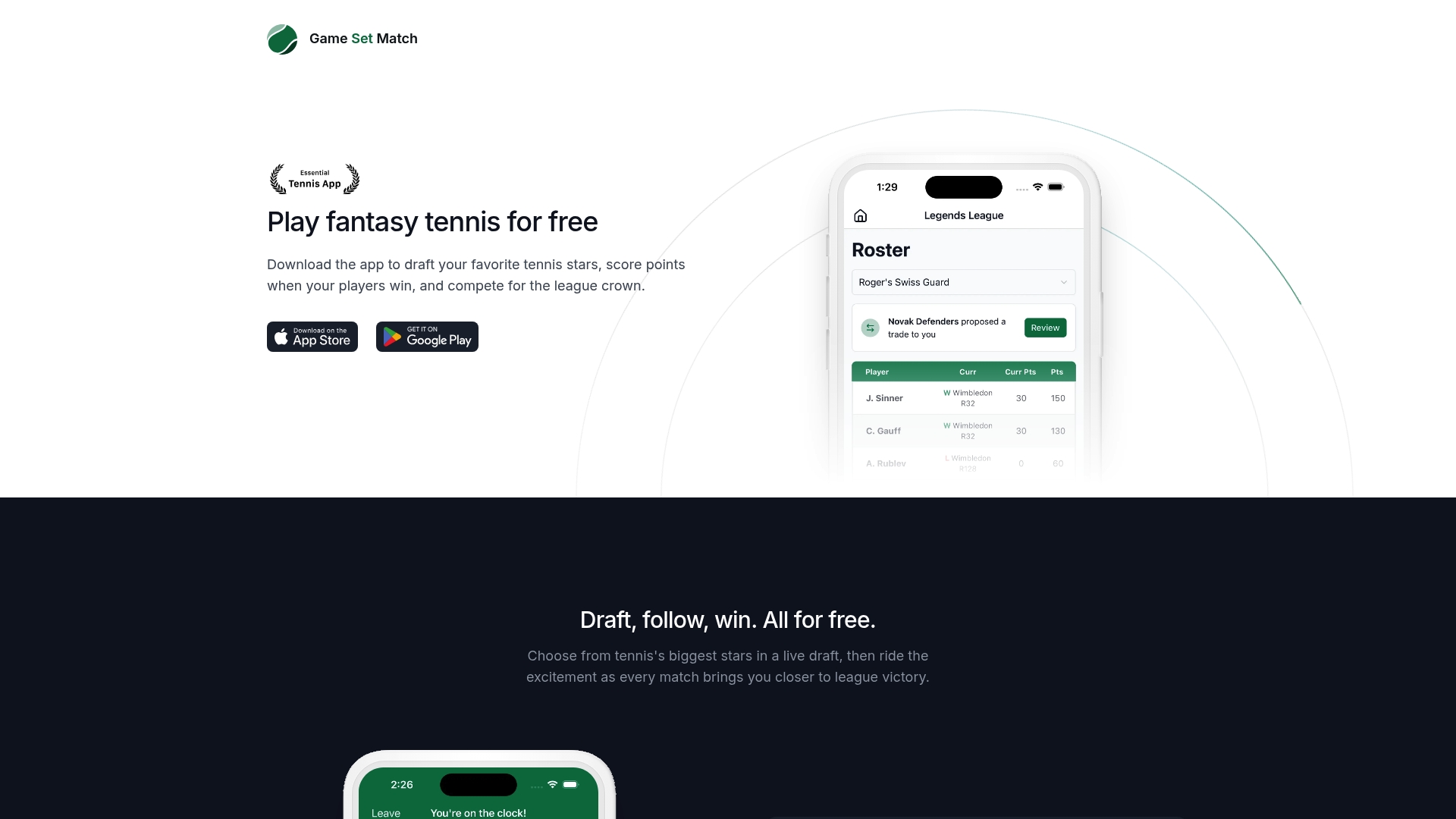
Free access plus live drafting is the standout: Game Set Match centers league play on ATP and WTA events, including Grand Slams and Masters 1000 tournaments. The app emphasizes live scoring and in-season trade negotiations to keep league managers engaged during matches.
Core Features
- Live drafting that runs ahead of tournaments so managers lock rosters in real time.
- Live scoring that converts actual match outcomes into league points as matches finish.
- Trade negotiations and standard team management tools for adding, dropping, and swapping players.
- Competitive league tables with season rankings and head to head matchups.
- Mobile and web access so members can manage teams from phones or desktops.
Key Differentiator
The platform focuses solely on fantasy tennis leagues tied to professional ATP and WTA matches and offers that for no charge. That narrow focus means draft rules, scoring, and trade mechanics aim specifically at tennis rhythms rather than adapting a football or baseball template to the sport.
Pros
- Free access lowers the barrier for entry so friends can form leagues without subscription friction.
- The live draft and live scoring keep attention on matches; managers have a reason to watch every set.
- Trade negotiation support encourages active roster management instead of passive season-long lineups.
- Mobile plus web availability means quick lineup edits during match days and easier league coordination.
- Tournament focus on Grand Slams and Masters 1000 aligns the scoring calendar with the events tennis fans already follow.
Cons
- Independent reviews and user feedback are limited, which makes it harder to judge long term reliability.
- Documentation on specific platform usability and edge cases is sparse in public sources.
- There is little third party information about how player valuation, tie breakers, or advanced scoring rules are handled.
When It May Not Fit
If you want a platform with an established body of independent user reviews or detailed public documentation, this may feel thin. Organizers who need an audit trail of league decisions or extensive rule customization should evaluate sample leagues before committing. Competitive players seeking deep analytics may find the feature set focused more on play than on advanced stat breakdowns.
Who It's For
Managers who love ATP and WTA tournaments and want a casual but active league with friends or global members. The product suits fans who prize live drafts, inseason trades, and watching matches with a competitive team goal rather than users who want heavy analytics or an established review record.
Real World Use Case
You and eight friends set up a private ten team league for a Grand Slam. You run a live draft the night before the tournament, negotiate a swap after the second round, and track scores on your phone while watching evening sessions. The matchup swings every match day keep the league chat lively.
Website: https://trygamesetmatch.com
MatchTime
At a Glance
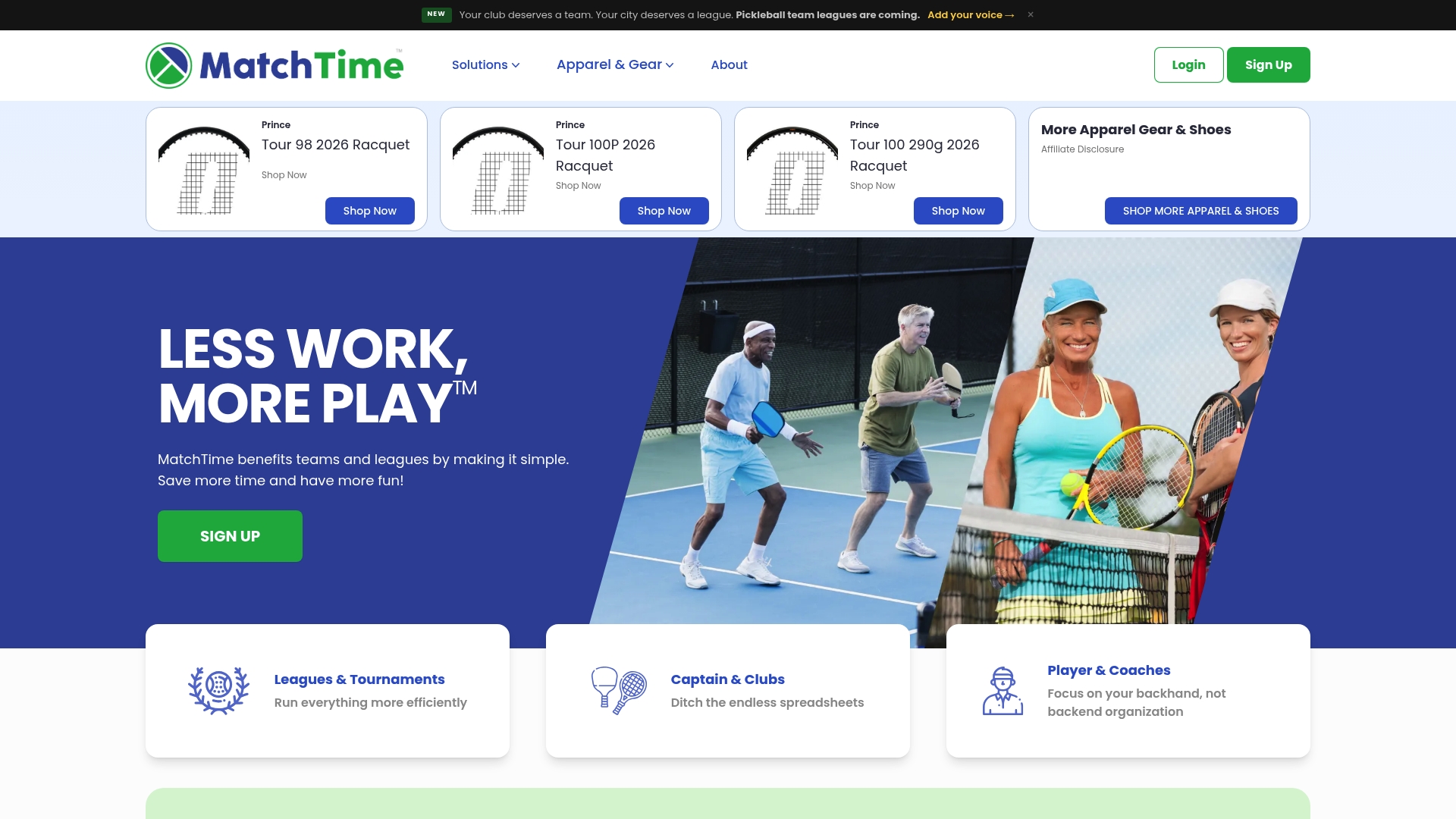
MatchTime reports it has powered over 4 million matches across all 50 states over 16 years. That scale shows the platform is widely used by clubs and leagues for the specific operational pain points of racket sports.
MatchTime focuses on automating scheduling, registrations, fee collection, and live scoring so organizers spend less time on spreadsheets and more time on member engagement.
Core Features
- League and tournament management for tennis, pickleball, and other racket sports, with support for singles, doubles, and multiple line formats.
- Tools for registration and payments, including fee collection and basic messaging to participants and captains.
- Live match stats and real-time results feed so captains and spectators can track outcomes during play.
- Team and club management features: availability tracking, lineup creation, match confirmations, and roster management.
Key Differentiator
MatchTime’s distinguishing angle is its long tenure and sport-specific focus. The product targets the operational needs of racket-sport organizers rather than generic club software, and that specialization is reflected in match tracking and lineup workflows.
Because it has been adopted broadly across local leagues and clubs, the platform’s feature set emphasizes practical fixes organizers request most: schedule automation, streamlined fee handling, and scoreboard-style live updates.
Pros
- Saves organizer time by consolidating scheduling, registration, and fee collection in one place rather than juggling spreadsheets and payment tools.
- Handles multiple league formats and play styles, which reduces one-off work for summer sessions, mixed leagues, and playoff brackets.
- Built-in communication tools cut down on fragmented email threads between captains and players.
- The platform’s long history brings maturity; that track record suggests the workflows have been refined across many seasons.
- Team captain features like lineup locks and match confirmations make weekly match administration smoother for club play.
Cons
- Independent feedback is limited and leans neutral; some users report they use MatchTime because it fits a need rather than out of enthusiasm.
- The product does not appear to chase flash features or modern consumer-grade UX; organizers seeking an app with heavy social features may find it plain.
- Public reviews show few strongly positive testimonials, which makes vendor claims harder to validate from third-party sources.
When It May Not Fit
If you want a platform that generates strong member excitement or a highly polished consumer experience, MatchTime might feel utilitarian. The vendor’s available feedback suggests modest user sentiment rather than passionate endorsement.
Also, if your league depends on deep third-party integrations or advanced marketing features, MatchTime’s public data does not show a broad integration ecosystem and may limit that workflow.
Who It's For
Leagues, clubs, and tournament organizers in tennis and pickleball who prioritize operational reliability over glossy consumer features. The product suits volunteer-run organizations and small commercial clubs that need a single system for schedules, payments, and live scoring.
Real World Use Case
A midsize tennis league in Atlanta moved weekly signups, match schedules, fee collection, and score entry into MatchTime. Organizers replaced spreadsheets and one-off emails, freeing volunteer leaders to focus on courts and member retention instead of admin tasks.
Pricing
MatchTime does not publish detailed pricing in the available data. The vendor frames the offering as a subscription-based solution for leagues and organizations, so budget conversations typically happen during vendor outreach or demos.
Website: https://matchtime.com
Ultimate Tennis Flex Leagues
At a Glance
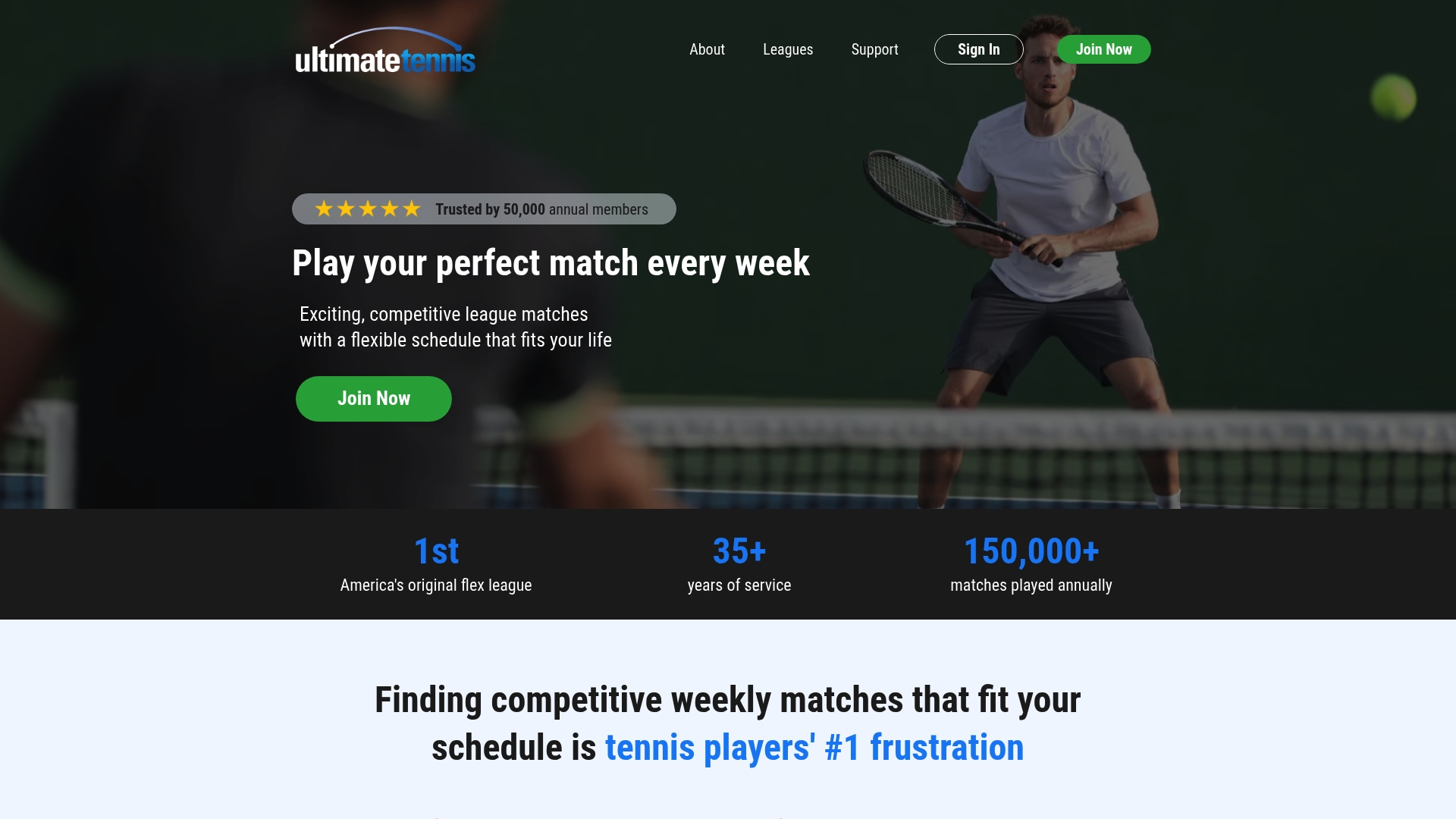
The vendor reports serving over 50,000 members annually and operating for 35 years, a scale that supports dense local match networks across many U.S. cities. Ultimate Tennis pairs precision ratings with flexible scheduling so players get balanced opponents without fixed-weekend commitments.
Core Features
- Personal match scheduling with weekly opponents and automatic reminders that reduce coordination work.
- Precision player ratings built from decades of match data to produce fair pairings and meaningful promotion or demotion between tiers.
- City-wide playoffs and tournaments that convert regular season play into local championship brackets.
- Easy online booking and a real-time performance dashboard with match data, scouting, and rating verification tools.
- Short drive times thanks to local match routing and flexible time windows that fit busy schedules.
Key Differentiator
Ultimate Tennis centers its product on a data-driven rating system that feeds match assignments, playoff seeding, and scouting reports. That rating engine, combined with genuinely flexible scheduling, is what separates routine community leagues from programs that match both competitiveness and availability.
Pros
- Well-organized league system: Clear season structure and automatic reminders keep matches played and standings current, which reduces no-shows and confusion.
- Highly accurate rating system: The ratings aim to improve fairness so matches are competitive rather than one-sided, helping players track real progress.
- Flexible scheduling accommodates professionals and parents by offering multiple match windows each week, not just fixed evenings.
- Local matches minimize drive time, making it realistic to play regularly without sacrificing an entire afternoon.
- Active member community provides social play and informal scouting that helps new players find practice partners and local clinics.
Cons
- The structure can feel data-driven and formal for players who prefer casual, pick-up style matches.
- Not a fit for those who want rigid, set schedules; the system favors flexibility and will reassign slots to optimize match density.
- Requires reliance on online scheduling; players who avoid apps or smartphones will find participation awkward.
When It May Not Fit
Players who enjoy fixed weekly court times or travel-heavy club matches will likely not get the benefits here. Also, because scheduling and tracking are app-centric, the system requires internet access and a device for booking and performance review.
Who It's For
Amateur tennis players seeking balanced competition and regular match play without long commutes or fixed-week commitments. Good for players who value tracking metrics, climbing a verified rating ladder, and competing in local playoff formats.
Real World Use Case
A busy professional signs up, selects available evening windows, and receives weekly match assignments within a 20-minute drive. They use the rating dashboard to monitor improvement, play in city-wide playoffs at season end, and find opponents who push their level without overcommitting time.
Website: https://ultimatetennis.com
Rival Tennis Ladder
At a Glance
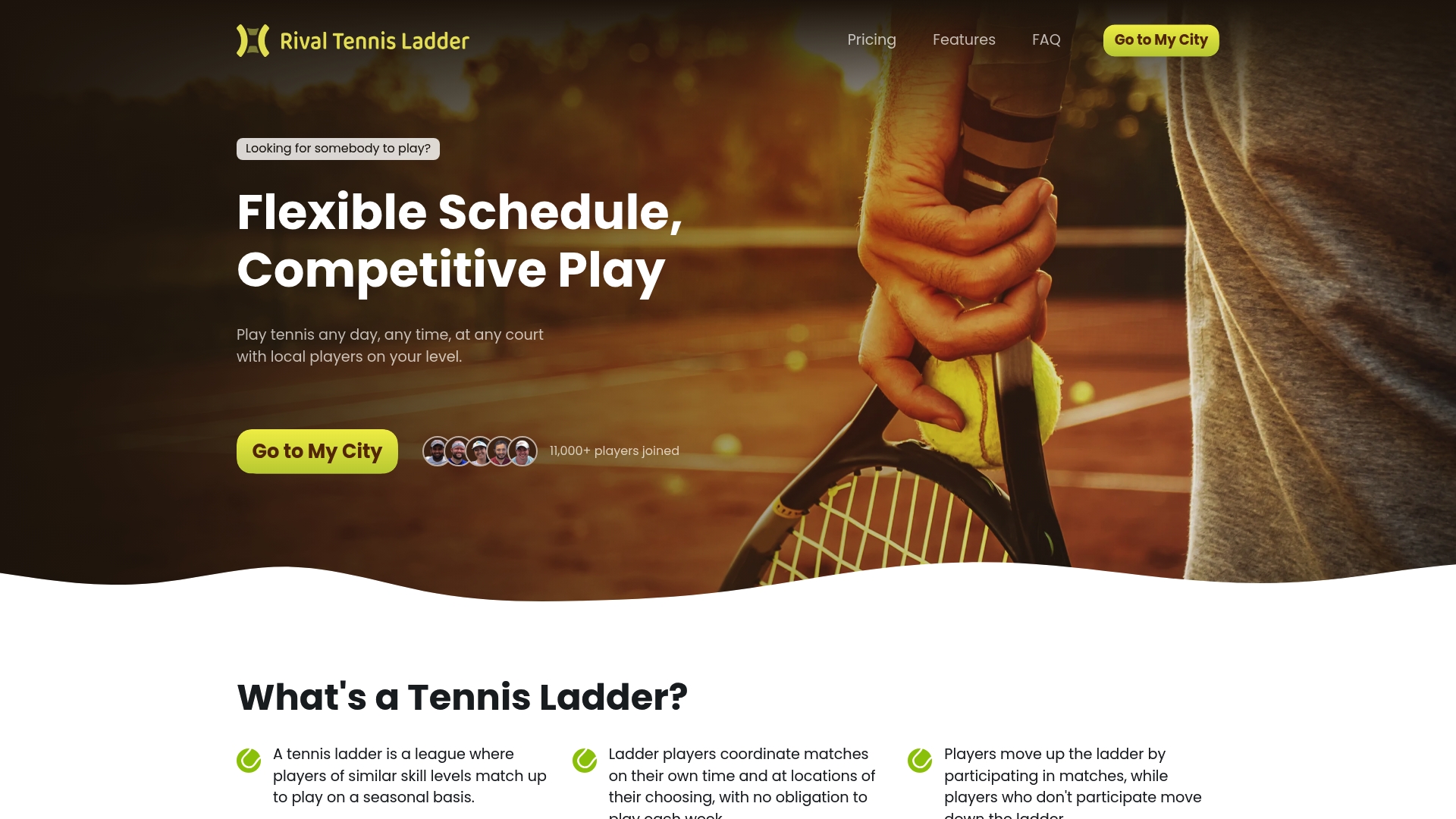
The vendor advertises a free first season for new players and season fees of $35 for singles and $25 for doubles. Rival Tennis Ladder runs localized seasonal ladders in US metro areas and adds avatars, badges, and in-app trophies to conventional match play.
Core Features
- Skill-based ladder ranking system that advances players through wins and challenges.
- Self-scheduling tools to propose, accept, and report matches on your timetable.
- Player profiles with performance metrics including rivalries, match history, and seasonal stats.
- Mobile-friendly experience for iPhone and Android with avatar customization and local community pages.
Key Differentiator
Rival Tennis Ladder centers local communities rather than broad national leaderboards. That local focus lets players arrange matches at nearby courts, form persistent rivalries, and qualify for end-of-season tournaments that reward trophies and gift cards. The combination of social ladders and season-based incentives tightens engagement for small-city groups.
Pros
- Modern interface and easy onboarding make match setup fast and repeatable for casual players.
- Flexible scheduling removes weekly-match pressure so members can play around work and family commitments.
- Deep player stats give you concrete signals when issuing a challenge or tracking improvement across a season.
- Localized ladders in multiple cities reduce travel and increase the chance of finding similarly skilled opponents.
- Incentives such as trophies and gift cards add motivation beyond simple ranking changes.
Cons
- Availability is limited to select US metro areas which excludes many recreational players outside those cities.
- The platform relies on self-reporting for match results, so disputed outcomes require local social enforcement.
- The seasonal fee, while modest for committed players, may deter casual participants after a free first season.
When It May Not Fit
If you live outside the listed cities the platform will feel irrelevant because there is no way to join a local ladder. If you prefer automated result verification or referee arbitration the heavy reliance on player-reported scores will be frustrating. Social groups that need guaranteed weekly fixtures will find the self-scheduled model mismatched.
Who It's For
Recreational tennis players in US cities who want competitive but flexible play. This suits players who value a steady seasonal structure, local rivalries, and quantifiable stats rather than rigid club leagues or weekly match commitments.
Real World Use Case
A Raleigh recreational player joins a seasonal ladder, issues three challenge proposals for weeknights, reports match scores after each win, and climbs the ladder to reach the end-of-season tournament. The player uses profile stats to pick opponents and collects a small prize at the finale.
Website: https://tennis-ladder.com
Matchcourt
At a Glance
Matchcourt launched in 2024 from Rotterdam and markets itself as an all-in-one mobile tool that automates club operations and connects players. Clubs report faster event setup and better member communication after adopting the app.
Core Features
Matchcourt bundles several admin functions into a single mobile interface. Key parts include automated brackets and live scoring, intelligent player matchmaking that considers skill and availability, and member registration with activity tracking.
The platform also ships club resources and step by step guides for running tournaments and events, plus real-time notifications and basic tournament analytics for organizers.
Key Differentiator
Matchcourt combines tournament management, matchmaking, and community features in one mobile app. That integrated approach is focused on clubs rather than spectators or fantasy players, so the workflow centers on scheduling, court utilization, and member retention.
Pros
-
Automates repetitive tasks so club staff spend less time on admin and more on coaching or facility upkeep.
-
Personalized matchmaking improves participation by matching players by skill and schedule, which helps fill courts during off peak hours.
-
Tournament tools simplify round robin and knockout formats with live scoring and automated brackets, reducing manual bracket errors.
-
Educational guides help clubs run events more professionally and scale operations without hiring extra staff.
-
Community features promote member engagement and make it easier to communicate changes, reminders, and results.
Cons
-
Pricing detail beyond the listed plan is limited, which makes long term budgeting unclear for larger clubs.
-
The full feature set adds complexity. Clubs without a tech lead will need training to get the most from the platform.
-
Some tournament capabilities are still under development and may change as the product matures.
When It May Not Fit
If your club runs only informal meetups or you need a simple court booking app with no event features, Matchcourt is more tool than you need. Also avoid it if you require offline operation because the app requires an internet connection for live features.
Who It's For
Club managers, program coordinators, and community organizers who want a single mobile solution to run memberships, schedule events, and increase court utilization. Best for clubs prepared to invest a little training time to unlock automation gains.
Real World Use Case
A community club uses Matchcourt to automate new member signups, schedule weekly round robin nights, and match players by level. The staff reduced manual scheduling by several hours per week and saw attendance stabilize across weekdays.
Pricing
Matchcourt lists €15 /month for MatchCourt Pro and offers a 14 day free trial. The single price point makes it easy to pilot at one club before wider roll out.
Website: https://matchcourt.app
Comparative Analysis
Evaluating the options for fantasy tennis platforms brings several distinct differences into focus, allowing players to select the best tool for their specific needs. Here is how the compared products align and differ from one another, focusing on the primary strengths and tradeoffs they present.
Feature Accessibility and Platform Scope
Tweener.io effectively merges accessibility with depth through its dual virtual currency and cash model, allowing users to transition between free and paid formats. The platform explicitly targets tennis enthusiasts in states where paid contests are permitted, which builds a strong niche. In contrast, Game Set Match emphasizes accessibility with its free-to-use system and focuses on live interactivity features such as live drafts and trades, making it highly compelling for socially interactive players. However, it lacks the dual-format structure Tweener.io provides.
Gameplay Design and User Engagement
While Tweener.io fosters a strategic, stats-focused gameplay experience through its roster drafting and predictive play modes, Ultimate Tennis Flex Leagues accommodates players who prefer personalized scheduling and fair matchup metrics based on skill ratings. This latter approach enables a player-centric flexibility that complements a community-driven dynamic over the strategic intricacy found in Tweener.io's setup.
Best Fit Recommendations
- Tweener.io: Ideal for strategic and analytics-driven tennis fans residing in eligible states, especially those who value structured gameplay and intend to explore combined free and paid play options.
- Game Set Match: Best suited for users prioritizing social interaction, enjoying live drafts, and dynamic trade-based engagement in their tennis fantasy league.
- Ultimate Tennis Flex Leagues: for amateur players who seek skill-based matchmaking and a flexible schedule to accommodate personal commitments.
Our Pick: Tweener.io
Tweener.io excels by blending strategic gameplay, dual-mode flexibility, and advanced stat features that resonate deeply with analytical tennis fans. Its capability to transition players smoothly between free and paid compounding environments ensures extensibility and engagement. However, for individuals outside its operational cash-play states, exploring alternatives like Game Set Match or Ultimate Tennis Flex Leagues might provide a more fulfilling experience.
Fantasy Tennis Platforms Comparison
Choosing the right fantasy tennis platform involves evaluating specific features, user goals, and access options for the best experience.
| Product Name | Core Feature | Key Differentiator | Best For | Notable Limitation |
|---|---|---|---|---|
| Tweener | Draft Mode and Pick'em Mode for contests | Focuses on skill-based, stats-driven play | Tennis fans in eligible US states | Cash mode limited to 19 US states |
| Game Set Match | Live scoring and trade negotiation tools | Free access and tennis-specific format | Managers wanting active league play | Limited independent reviews and public documentation |
| MatchTime | Operational tools for league management | Long tenure specializing in racket sports | Club and league organizers | Neutral user feedback and limited flashy features |
| Ultimate Tennis Flex Leagues | Weekly flexible scheduling with accurate ratings | Data-driven fairness in match assignments | Busy players needing local competitive play | App-centric system requiring reliable internet access |
| Rival Tennis Ladder | Self-scheduling and local seasonal ladders | Local focus enabling engaged matchmaking | Recreational tennis players in US cities | Limited availability to select metro areas |
| Matchcourt | All-in-one tool for club operations | Club-oriented with matchmaking and event tools | Community clubs needing mobile integration | Complexity requiring training for full utilization |
Discover a Superior Fantasy Tennis Experience with Tweener
The search for trygamesetmatch.com alternatives brings focus to platforms that combine real match data with strategic, skill-based gameplay. Tweener answers that call by delivering a deep, analytics-driven fantasy tennis app built for fans who know ATP and WTA stats inside out. Whether you prefer drafting full rosters or quick pick'em contests, Tweener balances engaging free play with a cash mode, letting you compete for real prizes where legal.
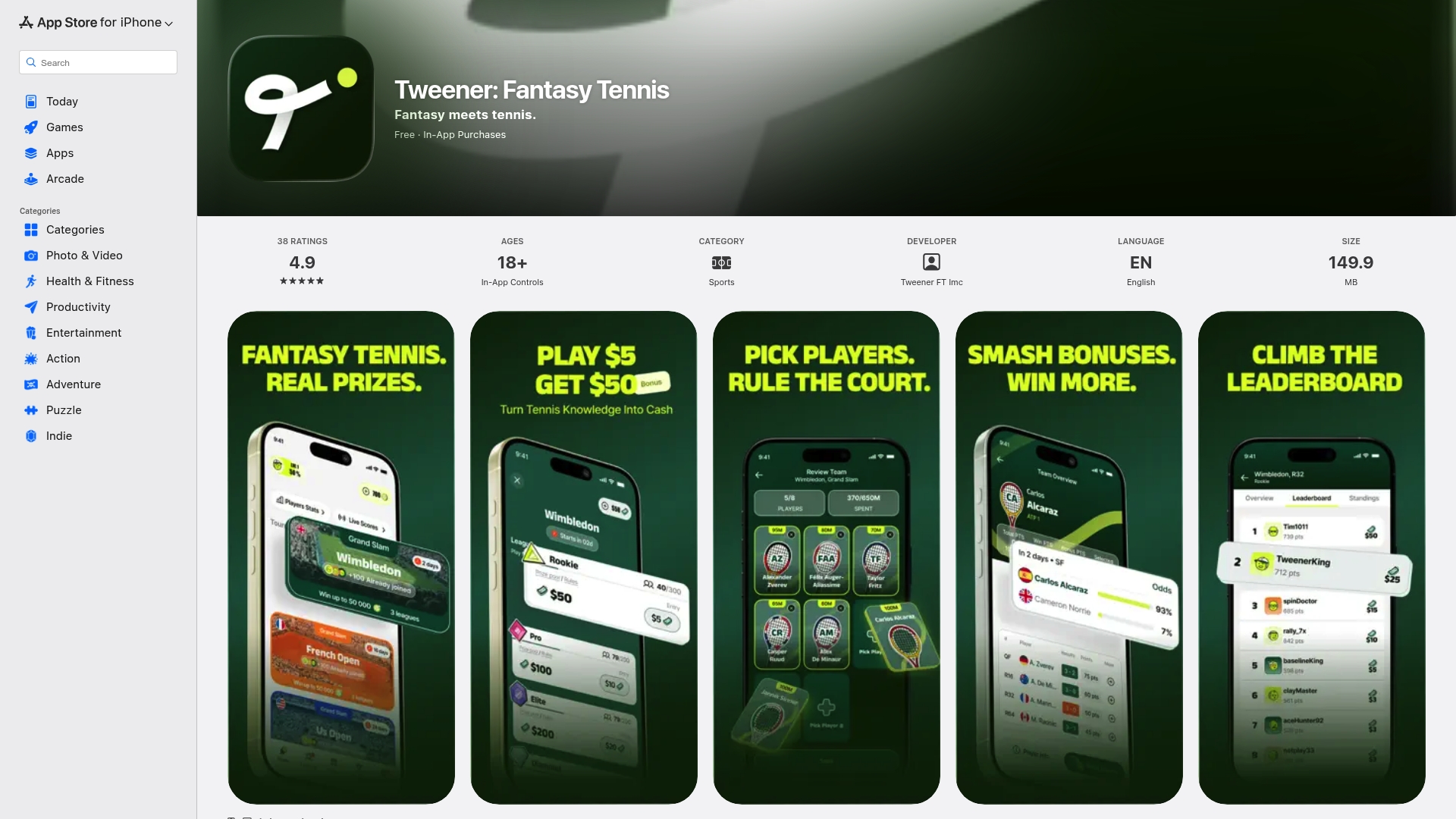
Don’t let limited access or generic formats hold you back. Join public or private leagues, leverage surface and head-to-head stats, and sharpen your lineups with virtual coins before entering paid contests. Ready to elevate your tennis fantasy game? Download Tweener today on the App Store and start crafting your winning roster at Tweener Fantasy Tennis.
Frequently Asked Questions
What unique features does Tweener offer that make it superior to other fantasy tennis apps?
Tweener provides a skill-based competition format for drafting real ATP and WTA players into contests, emphasizing analytics and player stats rather than chance. The core feature of drafting a 6–8 player roster from real ATP and WTA players enables knowledgeable fans to monetize match previews and lineup strategies. This makes Tweener an excellent choice for fans who are serious about utilizing their tennis knowledge.
How does Game Set Match cater to casual fantasy tennis fans compared to Tweener?
Game Set Match allows free access and focuses on live drafting and scoring to keep fans engaged and involved in matches. In contrast, Tweener blends free play with a cash mode, appealing more to serious fantasy players who want to dive deeper into analytics and player stats. Casual fans might find Game Set Match’s straightforward interface and live engagement more suitable for their preferences.
What makes MatchTime a practical choice for organizers compared to Tweener?
MatchTime excels in automating tournament scheduling, registrations, and live scoring, specifically designed for managing racket sports leagues efficiently. On the other hand, Tweener focuses more on individual performance and fantasy competition rather than operational management. Organizers who prioritize ease of setup and community management may find more value in MatchTime’s features.
Can I take advantage of a free trial with Matchcourt as I explore fantasy tennis options?
Matchcourt offers a 14-day free trial for its MatchCourt Pro version, allowing clubs to test its features before committing to a subscription. This is unlike Tweener, which does not have a free trial but offers promotional deposit bonuses to lower the entry barrier for new players entering cash contests. If you're considering multiple options, Matchcourt's trial may provide you insight into its effectiveness without upfront costs.
How does Ultimate Tennis ensure fair match pairings over conventional formats like Tweener?
Ultimate Tennis utilizes a data-driven rating system to create fair match pairings and enable progression through ranks, focusing on balanced competition. In contrast, Tweener revolves around fantasy contest structures and player drafts, making it more appealing to fans interested in strategic gameplay rather than traditional matches. If your priority is competitive fairness in local play, Ultimate Tennis’s systematic approach may suit you better.